



Plenty of Instructions and Manuals, but Little Use: Employees Keep Making Mistakes
Even the most detailed paper instruction doesn't help when an employee has no time to study it. Complex instructions get skimmed, important warnings get skipped, and tangled manuals drive up the number of errors at work. Every such mistake means rework, wasted materials, and a dissatisfied client.
Employee training is also built on text: first find the right section, then understand the diagram, then transfer it to the actual part. This takes hours, and the result still depends on attentiveness and experience. Paper is static — it can't show the correct action.
So newcomers are afraid to ask, experienced workers rely on guesswork — and the procedure stops working.
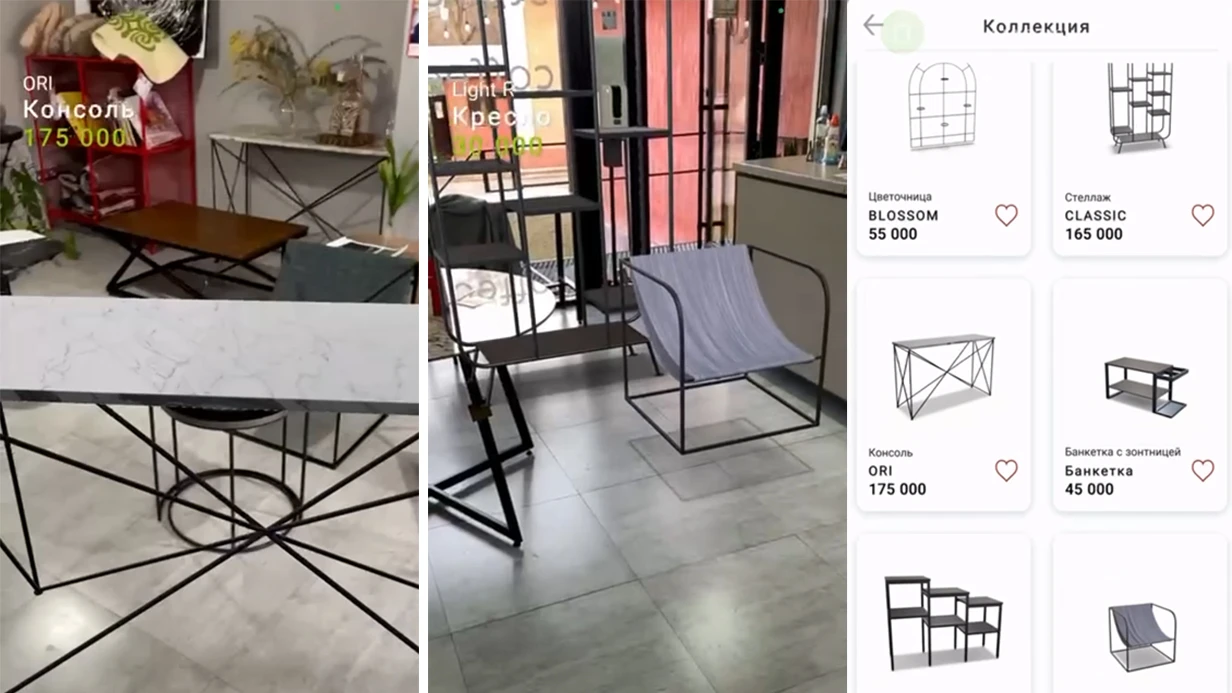
We solve this not with another brochure but with an AR layer on top of your documentation. Point your smartphone camera at a manual page or at the part itself — and the instruction comes to life: arrows, animation, and checkpoints guide the sequence of actions. The employee sees the steps instead of reading a wall of text.
As a result, complex instructions become a visual guide, and tangled manuals become a step-by-step assistant. Show the process in augmented reality once — and the employee acts with confidence.
We address this pain point: training accelerates, on-the-job errors disappear, and standards stop depending on the human factor.
What AR Print Delivers: Clear Processes and Fewer Errors
Any instruction that goes unread becomes a source of errors and extra costs. An employee looks for an answer in a paper manual, doesn't find it, and acts on a whim — the client gets the wrong result, and the brand loses time and money.
AR print for instructions and manuals solves this: point your smartphone camera at a diagram — and tips, arrows, and warnings appear.
Fast training is the main result. A new employee doesn't need to study dozens of pages: they scan the spread and immediately see the sequence of actions. Onboarding time shrinks, and confidence grows from day one. This saves time for mentors and reduces errors at the actual worksite.
Fewer support requests is the second obvious benefit. When an operator sees a hint on screen at the right moment, there's no need to call, write to a chat, or hunt down a colleague. Every saved question is an hour of a specialist's time that can be spent on complex tasks. Over the course of a year, those hours add up to significant budget savings.
Higher engagement is the third point. People interact with an interactive manual more willingly than with a flat reference card: AR holds attention and helps them remember material through practice rather than cramming.
Employees return to the instruction on their own when they need to refresh their knowledge, and clients see the brand's care.
The bottom line: AR for instructions means fast onboarding, fewer support requests, higher engagement, and consistent results. This is exactly the effect we build into every project.
AR Print Formats for Your Business Task
For businesses, paper instructions and booklets often become "dead weight": they get skimmed, set aside, and lost. Errors during assembly, setup, or product use lead to support calls, returns, and customer frustration.
AR print brings the printed medium to life: point your smartphone camera — and you get a clear 3D hint, animation, or step-by-step instruction right on top of the page.
Such an instruction always works: no need to search for a video online, flip through footnotes, or wait for a hotline response.
We work with four main formats and select the right one for your task. The table below shows who each format is for and what benefit it brings.
| Format | Who it's for | What it gives the client |
|---|---|---|
| AR brochure | Companies with catalogs, price lists, reports | Brings the presentation to life: brands, diagrams, and specifications turn into 3D demonstrations. Increases time spent with the material and memorability |
| AR poster | Museums, exhibitions, offices, outdoor advertising | The visitor points the camera at the poster and gets a gallery, video tour, or additional content. Works as an attraction point and a reason for photos |
| AR label | Product manufacturers, packaging | The buyer sees the ingredients, brand history, or a video recipe without scanning a QR code separately. This increases engagement and loyalty |
| Interactive manual | Complex machinery, furniture, equipment | Replaces dozens of pages of text with video hints and animation. Reduces assembly errors and support requests |
All formats launch with a regular smartphone camera — nobody needs to install apps. The client gets not a "flashy gimmick" but a tool that reduces the load on service specialists and extends the value of printed products.
If you need a format for a non-standard medium — such as stickers or tags — we'll develop a custom solution together with the design.
How AR Print Development Works for Instructions and Manuals
You don't need to understand the technology to integrate AR into printed instructions. The process is designed so you control quality at every step and get no surprises by the time you go to print. Below are the stages of AR print development for manuals, refined across dozens of projects.
How the work is structured
- Requirements gathering and materials audit. You send your current instructions and manuals, and we determine where AR will deliver the most value: video breakdowns of components, 3D diagrams, hidden hints for staff.
- Layout and scenario approval. We decide which page elements will feature AR markers and what the user will see after pointing the camera. The logic is approved before production begins.
- AR layer development. We create animations, diagrams, and narrated video instructions tied to specific places in the manual.
- AR testing on devices. We test the scenario under different lighting conditions and on various smartphones and tablets. Errors are fixed before printing.
- Printing the run. We hand off the files to the print house and monitor color reproduction and print quality — markers are recognized on the first try.
- Post-launch support. We help update video instructions and adapt manuals to new product models. You're never left alone with the technology.
This sequence eliminates unnecessary costs: you see in advance how the AR instruction will look, approve the layout before printing, and receive exactly the print run you agreed on.
Each stage has a checkpoint — so the result meets your expectations without "surprises" at launch.
What an AR Print Project Includes
When you order AR print, you get not just files but a complete working tool for your clients and employees. We put the project together as a single package — from layouts to team training — so you don't have to figure out or configure anything yourself.
- Layouts with an AR layer. We create the print design and set up the augmented reality that comes alive when the camera is pointed at it. It works on packaging, in instructions, and on promotional sheets.
- QR code for launch. We place a prominent QR code on the layout so the scenario starts within seconds. The user doesn't need to search through settings or enter anything manually.
- Access to a management platform. You get a personal dashboard where you can update AR content, track the number of scans, and make edits without re-printing the run.
- Staff training. We run a short training session for your team so employees can explain how it works to clients and resolve simple questions without contacting us.
- End-user instructions. We prepare simple text and video hints — a person immediately understands what to do with their smartphone, even if they've never used augmented reality before.
- Launch support. We stay in touch during the first days after the print run is delivered, help resolve any issues, and answer the team's questions.
In the end, you get fully finished AR print: from the layout on your desk to a working scenario in the user's hands. All that's left is to run the print and use it — the entire technical side is already configured and handed over to you.
Case Study: How AR Print Accelerated Work with Equipment
A standard paper manual for complex equipment means hours of study, the risk of assembly errors, and a stream of support calls. Operators lose time, equipment downtime costs money, and every missed step hurts warranties and reputation.
We solved this problem for the industrial equipment manufacturer TechnoProm. Instead of rewriting the manuals, we added AR markers to the printed guides: a technician points a smartphone at the page — and sees a step-by-step 3D diagram right on the machine component. No retraining required; it works on any modern phone.
We measured the results over two months. The time a new employee spends deciphering the manual and preparing for the job dropped by 40%. The number of errors at first startup fell by half, and the number of tech support requests on routine issues dropped by a third. Production no longer stopped because of incorrect action sequences.
For the client, this is not a "cool gimmick" but measurable savings: faster onboarding, fewer defects, and peace of mind in working with customers. After the pilot, the company ordered AR print for all new equipment models.
The same approach easily scales to service books, procedures, and training materials — you just need to demonstrate the result on one component.
How to Choose the AR Print Format for Your Task?
An AR print format is chosen based on the task, not on technical specifications: what should the marker do — surprise and engage, or explain and simplify? The type of marker, its placement, and the method of interaction all depend on this. These are two different directions, and they shouldn't be mixed.
For events, exhibitions, and promo zones, emotion and impulse matter more: a person scans the marker in 10–20 seconds, gets an effect or a bonus, and shares it on social media. Here, a large format wins — banners, signs, branded postcards. The main metric is the number of scans and the reach you get from guests' posts.
For instructions and manuals, the task is different: reduce training time and lower the number of errors. A marker on a document page or on a device body opens a step-by-step visual hint — the employee sees what to do and how to do it right at the workstation.
This format lasts for years and pays off with every new person who doesn't need the process explained from scratch.
The third criterion is the project scale. For a small print run, such as a trial batch of invitations, a simple marker and a ready scenario are enough.
For mass printing or recurring series, it's important that the application process is stable and the launch is fast: we match the solution to the volume, the number of scan points, and the audience.
If you're unsure — start with a short consultation: describe your task, audience, and timeline, and we'll suggest the right format and show examples from real projects.
That way you'll choose a solution that delivers a measurable result, not just a "pretty picture" on paper.
Frequently Asked Questions About AR Print
Before launching AR print for instructions and manuals, clients tend to ask the same questions. We've gathered the answers to the main ones so you understand how the technology integrates into your processes and what result you'll get.
How does AR print work?
Point your smartphone camera at a page — and a 3D model, video, or animated instruction appears on the screen. The system recognizes the image and augments it with digital content. The user doesn't need to install anything: just open a link or simply point the camera.
Is internet required for it to work?
A network connection is required for the initial content load. After that, the AR object can be saved and opened offline. We include this scenario so the instruction works in a workshop, warehouse, or at an off-site presentation where Wi-Fi is unreliable.
Is it difficult to use?
No, it's just like a QR code: point your camera and get the result. We make the interface intuitive and the instructions themselves visual. Employees don't need to undergo training — a short reference card is enough.
How long does development take?
Timelines depend on the scope: a simple AR marker with video takes from a few days; a complex interactive instruction takes up to two or three weeks. After launch, we stay in touch and update content when models, procedures, or texts change.
How do you support the project after launch?
We take on maintenance: we change 3D models, videos, and texts, fix errors, and adapt content for new devices. You're never left alone with the technology — everything works and stays up to date.
Let's Discuss Your Task — We'll Find the Right Format
Companies often publish instructions and manuals, but users still get confused, assemble things incorrectly, and call support. AR print solves this: point your smartphone at a page — and you see a step-by-step 3D hint.
But before implementing it, it's important to understand whether the format fits your product, budget, and timeline.
We offer a consultation: we break down your task, show examples of AR print from our projects, and calculate the cost and timelines. No abstract promises — just concrete specifics. We work remotely, so the consultation can be held in whatever format is convenient for you.
After your inquiry, you'll receive a list of solutions:
- Cost and timeline estimate — for your print run, print format, and number of AR scenes;
- 2–3 ideas on how AR will bring your instruction to life and simplify assembly or maintenance;
- Project examples from our practice — with mechanics that delivered results;
- Implementation plan: brief, prototype, layout preparation, launch, usage analytics;
- A recommendation on the AR format: marker, image recognition, or a combined option.
This is not just a presentation. During the consultation, you'll see how AR works on real examples, ask questions, and understand how many resources the project will require.
Leave a request: we'll call you back within one business day, discuss your task, and prepare the estimate. This doesn't obligate you to anything — just a plan and real value.