



Your Commercial Proposals Don't Stand Out from the Competition
Every week you send out dozens of commercial proposals — and most of them get opened, skimmed diagonally, and closed.
The recipient sees the same standard structure: "about us," "services," "prices," "contacts." Competitors send roughly the same thing, and in that stream, even a strong proposal gets lost within the first 30 seconds.
The problem isn't the text — it's the format of perception. The client makes the decision about a meeting based on first impressions: a static, flat document gets immediately put aside "for later" — and most often forgotten.
That's how a boring proposal quietly kills the deal before you've even had a chance to discuss the details.
AR printing is a way to attract attention and hold it. Point your smartphone camera at a page of your proposal — and it comes to life: a 3D model of the product appears, along with a short demo video, dynamic figures, and infographics.
The client doesn't read a long text — they see your product in action during those 2–3 minutes while they decide whether you deserve their time.
This kind of interactivity works not as a tech novelty, but as an argument in negotiations: your proposal gets remembered, forwarded to colleagues, and revisited. That means your proposal starts selling before the first phone call.
We've been creating interactive solutions for events, museums, and brands for ten years. Our experience confirms: proposals with augmented reality get opened more often, read to the end, and discussed within the team.
We solve this pain point — we turn your document from "just another file" into a sales tool that sets you apart from the competition.
What You Get from AR Printing
Your commercial proposal gets only a few seconds of attention in a client's inbox. If it doesn't stand out, it gets put aside "for later" — and most likely never gets revisited.
AR printing solves this problem: it makes your proposal come alive, turning passive reading into active engagement.
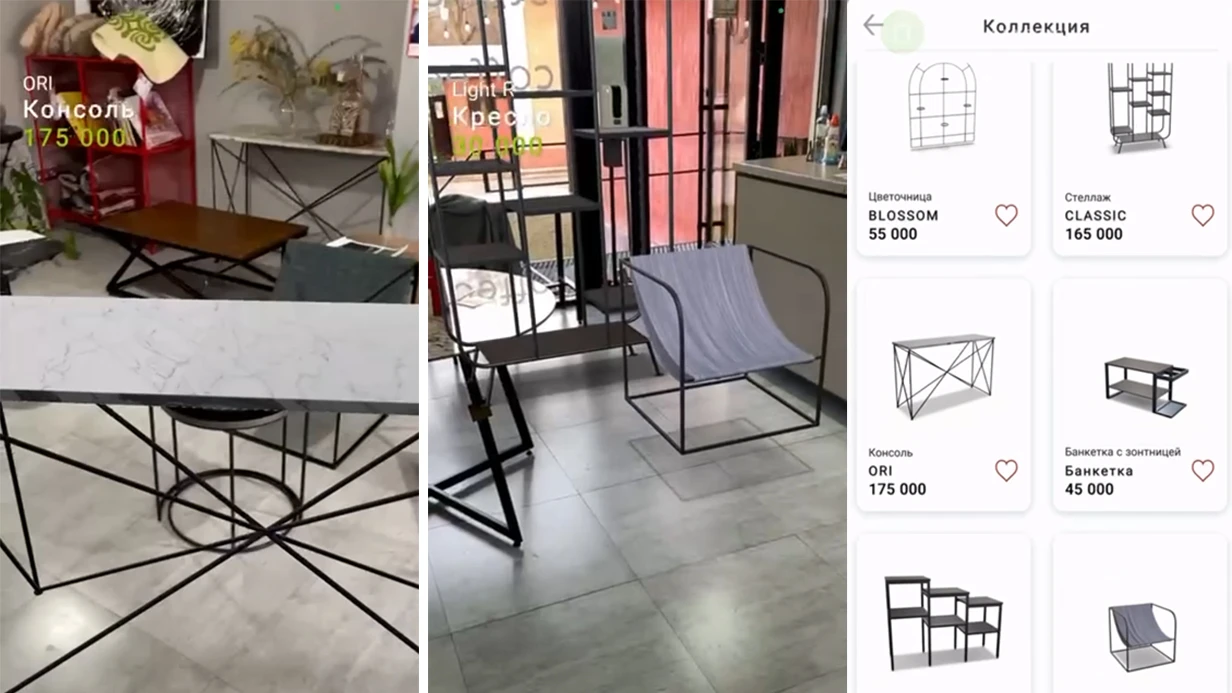
Augmented reality makes information visual and memorable. The client points their smartphone at the page — and sees a 3D model of the product, a demonstration of how the service works, or the interior of a future project. It's an impression that can't be ignored.
Here's what this gives you:
- Increased response to proposals. An "animated" page holds attention 2–3 times longer than ordinary print. The client reads the proposal to the end, returns to it, and is more likely to initiate a meeting.
- Memorability. A striking AR effect creates an emotional anchor. Your proposal will surface in the client's memory even a week later — when they're making their decision.
- Interactivity. The client controls the content themselves: rotates the model, opens the catalog, watches video demos. This way they dive deeper into your product and grasp its value faster.
- Brand recognition. An innovative presentation sets you apart from competitors. People tell their colleagues about proposals like this — organic reach grows and the image of a tech-savvy partner takes shape.
We have been creating VR and AR installations for events, museums, and brands for over 10 years. During this time, we've accumulated experience that helps us build proposals that actually sell. Tell us about your task — we'll suggest a solution tailored to your product and budget.
AR Printing Formats for Commercial Proposals
An ordinary commercial proposal can easily get lost among dozens of similar emails and brochures. AR printing turns the document into an interactive tool: point the camera at the page — and it "comes to life": a video, 3D model, presentation, or website link appears. The client remembers this brand encounter instead of just flipping through paper.
The format is matched to the specific task — from a brief introduction to an in-depth product presentation. Below are the main options.
Comparison of AR Printing Formats
| Format | Who It's For | What It Delivers to the Client |
|---|---|---|
| AR business cards | Top managers, sales departments | An impressive first encounter: the card launches a video greeting or portfolio, increasing the chance the contact gets saved |
| AR brochures | Companies with a broad range of services | Visually demonstrates the product in action, cutting down explanation time and boosting interest in details |
| AR catalogs | Manufacturers, distributors | Let customers view a product from all angles, in an interior, or in operation — the client makes a purchase decision faster |
Each format works toward one goal — strengthening the perception of your proposal.
A business card solves the task of "remembering the contact," a brochure — "telling about the company," and a catalog — "selling the product without a manager present."
Importantly, nothing needs to be installed to view the content: everything works through the standard smartphone camera. This removes the barrier for the client and makes the format convenient for mailings, meetings, and exhibitions.
You get not just paper, but a communication channel measured in real actions — clicks, video views, and requests for follow-up.
Stages of AR Printing Development
Each stage of AR printing development is structured so you understand what's happening at every step and what result you're getting. We document agreements, align on key milestones, and don't take unnecessary revisions — only the ones needed for a good result.
- Brief and immersion in the task. We learn which industry the printing is needed for, who your audience is, and what scenario should come to life when the camera is pointed at the page. This helps us propose a solution that works toward your goal — from increasing brand awareness to growing conversion.
- Developing the plan and cost estimate. Based on the brief, we prepare the concept, a list of materials, and timelines. We document what you'll receive and when, so every detail is transparent.
- Design and layout preparation. We create the design for the printed materials and embed AR markers into it so they don't interfere with the experience. At this stage, you see how the printing will look in your client's hands.
- Review and revisions. We show an interactive prototype: you point the camera at the layout and see how the AR works. You give feedback, we make changes — up to two iterations are included in the cost.
- Handoff to print and launch. After the final version is approved, we transfer the files to a print shop or send them for printing if you ordered through us. Each batch goes through a test scan check to ensure the result works consistently across all print runs.
- Support after the print run. We help with setup, answer questions from your staff and clients, and update AR content as needed — for example, changing a promotion or adding a new block.
In the end, you get working AR printing with a clear process: from brief to finished print run. No surprises — just agreed-upon stages, clear timelines, and content that comes to life right before your clients' eyes.
What's Included in the AR Printing Package
When you order AR printing for commercial proposals, you don't get "bare" technology — you get a complete, ready-to-use package. We hand over everything needed to launch the project: from configured layouts to instructions for your managers. You won't have to figure anything out on your own or look for outside contractors.
The package includes the following elements:
- Ready AR layouts — files of your printed materials (commercial proposals, brochures, catalogs) already marked up and configured for recognition. They can be sent straight to print or used in mailings.
- Branded AR application — works on major smartphone models and requires no special skills from the client. The app downloads in a minute and shows a 3D model, video, or presentation right on the proposal page.
- Instructions and cheat sheets — short documents for your managers and clients: how to open the AR, what to do if the camera doesn't work. This saves you from dozens of repetitive questions.
- AR scene source files — editable files where you can change prices, photos, and texts. Your designer can update content on their own without waiting in our queue.
- Project results report — analytics on downloads, activations, viewing time, and repeat launches. You'll see which proposal pages interested clients.
- Launch support — a direct contact with an engineer who will help if something won't open on a specific device or urgent edits are needed before sending.
- Application updates — for an agreed period, we monitor compatibility with current mobile OS versions and update the app at no additional cost.
Case Study: How AR Printing Increased Response by 40%
The company PromTech, an industrial equipment supplier, came to us with an unusual problem: their sales department prepared technically strong commercial proposals, but response was weak.
Potential customers downloaded the PDF, skimmed a couple of screens, and drifted away — the information was complex and static. Managers sent out over a hundred proposals a month but got only a handful of replies.
We suggested turning the paper proposal into an AR installation.
We added a hidden marker to the brochure — any employee of the client could point their smartphone at the page and "bring the product to life": the 3D model rotated, details and materials could be examined up close, and an embedded video explained the key advantages in 30 seconds.
For sales managers, it looked like an unconventional and valuable tool; for their clients, it felt like respect for their time. This format worked well for complex equipment that's hard to describe in words.
The result exceeded expectations within a month: response to commercial proposals grew by 40%, the number of initial meetings doubled, and several clients noted that the interactivity helped them make a decision faster.
The managers themselves started using tablets during presentations — they no longer just talked about the product, they showed it in full volume. The conversion growth held even after the test period ended — the company began using AR in all new price lists.
The key takeaway from this case: AR printing isn't a decorative "gimmick" — it's a working tool for increasing conversion. A commercial proposal stops being a faceless file and becomes part of a dialogue with the client.
We used standard markers and professional equipment, so the launch took five days, and the brochure itself looks no different from an ordinary one — all the magic happens through the smartphone camera.
This experience shows: even a single line that says "point your camera" can change a client's attitude toward your proposal.
Frequently Asked Questions About AR Printing
Clients often hesitate before adding an AR layer to printed materials: is it complicated to produce, will every client figure out the link, and what happens if the content becomes outdated.
We've gathered answers to the main questions so you can see: AR printing is a working tool, not a risky experiment.
All the solutions we offer have already been proven in real campaigns. Below are typical concerns and how they're resolved in practice.
How difficult is it to create AR printing? Will it take a lot of time?
On our side, the entire process fits into 3–5 business days: you send a ready layout or an idea, we add the AR layer and configure the interaction scenario.
You don't need to understand the technology — we handle the entire technical side and provide clear instructions for your team.
To launch it, all the client needs is a regular smartphone — no additional apps required. A link or QR code on the layout leads to our server, where the content is hosted. You get a finished product — the only thing left is to print the run.
Will AR work on all devices? What if the client has an old phone?
AR printing uses the smartphone's regular camera and browser — that's enough on almost any device from recent years. We deliberately don't tie ourselves to a single platform so we can reach the widest possible audience.
Additionally, we verify compatibility on several popular models and operating systems before launch. For the client, it means: open, point the camera — and get the desired effect, no fuss.
What if the content in the brochure becomes outdated? Do we reprint the whole run?
This is the main advantage of AR printing: you can change videos, promotions, prices, and even the entire scenario — without reprinting. Just update the content on our side, and the next time someone scans it, the client will see the new version.
This is convenient when preparing a long-term campaign or when you want to test different offers. The same printed catalog keeps working for months while you respond to the market in real time.
How do we know AR is working? Can effectiveness be measured?
We connect analytics: you can see how many people scanned, at what time, how many times they returned to the content, and which sections they viewed longer. This data helps assess interest in a specific offer and adjust strategy in time.
For the marketing department, this is transparent statistics that shows the ROI of promotional materials. You don't have to guess whether the printed materials worked — you see the numbers and understand what to improve in the next campaign.
How to Choose the Right AR Printing Format for Your Task?
When the question of which AR printing format to choose comes up, many clients look for "the one" universal option.
In practice, the right choice depends on three parameters: what task the commercial proposal needs to accomplish, who will be reviewing it, and what budget is allocated for printing and augmented reality.
Start with the goal.
If your task is to instantly capture attention and stand out among a dozen similar documents, a single striking AR element on the title page is enough: the logo "comes to life," and within 15 seconds the recipient sees the key product in full volume.
If the goal is to showcase a product line or demonstrate a complex solution in action, it makes more sense to create several AR scenes on different pages so each part of the proposal works with its own material.
The second factor is the audience. For a business owner or top executive, a quick result with no extra steps matters most: open the camera, point it at the page, get the story.
For a technical specialist or procurement officer, you can add detailed interactive diagrams, 3D breakdowns of the device, and hidden layers with specifications.
Base your choice on what the recipient will find easier to absorb: a short visual takeaway or an in-depth study of the parameters.
Budget determines the scope — but not in the way that seems obvious. With a small budget, you can cover the task of a single AR object on an enclosed card — that's often enough to boost response to a mailing.
A larger budget allows for personalization: for example, different AR content variants for different recipients and tracking which scenes were viewed most often. In any case, it's best to start with a pilot project: one format, one audience, a measurable result.
The main benchmark isn't the amount of technology — it's the recipient's behavior after engaging with the proposal. If, after viewing an augmented reality card, the recipient visited the website, returned to the email, or requested a call back — the format was chosen correctly.
Order AR Printing Development
A commercial proposal often loses at the first-impression stage: the client flips through the pages without pausing and sets it aside.
AR printing changes this: all they need to do is point their smartphone camera at the page — and a video, 3D model, or animated diagram comes to life on it.
This format holds attention 2–3 times longer and stays in memory, which means your proposal is much more likely to be reviewed to the end.
Here's what's included in the development process when you decide to order AR printing from us:
- We overlay an AR marker on your existing brochure or catalog design — no need to redo the original layout.
- We prepare an interactive scenario: video, presentation, photo gallery, 3D model, or a combination of formats — matched to the goal of the proposal.
- It works on a regular smartphone through the browser: your clients don't need to install or register for anything.
- We create a short user guide and train your managers to present such printed materials effectively.
- We test the scenario on several devices before printing the run, so nothing freezes at the most critical moment.
- After the print run, AR content can be changed without reprinting: updated a price or added a new video — old brochures become relevant again.
We've done such projects for events, museums, and brands, so we guarantee not "raw technology" but a working sales tool. You'll receive a sample before final payment and support at every stage — from concept to implementation.
To order AR printing, simply submit a request for a consultation. We'll discuss your task, suggest ideas, and calculate the cost after audit — with no obligation on your part. If you already have a layout — bring it in, and we'll show you how it comes to life with a test example.