



Why do direct mail materials lose response?
Direct mail still remains one of the most personal communication channels: unlike messenger spam, a paper letter is held in hand. But here lies the paradox — the more such letters arrive, the faster they end up unopened in the trash.
A static catalog or flyer gives no reason to pause and explore the offer, so response to direct mail declines year after year.
Business pays for printing, envelopes, and delivery, while the recipient spends three seconds on the letter — and the decision is made.
The average response rate for a regular mailing stays low even when the offer is attractive, because the digital environment fully consumes attention. Paper without interactivity loses to the screen, where everything moves and reacts to touch. This leaves the company without potential clients, and the campaign budget does not pay off.
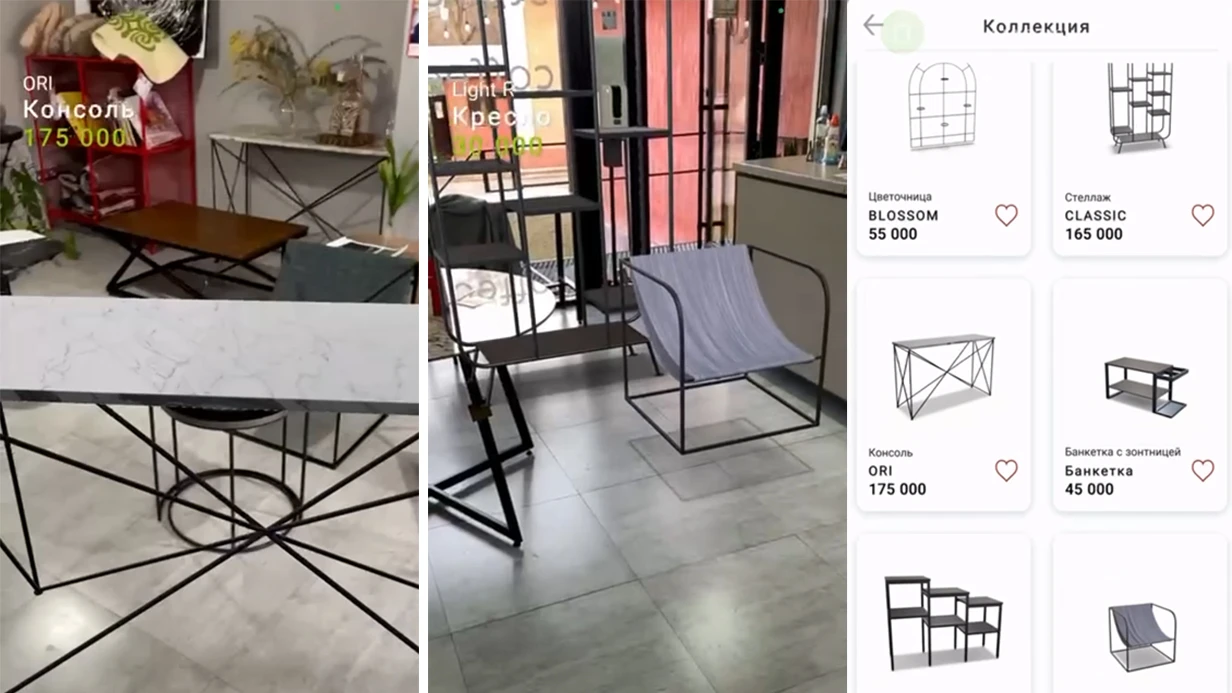
The way out is not to abandon paper but to strengthen it with digital capabilities. AR in direct mail turns an ordinary catalog into an interactive letter: point the camera at a page — and you see the product in volume, a promo video, or a "Buy in one click" button.
We help brands create such materials since the time when examples like the IKEA catalog were only proving the viability of the format. Today it is already a working tool that restores to direct mail its role as a channel delivering measurable results.
What results adding AR and VR to customer communication brings
Direct mail stops being a "letter to nowhere" when an AR layer is built into it. The recipient points their smartphone camera at the page — and sees a 3D product, a video invitation, or an interactive instruction.
At our team we use this mechanism to turn an ordinary envelope into a point of contact that people remember.
What changes for your marketing
Instead of a utilitarian "read and throw away," the client gets an impression. Such an experience begs to be shown to colleagues and friends — which means the brand gets discussed beyond the original mailing.
Brand recognition grows without additional advertising budget: every recipient becomes a voluntary ambassador of your message.
Every scan is a measurable action. You know exactly who opened the letter, got interested in the product, and is ready for a conversation.
Unlike classic mailings where response is hard to track, AR provides a transparent funnel: from the first touch to contact with a sales manager.
In our projects, AR boosts response to mail materials by 1.5–2 times. The interactive element holds attention on average a minute longer than text or a static image. For B2B this means more scheduled meetings; for B2C, more leads and repeat purchases.
Implementation does not require changing production processes: we adapt your layouts and connect analytics. You get a tool that pays off through increased conversion and a lower cost of repeated customer touchpoints.
VR and AR installation formats for event or brand tasks
Each VR and AR installation format works toward its own goal: one draws a crowd to a booth, another makes people open a mailing envelope, a third creates content for social media.
We choose a format not "for show" but for the specific goal of the event and the brand's audience, so you pay for the result rather than for a flashy picture.
Below are the main formats we develop. The table helps you choose a suitable option even before the brief: you only need to understand what response you want to get from guests or clients.
| Format | For whom / which task | What it gives the client |
|---|---|---|
| VR installation (immersion into virtual reality) | Product presentations, training, corporate events, exhibitions | A strong impression, full immersion into the brand, high engagement, and a memorable experience people talk about after the event |
| AR mask (augmented reality on social media) | Brands working with audiences online and at offline venues | Viral reach: guests share content with their followers, brand recognition grows without extra ad spend |
| AR print — "living" direct mail materials | Postcards, catalogs, branded gifts, promo packages | The client points their smartphone and sees a 3D product presentation, a video invitation, or a promo code — response to the mailing is noticeably higher than with regular letters |
| Interactive installation for a museum or showroom | Museums, exhibitions, exhibition zones, retail spaces | The visitor becomes part of the story, spends more time in the space, and comes back — this increases loyalty and collects contacts |
We help choose the format and adapt it to the venue, budget, and audience expectations. If you are not sure what suits you, we start with a short brief and offer 2–3 options with expected results for each.
How installation development works: the process for the client
We structured the development process so the client understands what happens at each stage and when the result will be delivered. Below are the six steps a client goes through: from the first brief to support on the day of the event and after it.
- Brief and task. We meet and discuss goals: what the audience should feel, how the installation strengthens the brand, which venues and formats fit. We ask questions and propose our own ideas because we often see solutions the client misses.
- Concept and estimate. We offer several implementation options — from idea to visual style. We show what the installation will look like and fix the timeline and cost. You make a decision without unexpected expenses.
- Layout approval. We prepare layouts and scenarios for all elements — screens, scenery, and, if the project includes AR print, for printed materials too. You make edits, we incorporate them quickly, and we arrive at the final version.
- Implementation. Our team creates content, configures equipment, and assembles intermediate versions. We do not disappear at this stage: we send materials for the client to review and make changes promptly.
- Test and launch. We go to the venue, test the installation in real conditions, and run a rehearsal. On the day of the event everything is already ready to work — all you have to do is host guests instead of worrying about tech.
- Support and maintenance. We stay in touch until the end of the event and after it. If any refinement is needed or something changes, we respond quickly. Warranty maintenance is included in the cost.
What's included in delivery: the kit for launch and support
The delivery is not just a "box" with an installation but a complete kit for launch and ongoing support. You get a solution you can use in mailing right away: a living postcard or catalog, an entry point for the client, and a clear instruction for your team.
Here is exactly what you receive:
- Installation kit: all necessary equipment, materials, and markers are already assembled, configured, and ready for placement.
- Interaction scenario: we design how the client scans the material and what they see — a video, a 3D model, or an interactive showcase.
- Design and layout of AR print: we adapt it to your brand and the format of the letter, postcard, or catalog.
- Ready application or web page with augmented reality: no complicated installation — the user opens a link or scans a marker.
- Staff training: your marketing and support team gets a short guide on how to answer client questions and what to do in case of failures.
- Warranty on equipment and software: a fixed period during which we fix issues free of charge.
- Tech support after launch: available during business hours, helping with updates and refinements.
- Post-analytics: we count scans, viewing time, and repeat visits so you can see the effect of the mailing.
These items cover the client's main risks: a process the staff does not understand, a failure at the most critical moment, and the absence of a measurable result.
You get not an abstract technology but a working tool that launches in a few days and is easily integrated into current campaigns.
Case study: interactive installation increased response to a mailing
Direct mail competes with dozens of phone notifications, so an ordinary catalog or letter gets thrown away more and more often.
We suggested the client make their mailing materials interactive: pointing a smartphone camera at a printed page brought the product layout to life as a 3D scene. That is how the client gets a brand touch that cannot be ignored.
Project example
One of our clients — a manufacturer of premium technology — asked us to restore interest in their seasonal mailing. In three weeks we produced AR print: every product category in the catalog was supplemented with an interactive demonstration.
We also prepared a VR installation for the exhibition where catalog recipients were invited, so the acquaintance could continue in person.
The result was measured not in "print runs" but in business metrics. Response to the mailing grew 2.5 times, and 38% of those who moved on to the client's website visited a specific product page — last season no more than 15% did. The work took three weeks: one for the concept and two for production and integration.
Client feedback: "We expected a 30–40% response lift, but we got several times more.
The most valuable part is the depth of contact: clients didn't just open the letter — they examined the product in 3D and remembered the brand weeks after the mailing." Since then the client has ordered interactive mechanics from us for every season — and that is the best proof that the technology works for their business.
How to choose the right installation format for your business task?
No format is universal — the choice is determined by two things: what reaction you want to get from the client and under what conditions they will meet the installation.
If the task is to hold attention for several minutes and fully immerse someone in the brand's world, virtual reality is a good fit. If you need to enrich a real object with digital details that can be examined and changed — augmented reality.
For direct mail materials, AR print is the optimal choice: it requires no special space or equipment and works wherever a person already is — at home, in the office, on the go.
Use three criteria as your guide: where the recipient is, how much time they are willing to give, and what action they should take after the contact. Full VR immersion typically lasts 5–10 minutes and works best at events where the guest is in no hurry.
AR print gives an instant result: open the envelope, point the smartphone camera — and get a video message, a 3D product model, or an invitation to the next step. This format solves the main problem of paper mailings — being overlooked.
For mail materials, it is essential that the recipient does not have to install anything or even search for anything. Just point the camera — and the digital layer appears on top of the paper medium.
This lets you track the real return: you see who opened the letter, who watched the video to the end, who moved to the website.
For business communication this approach delivers clear measurable value and, on top of that, surprises — an ordinary catalog or booklet becomes an interactive sales tool.
The conclusion is simple: if you need a sense of presence and a strong emotion, choose VR. If you need to connect a physical medium with digital capabilities and get a measurable response to a specific letter or catalog, choose AR.
For direct mail, AR print is almost always the right answer: it has a low entry barrier for the recipient, high brand recognition, and transparent analytics for you.
Frequently asked questions and client concerns before launch
Before starting a VR/AR project, clients often hesitate: isn't it complicated, isn't it too expensive, how fast will it pay off, and what happens with the equipment? Especially when it comes to AR print for direct mail materials. Here we answer the main concerns in order.
How difficult is it to integrate AR into printed materials?
The recipient does not need to install anything: they simply point their smartphone camera at a postcard or booklet and see an animation, video, or 3D object.
We handle the technical part — we select the format for the print run, prepare the interactive content, and test it on different devices so everything works reliably.
How quickly does AR print pay off?
A regular mailing piece gets opened, skimmed, and forgotten. An AR element holds attention 2–3 times longer: the recipient doesn't just read but interacts with the brand.
At the same time, you see the real number of views and clicks — the effectiveness is clear, not measured "by eye."
What if the technology doesn't work for the recipient?
We always plan a fallback scenario: if the camera cannot focus or the device is weak, the person still sees the key text and the offer. AR enhances the material but does not replace it, so the part of the audience with technical limitations is not lost.
Is the installation safe and what about deadlines?
For events we use equipment with protection against drops and overheating, and all mountings are checked before the start. For print materials the process is regulated: it usually takes 5–7 business days, we fix the dates in the contract and keep you informed at every stage.
Order the development of a VR/AR installation for your project
Leave a request for development — we will contact you within one business day, clarify the task, and prepare a cost calculation.
You will receive not an abstract commercial estimate but a clear plan: which format is justified, what can be completed by your date, and how the installation will perform for your target audience.
A museum needs one solution, a conference needs another, and we will advise which option will work better.
From there everything follows a transparent schedule: you can see what stage the project is at and what is required from your side.
- AR and VR consultation: we analyze the task, the audience, and venue constraints to propose a working format rather than an "expensive booth."
- Cost and timeline calculation: we fix the estimate and milestones before launch so you understand the budget and control points.
- Concept and scenario: we show how a visitor interacts with the installation — from the first glance to a keepsake photo.
- Approval and launch: we incorporate edits, prepare professional equipment, and complete the setup exactly by the date.
- On-site support: our specialists stay nearby so everything works from opening to the final moment.
- Report and recommendations: we record reach and visitor behavior and suggest how to use the experience going forward.
To order a VR installation for an event, museum, or promo campaign, fill in the form below or message us.
You will get an AR and VR consultation at a convenient time, a cost calculation with no hidden extras, and a team that takes responsibility for the result from task to final check.
We work remotely and on in-person projects across the country — we will discuss the format during the first conversation.