



Problem: No One Reads Safety Passport Instructions
A safety passport at the registration desk almost always looks like a mandatory formality: thick paper, fine print, dozens of items.
In the first minutes of an event, a guest does not read instructions — they look around, trying to find where to go, who to talk to, whether they will make it to the program.
Even if someone picks up the passport, their eyes skim the pages looking for the main point — and never find it. The most important message about safe behavior goes unheard.
Low engagement turns into loss of trust in the brand, and then loss of customers. A visitor who could not quickly get answers to their questions leaves with a feeling of “I wasn’t warned” — and shares this impression with others.
Such dissatisfaction is rarely voiced out loud at the venue, but it is projected onto the entire company: guests return less often, are less likely to recommend the event to colleagues, and partners notice the audience’s coolness.
Paper safety passports begin to work against you — instead of protecting people and reputation, they create a barrier between the brand and the customer. In the events industry, these small details directly affect repeat bookings and long-term contracts.
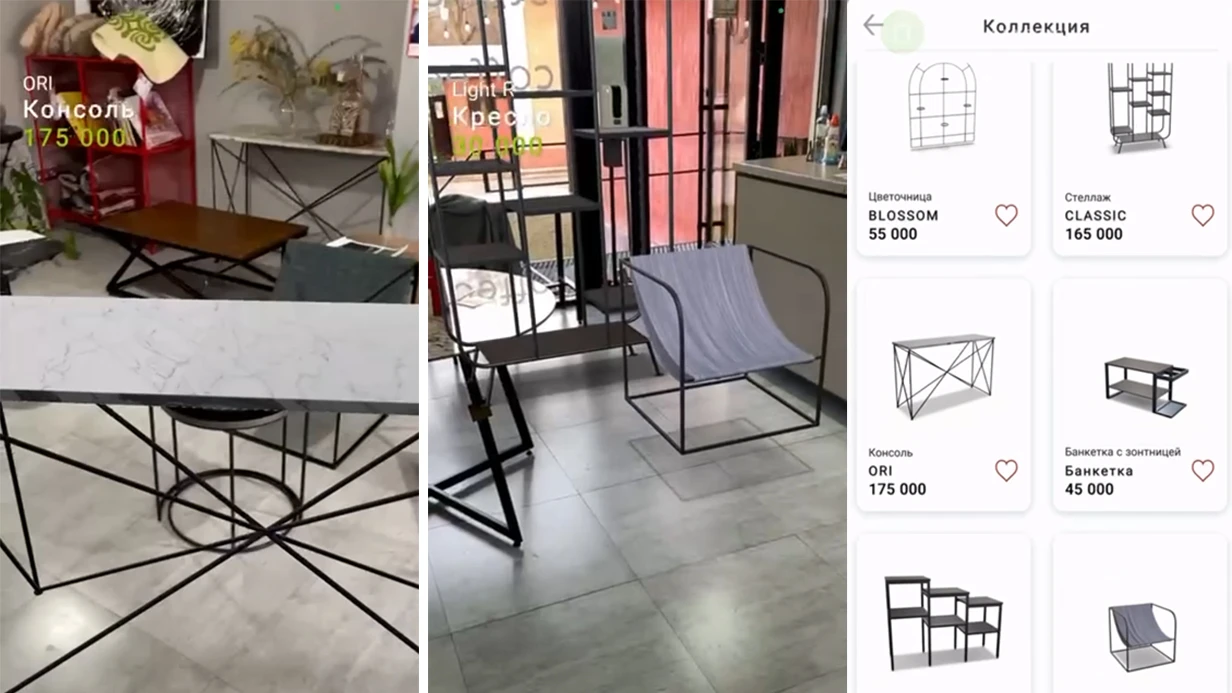
We solve this problem with AR printing: an ordinary passport becomes an interactive guide. The visitor points their smartphone camera at a page and sees a short video with key rules, an evacuation diagram and answers to frequently asked questions in a convenient format.
No need to search through sections — information appears before their eyes within seconds. Anxiety levels drop, the guest feels cared for, and the brand is remembered as modern and responsible.
What Interactive Print Brings to Business
Ordinary print is static — it’s read and forgotten. Interactive print comes alive when a smartphone is pointed at it and turns a leaflet or a safety passport into a dialogue with the customer. Our team build such turnkey solutions that deliver measurable value.
Increased Brand Awareness
Advertising that people want to show is memorable. The client records a video and shares it on social media — the brand gets free reach beyond the print run. The more such touchpoints, the higher the awareness.
Lead Generation
Interactivity helps capture the contact: a person scans an element, leaves a request and receives a promo code. Every handed-out copy starts working for sales, even when the manager is no longer at the table.
Audience Engagement
Instead of reading — action. The visitor stays longer with the material, goes deeper into the message. For a safety passport, this is a quick way to show an evacuation diagram or instructions without reading a long text.
Product Trust
A modern presentation raises the value of the product in the eyes of clients and partners. This is especially important for corporate customers and when working with tenders.
This is how interactive print serves the main goals of business: awareness, leads and trust. Every print run pays off not only through printing, but through real responses.
AR Print Formats for Safety Passports
A safety passport at an event or in a museum exhibition usually exists only formally: it is kept at a stand, but guests and even staff rarely look into it.
AR printing turns this document into a living tool: point the camera at a page — and you get a route map, a video instruction or a 3D model. The format is easy to match to the client’s task: from a large event to an exhibition hall.
Below is a comparison of AR print formats with typical usage scenarios.
| AR format | For whom | What it gives the client |
|---|---|---|
| AR sticker on the passport cover | Event organizers | Visitors and staff find what they need faster: program, evacuation diagram, contact of the responsible person — everything comes alive from a smartphone camera |
| AR insert in the exhibit passport | Museum exhibitions | The visitor sees a reconstruction, video and history of the object — this adds depth to the experience and increases time at the stand |
| AR page in a brand catalog | Marketing departments and brand owners | Printed material turns into an interactive presentation: product demonstration, promo video, repeated contact with the audience |
| AR poster with safety requirements | Maintenance and security services | Instructions don’t get swept into a drawer: point the camera and see emergency measures, responsible people and verification checklists |
Each format is implemented with the specifics of the venue in mind: for large-scale events, scanning speed and simplicity matter; for museum exhibitions, content depth and aesthetics matter; for brands, measurable audience response matters.
We select the right type of AR print for your task, and the safety passport stops being a mere formality — it becomes a point of contact with guests and staff.
How AR Print Development Works
AR print development is a transparent process of seven stages: from brief to launch and support. You control the timeline and see intermediate results, so the outcome always matches expectations.
- Brief. We define the task, audience and desired result: an animated postcard, a sticker with video, or a label with a 3D model.
- Analysis and estimate. We choose the format, print run and budget. You receive an accurate commercial proposal with no hidden payments.
- Design and prototype. We create a layout and a working AR scenario — you see it in your smartphone camera before printing.
- Approval. We make corrections and approve the final version of the layout and content.
- Production. We print the run on professional equipment and prepare the AR scene in parallel.
- Testing. We check the launch on different devices and under different lighting conditions to avoid failures during the event.
- Launch and support. We hand over the products, instructions and QR codes. After launch, we update content free of charge if necessary.
What Is Included in the AR Solution Delivery
The delivery package is designed so that you get a working solution — with no finishing touches needed. We assemble AR safety passports for your format: from design to technical support.
Everything is included in the price and forms a single system for quick launch and ongoing maintenance.
- Passport layouts. We design layouts with zones for AR markers, adapted for printing. You send the files to the print house and receive a print run ready to come alive. We add variants for different departments.
- Mobile application. A branded application or a module inside your corporate application. An employee points the camera at the passport — and sees instructions, a diagram or a video. No special skills required.
- AR content. Interactive instructions, 3D diagrams, animations and pop-up hints. Content is created for your safety scenarios and can be updated after launch.
- Instructions for staff. Short memos and video guides on usage. From day one, your team knows how to scan the passport and what will appear when pointing the camera.
- Support package. Setup, testing and support at launch. We stay in touch after launch, answer questions and help resolve technical issues.
- Content updates. If instructions or regulations change, we update scenes and content. Passports stay relevant without reprinting the run.
- Training launch. We help implement the solution and hold an explanatory session for the team. You get a working tool that employees actually use.
Case Study: 3× Engagement Growth After AR Implementation
For the machine-building holding UralEnergomash, we created an AR installation based on equipment safety passports.
Nobody read the ordinary paper instructions at the stand, so we turned the passport into an interactive point: a guest pointed their smartphone camera at a page, and a 3D model of the equipment with risk zones and operating rules appeared in front of them.
Without a manager or a presentation, a person understood in a couple of minutes how the product worked and why it was safe.
The result appeared on the very first day of the exhibition: time spent at the stand increased threefold. Visitors who previously stopped for 40 seconds to take a brochure now studied the model for 3–5 minutes, asked specific questions and came back with colleagues.
Contacts were collected automatically at the moment of scanning, so managers did not waste time collecting business cards and immediately discussed client tasks.
What the Client Got
The holding’s stand became a center of attraction, even though neighboring exhibitors used classic roll-ups and screens.
Over two days, the passports were scanned more than a thousand times, and 47 requests from engineers and procurement specialists were passed to the sales department. A month later, the company came back to us for an AR print run of passports for its own training center.
Implementing AR in printed documentation removes the barrier between “instruction” and “demonstration”. The visitor interacts with the material themselves, and the client gets measurable statistics: how many people viewed it, which sections were opened, and for which models.
For a marketing director, this is ready-made data for a report to management: reach, depth of interest, requests.
Frequently Asked Questions About AR Print Development
We understand clients’ doubts: new technology, new questions. We answer the main ones — ease of use, budget, timelines and reliability.
our team has been working with AR print for more than 10 years, so every scenario has already been tested across dozens of projects in different industries.
Employees and visitors won’t figure it out — is it complicated?
Quite the opposite: a person simply points their smartphone camera at a passport page — and the content comes alive automatically. No software or instructions needed; everything works through a regular browser. One test page is enough to get familiar with the mechanic, and we provide a short memo for users.
How much does development cost, and will it blow the budget?
The cost depends on the volume of content and augmented reality scenarios. We select a solution to fit the budget: from a simple activation for one page to a full interactive instruction.
The investment pays off through increased engagement — employees read materials more often, and clients and partners remember the brand.
What are the implementation timelines?
A standard project takes one to three weeks. In parallel with AR content development, you can send the print run to the printer, so the final launch is not delayed. Urgent tasks are done in a few days if the layouts are already ready.
What about guarantees and support after launch?
Before delivery, we test activations on different phone models and operating systems so that the result is stable for all users. After launch, we stay in touch: we fix links, update content and help with integration. Technical support is included in the cost of the first month of operation.
If you want to address these questions in detail — show us an example of your passport, and we will send you a cost and timeline estimate for your format.Leave a Request — We Will Calculate Your Project in 1 Day
A safety passport is a document that should be clear and accessible. In practice, however, paper instructions gather dust in folders, and employees never have time to figure out diagrams and algorithms.
AR printing solves this problem: point your smartphone camera at a page — and you get a video, a visual sequence of actions, contacts of the responsible person.
Such a document ceases to be a formality and really helps people, while also highlighting the company’s care about safety.
To launch this at your company, you don’t need to spend a long time approving a technical specification. Leave a request for a cost estimate — within one day we will prepare a transparent budget, show print run options and give you timelines. You will understand the costs before discussing details, with no hidden payments or surprises.
What getting an estimate gives you:
- An estimate tied to your layout — you see what you are paying for and can simplify the project if necessary.
- Calculations for different print runs — from a few copies to mass printing, so you can choose the optimal budget.
- Timelines fixed in the contract — we take on obligations and are responsible for the result.
- Examples of projects for your industry — we show how AR brings safety passports to life at similar facilities.
- Format recommendations — we advise which pages to make interactive and which to leave static.
- Post-implementation support — we help update content or add new scenarios when regulations change.
To get an estimate, contact us in any convenient way: write to us in a messenger, submit a request through the form on the website, or simply call. It is enough to send your current safety passport or describe the task in words — that is sufficient for a preliminary estimate. By tomorrow, you will know the cost of the project and a concrete action plan.
How to Choose an AR Print Format for Your Task?
Choosing an AR print format for safety passports starts not with technology, but with two questions: who will use the document and under what conditions. If it is exhibition visitors, they need instant response, a clear visual cue and launch without training.
If it is warehouse or production staff, reliability, offline access and scenario repeatability come to the fore.
The second step is to understand what outcome you are aiming for. A single-layer AR overlay shows a short video instruction in 30 seconds and works well for audience engagement.
A safety passport more often requires a multi-step scenario: step-by-step actions, understanding checks, and the ability to return to a complex block. Such scenarios reduce the risk of errors, which means they save time and protect people.
The third criterion is user preparation. A museum guest will not read a long text; it is enough for them to point the camera and see an animation.
An employee, on the other hand, is ready to spend a minute on an interactive briefing, but expects the material to remain available on any shift, including without the internet.
These differences affect the choice of layout format, the number of interaction points and the depth of content.
We help choose a format for a specific task and test it on a real audience before launch.
If you are not sure which option suits your safety passport, send us an example of the document — we will review the usage scenarios and suggest a solution that is easy to implement and scale.