

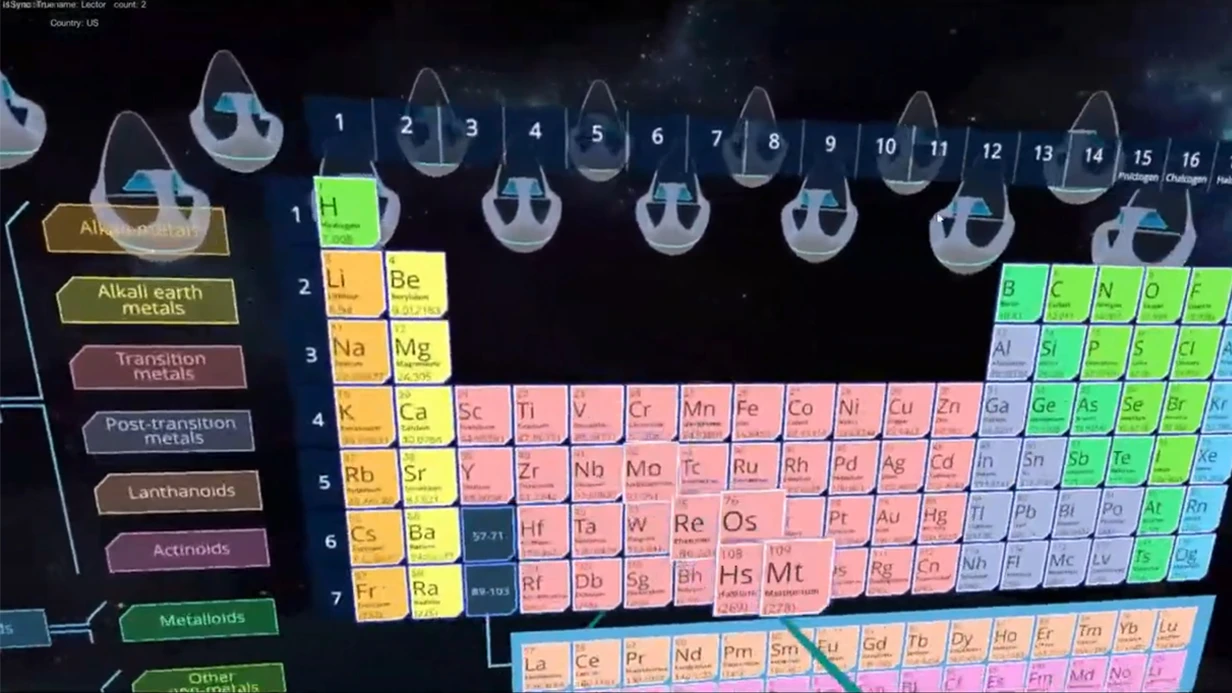


How AR print materials bring exhibition materials and showrooms to life
A visitor walks past a booth in a matter of seconds if nothing catches their eye. Static booklets and posters describe a product but don't show it in action — the information gets lost among dozens of other exhibits.
That's why traditional exhibition materials stop delivering results: they don't hold attention or create a dialogue with the brand.
AR print materials solve this problem by bringing exhibition materials to life. Simply point a smartphone camera at a banner, leaflet, or catalog — and an interactive 3D model, video presentation, or interactive product diagram unfolds in front of the customer.
An ordinary booth thus becomes an interactive showroom where each visitor discovers the product themselves instead of listening to a manager's long monologue.
For businesses, the benefit is measurable: visitors stay at the booth much longer, ask meaningful questions, and remember the company.
An interactive showroom makes it possible to showcase large products, the operation of complex devices, or interiors without a physical sample — as a result, conversion into contacts and sales grows right at the exhibition.
We help implement this scenario turnkey: from marker design to content setup. Your exhibition materials stop being just paper — they start building brand recognition and revenue even before a visitor reaches your counter.
3 key benefits of AR for your booth and showroom
At an exhibition, you have a few seconds to capture attention. AR interactivity turns those seconds into minutes of genuine interest. Our team builds such solutions for events, museums, and brands.
Visitor engagement: attention and emotions
When a visitor points a camera at a poster or catalog, the flat image comes to life: a 3D model, video, or mini-game appears. That stops them even in a heavy flow — people spend twice as much time at the booth.
Guests take photos and videos and share them on social media. The brand gets free reach that keeps working long after the event.
Lead generation: contacts without effort
AR interactivity gives you a reason to ask for contact details. To unlock the experience, visitors leave an email or subscribe in a messenger — you build a qualified base without aggressive forms.
You also see the guest's preferences: which product they explored, what they saved. This data lets sales follow up with a precise offer after the exhibition.
Brand image: modernity and innovation
AR solutions at the booth show that the company keeps up with the times. This builds trust and creates the image of a technology leader, especially among younger audiences.
Guests remember not just the logo but the interactive experience. When choosing among competitors, they're more likely to recall your brand.
AR print formats for different purposes
At exhibitions and showrooms, you have a few seconds to capture a visitor's attention. Ordinary booklets and posters get lost among dozens of distractions, while AR print stops the eye and turns interest into action.
A person points their phone camera at a sticker, catalog, or poster — and immediately gets a video, 3D model, or special offer.
We create three basic formats that cover different scenarios: quick contact at the booth, deep client engagement during negotiations, and impressive space design. The table shows who each option suits and what results it delivers.
| Format | For whom | What it gives the client |
|---|---|---|
| AR stickers | For handouts to visitors, badges, and business cards | The guest downloads nothing — a camera is all it takes; a presentation or game opens in seconds. The sticker acts like a magnet, increasing foot traffic to the booth. |
| AR catalogs | For managers at the exhibition and in follow-up meetings | An ordinary catalog comes to life: product video, testimonials, answers to questions appear. Clients browse 2-3 times longer and better remember the advantages. |
| AR posters | For display windows, showrooms, welcome zones | The poster comes to life and draws visitors. People gladly photograph the result and share it on social media — the booth gets extra reach without an advertising budget. |
There's no need to change the printing: the marker is placed on existing materials. We select a format for your task — from a single print run of stickers to a comprehensive AR element system for the entire exhibition product line.
How a project goes: from brief to launch
We structure the work so that you always know what's happening with the project and when results will appear. No black box: you receive intermediate versions on agreed dates, and the final launch follows a clear plan.
- Briefing and material audit — we discuss the task, venue, and expectations, and collect source materials: print layouts, exhibition description, zone photos. The output is a document with goals and success criteria.
- Concept and AR scene scenario — we propose how exactly the material will come to life: what the visitor will see, what actions they'll take, and how this relates to the product. You get a clear scenario description without technical details.
- Design and prototype — we create a visual look that fits your style and the event's atmosphere. You see what the result will look like before the main development begins.
- Review and revisions — we show the working version in your environment and make changes based on your feedback. At this stage, details are easy to adjust without losing budget.
- Technical preparation and testing — we configure marker recognition and adapt the scene to real conditions: lighting, camera distance, number of simultaneous users. We test on your device.
- Launch at the exhibition or showroom — we install the app, take the scene into production, and train your team. We stay in touch on the event day and are ready to quickly solve any problem.
This order helps avoid surprises: every stage has a clear deliverable and timeline. You know in advance when the first versions will appear and when everything will be ready for launch.
What you get in the end: the delivery package
You receive not "files" or "source files for the sake of source files," but a complete working package that can be used immediately at an exhibition or in a showroom.
Everything, from design mockups to a staff script, is organized in a single structure — this simplifies launch and eliminates "what do we do with this" questions on the event day.
Here's what's included in the delivery package:
- Ready-made AR print layouts — posters, leaflets, catalogs, and signs designed to match your corporate style. Just send the files to a print shop — and they're ready to print.
- Configured AR package for all copies — each layout is already linked to its own content: video, 3D model, animation, or interactive instruction. Staff don't need to "set up" anything before starting.
- Staff instructions — simple one-to-two-page cheat sheets: how to launch AR, which smartphones work, and what to tell visitors if the app doesn't work on the first try.
- Demo video for internal preparation — a 2-3 minute video showing what the live layout looks like in action. Send it to the staff chat or show it at the pre-opening meeting.
- Project source files — all working files remain yours. If you later want to update a video, replace a product, or add a new layout, you won't need to order development from scratch.
- Content update guide — a short step-by-step outline for replacing an image or text in the AR layer with your own designer. It's a 15-minute task, not a new tender.
Such a package covers the client's main risks: staff understand what to do; layouts look like part of the brand, not an "experiment with technology"; and after the exhibition you keep assets that work in the showroom, on the website, or in partner presentations. You don't need a technical specialist on staff — everything is ready to use from day one.
Case study: how we brought a catalog to life for an exhibition
For one of our clients — an industrial equipment supplier — the main goal at the exhibition was to keep visitors at the booth. The printed catalog was flipped through in 20 seconds and forgotten, and managers literally had to call people over.
We proposed turning the catalog into AR print: point a smartphone camera at a page and a 3D model of the machine with a control panel comes to life on it.
The solution took less than two weeks to prepare. We created interactive scenes for each important model and printed a run with augmented reality markers.
Visitors opened the catalog via a QR code right at the booth, without installing apps, and immediately interacted with the product.
Exhibition results
- Average time at the booth grew from 4 to 12 minutes — people explored the parameters in 3D instead of just skimming the text.
- The number of targeted inquiries on the first day equaled what previously came in during the entire exhibition. Over three days, we collected three times more contacts than planned.
- The catalog wasn't thrown away after the walkthrough — visitors took it with them, and it kept generating leads after the event ended.
The marketing director shared the outcome: "For the first time, we had a booth with a lineup.
People called their colleagues over to see the 'magic.' And most importantly, after the exhibition, managers spent a week sorting through the leads that came from that catalog."
Two months later, the client ordered similar AR print for the showroom and a corporate catalog for the next season. Now they come back with requests for new items, and we don't need to explain the value — the results speak for themselves.
What if I have specific requirements for exhibition materials?
Every other client comes with a ready-made layout and a set of standard solutions. But as soon as it comes to a non-standard booth, complex lighting, or materials that don't hold a marker, doubt arises: can the contractor handle this?
That's normal — most agencies force the task into their templates and call any custom format "impossible."
We work the other way around: we adapt the solution to your conditions, not the reverse. Over 10 years of projects for museums, showrooms, and industry exhibitions, we've created AR for round booths, glass display cases, ceilings, and flooring.
Non-standard AR print for exhibition materials and showrooms is our daily practice, not an exception.
The first step is not a quote but a conversation about your scenario. How many people pass by the booth, what lighting, what material formats — from business cards to curved banners? The AR format and marker application method depend on these inputs. Adaptation to requirements starts with precise inputs, so there will be many questions.
We'll make a prototype and test it at your booth or showroom: you'll see how AR behaves on the actual material, under which lighting, and from what distance. Only after that do we approve the final solution. We lock in the timeline and cost before launch — no surprises.
Send us a description of your inputs — we'll get back to you within a day with an implementation option. If the specifics are complex, we'll offer two or three approaches with different levels of depth and scope. Choose the one that fits your budget — we'll handle the rest.
Frequently asked questions about AR print
Before ordering AR print, clients most often ask the same things: will it work for visitors, how much does it cost, and who is responsible for the result. We answer directly — without technical details, only what matters for your decision.
Will AR work on guests' and visitors' smartphones?
Yes. We make sure visitors don't have to download or set up anything. Just point a smartphone camera at the image — and augmented reality launches right in the browser.
Compatible with most modern iOS and Android devices. Before delivering a project, we always test on different models, so you get a predictable result on the event day.
What guarantees are there if something fails at the peak of an event?
Guarantee is one of the key points of our work. We are responsible for the stability of the AR print for the entire period of use: from test printing to the end of the exhibition or event.
If a problem arises on the event day, we connect remotely within a short time and, if necessary, quickly come to the venue. You're never left alone with the technology.
How much does AR print development cost?
The cost depends on three things: print run, the number of AR markers, and content complexity. For example, a single interactive postcard and a full catalog with animation are different amounts of work.
We prepare a detailed estimate before starting, lock it in, and work without hidden fees. We provide the calculation within one day after the brief, so you immediately understand the budget.
What are the production timelines?
A standard project takes from five working days. This includes AR marker design, interactive development, device testing, and handing off finished materials to print.
If the event is close, we have an accelerated format — we'll find a solution that fits your timeline without sacrificing quality.
Order an AR installation for your event
Submitting a request means getting a ready-made plan, not just another email. We'll call you back within one business day, clarify the event's objectives, and propose an AR installation format that will enhance the guests' experience and deliver measurable results for your brand.
Cost calculation takes one or two days, and we'll show preliminary options before the contract is signed.
What you get after submitting a request:
- Personal consultation: we analyze the audience, scenario, touchpoints, and goals, so AR solves exactly your task.
- Transparent pricing: an estimate for your budget and event format — with no hidden costs for installation or equipment.
- Project examples for your industry: we show cases similar to your event, with reach and audience response.
- A clear implementation plan: timelines, stages, and those responsible for each block — from idea to on-site launch.
- An on-site specialist: preparation and support of the installation, so everything works flawlessly on the event day.
It's worth starting now: a quality AR installation takes time for ideation, rendering, and testing. The earlier we start, the more scenarios we can work through and the better the optimal solution we can propose.
Some of the preparatory work doesn't require your involvement — we'll coordinate only the key points.
Leave a request — and we'll send installation options with an approximate cost the very next business day. This is not binding, but it gives you the facts you need to decide and the opportunity to secure your event date.