



Customers Leave a Car Dealership Without Any Emotions
A visitor walks into a car dealership, circles a few cars, gets behind the wheel, listens to the sales manager — and leaves. An hour later, he won't remember the body color or the numbers in the specs.
That's what a typical visit looks like: no vivid impression, no reason to come back, no desire to tell friends about the brand.
And yet it's emotions that turn one-time attention into loyalty and repeat visits. When a buyer feels the thrill of a car, they're ready to talk about it, share the experience, and come back for a test drive.
The problem is that in a regular showroom, it's hard to convey a car's character — especially when it comes to speed, maneuverability, or the feeling of freedom.
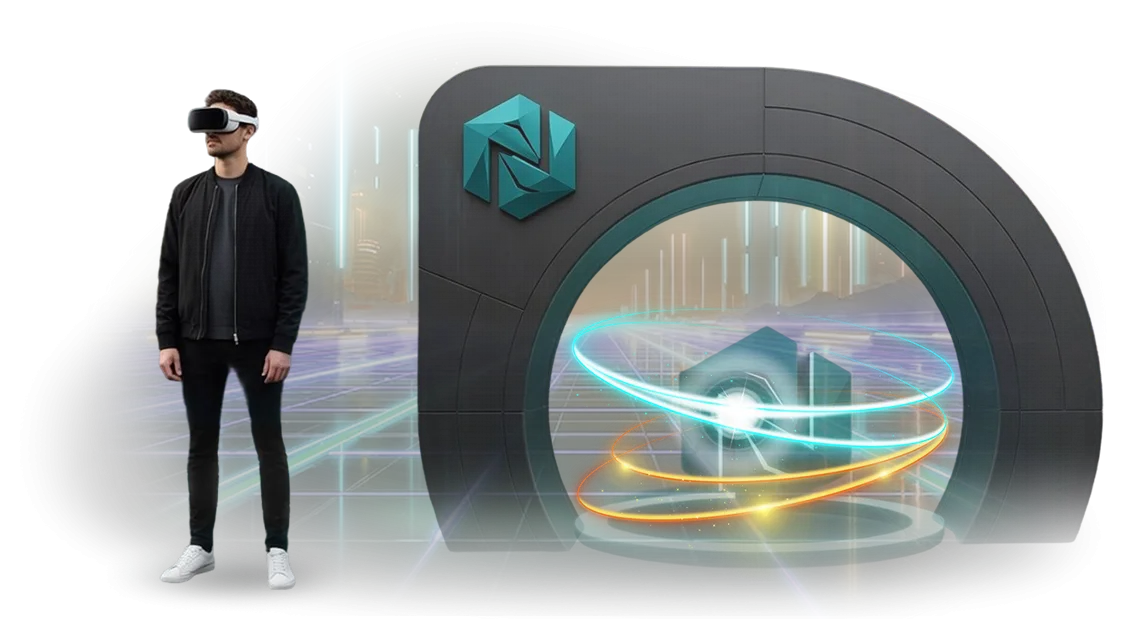
A VR stand solves this problem: in just a couple of minutes, the visitor finds themselves behind the wheel of a new car, experiences a scenario — from city streets to a racing circuit — and walks out with genuine emotions.
An interactive experience for a car dealership holds attention, creates a queue, and gives people a reason to linger. It's no longer just looking at a car, but a mini-journey that leaves a lasting memory.
We develop such VR installations to fit a car dealership's goals: attracting visitors, increasing visit duration, and creating a memorable brand image.
We tailor the scenario to the car model and the audience, and handle everything "turnkey" — from concept to launch on professional equipment. The dealership then gets a tool that delivers emotions to customers and pays for itself through growing brand interest.
What a VR Stand Gives a Dealership: 5 Measurable Benefits
A VR stand in a dealership is not a funfair attraction but a sales tool. It allows you to showcase cars that aren't yet in the showroom, lets buyers "sit" inside their favorite model, and helps collect contacts from interested customers.
The technology turns an ordinary visit into a memorable event that directly influences the purchase decision.
1. Brand Recognition and Image
A striking VR zone becomes a magnet for visitors and a natural photo spot. Guests share their impressions on social media, and your dealership's name gets free exposure among their followers — building a reputation as a modern, customer-focused dealer.
2. Contact Collection
To enter the virtual showroom, visitors leave their details. You get a database of warm leads — people who have already shown interest in your dealership and are ready to continue the conversation with a sales manager.
3. Growth in Leads and Test-Drive Requests
In VR space, the buyer chooses the color, trim level, and options — which fuels the desire to see the car in person. Based on our experience, after a VR session the number of test-drive requests grows 2–3 times compared with a standard presentation.
4. Savings on Demonstrations
You don't need to bring every new model into the showroom — clients get acquainted with them virtually. This cuts logistics costs and lets you show far more models than the showroom could physically hold.
5. Clear Metrics for Marketing
The system records how many people completed the VR session, which models were chosen most often, and how many left their contacts. This data helps plan purchases and ad campaigns, and accurately assess the stand's return on investment.
"Before, buyers looked at photos and didn't feel the car. Now they open the door, sit in the seat, and experience the visibility — emotions sell better than any brochure," shares the head of marketing at AutoGrad dealership.
We've been developing VR installations for the automotive business for over 10 years and have built a library of solutions refined to a stable result.
We use professional equipment and proven tools — so you get a stand that launches on schedule and runs without a hitch on the busiest event day.
VR Stand Formats for a Car Dealership
Each VR stand format solves a specific task: one draws a crowd of visitors, another helps present a new model in detail, a third suits a quick brand introduction.
To pick the right solution, it's important to understand what result you expect from the stand: more contacts, an in-depth model presentation, or a striking media moment.
Below is a comparison table of the formats we use for car dealerships. It will help you find your bearings and choose the option for a specific task — from a bustling exhibition to a closed event for VIP clients.
| Format | Who it's for | What it gives the client |
|---|---|---|
| VR test drive | Broad audiences at exhibitions and city events | The visitor gets behind the wheel of a virtual car and "takes a ride" along a track. It's an experience worth lining up for, and it gives the brand a reason to collect contacts and showcase the car even without a physical vehicle on site. |
| Model presentation | For a new model launch or closed premiere | Guests examine the car in detail: the interior, color, options, lighting, even how the exterior changes from different angles. The format helps direct audience attention and present the model's advantages without a long script. |
| Virtual showroom | For a dealership or a stand in a shopping mall | The client "wanders" through a virtual exhibition space on their own, opens doors, looks under the hood, and configures the trim. This keeps visitors at the stand for 5–7 minutes and lets a consultant approach someone who's already engaged. |
| Interactive showcase | For attracting attention from the flow passing by the stand | A large screen with a 3D model that can be controlled with gestures or gaze. Even people without headsets or controllers stop, shoot videos on their phones, and share them on social media — reach grows without extra advertising. |
If the goal is to attract the maximum audience, choose the VR test drive. For a premium presentation, a virtual showroom works better, and for a stand operating over a long period at a regular exhibition — an interactive showcase or a combination of formats.
We'll match the right option for your budget and venue, and if needed, combine two formats in one stand — that delivers both buzz and the chance to present the car in detail. Tell us about your event goals — we'll propose a solution that delivers results.
How the Project Works: From Brief to VR Zone Launch
We start with a brief — a short interview where we find out what matters most to you: showcasing new models, collecting potential client contacts, or creating a reason for social media buzz.
At this stage, we study the venue, the visitor profile, and the task so we can offer a VR stand that solves your specific problem.
From there, the project moves through clear stages, and you control each one:
- Brief and immersion — we define goals, audience, event format, and venue. You receive a work plan and a preliminary solution.
- Concept and scenario — we develop the VR zone idea for the dealership: what the visitor will see, how the virtual test drive will flow, and what emotions and messages the client takes away. We align on the script and visual style.
- Approval — we confirm the details, timeline, and scope of work. We sign the contract and move to production.
- Production — we create the VR content, set up professional equipment, and assemble the stand structure. We run internal tests to rule out failures on site.
- Logistics and installation — we deliver the stand to the venue, set it up, connect everything, and verify that all systems work.
- VR stand launch — we do the final calibration and train your team: how to welcome visitors, manage the queue, and help with the equipment.
- Support and reporting — we stay in touch for the entire time the stand operates. After the event, we hand over statistics: how many sessions were run, how long people lingered, and what sparked interest.
The entire process takes from two weeks — depending on scenario complexity. We handle production, logistics, installation, and support, leaving you to simply invite the guests and enjoy the results.
What's Included in the VR Stand Delivery for a Dealership
For a dealership, it's important not just to show a car but to let the client feel it: sit behind the wheel, examine the materials, change the color. That's exactly what a VR stand does — without physical displays or the cost of a vehicle fleet. We supply a turnkey package so you can focus on sales, not technology.
What's included in the delivery:
- Content for your model lineup: 3D copies of cars with detailed interior, exterior, and color palette work.
- Professional VR equipment: headsets, controllers, sensors — built for a high flow of visitors and stable operation throughout the day.
- A stand with an integrated screen or transparent showcase, branded for your dealership, with height adjustment.
- Configurator module: the client changes the color, wheels, and trim themselves and immediately sees the result at real scale.
- A computing unit with preinstalled software and an admin interface for quickly switching modes.
- Installation and dismantling on site, training for your staff — 2–3 hours before opening.
- Technical support for the entire period the stand operates, plus a backup equipment kit.
We adapt the content to the goals of a current promotion or a new model presentation. If you need to add an anniversary edition or a special offer — we'll update the content before the event starts.
With us, you're never left alone with the technology. At our team, engineer support is provided throughout the event, along with remote monitoring and rapid equipment replacement.
All these components form a single package — you get a working VR stand, not a collection of separate pieces.
Case Study: How a VR Stand Boosted Test-Drive Conversion
Booking a test drive is the key step toward a sale, but it's exactly where most visitors are lost. People aren't ready to wait for a free car, fill out paperwork, or spend time driving around the city. As a result, a dealer center gets a stream of visitors that barely converts into requests.
For the AutoPrime dealer center, we installed a VR stand in the new-model zone. A visitor puts on the headset, picks a model, and finds themselves behind the wheel: driving along a city route, examining the interior in detail, switching trim levels.
It takes five to seven minutes — exactly as long as a guest is willing to give the brand without queues or commitments.
Over two days of operation, 300 guests went through the stand, and 80 of them left a request for a real test drive — a 27% conversion. For comparison, a regular promo zone with a consultant and brochures delivered no more than 9%.
Every third visitor recorded a video on their phone and posted it to social media — the dealership got additional reach without spending on advertising.
A month later, AutoPrime ordered a VR stand for a regional exhibition, adding a color and options selection scenario. The stand then moved into the showroom as a permanent point of attraction — now it works on conversion every day, not just during events.
This case shows that a VR stand solves a business problem, not just an entertainment one. It turns "looking" into "trying," and a test-drive request into a natural extension of the emotion the guest already experienced during the virtual ride.
How to Choose the Right VR Stand Format for Your Goals?
Choosing a VR stand format starts not with technology but with your business objective. For a dealership, that primarily means drawing attention to a new model, enabling a virtual test drive, or introducing trim levels.
Define the main goal: broaden reach, tell the product story in detail, or push visitors to book a real drive. That determines the format — a solo immersion for a complete experience or a wide-format solution visible to every visitor in the showroom.
The next step is the venue and audience. At an exhibition with heavy foot traffic, you need stands that can quickly serve several guests at once. In a compact showroom, a more intimate solution is effective, where each visitor gets a few minutes of personal experience.
We assess guest numbers, peak hours, and their expectations — so the stand doesn't create queues or scare off casual visitors.
Budget and preparation time also matter. A ready-made solution launches in days and suits a one-off promotion — for example, a seasonal new-model presentation.
Custom development costs more but delivers a unique scenario that can be used across different venues and updated for new models. We offer both options and show in advance exactly what you get for your money.
As a rule, we don't sell "hardware" — we sell results.
In a consultation, you describe your task, and we propose two or three format concepts with an effectiveness forecast: how many people can try it, how long each session will take, and what impression will stay with guests. That way you're not choosing a technical parameter, but a solution that pays back your investment.
A properly chosen format is a benefit, not an expense.
If you need a VR stand for a dealership, start with the question "what should happen after the visit?" Describe that picture to us — and we'll find the format that brings it to life without you getting involved in the technical details.
Common Concerns When Ordering a VR Stand: We Answer Your Questions
Having doubts before launching a VR stand is normal.
The client is responsible for the event's outcome, and the fear that "something will go wrong exactly today" is always there: the scene won't load, someone will bump the equipment, or something will need urgent reconfiguration.
We've been working at events for over 10 years, so reliability questions are a matter of reputation for us. You get not just a kit of devices, but a team that answers for the stand's operation from the moment we receive the technical brief until the final guest checkout.
The contract specifies the warranty and areas of responsibility, and if needed, you can come to a test launch before the event date.
Warranty and Service
The fear of breakdown tops the list of concerns, and it's unfounded: all equipment undergoes a full check before dispatch, and a backup kit of key components is always present on site. If anything goes wrong, the engineer replaces the device in minutes, not hours.
What happens if the VR equipment breaks down during the event?
A breakdown at the height of the event is the client's most common fear, which is why we design stands with a safety margin. The whole kit is tested before dispatch, and backup equipment is present on site.
This means that if a failure occurs, the guest simply moves to the neighboring station and you never even know there was a problem. A ruined event isn't in our playbook, so we cover all risks at the contract stage and document this in our warranty commitments.
Who services the stand during operation?
Throughout the event, our technician-engineer is on site. They configure scenes, monitor equipment performance, help guests put on the headset, watch the queue, and guide visitors on the controls.
You don't need to think about the technical side — only about interacting with visitors and the outcome. On request, we can train your employee in the basics, but that's usually not required.
What warranty comes with a VR stand for a car dealership?
A warranty isn't just words — it's the commitments written into the contract. It covers equipment operation, correct application launch, and the stability of all the scenarios we agreed on during the brief stage.
Additionally, we insure the stand against unforeseen situations and stay in constant contact with your manager before, during, and after the event. If anything goes wrong, you know who to call — and who will resolve the issue within minutes.
The reliability of a VR stand comes down to three things: proven equipment, a well-prepared scenario, and a person on site responsible for the technical side. All of this is included in the service — all you have to do is reap the result in the form of guest emotions and attention to your brand.Order a VR Stand — What You Get After Contacting Us
You can already picture showroom visitors lining up to "take a ride" in the new model, choose the color and trim — without leaving the showroom. A VR stand turns an ordinary car presentation into an event people talk about and post about on social media. One step separates you from that result: simply submit a request to order a VR stand.
Right after you reach out, we'll prepare an individual proposal for your format: dealership, exhibition, closed preview, or test drive.
We'll analyze the task, calculate the budget and timeline, and offer solutions that have already demonstrated growth in engagement and repeat visits on similar projects.
Here's what you get within the first days of working together:
- We'll calculate a cost estimate and realistic timeline for your event — no hidden fees or "surprises" during installation.
- We'll match a scenario to your goal: virtual test drive, color and options selection, interior and exterior review.
- We'll propose 2–3 stand formats: from a compact mobile zone to a full-scale showroom with multiple entry points.
- We'll prepare a floor plan accounting for the square footage, guest flow logistics, and safety requirements.
- We'll assign a team of engineers and animators to the site and provide technical support throughout the event.
- After the event — a report on reach, interaction time, and interest in the models you showcased.
The next steps are simple: you submit a request, we call you back within an hour, clarify the details, and lock in the date. From there, we take over all the organization — from the scenario to installation and on-site support on the day of the event.
Submit your request now to guarantee a convenient slot in our schedule. You'll get more than just equipment rental — you'll get a tool that attracts visitors, frees up your consultants, and collects contacts from potential buyers. Order a VR stand — and give people a reason to talk about your showroom long after they leave.