

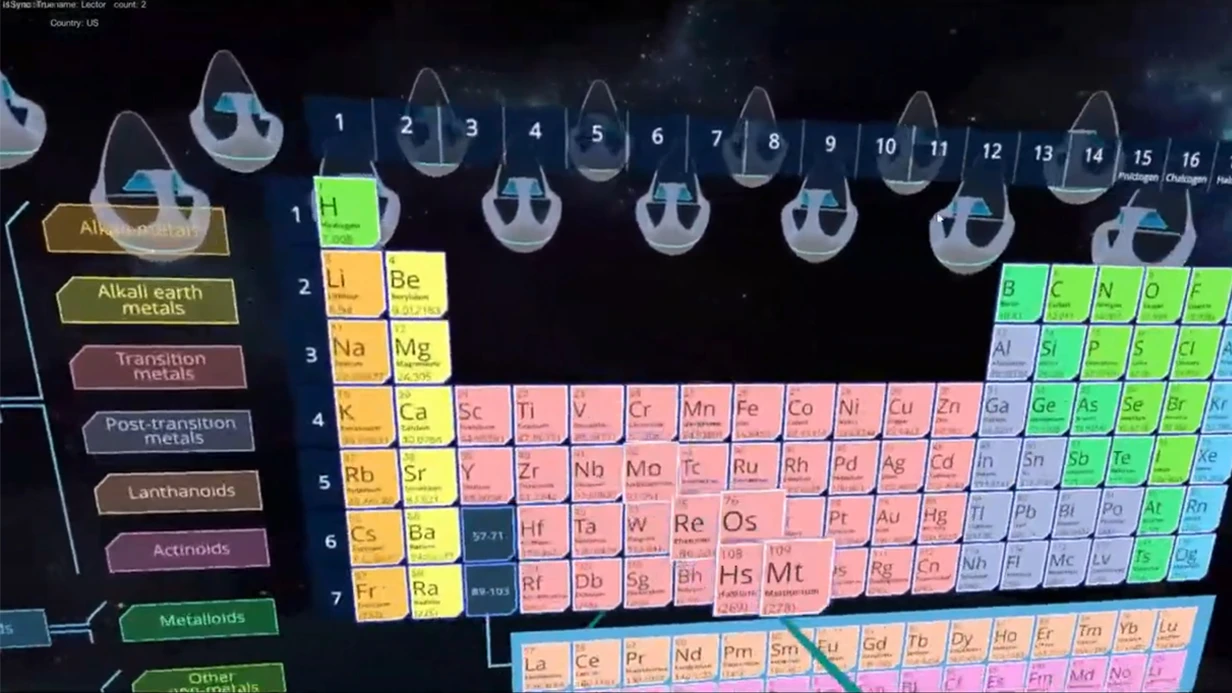


Losing attendee attention at cloud conferences?
Attendees of cloud conferences sit in front of screens surrounded by dozens of tabs and notifications. A dull talk, standard slides, and a weak booth that's just a PDF link — and within five minutes the viewer is already checking email or scrolling through a feed.
Organizers invest in the program but get a passive audience that doesn't remember the brand and doesn't return for the next events.
Audience attention is the scarcest resource of an online event. On a regular video broadcast it's hard to keep people engaged for more than a couple of minutes: there's no change of activity, no sense of presence, no reason to interact with the exhibitor.
As a result, even interesting content loses the competition for the user's screen, and stats show low engagement and shallow brand contact.
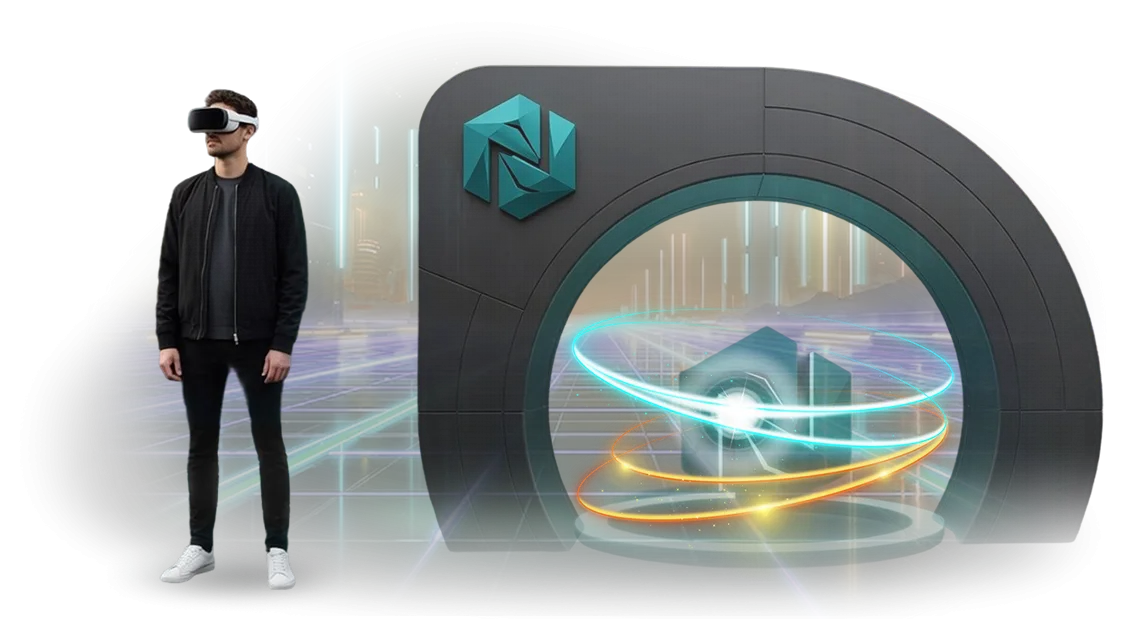
A virtual booth solves this problem — it turns the viewer from an observer into an active participant. People walk through the space themselves, open materials, launch demos, and interact with the product just like in a physical pavilion.
At a cloud conference, such a booth gives guests a personal experience they can't get through an ordinary browser: they explore, try, and make their own choices — which means they remember your company.
We create VR booths for cloud conferences that hold attention for the entire session and collect contacts without a manager's involvement.
This isn't just a "3D showcase" but a thoughtful product discovery scenario: from the first step to a request for a commercial proposal.
You get measurable activity — how many guests visited, how long they spent, and which materials they downloaded — plus a direct link between the booth and interest in your solutions.
A weak booth stays part of the background; a strong one becomes a reason to stay at the conference until the end and remember you after the stream ends.
We help make the second option a reality: we transfer your exhibit into a virtual space where attendees don't get bored but engage in dialogue with the brand. As a result, the cloud conference is no longer just a broadcast — it becomes an event people discuss and talk about.
VR booth benefits: brand recognition, leads, emotions
Brand recognition
At cloud conferences there are hundreds of booths and talks, and attendees quickly tire of samey content. A VR booth turns brand discovery into a game: guests are immersed inside your story instead of just looking at a banner.
Such an experience is remembered far better than ordinary video, and after the event attendees share their impressions on social media — reach grows without an extra advertising budget.
Leads and contacts
A VR booth collects quality contacts, not just a visit count. The interactive format holds attention longer, so you have time to show the product's advantages and ask visitors to leave their details.
Every attendee action is recorded: what they viewed, how long they spent, what materials they downloaded. That's a ready-made database for the sales department — segment the interested ones and send personalized offers.
Guest emotions
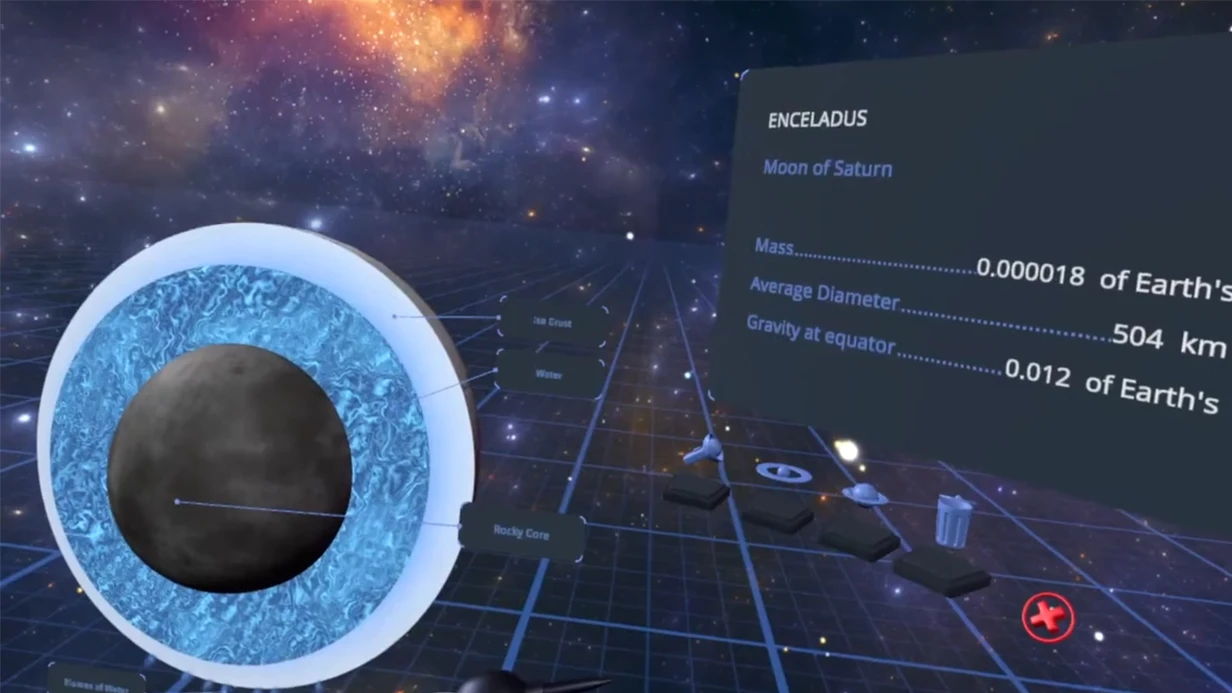
An emotional connection with the brand starts with surprise. A VR booth offers a virtual tour, a test drive, or a journey into the future — vivid impressions become associated with your company.
Satisfied attendees are more willing to recommend the brand to colleagues and leave positive reviews, creating a free channel of referrals.
Achieving marketing goals
We understand that a VR booth is not entertainment but a tool for achieving specific business metrics. That is why in development we focus on the client's goal: increasing reach, collecting leads, showing the product clearly.
Our team helps build a scenario around your objective and provides attendee activity analytics after the event.
VR booth formats for cloud conferences
A cloud conference gathers attendees from different cities and time zones, so holding their attention is harder than in an offline hall. Ordinary broadcasts and chat don't create a sense of presence, and people lose interest within minutes.
VR and AR formats solve this problem: they turn passive viewing into full-fledged participation where everyone is involved in what's happening.
Below is an overview of the main formats. It will help you get oriented, and then we'll choose a solution for your task, combining several options if needed.
| Format | For whom | What it gives the client |
|---|---|---|
| VR attraction | Broad attendee audience | Sense of presence and a live experience: guests interact with the virtual space in real time |
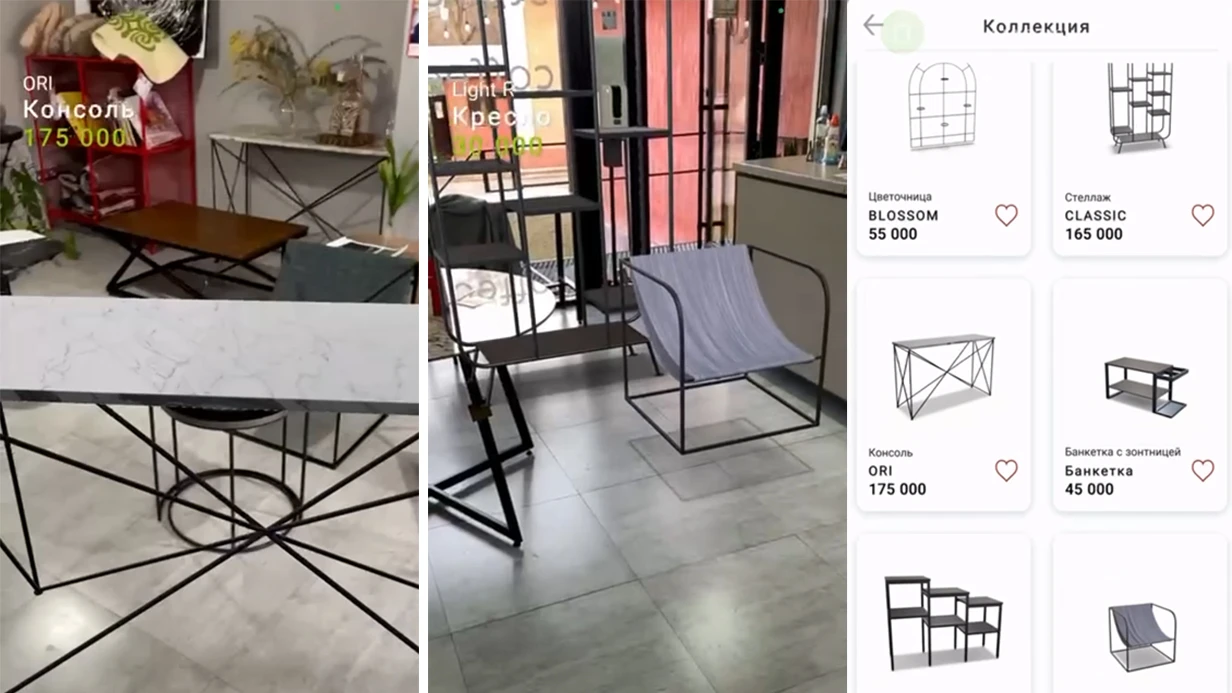
| AR installation | Brands and sponsors | Augments reality with branded objects — creates unusual content people want to share |
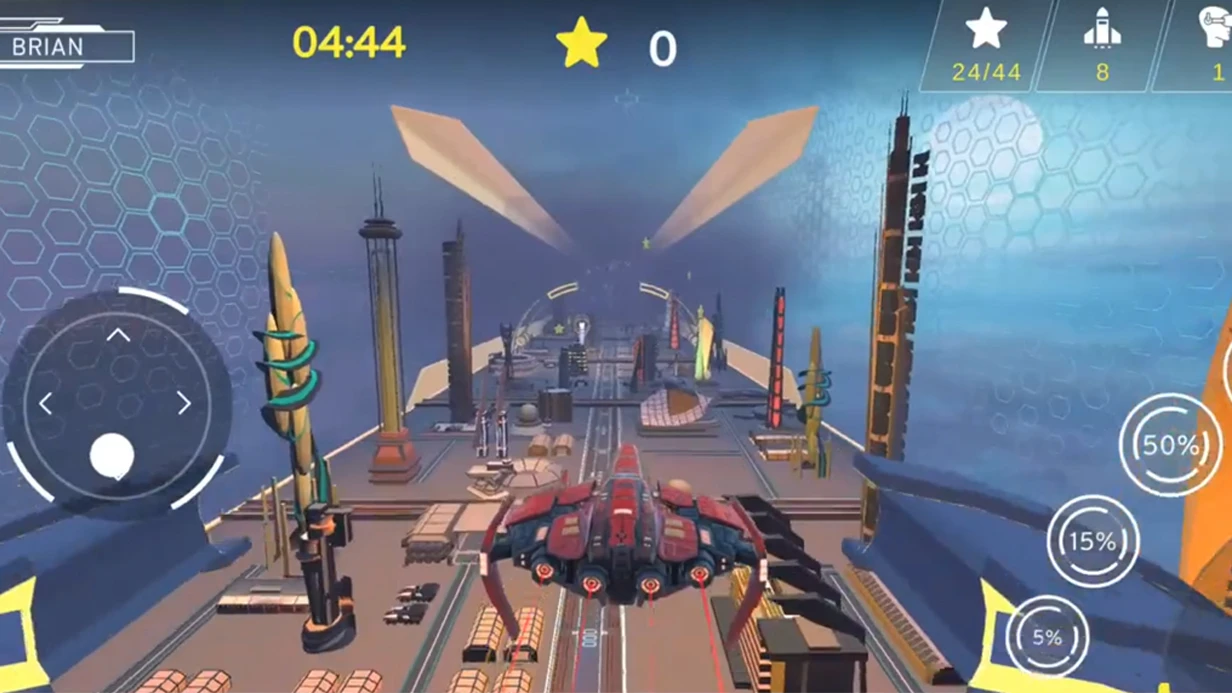
| VR quest | Corporate teams | Collaborative problem-solving, engages participants and keeps them on the platform longer than a regular broadcast |
| Virtual tour | Museums, showrooms, exhibition pavilions | Product or space demonstration without an offline location or logistics costs |
| Interactive booth | Exhibitors and partners | Personal communication with visitors and contact collection right in the virtual space |
The basis for the choice is the event's goal: audience reach, lead collection, or product presentation. Each format scales to the number of attendees and easily integrates into a cloud conference program.
We take on the full cycle: from idea to launch, so the platform is up and running by the date of your event.
How turnkey VR booth creation works
Turnkey VR booth development is a transparent process where the client always sees what's happening at each stage. You don't need to understand technologies: we handle everything — from idea to launch at a cloud conference. Below is a typical project path, which we adapt to your task.
- Brief. We collect requirements: event format, number of attendees, what message the booth should convey, and what actions are expected from virtual space guests.
- Concept and scenario. We propose the interaction idea: how a visitor enters VR, what they see, what emotions they feel. We discuss visual style and key brand touchpoints.
- Mechanics approval. We show the user journey map, mockups, and booth logic. We make adjustments before the main development starts — this saves time and budget.
- Implementation. Our specialists build the booth using professional equipment and proven tools. You receive regular progress reports without needing to dig into technical details.
- Testing. We verify operation on the various devices attendees use. We resolve issues and make sure the launch goes smoothly.
- Launch and support. We integrate the booth into your cloud conference and support you on the event day. Attendees enter VR without complicated setup — we'll make sure everything runs reliably.
After the event, you're left with analytics: how many people visited the booth, how long they interacted, and what actions they took. This data will help improve the next launch, and the project itself can be adapted for a new event if needed — without redoing it from scratch.
What's included in VR booth delivery
When you need a VR booth for a cloud conference, every minute counts: guests arrive in waves, sessions are scheduled, and any glitch can ruin the impression of the entire event.
So you don't have to think about it, we deliver the booth turnkey — from equipment to content and support on the day.
Here's what's included in the standard delivery package:
- Equipment: headsets and controllers, PCs and server components. Everything is tested, configured, and packed in transport cases.
- Task-specific content: virtual tour, interactive product presentation, or game mechanics. We adapt the scenario to the cloud conference theme and audience interests.
- On-site assembly and configuration: we deliver, assemble, test. By the start, the booth is fully ready to welcome guests.
- Instructions for staff: short guides on greeting attendees, helping them get seated, and recording sessions.
- Support on the event day: our specialist is nearby or reachable. If anything goes wrong, we resolve it within minutes.
- Dismantling and removal: after the event, we pack up the equipment and take it away; you don't need to handle logistics.
A clearly defined delivery scope is a guarantee that at the cloud conference you'll get a working booth without surprises or extra hassle. And if you need a VR booth with branded design or a non-standard scenario, we'll extend the package to fit your task.
Case study: VR booth for an international conference
Challenge and solution
At an international cloud conference, hundreds of talks compete for attendees' attention. The organizers were looking for a solution that would make the event stand out and turn viewers into interested clients. We proposed a VR booth — a virtual space without app downloads or complicated setup.
For the company CloudBridge, we created a custom scenario: guests from different countries entered a virtual hall, explored demo zones, talked with consultants, and received promo materials.
All they had to do was follow a link and put on a headset — at a partner venue or on their own smartphone. Sessions started every hour so attendees from different time zones could choose a convenient time.
Results
In two days, more than 3,500 people visited the booth, and the average interaction time was 7 minutes — three times longer than regular online broadcasts. We collected 1,200 contacts, 350 of which became qualified leads for the sales department.
Within a week after the conference, the company closed several deals with attendees who had visited the VR booth.
Engagement reached 78% — visitors returned to the virtual space repeatedly to finish viewing materials. The organizers appreciated the effect and ordered an expanded version of the booth for the next event.
They noted how easy it is to immerse attendees in the product's atmosphere and turn them into loyal customers.
How to choose a VR booth format for your task?
The format of a VR booth is not a technical parameter but a way to achieve your business goal. Choosing it based on what's "coolest" is wrong: what matters is the result the client needs.
For a cloud conference, that could be audience reach, product demonstration, or creating a memorable impression — each task has its own format.
Start with three criteria: who your attendees are, what they need to see, and what they should do after the session. If the audience is broad and connects from laptops, a virtual tour of the booth or 360-degree panoramas that open in the browser without installations is enough.
If the task is deeper — for example, showing how the product works — you need an interactive VR experience where participants control the scenario themselves. This engages more deeply and leaves more time for the brand.
The third criterion is budget and timeline. A full-fledged VR installation with a custom scenario requires more investment and preparation time.
A simplified format — with standard modules and "boxed" scenarios — launches within a few days and is suitable if the conference is tomorrow.
It's important not to overpay here: experienced contractors will always offer intermediate options between a "presentation" and "full immersion".
A simple rule applies to cloud conferences: the easier it is for attendees to join, the more people will actually enter the booth.
That's why the optimal format is web-VR: a person follows a link, enters the virtual space, and interacts with your materials through an ordinary browser. No special headset is needed, which means the entry barrier is one click, and reach is maximized.
We select the format based on your task and budget, not the other way around. Send us a description of the conference — within one day we'll offer 2–3 options: from a light 360-degree tour to a full-fledged interactive booth with visitor analytics. You will do the choosing, and we'll handle implementation and launch on time.
Answers to frequently asked questions about VR booths
Participating in a cloud conference is an opportunity to show your product to hundreds or thousands of viewers online, but it's also where you can easily lose their attention.
A VR booth eliminates this problem: it moves attendees into your digital space, lets them "feel" the product, and leaves a bright impression in memory. However, before ordering, clients often have questions about timelines, budget, and technical reliability. Below are answers to the most common ones, so you can make a decision without unnecessary doubt.
How long does it take to prepare a VR booth?
The standard production cycle is 2 to 4 weeks from concept approval. The time depends on scenario complexity: a simple 3D product visualization will be ready faster than a full interactive quest.
If the event date is already set, we'll choose the optimal format we can definitely complete with quality and lock in the timeline in the contract.
What is the development cost? What does it depend on?
The cost is made up of three parts: scenario and 3D content development, rental or purchase of professional equipment, and the team's work on site.
For cloud conferences, we often offer "boxed" solutions — ready-made virtual showroom or presentation scenarios that are adapted to your product. This allows you to reduce the budget without losing impact.
We calculate the exact estimate after the brief and immediately offer 2–3 options for different budgets.
What if the equipment breaks down on the event day?
This is every organizer's biggest fear, so we take it on ourselves. Before the event, the equipment goes through a full check, and our engineer is always present on site.
All risks and responsibilities are spelled out in the contract: if the equipment fails, we'll promptly replace it with backup. Your only task is to connect the booth to a stable internet connection and power supply on time.
Is technical support needed during the conference itself?
Yes, and it's included in the cost. Our specialist works on site from the start of setup to the end of the event. The specialist helps guests quickly get comfortable in the VR space, monitors system operation, and resolves any issues.
For you, this means zero headaches: you take care of content and communication with the audience, while the technology runs itself.
How will a VR booth fit into an online broadcast format?
We design the scenario so that it's interesting for both offline visitors and online viewers. VR immersion footage can be broadcast live, and the booth itself becomes a vibrant studio for interviews and demonstrations.
Attendees in the hall get a personal experience, while remote audiences get dynamic video that holds attention better than a standard presentation.
If you're not sure whether a VR format fits your task, that's normal. Send us a brief with the conference description and goals — we'll propose a concept that solves exactly your task: it will attract attention, engage guests, and leave them with the right impression of the brand.Order a VR booth and get an advantage
An ordinary virtual booth gets lost among dozens of identical ones. A VR booth turns event participation into a live experience: attendees enter the brand's space, interact with the product, and remember you after the conference.
To get this advantage, you don't need to understand technologies — just leave a request, and we'll handle everything: from idea to launch.
When you order a VR booth, you get:
- Consultation: we'll break down your task and advise which format will generate the strongest attendee response.
- Cost estimate within one business day: a transparent quote with no hidden fees or surprise surcharges at the final stage.
- Booth prototype before launch: you see how the space will look and can make changes before the conference starts.
- Turnkey launch: we integrate the booth into the event platform, set up attendee access, and run testing.
- On-site support on conference day: technical support, session moderation, and real-time help for visitors.
- Post-event analytics: how many people visited the booth, how long they interacted, and what generated the most interest.
Leave a request — we'll call you back within one business day, clarify the details, and prepare a personalized proposal. This way you get a memorable booth without extra hassle and with a guaranteed result. The first step is a call or a request for a cost estimate.