



Why Your Data and Analytics Conference Is Losing Attendees
The core of any data and analytics conference is sharing experience and discovering new tools. But organizers often notice the same pattern: after lunch the room visibly empties, and by evening only the most dedicated remain.
Attendees come for value, but instead listen to similar presentations and drown in a stream of information that is quickly forgotten.
The problem is not the program but the format of delivery. When content is presented only "from the screen," attention drifts within 20 minutes.
Attendees don't engage emotionally, don't remember brands and speakers, and therefore don't return the next year or recommend the event to colleagues. For business, this is a direct loss of reach and reputation.
The organizer needs a result: for each attendee to leave with a specific impression, and for the partner company to gain real contact with the audience. This is where interactive installations help.
They turn a passive listener into an active explorer who interacts with data and the brand directly, rather than just watching slides.
We've been creating such immersive formats for business events for over 10 years. Our solutions hold attendees' attention, give them a pleasant experience, and create a natural reason for dialogue with your partners. We solve the audience retention problem where the classic program stops working.
What a VR Stand Offers the Business and Event Guests
An analytics conference always has a dense program: presentations, case studies, numbers. By midday, guests' attention inevitably drops — they tire of slides and want a hands-on experience.
Ordinary booths with brochures no longer work: competition for attention is high, and only what a person experiences themselves is remembered.
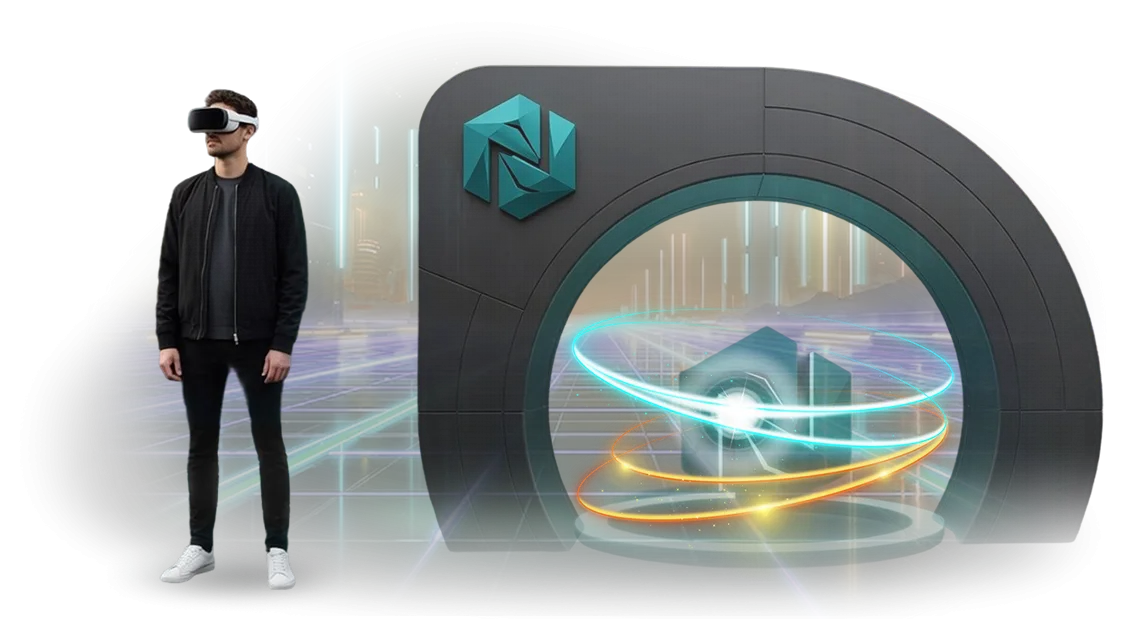
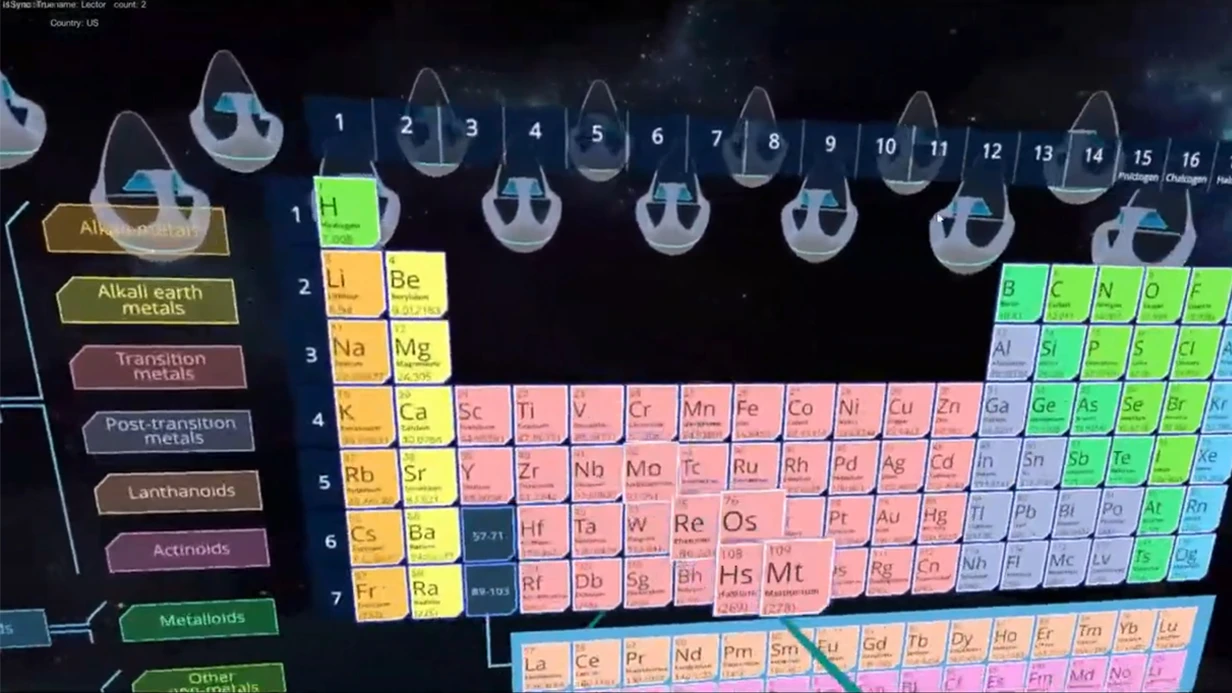
A VR stand solves this: it turns the guest from a spectator into a participant. In 3-5 minutes, a person finds themselves inside your product or service, sees data in volume, and controls it.
This is genuine audience engagement — guests approach on their own, try it, and come back to show colleagues. These are the moments that create an emotional connection with the brand and growth in loyalty.
After the event, the social effect kicks in. Every participant takes away vivid impressions and photos or videos from the VR zone. These social media posts are free reach that continues to generate brand mentions for weeks.
While competitors are taking down their booths, your guests are sharing emotions with their followers.
The practical benefit — collected contacts. The built-in registration system allows you to capture guests' contacts right during the session, with their consent and in exchange for the experience.
You get a database of engaged professionals ready for further dialogue, not just a list of random visitors.
We've been developing VR installations for events of various scales for over 10 years.
We work on professional equipment that withstands heavy guest traffic without failures: content streams steadily, scenes load quickly, and the controls are accessible even to those who have never used a headset. All you need to do is choose the scenario — we take care of the rest.
VR Installation Formats for the Client's Objectives
A data and analytics conference gathers hundreds of participants — from technical specialists to executives. Each group has its own expectations: some need business contacts, others need live experiences between presentations.
That's why we don't offer a single solution but a spectrum of formats to suit your venue's objectives.
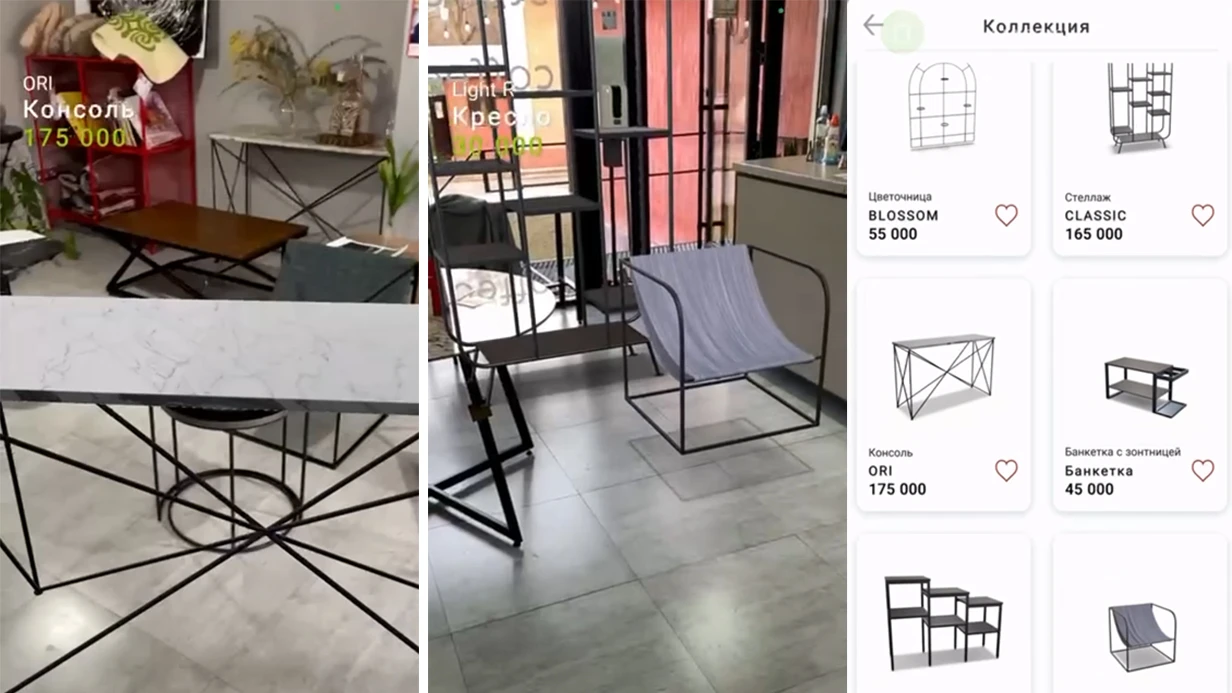
The installation should serve the organizer's goal, not just be a flashy attraction. A VR stand clearly demonstrates complex data, an AR mask creates a reason for photos, and an interactive screen or multimedia table engages guests in discussion at the booth. We'll select the format — from a compact VR corner to a full-scale AR zone.
Format table
| Format | For whom | What it gives the client |
|---|---|---|
| VR stand | Product and data demonstration | Visual 3D models and analytics; guests remember the stand for a long time |
| AR mask | Photo zone and entertainment | Visitors post photos with the brand — free reach |
| Interactive screen | Information zone | Fast delivery of charts and reports; guests' attention lasts longer |
| Multimedia table | Discussions at the booth | Collaborative exploration of materials; more contacts for the sales department |
By combining formats, you get engaged guests and measurable results. We have dozens of projects for conferences and exhibitions behind us — we know how to make an installation work for your results.
We handle development, delivery, and on-site support — all you have to do is invite the participants.
How We Build a VR Stand: Project Stages for the Client
We work transparently: you always know what's happening with the project and when the result will arrive. The entire journey is divided into stages — from the first brief to on-site support at the event itself. Here's how we structure our work.
- Brief and objective. We have a call with you to clarify the stand's goals: what visitors should see and remember, expected traffic flow, and brand messages. We define success criteria — for example, the number of sessions or engagement time.
- Concept and plan. We propose a VR experience scenario and stand format tailored to your audience. We show a layout diagram, venue requirements, and a calendar plan with dates.
- Approval. We discuss the concept with your team and make edits to the scenario and design. After approval, we lock in the scope and timeline — you receive a clear document with no hidden details.
- Building the VR space. We prepare the virtual environment: interface, 3D objects, interaction logic. In parallel, we configure the equipment and system — everything is tested on our side.
- Test run. We launch the stand in conditions close to real life: we simulate visitor flow and check stability and usability. You receive a video recording of the experience and a list of final adjustments.
- Launch at the venue. We deliver the equipment, assemble the stand, brief your team, and support the first hours of operation. Everything works from the moment the doors open.
- Support and analytics. Throughout the event, we help with technical issues. Afterward, we hand over the data: sessions, duration, engagement — so you can evaluate the results and plan your next activities.
This approach removes risks: you see the result before launch, not on the day of the event. We stay in touch at every stage and handle all the details — you don't need to dive into technical intricacies.
What's Included in the VR Stand Delivery
When it comes to a data and analytics conference, the stand should not just attract attention — it must run without failures and give guests a live experience of working with your products. That's why we take on the entire cycle: from content creation to dismantling. Below is the complete delivery package you receive as a single turnkey solution.
-
Content tailored to your scenario. A VR installation that visualizes data, statistics, or analytical products in a memorable way. This is custom development for your specific conference, not an abstract demo zone from a catalog. You tell us about your topic — we turn it into an interactive experience for participants.
-
Equipment and assembly. Delivery, setup, configuration, and testing on site. We bring everything needed: stations, headsets, seating area, and branding. We connect, test, and show that everything works before opening. No need to hunt for contractors or coordinate logistics — we cover it.
-
Staff training. A short briefing for the stand operators: how to welcome guests, help with VR, switch scenarios, and respond to unexpected situations.
Your employees work with confidence from the very first hour, and guests receive an equally high-quality experience no matter who is on duty at the booth.
-
On-site technical support. During conference days, our specialist is on hand. If anything fails, they fix it on the spot — no pauses, no stress. You don't worry about the equipment; you focus on talking with participants and your own tasks.
-
Post-event support. Dismantling, packing, and removal of equipment. No logistics after the event — you simply sum up the results and count the numbers.
This package relieves you of a hundred small tasks. You get a working stand that generates reach and impresses guests at your data and analytics conference — instead of distracting your team with technicalities.
VR Stand Case Study for an Analytics Conference: Numbers and Facts
For the DataScope data and analytics conference, we developed a VR stand that became a hub of attraction for participants. The client wanted not just to draw attention to their exhibition space but to engage a technical audience in interaction with the brand and product.
Standard presentations don't work here — guests pass dozens of identical booths in a day, and only those that deliver a live experience are remembered.
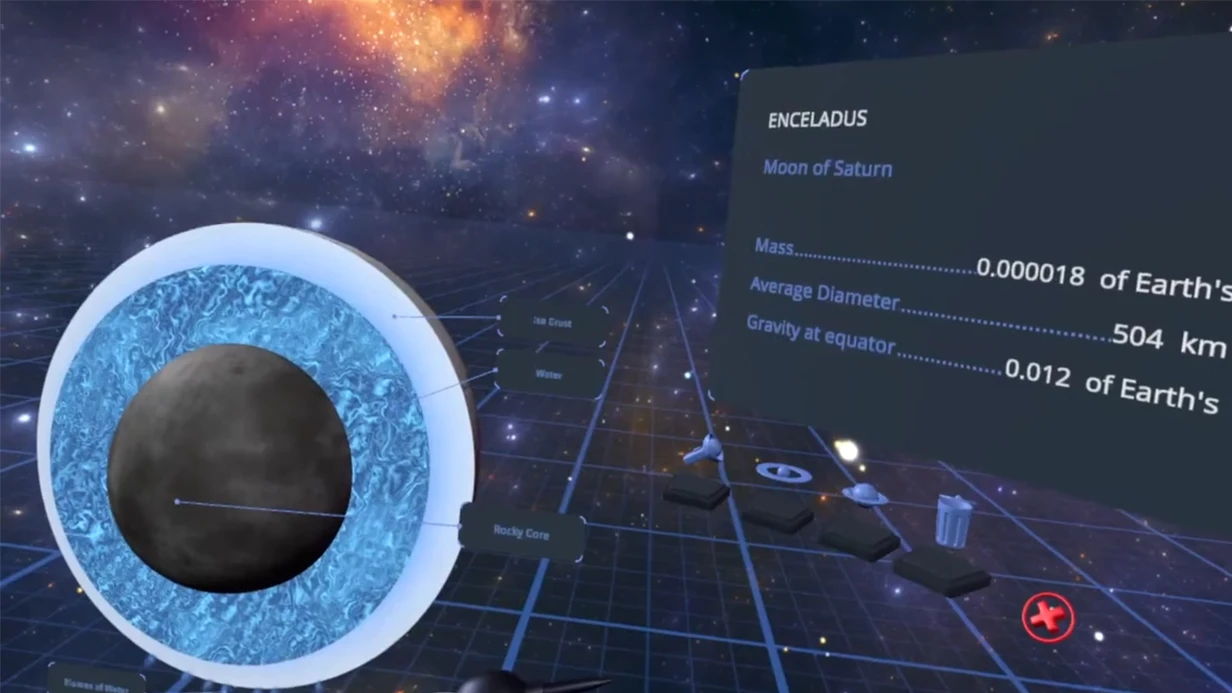
We proposed an interactive VR visualization: a visitor entered a virtual space, controlled data streams, discovered patterns, and received a personalized result.
This sparked natural curiosity and a desire to share the experience — each participant took a photo or video and tagged the brand on social media.
Case results
Over the two days the stand ran, more than 400 VR sessions took place — an average of 6 minutes per guest. Moreover, 70% of visitors left their contacts after the virtual experience to receive a detailed breakdown of their results.
Translating that into marketing figures, the cost per qualified lead turned out to be three times lower than with the classic business card collection at a booth.
Most importantly, the event didn't end when the exhibition closed. Participants kept sharing their impressions and tagging the brand in posts for two weeks after the event.
And the client, having seen the live reaction and clear metrics, ordered the next VR stand for their annual event just six months later.
We know how to build a VR stand that solves a business problem: it attracts, engages, and delivers measurable results — not just a "wow effect." Get in touch — we'll calculate the metrics for your event and propose a solution.
How to Choose the Right Format for Your Task?
There's no universal "best format" — the right option is determined by your goal. At a data and analytics conference, the audience comes for substance, but holding attention in a packed program gets harder and harder.
So the first question isn't "VR or AR" but "what should the visitor feel and remember?"
If the goal is to introduce guests to a product or service in a short session, a VR stand is the optimal choice. The participant enters a controlled environment where data becomes tangible objects, and product discovery happens through experience rather than a presentation.
This is especially valuable at a data and analytics conference: complex processes can be shown in a few touches, without lengthy explanations.
When the audience is large and the flow is hard to control, an AR element will work better: guests point a camera at a marker and see an augmented layer over reality. But if the priority is deep engagement and individual contact, VR gives you maximum time with each visitor.
We recommend the VR format when you have a specific goal: product demonstration, training, or contact collection with high-quality feedback.
Turnkey selection means we analyze your inputs ourselves: number of participants, venue space, session time, and desired outcome.
You don't need to be a technical specialist to make a decision — we'll calculate the loads, suggest the optimal configuration, and adapt the scenario to the specifics of your data and analytics conference.
Individual requirements — such as space branding, integration with surveys, or registration — are built into the project from the very start.
So the answer is simple: choose VR when you want to hold attention and deliver a truly immersive experience — and we handle the rest. You get a turnkey solution, from concept to launch on the day of the event.
This removes the risk of mistakes and lets you focus on the conference program rather than technical details.
Frequently Asked Questions About VR Installation Development
Clients most often ask about timelines, budget, equipment, and safety. These are understandable concerns: before signing a contract, you want to assess the risks and understand what you'll be working with. We've gathered answers to common questions — below.
If your question isn't on the list, just write to us: we'll start with a consultation and honestly tell you what's realistic and what may require additional investment.
How long does it take to develop a VR installation?
Timelines depend on the complexity of the scenario and the chosen effects. A typical project takes two to four weeks: brief, concept, approval, development, and testing.
We give exact timelines after the brief and announce them before work begins. If the event is urgent, we'll discuss accelerated options — without compromising quality.
How is the budget formed, and can it fit within reasonable limits?
We calculate the budget individually for each task: event format, number of guests, desired scenario, and placement area. We don't quote "average" figures — they are useless without context.
Instead, we offer several implementation options: from a compact stand to a full multimedia zone. You choose what fits your goals and allocated budget, and we help optimize costs without losing the impact of the project.
Whose equipment is used, and who is responsible for its operation?
We bring our own professional equipment, configured and tested in advance. Our technical specialist is responsible for the zone's operation at the venue.
You don't need to buy, rent, or figure out any details. In the morning we hand over a stand ready to work; in the evening we carefully take the equipment away.
Is it safe for guests and the venue itself?
Yes. The installation undergoes mandatory testing before the event, structures are stable, and cables are secured and hidden. We also arrange sanitization of the zone and headsets.
Guests are assisted by instructors or automatic prompts, so even those trying virtual reality for the first time feel comfortable.
Order a VR Stand for Your Event Today
Submit a request for a VR stand for your data and analytics conference — and by the next business day you'll receive a preliminary cost estimate and implementation plan. We work remotely, so response speed doesn't depend on your city, office, or time of day.
After you reach out, you'll get a consultation from our immersive formats specialist. They'll clarify the event's objectives, number of guests, venue space, and logistics — then propose a solution that fits your scenario and budget.
What you get right after your inquiry:
- A personal consultation describing the VR and AR formats suitable for your venue.
- A preliminary cost estimate with no hidden charges — the quote is locked in before launch.
- A selection of installation scenarios that reflect data and analytics themes and impress your guests.
- Examples of similar projects we've done for other events and brands.
- Technical recommendations for the venue: placement area, lighting, power connections, and walkways.
- A clear launch plan: content preparation, assembly, equipment rental, and support.
- Date confirmation and priority equipment booking for peak season.
We take on all organizational matters ourselves: from delivery and setup to briefing your team and technical support throughout the day. All you have to do is welcome the guests — we'll ensure the VR zone's impact and measurable social media reach.
Submit your request on the website or contact us any way you like. Within one business day, you'll know exactly what your VR stand looks like, what it costs, and when we'll launch it.