



Is Your Brand Presentation Getting Lost Among Competitors?
At any event, dozens of companies compete for visitors' attention. A standard booth with a banner and brochures blends in with dozens of similar ones — guests walk past and remember nothing.
As a result, your investment in participation brings neither brand recognition, nor new contacts, nor post-event buzz.
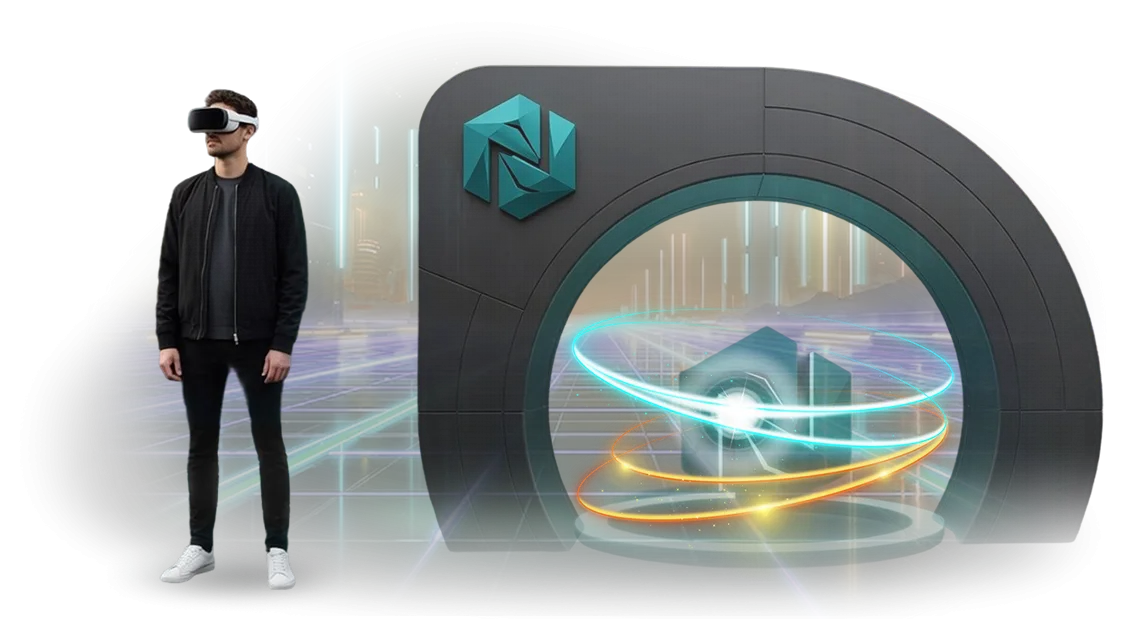
VR installations solve this problem differently: instead of passively glancing at a booth, visitors step inside the brand's story. For a few minutes, they are fully immersed in your world, interact with the product, and walk away with a vivid impression.
Such moments are memorable and — most importantly — people want to share them: photos and videos from the VR zone spread across social media, multiplying your reach long after the event ends.
That's why companies that want to stand out from competitors increasingly use VR presentations at exhibitions, conferences, and museums.
This is not just a "trendy attraction" but a tool that holds visitors' attention for far longer than a standard booth and turns every guest into a carrier of your message.
We have been creating VR installations for events, museums, and brands for over 10 years. We help design the scenario, select the equipment, and integrate the VR zone into your booth so that it drives recognition and results. Tell us about your task — we'll propose a solution tailored to your format.
What You Get from a VR Installation
A VR installation turns visitors into participants: instead of passive viewing, a person interacts with the brand in an interactive environment.
This is guest engagement that holds attention for several minutes — long enough to learn about the product, feel the emotion, and want to share it.
An emotional experience is remembered far better than any presentation or brochure. A month later, guests remember not the booth or the handouts, but how they found themselves inside the brand's virtual universe.
That's how recognition and a positive image are built — the company becomes associated with modernity, technology, and bold solutions.
Beyond impressions, the VR zone delivers measurable results: you can collect participants' contacts, data about their interests, and their behavior inside the installation.
After the event, you have a database of potential clients for follow-up emails, ongoing communication, and evaluating the return on your exhibition or event participation.
There is another distinct value: audience reach through social media. Guests post genuine emotions, photos, and videos from the virtual space on their own accounts, expanding brand awareness beyond the venue.
Every participant becomes an ambassador, and the brand gets organic content for social media and PR.
In short: a VR installation simultaneously covers engagement, memorability, lead generation, and image strengthening. It is not "entertainment for entertainment's sake," but a marketing tool that keeps working for results for weeks after the event.
Installation Formats for Brand Presentation
Every brand is looking for ways to make guests remember it specifically, rather than the neighboring booth. Standard structures and video no longer provide the required level of engagement: people walk past if nothing is happening.
An interactive installation stops guests, makes them act, and encourages them to share their impressions.
We take on the design and launch of three core interactive formats — VR booth, AR zone, and interactive show. We select the option based on your task and venue: reach, depth of contact, contact collection, or creating a high-status event.
Options That Already Work
| Format | For Whom and When | What It Gives the Client |
|---|---|---|
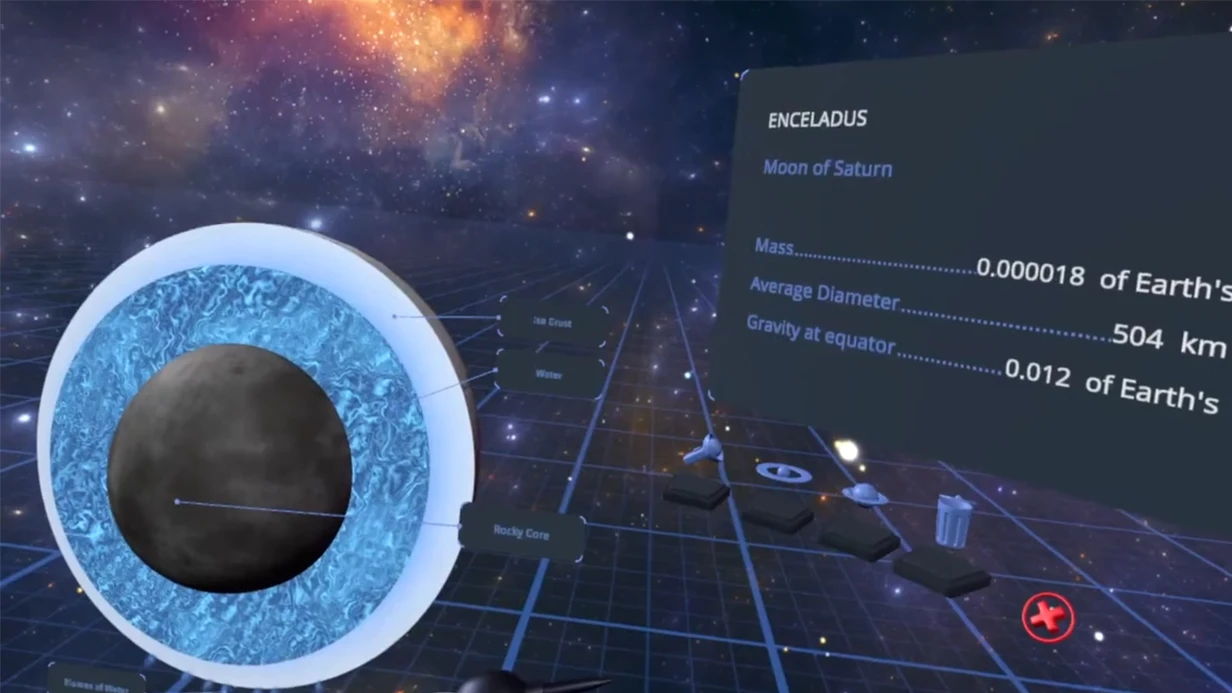
| VR booth | New product presentation, exhibition, showroom | Guest is immersed in the brand's virtual world; you can show something that doesn't exist in reality yet |
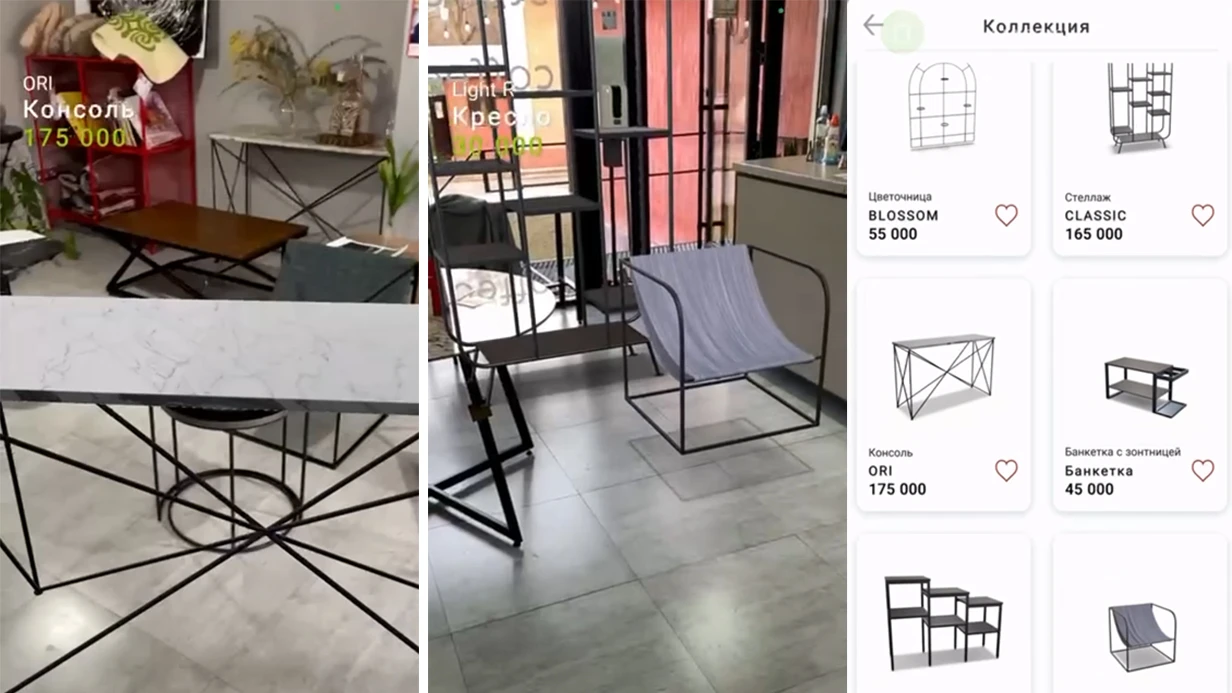
| AR zone | Festival, city celebration, shopping mall promotion | The brand "comes alive" on top of reality; guests take photos and post them on social media |
| Interactive show | Closed presentation for partners, premium event | Emotional impression that gets talked about; photos and video for future brand content |
Any format integrates into your scenario — from a short five-minute demo to a full-scale zone for hundreds of guests.
We select equipment to match visitor flow so there are no queues, and we fully support the project: from concept and design to launch and technical support on the day of the event.
As a result, you get not a "picture for picture's sake," but a brand presentation tool: guests interact with the product, remember it, and walk away with a positive association: "brand = emotion and impression."
How Project Work Unfolds
A clear process is the key to a stress-free client. We have structured our work so that you see results at every stage and can influence the project before launch.
No "black box": all decisions are documented, and timelines and budget are transparent from the very first meeting.
-
Brief and goal setting. You tell us about your objectives: who your audience is, what should change in brand perception, how you measure success. We ask clarifying questions and document the project's key parameters.
-
Concept and scenario. We propose 2–3 VR or AR installation options: idea, visual style, interaction logic. We show how a guest will go through the scenario and how long it will take — so you understand its value for the visitor at this stage already.
-
Approval and estimate. You make edits, we adjust the concept and finalize the production plan. At this stage, we lock in the equipment list, timeline, and cost — with no surprise surcharges mid-project.
-
Production and preparation. We build 3D models, graphics, sound, and interactive logic. In parallel, we configure professional equipment and run an internal rehearsal so we arrive at the venue with a fully polished solution.
-
Setup and launch on site. We bring the kit, assemble the installation, and test it under real conditions. We perform commissioning and train your team on basic operations — you get a reliably working booth by the time the event opens.
-
Support on the event day and report. Our specialist stays in touch or is present on site: we monitor operations, assist guests, and promptly resolve any emergencies. After the event, we send analytics — number of sessions, average duration, visitor behavior.
You use this data to develop the project further: you learn which elements work best and can double down on them at the next event. Ultimately, you get not just equipment rental, but a manageable result with a transparent workflow.
What's Included in the Installation Delivery
A transparent delivery scope — so you understand what you're paying for and what you'll get on the day of the event. We work "turnkey": we handle every stage, from equipment to final support.
- Equipment. Professional VR/AR systems selected for the brand's task. We deliver, set up, and test everything before opening — you don't need to find or configure anything.
- Content. A scenario built around the brand's goals, from the first frames to a call to action. Three-dimensional models, animation, sound — content that looks premium and works for brand recognition. No templates: every project is unique.
- Setup. We arrive ahead of time, assemble the structure, and calibrate lighting and hardware. We run full testing so that everything works flawlessly by the time guests arrive.
- On-site service. Engineers remain at the venue throughout the event. They monitor systems, assist guests, and resolve issues instantly — that is our area of responsibility.
- Post-event support. We provide a report: how many people used the installation and what sparked interest. We can also help refresh the content for future events if needed.
No hidden conditions — the scope of work is fixed in the contract before we start. You get a turnkey installation that works, impresses guests, and strengthens your brand.
Case Study: How We Strengthened a Brand at an Event
For the brand Gorizont, we developed a VR booth for a two-day industry forum. The goal was not just to attract attention, but to introduce guests to the product and collect cooperation inquiries.
We proposed an interactive "journey through production": putting on the headset, a visitor moved from raw material to finished product in just a few minutes and controlled the key stages themselves.
The results exceeded expectations. Over two days, more than 1,200 people visited the booth, with an average interaction time of 4.5 minutes — compared to the usual 15 seconds at informational counters.
This format holds attention and communicates the product's key advantages to guests. Following the event, we handed over 380 inquiries with contacts and consent to negotiations.
What This Meant for the Business
For marketing, the core value is not a one-time "wow," but a measurable result. Every guest who spent 4.5 minutes in the installation remembers the brand better and is more willing to share their experience on social media — that's additional reach after the event. And 380 inquiries became a direct source of sales: some contacts turned into commercial proposals.
A month later, the client returned with an expanded version of the booth for the next forum. The repeat order confirms: a VR installation works as a brand presentation tool, not as a temporary attraction.
How to Choose the Right Format for Your Task?
A universal format that suits everyone simply doesn't exist — and that's perfectly normal. Choosing a VR installation isn't driven by trends but by three factors: the goal you're solving, the audience you want to engage, and the venue where it all takes place.
These are the parameters that turn an "interesting technology" into a tool that delivers measurable value to the business.
If your goal is to introduce guests to a new product or service, the best format is one that lets them "try it out": for example, a virtual test drive or an interactive presentation where visitors control the scenario themselves.
If your goal is to create a wow effect and a striking photo zone that spreads across social media, focus on short, impressive scenarios of 2–3 minutes. Education and entertainment are also different scenarios, and each requires its own approach.
We always start any project not with choosing the "hardware," but with a discussion of your business goal: what should change after the event? Everything else follows from that answer.
The right format always considers your audience and venue. At an open exhibition with a constant flow of people, you need fast sessions that don't require lengthy instructions and work even in a noisy environment.
In an intimate showroom or museum, you can afford deeper, longer scenarios — up to 10–15 minutes. The same applies to the venue: we have proven solutions for compact zones of 4–6 square meters as well as for large pavilions with multiple points running simultaneously.
Of course, budget is a key constraint, but even here we help find the balance. Instead of selling the most expensive kit, we'll propose an option that accomplishes your goal with the right reach and quality.
You get not just an installation, but a complete solution with calculated return on investment — with a clear understanding of how many people will see your brand and what emotional impression they'll carry away. Describe your task and venue — and we'll advise which format will work best.
Frequently Asked Questions and Client Concerns
Any new format raises questions: "Will guests handle it," "What if something goes wrong," "Will this ruin the event." That's normal — we've been mitigating these risks for dozens of brands for 10 years. Below are answers to the most common concerns that come up before ordering a VR/AR installation.
What if guests don't like the installation?
We don't bring "raw" technology. Before launch, the installation goes through test sessions with a focus group from your audience — we check the scenario, timing, and ease of control. If something doesn't land, we adjust the scenario and interface before the event.
And on the day itself, our specialist is always nearby to manage visitor flow and help everyone get comfortable quickly.
What if the equipment breaks down in the middle of the event?
The risk of breakdown is our risk, not yours. We bring a backup equipment kit and keep an engineer on site throughout the entire event. Our installations' average uptime is over 99%, and even in an emergency, replacement takes no more than 15 minutes — guests won't even notice.
What guarantees that the project will be delivered on time?
Timelines are fixed in the contract, not just verbally. We work on a transparent plan: brief, scenario, design approval, test assembly, setup. You see intermediate stages and approve every step.
By the time of the event, the installation is fully complete and tuned — no "last-minute fixes" on the day.
Will it be difficult for your staff to manage the installation?
The operation is designed for people without technical training. Launch is one button; from there, the system runs on its own. Just in case, we give your team a 15-minute briefing before the event and leave a quick reference card. If anything goes wrong, our specialist is on call — they can arrive on site or connect remotely.
We have built over 500 interactive zones for exhibitions, conferences, and private events. Every project means a stress-free client, happy guests, and a measurable result for the brand. Tell us about your event — we'll propose a solution that resolves your concerns as early as the briefing stage.Submit a Request for Installation Development
Tell us about your task — and we'll propose a solution that strengthens your brand presentation and stays in guests' memories. Fill out a short request on our website: it involves no obligation, but gives you clarity on timelines, budget, and installation format.
Our specialist will contact you within one business day, clarify your goals, and advise which VR or AR option fits your event best.
What You Get After Submitting a Request
After the first conversation, we prepare a personal consultation and a preliminary estimate — this is the foundation of the future project. It typically includes:
- Format consultation — we analyze which installation will solve your task: attract attention, engage guests, or showcase the product.
- Cost and timeline estimate — we provide a budget range and production time so you can plan your event.
- Preliminary technical solution — we explain in plain language how the installation will work and what equipment will be needed.
- Examples of similar projects — we show cases from our practice so you know what results to expect.
- Launch plan — we describe the work stages and what will be required from you at each step.
- Answers to your questions — we discuss details: layout, logistics, technical support during the event.
After the request and consultation, we document everything in the contract and move on to project development. You get a complete turnkey installation: from concept to setup and on-site support.
Submit your request right now — so that within a couple of days you'll already have a clear plan and estimate in hand. We'll start with an initial consultation, and everything else depends only on your goals.