



Why Visitors to Technology Exhibitions Don’t Remember Your Booth
A visitor to a technology exhibition passes dozens, even hundreds, of booths in a day. By lunchtime, attention scatters: identical stands, brochures, and demo screens blur into visual noise. In that flow, your booth is just another stop on the route — forgotten ten minutes later. Floor rental, layout preparation, logistics — you invest, but there’s no brand recall.
The problem isn’t that you’re showing a bad product. The problem is that an ordinary presentation doesn’t trigger emotions, and emotions are exactly what a visitor takes away.
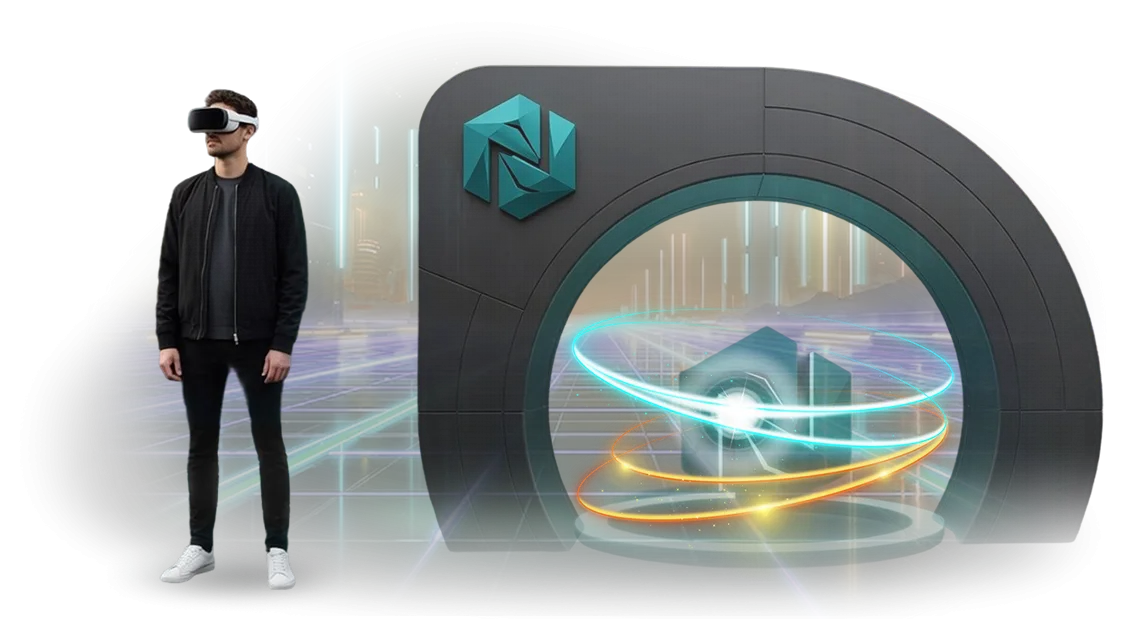
Virtual reality changes the rules: a person stops being an observer and becomes a participant in your story. He doesn’t watch a screen — he ends up inside the brand. And that impression can’t be missed or confused with anyone else’s.
These are the moments people later discuss in the hallways, post on social media, and remember when making decisions about cooperation.
The visitor doesn’t just remember your booth — he becomes a carrier of your message, and that effect keeps working long after the exhibition closes.
We help clients stand out among dozens of booths with well-thought-out VR installations: from idea and scenario to launch at the venue.
Virtual reality here isn’t decoration — it’s a tool that turns a passing guest into an engaged participant and creates the very brand association you’re exhibiting to achieve.
What Benefits Does a VR/AR Installation Bring to Your Brand?
At a technology exhibition, every booth is fighting for visitor attention: eyes dart around, information overloads, and after a couple of hours all exhibits merge into one blur. A VR/AR installation breaks this pattern — it doesn’t show, it involves.
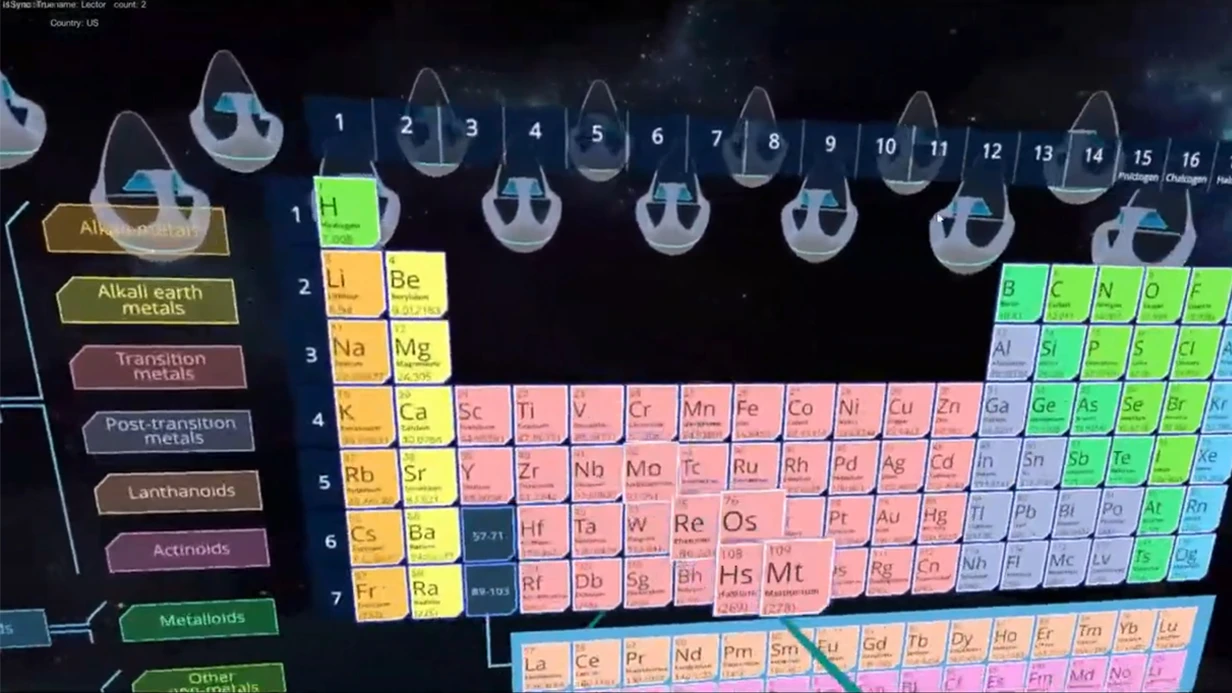
The guest becomes a participant, not a spectator: he puts on a headset or points a camera and enters a world where the brand speaks to him in the language of emotions and impressions.
An immersive experience holds attention several times longer than an ordinary booth with brochures. People remember not the text on a banner, but what they experienced.
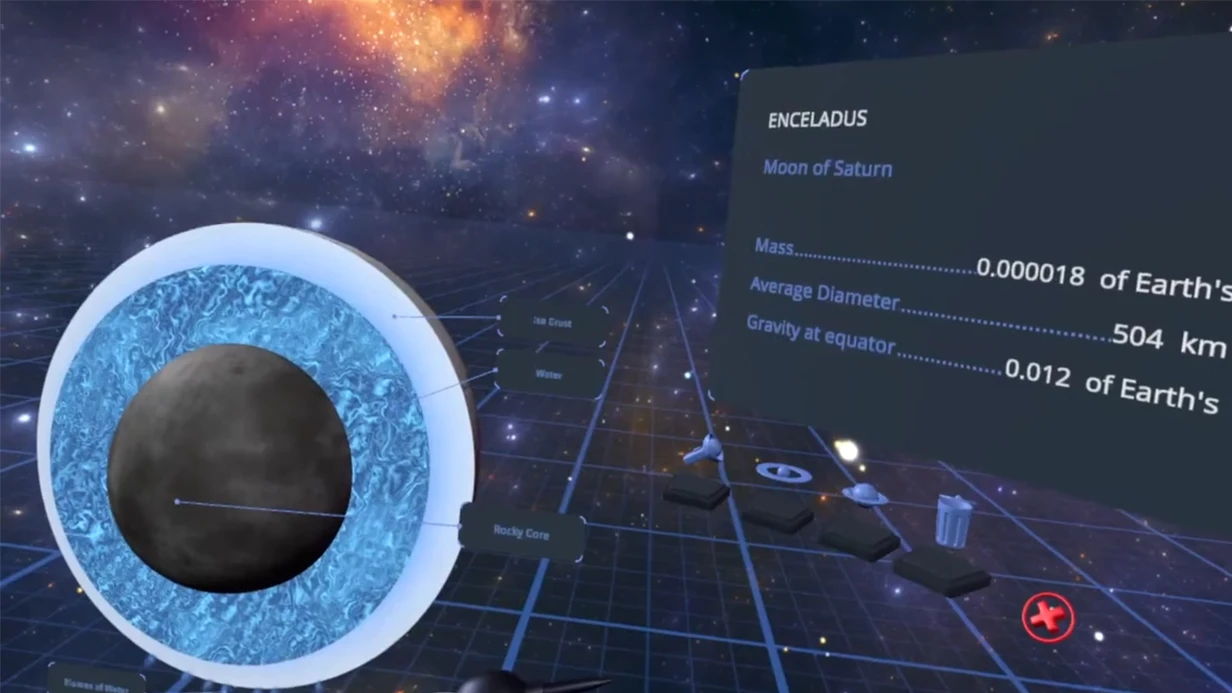
These are the moments that later come up in conversations: “There you could control a virtual universe,” “We assembled a product hologram.” Positive emotions automatically transfer to the brand — it’s perceived as modern, bold, and tech-driven.
VR/AR also works great for reach. Guests don’t just participate — they film what’s happening and share it on social media. Photos and videos from virtual space look unusual, so they spark interest and questions.
That’s how an exhibition becomes a growth point for recognition: your brand is talked about not only on-site but far beyond it, and every post becomes free advertising.
Guest reactions are a separate bonus. When a person is genuinely surprised and delighted, he’s open to dialogue. In those moments, it’s easy to start a conversation, talk about the product, and invite the visitor to the next stage.
The installation works like a natural magnet: some people come over, bring friends, and return themselves. The atmosphere around the booth becomes lively and attractive, increasing overall interest in your space at the exhibition.
Finally, participation effectiveness is measured not by the number of flyers handed out, but by the contacts and impressions that stay in the client’s mind. A VR/AR installation delivers both.
You get not just entertainment, but a tool that amplifies brand meaning, sets you apart from dozens of other booths, and brings tangible benefits — from recall to new business contacts. That’s what business goes to an exhibition for, and that’s exactly what we help you achieve.
VR and AR Installation Formats for a Technology Exhibition
At a technology exhibition, a visitor passes dozens of booths in an evening — keeping him longer than two minutes is difficult. The format of a VR or AR installation determines how many people gather at the booth, how long they interact, and what they later say about the brand.
First define the task: collect contacts, show the product in action, or create viral content — then choose the mechanics.
Which VR and AR Formats Are Chosen for a Booth
We’ve identified four scenarios that work well at a technology exhibition. The table shows who each format is for and what results it brings to your event.
| Format | For Whom | What It Delivers |
|---|---|---|
| Fully immersive VR booth | Brands that showcase a product or service in action | 3–5 minutes of engagement, full visitor attention, a photo of the guest inside the virtual scene |
| AR masks and augmented reality without a headset | Marketing teams when the goal is social media reach | Guests participate without training, content goes to personal accounts, viral effect |
| Interactive content on a large screen | Booths with high foot traffic that need to engage many guests at once | 5–10 people participate simultaneously, queue moves fast, no downtime |
| Competitive VR zones | Young audiences and a brand’s innovative image | Excitement and emotions, guests return to the booth, leaders and discussions emerge |
If you’re unsure which format fits your goal, we’ll advise you at the brief stage: show examples from past exhibitions and calculate the load on your booth. The installation should work for your result, not just build a queue.
How VR Booth Development Works: Project Stages
A technology exhibition means intense competition for visitor attention. A VR booth must work flawlessly from the first minute, so the development process is designed to deliver a predictable result on time.
- Brief and goals — we discuss who you want to attract, what message to communicate, and what result to measure. The output is a clear technical specification that both sides understand.
- Concept and approval — we propose 2–3 interaction scenarios, show sketches and descriptions. You approve the option, and then we lock in timelines and budget.
- Content and hardware development — we create 3D scenes, interactive logic, and assemble the booth on professional equipment. In parallel, we prepare instructions for your team.
- Testing and refinement — we run the scenario the way visitors will: load, failures, “inconvenient” questions. We make revisions before the booth reaches the venue.
- Installation and setup — we arrive at the exhibition early, install the equipment, set up lighting and sound, and conduct a final check together with you.
- Support during the event — our engineer stays nearby during all booth operating hours. We quickly resolve any issues so that you focus on talking with visitors, not on the technology.
This process gives you the most important thing — project control. You always know what stage development is at, what’s ready, and what comes next. And we close all risks early, before the exhibition opens.
What’s Included in a VR/AR Installation Delivery
It’s important for the client to understand: you receive not a “raw system,” but a ready-made solution that can be launched on opening day. The delivery package includes everything needed — from hardware and content to installation and training for your team. You don’t need to search for anything, buy extras, or understand the inner workings.
What’s Included in the Delivery
- Project preparation and delivery — we agree on the scenario, rendering, and installation logic, fix timelines and scope, then bring everything to the venue on the agreed day.
- Hardware and content — professional VR/AR systems, server side, and pre-installed software with your content, already configured for the event scenario.
- On-site installation and setup — we bring, assemble, connect, and verify everything before opening. You get a turnkey installation: no surprises, no downtime.
- Staff training — we teach your employees how to launch, change sessions, and handle basic emergency actions. Fifteen minutes after training, they work independently.
- Technical support — our engineers stay in contact during the event: remotely or, if needed, on site. Force majeure won’t affect guest impressions.
- Dismantling and removal — after the event, we take back the equipment and return the venue to its original condition.
This package answers the question “what are we supposed to do with this technology?”: you get a manageable solution, and we handle the technical side.
As a result, your technology exhibition booth is bright and interactive, and your team focuses on communicating with visitors rather than adjusting complex systems.
The delivery scope can be adjusted to the event format: one-day rental, full purchase, or extended support with an on-site engineer. In any case, you know in advance what’s included and what you’re paying for.
All that’s left is to discuss the details of your event — we’ll send a transparent commercial proposal with the scope of work and timelines.
Case Study: How We Strengthened a Booth at an Industry Forum
A typical booth at an industry forum is business cards, brochures, and “come take a look.” After a couple of hours, staff get tired of repeating the same thing, and the visitor flow fades away.
We suggested to the client — the company LogistikPro — that we turn their exhibit into a point of attraction: we installed a VR installation that introduced guests to the product in action in two minutes.
The task wasn’t just to attract attention, but to hold it. At forums, a visitor has two to three seconds to decide whether to approach or walk past.
VR goggles create an immersive effect: a person, through his own experience, “assembles” a delivery route, controls a warehouse, or sees how the system works. The emotion carries over into interest in the product — and then into dialogue with the booth managers.
What We Did
We designed the installation scenario for the specific booth and packed it into a mobile zone of 15 square meters. No queue formed: one session lasted two and a half minutes, and four people could participate simultaneously.
Managers received a short summary of exactly what the visitor had viewed — and continued the conversation from there.
Forum Results
The numbers exceeded the client’s expectations. Average contact time at the booth increased 2.5 times compared with the previous event: from two minutes to almost five.
The number of contacts collected doubled, and guests were more willing to leave a demo request — every fourth VR-session participant became a warm lead.
The additional effect was social media. Visitors filmed the experience in the headset and tagged the booth, so the reach of posts about the company at the forum tripled.
Two weeks later, we received an order for a new scenario for a regional exhibition — the client understood that a VR booth works not as a toy, but as a sales tool.
This case demonstrates: a properly made VR installation pays off through engagement. If you’re planning an industry forum — ask us how we can calculate the expected effect for your booth.
How to Choose the Right Format for Your Task?
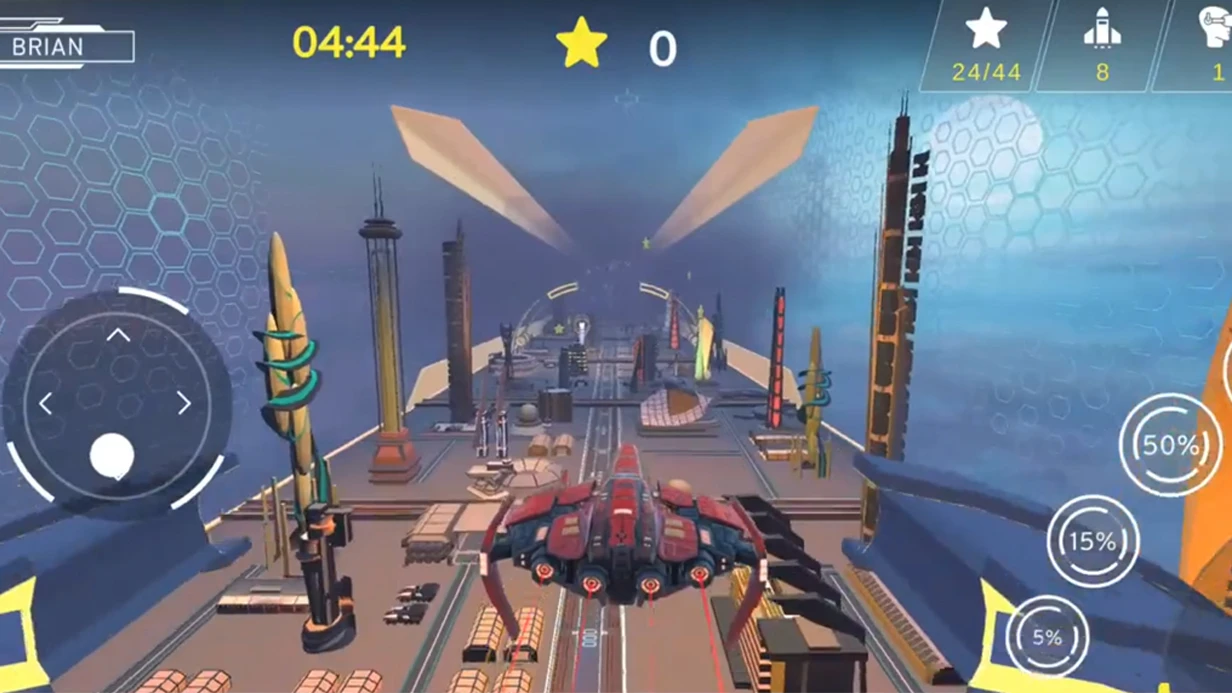
Choosing a format always starts with your task, not with the technology. If the main goal is to give visitors an experience that’s impossible in reality (flying over a city, visual-effects shows, presenting a large object “in miniature”), a VR booth is ideal.
Virtual reality completely isolates a person from the hall, captures attention, and creates strong emotions that usually turn into photos and social media discussions.
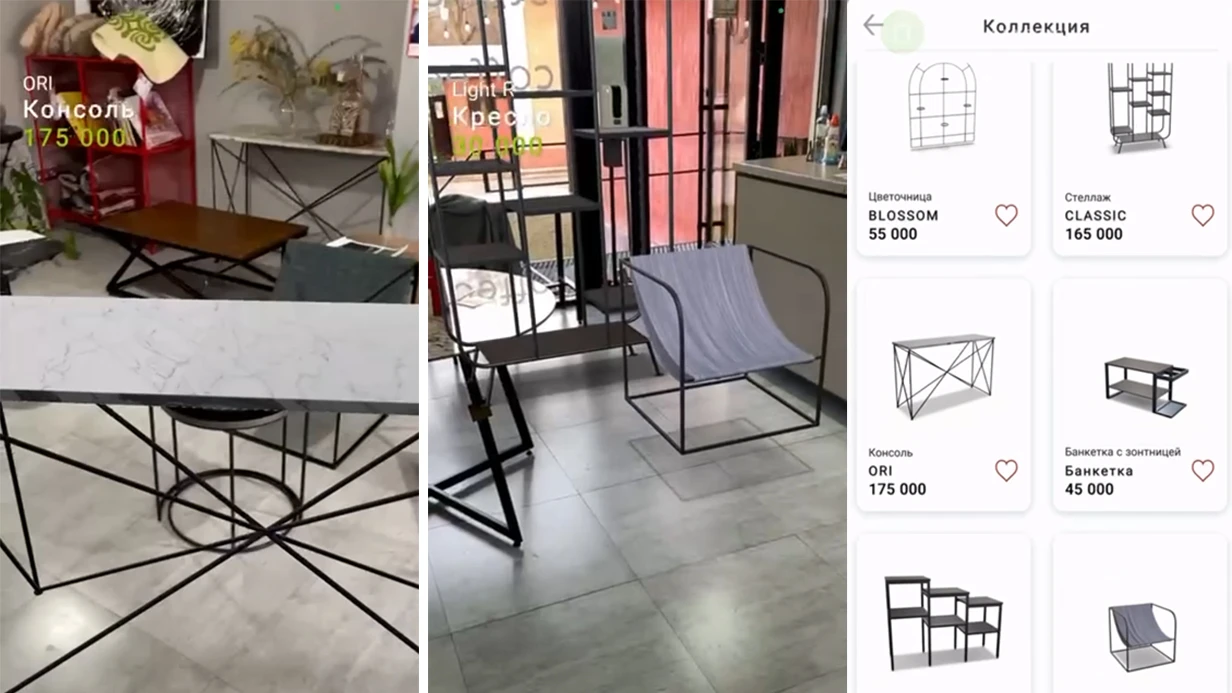
An AR solution is chosen when you need to augment the real world with digital objects — for example, “bring a museum exhibit to life” or overlay a presentation onto a display case.
Augmented reality doesn’t require wearing headsets and works well for high-throughput interaction: visitors point a tablet or smartphone camera and get interactivity much faster than with a VR session. That’s convenient if you have high traffic and can’t organize long queues.
It’s also worth assessing the space you have: a VR booth needs a dedicated area and supervision, while AR markers can be placed right in the exhibit or in a free-movement zone.
Timelines and budget also affect the choice — for example, AR is often easier to adapt to the venue’s existing design, while a VR booth is best built from scratch using modular structures. But in any case, we select the format to fit your specific task, not the other way around.
Over the years, we’ve implemented more than a dozen interactive zones for exhibitions and museums, and every project began with an analysis of the client’s goals: what visitors should feel and remember, what the traffic will be, and what technical limitations the venue has.
So even if you’re hesitating between VR and AR, we do a short consultation at the start and propose a solution that addresses exactly your business task — attracting attention, training, entertainment, or product demonstration.
In simple terms, don’t look for the “trendiest” format — it’s important to understand what you want to get from the installation. A VR booth is a deep experience and complete immersion. An AR solution is ease of interaction and audience reach.
Tell us where and for whom the installation will work, and we’ll offer a format that delivers maximum results for your exhibition.
Frequently Asked Client Questions About VR/AR Installations
Most often, clients ordering VR/AR installations for exhibitions ask about the same things: will the equipment withstand multi-day load, will the project be ready by opening, and will it be safe for visitors. These are logical concerns — a new format at the venue must work predictably, without surprises.
We remove these risks through a refined process. Over the years, we’ve delivered dozens of VR and AR projects at technology exhibitions, so we know the weak points of typical scenarios and close them at the brief stage. Every project has a well-designed redundancy plan and an action plan for emergencies.
Equipment reliability guarantee — what happens if the hardware breaks?
On-site there are always backup kits and an engineer who understands the entire installation. If a module fails, we replace it in minutes without stopping the zone. Before the exhibition opens, all equipment goes through a full test run.
Will you meet the exhibition preparation deadlines?
After the brief, we fix the calendar plan and scope of work. We assemble a standard VR/AR zone in one or two days; complex scenarios take longer, but the timeline is always stated in the contract. You get checkpoints: sketch, technical specification, ready date, and test launch.
Is the VR/AR zone safe for visitors?
We limit session duration, configure the space, and select content for the exhibition audience. Children’s sessions have separate age and storyline restrictions.
Physically, the zone is marked so that visitors don’t bump into obstacles, and emergency stop is available to both the visitor and the operator.
If you still have questions about your scenario, just write to us. We’ll show examples of similar projects and explain how we close risks in your case.What You Get After the Installation Goes Live
Launching an installation isn’t the finish line — it’s the start of its work for your brand. We hand over the project turnkey and stay with you throughout the entire event, so that you get results rather than solving technical problems.
our team works on professional equipment and proven tools, so stability is built into the solution itself.
After launch, you get a full package:
- A ready-to-run VR/AR zone: equipment configured, content loaded, scenario tested before opening.
- Training for your team: operators will figure out in 15 minutes how to greet guests and manage sessions.
- Technical support during working days: our specialist is in contact; average response time is up to 5 minutes.
- Statistics collection: how many guests visited the zone, how long they interacted, which scenes attracted the most attention.
- Content flexibility: if needed, we’ll update scenes or add branding for your current campaign.
- A post-event report: clear numbers for management and for assessing the installation’s contribution to the overall result.
These points address the organizer’s main fears: the hardware won’t let you down, the staff will manage, and you’ll get a measurable effect. Over 10 years, we’ve launched more than a hundred projects for exhibitions and events, and most clients come back to us again.
To order VR for your booth, leave a request — we’ll contact you within an hour, clarify your tasks, and propose a format that fits your budget. You’ll find contact details below. After a short brief, you’ll receive an implementation plan and timeline estimate the very next day.