



Poor navigation drives away visitors and hurts a museum's reputation
A visitor comes to a museum for an experience, not to search for the right hall.
But without clear navigation, the route turns into guesswork: confusing signs, inaccessible maps, queues of visitors asking attendants "where is that painting?" As a result, the guest spends time orienting themselves instead of looking at exhibits and leaves with the feeling that the museum doesn't respect their attention.
Losing visitors because of complicated navigation is not just a spoiled impression. It means short visits, negative reviews, and a blow to the museum's reputation: new guests choose their leisure options based on those reviews.
This is especially noticeable in large exhibitions — the more halls there are, the higher the chance that a person will grow tired of finding their way, miss landmark works, and not get what they came for.
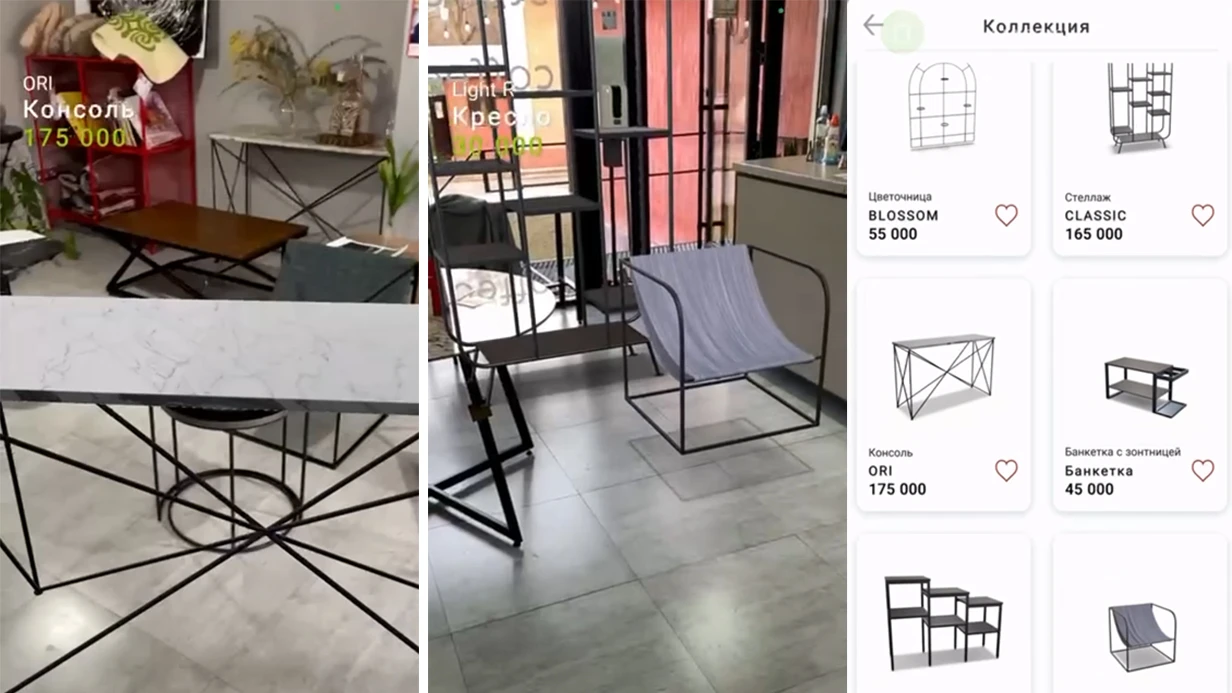
AR navigation for a museum solves the problem right in the halls. The visitor sees the route through a smartphone screen in augmented reality: arrows point the way to an exhibit, key objects are highlighted, and the map doesn't distract from the art. The guest chooses how to move — and always understands where they are and what to see next.
At our team we design such solutions for the specific tasks of a particular museum. Navigation stays invisible until needed and clear when needed.
In the end, the museum gets satisfied visitors, growth in repeat visits, and recommendations that strengthen its reputation and attract new audiences.
What AR navigation gives visitors and the museum team
For the visitor, a museum is history that comes alive, not just walls with exhibits. AR navigation turns the route into an engaging adventure: the guest sees hints, interesting facts, and hidden details right on top of the exhibition.
After this interaction, they leave not with a photo of a sign but with a personal impression they want to share.
The longer a visitor stays in the halls, the deeper they immerse themselves in the collection. Well-designed navigation suggests where to go next, highlights "hidden gems," and lets them choose a route by interest — from family to research-oriented.
As a result, average dwell time grows, and the cafe and gift shop get more traffic. For management, this is a clear way to increase revenue without expanding floor space.
A vivid impression is the main driver of repeat visits. A guest who independently discovered non-obvious details of the exhibition returns with friends or children. They tell others about the museum on social media, and each such story brings new visitors.
This is how AR navigation works not only on the day of the visit but continues to deliver reach for weeks afterward.
The museum team also gets a breather. Instead of repeating the same thing ten times per shift, staff focus on live interaction with guests and helping where it's truly needed.
Navigation takes over answers to routine questions: where the restroom is, how to get to the exit, what to see first. Staff get less tired, are less distracted by routine, and work more calmly.
We create AR navigation that solves the tasks of both visitors and administration — on professional equipment and proven tools.
In the end, the museum gets technology that speaks the language of benefit: more engaged guests, longer time in the exhibition, more repeat visits, and an unburdened team. This is an investment that pays off in experiences and loyalty.
AR navigation formats for different exhibitions
Museum visitors don't want to study maps and signs — they want to see exhibits and understand their story. But every exhibition has its own conditions: large halls, intimate spaces, temporary shows, outdoor routes.
One and the same AR navigation format can't work equally well in all cases. We select a solution for the specific tasks of the museum: sometimes a mobile guide is enough, sometimes stationary markers are needed, and for special projects — a separate scenario.
Implementation options
| Format | For whom | What it gives the visitor and the museum |
|---|---|---|
| Mobile guide on a phone | Permanent exhibitions | The visitor chooses their own route and gets context at each exhibit. The museum gets analytics on popular objects and reduced staff load. |
| Stationary AR markers | Large halls and key exhibits | Point the camera — see the object's story, restoration layers, hidden details. Nothing to download: everything works in the browser. |
| AR for temporary exhibitions | Events, special projects, traveling exhibitions | Quick launch without installation work: augmented reality zones are set up within a day. Content is easy to change between exhibitions. |
We don't offer a one-size-fits-all template; we combine formats to match the logic of the exhibition. The mobile guide covers the main route, stationary markers accent landmark objects, and temporary AR zones boost special projects.
This way the museum gets a cohesive navigation system that updates flexibly and works for the visitor's impression.
How we develop AR navigation: project stages
Creating AR navigation for a museum is a project where what matters is not only the technology but understanding the route, the exhibition's logic, and visitor behavior. We've structured the process so you see results at every stage and control budget, timelines, and quality.
Below is the standard workflow: it usually takes three to six weeks depending on the hall's scale and the number of exhibits.
-
Brief and immersion in the task. We gather information about the museum: layout, key exhibits, areas of attraction, typical visitor scenarios. We clarify the goal of the navigation — to help people not get lost, to tell about exhibits, or to direct them to specific points. The output is an agreed use scenario and a list of "points of interest."
-
Route design. We think through the logic of movement: from the entrance to the most popular areas, to rare exhibits, toward service rooms or exits. We determine where visitors need hints and where too many will start to annoy. As a result, you get a route map and hint texts that appear on screen.
-
Prototype approval. We show an interactive mockup on the museum's real floor plan: what the arrows look like, how the transition between points works, what happens when approaching an exhibit. At this stage you make edits to texts, display order, and design. Approving the mockup is the point of no return, after which we lock in deadlines and cost.
-
Development and calibration. We tune the app to the specific parameters of the space: hall dimensions, ceiling heights, lighting characteristics. We test how navigation behaves on different phones — from budget models to flagships.
This is critical for a museum: most visitors use their own devices, and all of them must work reliably.
-
Testing with visitors. We invite several people unfamiliar with the museum and observe how they complete the routes. We identify difficulties: where they stop, what they ignore, where they get confused. Based on this, we make final adjustments to the hint logic. You get navigation that actually works in real conditions, not in an "ideal scenario."
-
Launch and support. We publish the app in app stores or integrate it into the museum's existing application. We provide instructions for administrators and help with installation on staff tablets if needed.
After launch, we stay in touch: we quickly fix bugs, adapt to operating system updates, and advise on how to update content when exhibits change.
Each stage ends with a clear result — a document, a mockup, or a working version. You always know what's happening and what comes next. Launching AR navigation stops being a "black box": you participate in key decisions and understand what you're paying for.
What's included in the AR navigation implementation package
The delivery package includes everything needed to launch AR navigation without third-party contractors.
You get not just an app but a complete solution: digital content, physical markers, staff training, and instructions — everything needed for visitors to start using the navigation from day one.
- AR navigation app — a lightweight app that runs on a visitor's smartphone without special equipment. It plots routes through the halls, highlights key points, and tells you where to go next.
- Content for your exhibition — 3D models of exhibits, historical reconstructions, audio stories, and text references. Materials are created based on your collection and approved with you before publication.
- Markers and tags for the halls — compact indicators that anchor the digital layer to physical space. They don't disrupt the interior, are easy to install, and are read instantly by the camera.
- Staff instruction — a simple document with ready-made scenarios: how to welcome a guest, what to offer, how to resolve common questions. Staff can learn it in one evening.
- Staff training — a hands-on session for administrators and hall attendants. Employees learn to help visitors, explain how the app works, and respond to unusual situations.
- Technical support after launch — assistance during the first months of operation, content updates, and a fast response to any issues.
This package covers all the museum's needs: guests get a convenient route, staff get a clear tool, and management gets minimal implementation risk. Everything is included in a single contract, so you won't have to coordinate multiple vendors.
Case study: how AR navigation raised visitor satisfaction by 30%
When the Museum of City Stories approached us to improve the visitor experience, the main pain point was navigation. Guests got lost at transitions between halls, missed key exhibits, and left before seeing the highlights. This affected reviews and cafe revenue — people simply didn't stay in the museum for long.
We proposed AR navigation: the visitor points their smartphone camera at a hall, and a route appears on screen with hints and mini-stories about nearby exhibits. Nothing needs to be downloaded or studied in advance — navigation activates the moment a person enters the first hall.
It takes seconds to use, which is especially convenient for older generations and families with children.
Project results
Two months after launch, we measured the outcomes. Visitor satisfaction rose by 30%, average visit time increased by 1.5 times, and the number of positive reviews about the museum grew noticeably.
Guests began spending more time at exhibits they used to glance past, and the museum's average rating on online platforms rose from 4.2 to 4.6 points.
For the museum, this means more than just good numbers. More time in the halls means more purchases at the cafe and gift shop and higher revenue per visitor. And satisfied guests return themselves and bring friends, so advertising spend gradually decreases.
The AR navigation case proved itself so well that the museum ordered an expansion of the system to two permanent halls.
We continue to support the project: we update content for new exhibitions, add scenarios for children's programs, and are preparing a launch in temporary spaces. This is a partnership that delivers results on a regular basis, not just after the initial launch.
How to choose the right AR navigation format for your task?
There's no universal solution — the right AR navigation format depends on your task, audience, and budget. Some need to quickly orient visitors in a large building; others need to make a tour self-guided and engaging. We help you choose the option that solves your specific problem, not just "to have AR."
If the main goal is to reduce staff load and help guests not get lost, compact scenarios work: point the camera at an exhibit — get a short reference or an arrow to the next hall.
For educational programs and children's groups — expanded navigation with questions and a quest-style route. Each option scales to your budget: you can start with three key exhibits and gradually expand navigation to the entire exhibition.
For large exhibition spaces, a format tied to the museum floor plan is convenient: visitors see themselves on the map and immediately notice interesting objects nearby. This solution increases dwell time and repeat visits — guests come back to complete the route.
And for temporary exhibitions, when navigation needs to go live in a couple of days, there's a lightweight format without complex integration — it pays off quickly and is easy to update.
We've already built navigation for museums and know that the choice starts not with technology but with analyzing visitor behavior.
You get a recommendation with clear metrics: how long a guest will spend in the exhibition, how much staff load will drop, which objects will become the most popular.
Tell us about your task — we'll find a format that solves it without unnecessary costs and impresses your audience.
Frequently asked questions about developing AR navigation
When a museum plans to implement AR navigation, the team tends to ask the same questions: how compatible is it with the current infrastructure, how long will development take, and who will maintain the system after launch. Let's address the main concerns — briefly and to the point.
We work with museums of various scales — from small exhibitions to large complexes. Over the years, we've delivered dozens of navigation projects and know how to make technology work for your visitors, not the other way around.
Which devices is AR navigation compatible with?
We work with popular smartphones and tablets — visitors don't need a special museum gadget. They just point the camera at an exhibit and get a route or augmented information. If the museum already has QR codes or its own app, we easily integrate navigation into them.
How long does development take?
A standard cycle is two to four weeks, depending on the number of points and route complexity. Before we start, we lock the timeline into the contract and a stage-by-stage plan: you always know what you'll get and when. There's also an accelerated format for urgent projects.
Who handles support after launch?
After project delivery, we add a support plan: we update content, monitor compatibility with new mobile OS versions, and quickly resolve minor issues. You don't need to hire an in-house developer — one call or email to us solves the problem.
Will AR navigation overload the museum's infrastructure?
Our solution is lightweight — it doesn't require powerful servers or complex equipment. The main load goes to visitors' devices, and data is loaded from the cloud. You get stable performance even at peak weekend attendance.
If you still have doubts — write to us, we'll send examples of completed projects and calculate the timeline for your exhibition. We'll get back to you within one business day.Shall we discuss your project? Leave a request — we'll return with a plan and a cost estimate
To discuss AR navigation development for a museum, you don't need to prepare a technical specification or dive into details. Just leave a request — we'll take care of the preparation from there.
After your request, you'll receive:
- a project plan: a breakdown into stages with clear results after each one;
- a cost estimate: a transparent calculation without hidden surcharges;
- a timeline: a realistic schedule from the first discussion to launch;
- format recommendations: which platform and scenario to use for your tasks;
- team composition: who will work on the project and who you'll be in touch with;
- answers to your questions: we'll explain how the technology fits into the exhibition and what hardware is needed.
All of this comes without prepayment or obligations. You'll be able to compare options, make a decision, and approve the plan before work begins.
Based on our experience with exhibition-space projects, most clients ask about three things: how quickly navigation can be launched, how it will affect attendance, and what the risks are.
In our reply to your request, we'll address your specific situation, provide examples, and propose a solution that can be scaled.
Leave a request for AR navigation development — we'll get back to you with a plan and a cost estimate within one business day.
The rest is up to you: if the format fits, we launch the project; if not, you'll still walk away with a clear picture and an estimate for budget planning.