

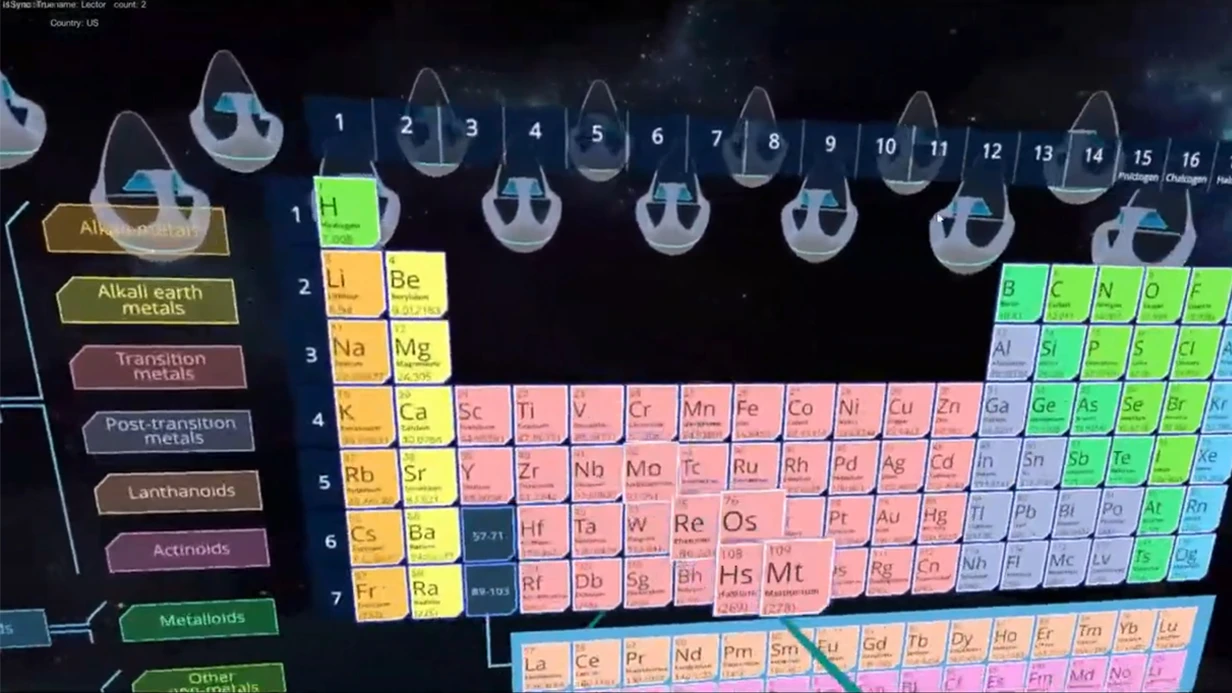


AR Product Visualization for Revenue Growth
A buyer makes a purchase decision in seconds, and most often puts it off because of doubts: will the size fit, how will the product look in the interior, does it match the rest of the surroundings.
In a regular store, this is resolved by trying on and consulting; online, by photos and descriptions, which are often insufficient. As a result, carts are abandoned, and the business owner loses up to half of potential revenue.
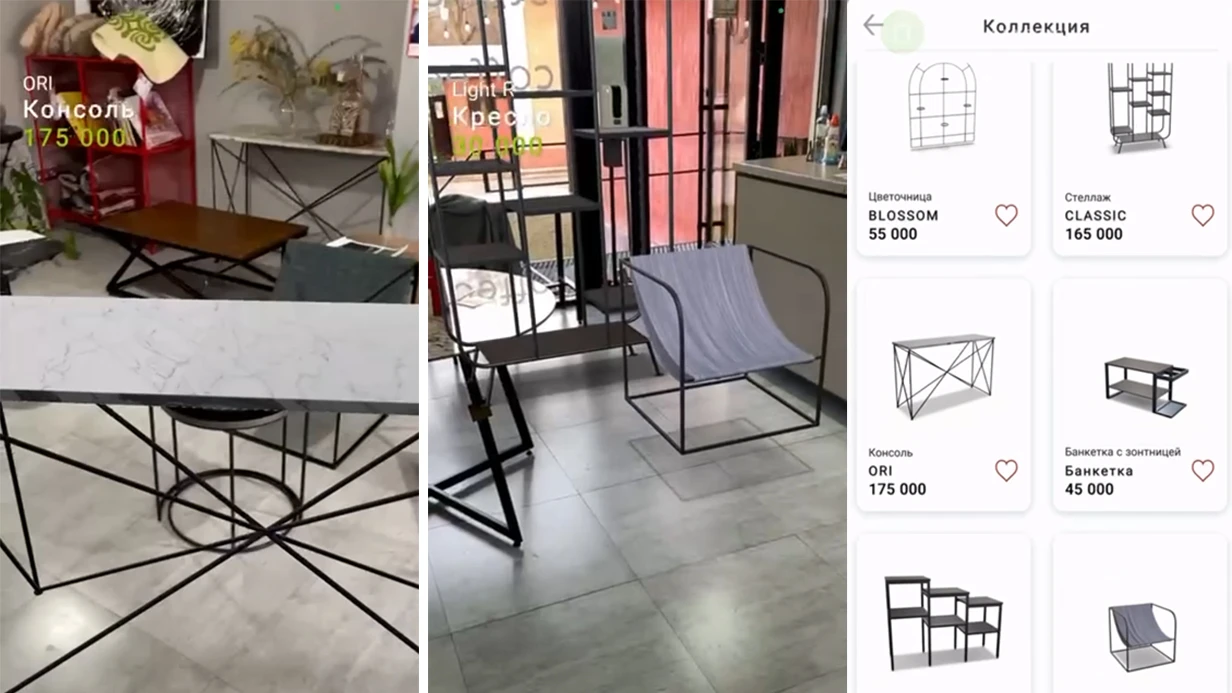
AR in the store and in the catalog removes these doubts: the buyer points their smartphone camera and sees the product in real scale, in their own interior, from different angles.
A sofa in the living room, a refrigerator in the kitchen, cosmetics on the face—all this ceases to be an abstract image and becomes part of the customer’s life.
This clarity builds confidence in the choice, and a confident buyer does not look for alternatives and returns for repeat orders.
The effect for business is measured by concrete metrics: an increase in order conversion by 20–40%, a reduction in returns due to “it didn’t fit,” and a higher average order value through upsells via the interactive catalog.
Buyers choose stores where they can “try on” a product before buying and are willing to pay more for this confidence. This is not just convenience, but a competitive advantage that directly affects revenue.
We create AR product visualization tailored to a specific business’s goals: from simple display in a catalog to full-scale try-on in a room. Implementation takes a few weeks and pays off through conversion growth within the first months. Tell us about your product—we’ll point out where AR will have the greatest effect.
What Benefits Does Visual Product Demonstration Bring?
When a buyer sees only a static photo, they cannot imagine the real size, scale, and details of the product. Doubts arise—and the cart remains abandoned.
AR product visualization transports the product into the customer’s real environment: a sofa—into their living room, a car—into the parking lot, clothing—onto their body. This removes the main fears and speeds up the purchase decision.
First effect—higher conversion. Instead of “looking at a photo,” a person starts interacting: rotating, zooming, placing the product in the right spot. Such involvement holds attention and creates a sense of ownership. Interactive demonstration significantly increases the share of completed orders.
Second effect—fewer returns. The customer sees in advance how the product looks in their environment, so discrepancies between expectation and reality become smaller.
For an online store, this means lower costs for logistics and return processing; for the buyer, it means more trust in the brand and peace of mind after the purchase.
Third effect—growth in the average order value. In AR visualization, it is easier to show combinations and sets: the customer tries on an entire style or completes an interior. Understanding the value of a set, they more often choose a more expensive item.
Additionally, time spent on the site increases—a positive signal for search algorithms and another chance for dialogue with the buyer.
We implement AR visualization using professional equipment and well-tuned tools—the client gets a stable, fast result and support at every stage. Tell us about your product—we’ll choose a format that delivers measurable value to your business.
Interactive Presentation Formats in the Catalog
In a catalog, the same product can be shown in different ways: from a full 3D model to a virtual try-on in a real interior through augmented reality.
Each format solves its own problem—helps to examine details, “try on” an item in one’s own environment, or present the product in the best light. The choice of format determines how quickly a visitor makes a decision and how confident they feel doing so.
Below are the three main formats we use in catalogs and their impact on the buyer.
| Format | Who it’s for | What it gives the customer |
|---|---|---|
| 3D model | Buyers who care about details and angles | The product can be viewed from all sides, zoomed in, and rotated—this replaces an in-store inspection and answers the question “what does it look like from the back?” |
| AR visualization | Those who doubt whether the product is right for them | Through the smartphone camera, the buyer “places” the item in their room. The real size, color, and fit with the interior are immediately visible—fewer returns, more trust |
| Photo demonstration in an interior | Marketing and social media | Ready-made realistic scenes where the product looks its best. Suitable for ads, product cards, and presentations—increase recognition and desire to buy |
Which format to choose depends on the task. If you need to provide maximum information about the product, use the 3D model. If the goal is to reduce the risk of returns and doubts like “what if it doesn’t fit,” add AR visualization.
For emotional presentation and advertising campaigns, photo demonstration in an interior works best.
Most often, we combine formats: the 3D model serves as the foundation, AR provides a personal try-on effect, and photo demonstration works for visual appeal. This approach addresses every buyer doubt at each stage—from the first glance to the purchase decision.
How a Demonstration Implementation Project Proceeds
We make the process of implementing AR product visualization predictable. You get clear stages, timelines, and responsible people—no chaos, no “just wait for the result.”
- Brief and goal. You tell us about the product and audience, and we determine how to measure success: reach, conversion, engagement. This is the foundation of AR development.
- Plan and timelines. We fix the implementation stages, checkpoints, and work schedule.
- Demonstration development. We create a three-dimensional image of the product, an interface, and an interaction scenario. We show intermediate versions so you can influence the result.
- Testing. We check the operation on different devices, speed, and usability. We eliminate issues before your clients see the project.
- Launch. We install the solution, train your team, prepare a QR code and instructions for visitors.
- Support. We answer questions, gather feedback, suggest improvements, and expand the catalog.
As a result, you get a working AR product visualization, and your team gets a clear system and reliable support. We manage the project from the first brief to launch and beyond.
What Is Included in the Solution Delivery Package
When you order AR visualization, it is important to understand: you get not just a 3D picture, but a ready-made sales tool.
We deliver the entire solution—from product modeling to training your employees—so you can launch it without a separate IT department and start using it right away.
- Product modeling—we create an exact 3D copy of the product with materials, colors, and fine details. The customer sees the product as it is in reality, can view it from any side, and zoom in on the necessary element.
- Integration into your system—we embed the visualization into your website, catalog, or mobile app. Everything works on regular smartphones and tablets, without additional devices or complex software installation.
- Configuration and administration—we connect access, set up employee permissions, and update content. You don’t have to think about the technical side: it’s under control, and all changes are made promptly.
- Team training—we conduct practical sessions for managers and marketers. They learn how to launch the visualization, change models for a new assortment, and use view statistics to improve sales.
- Post-launch support—we stay in touch, answer questions, and help solve non-standard tasks. When your assortment changes or an ad campaign launches, you quickly receive updated materials.
- Technical support—we guarantee the stable operation of the solution. We handle all errors and failures, so your customers always see a high-quality image and never encounter freezes.
This delivery package covers every stage—from modeling to daily operation. You get a predictable result: a fast launch, your team’s confidence in the tool, and growing customer engagement from people who can examine the product before buying.
Case Study: How AR Visualization Increased a Store’s Conversion
One of our clients—a furniture store chain—faced a typical problem: visitors looked at products for a long time but rarely moved on to purchase. Customers could not imagine a sofa or wardrobe in their room, so they postponed the decision. We proposed using AR product visualization to remove this barrier.
In two weeks, we integrated AR viewing into the catalog: a person points their smartphone camera at the floor and sees the selected piece of furniture in real scale right in their home. No apps or registrations—the entire session takes less than a minute.
The technology works directly in the browser, and for accuracy, professional AR tools are used—the customer gets a stable result without delays.
Implementation Results
A month after launch, we saw noticeable changes in customer behavior:
- Conversion to purchase increased by 34%—people stopped fearing that the model would not fit their interior.
- The average order value increased by 21%: having seen the product in scale, customers were less likely to decline options and add-ons.
- Return on advertising grew almost threefold—the audience warmed up by augmented reality arrives with clearer intentions.
- The share of repeat orders in a quarter doubled.
The chain’s manager noted that previously photos and videos in the catalog did not give the feeling of “how this will look at my place.” After launching AR projections, customers began making decisions faster and returning less often with requests for replacement.
Today, this VR/AR case is considered exemplary for our retail clients, and we regularly receive requests for similar solutions for other product categories.
Frequently Asked Questions About Implementing an Interactive Catalog
Many clients ask the same questions before implementing an AR catalog: how difficult is it, how long will it take, what happens when products change, and when will the investment pay off. The doubts are understandable—interactive technologies seem expensive and temperamental. In practice, it all comes down to configuring a ready-made solution, not developing from scratch.
Is it difficult to integrate the catalog with our website or store?
Integration takes a few business days. We connect the module to your website or product management system—you upload content, and visitors immediately see products in 3D and augmented reality. You won’t need to change internal processes.
Isn’t it too expensive?
The cost depends on the number of items and formats: you can start with a showcase of 10–20 products and then scale. The catalog pays for itself through higher conversion and fewer returns—the buyer sees the product at the right angle in advance.
What happens if a product changes?
The interactive catalog works like a regular admin panel: you change the price, description, or model, and the update immediately appears to customers. You don’t need to rebuild the app or wait for a release—updates are applied automatically.
How can we tell that the investment will pay off?
We calculate before launch: planned traffic, time in the catalog, expected conversion growth. After launch, we show statistics for each item—you can see which products get viewed longer and on which pages visitors are lost.
If you have any remaining questions, send us a list of products and examples of categories. We’ll advise which format suits your volume and goals.How to Choose the Right Demonstration Format for Your Business?
Choosing an AR visualization format begins not with technology but with the task. Large furniture and cars are shown in real size, clothing—through virtual try-on, complex equipment—through interactive disassembly.
First, decide what the buyer should feel: confidence in scale, a desire to try on, or an understanding of how the product works.
To understand which AR you need, answer three questions: where the customer will see the product, what emotion you want to evoke, and what they should do after viewing. If a person is choosing a sofa from a catalog, they need to see it in their living room.
If choosing glasses—try them on. If looking at a coffee machine—examine the details. The answers eliminate unsuitable options and leave two or three scenarios.
Then focus on the specifics of the product. For furniture and home appliances, placing the model in a real interior works best—the customer sees whether a wardrobe fits into a niche and decides on the purchase faster.
For clothing and accessories—try-on on a customer’s own photo, which reduces the risk of returns. For engineered products—detailed inspection with the ability to “look inside.” For real estate—a virtual tour when a physical visit is not yet possible.
Do not forget the goal of implementation.
AR viewing in a product card boosts an online store’s conversion, an interactive area at an exhibition collects contacts and helps you stand out among booths, and a large installation in a showroom creates a wow effect and strengthens brand recall.
It is better to start with one format on one product category, measure the growth in orders and repeat purchases, and then expand.
We help you choose a scenario for your task: we analyze the product, audience, and expectations, and offer a solution that will bring measurable results.
Order Interactive Catalog Development
Ordering interactive catalog development means getting a tool that turns an ordinary product view into a full-fledged meeting between the customer and the product.
The buyer sees the product in their own space, evaluates sizes, materials, and interior compatibility—and makes a decision faster, while returns happen less often. We work remotely and handle the entire process from idea to launch, so you do not need to understand the technology.
What you get after submitting a request:
- Calculation of timelines and an approximate scope of work for your catalog—already at the first consultation.
- Selection of a visualization format for your niche: an application, a web catalog, or a solution for the sales floor.
- A demonstration of similar projects—you will see how it looks for businesses in your field.
- Solution architecture and a development plan without technical details, in the language of results.
- A transparent proposal with a fixed cost and stages—no hidden extra charges.
- Testing and support after launch, so the catalog works stably on your customers’ devices.
Leave a request for AR product visualization and we will prepare an individual solution for your tasks. All you need to do is write to us or request a callback.
We’ll explain how an interactive catalog pays off in your niche and help you estimate the potential effect already at the brief stage.