



AR Navigation: Why Visitors Get Lost and Leave Without Buying
Imagine a shopping mall, an exhibition pavilion, or a stadium where thousands of guests arrive. A person wants to find a specific store, booth, or exit—but spends ten to fifteen minutes wandering around. By then, the impression of the visit is ruined, and the desire to come back noticeably drops.
Lost visitors mean direct losses, and these are higher than they seem. Anyone who cannot find the right department will not make the planned purchase.
In large spaces, up to a third of visitors leave without the desired result, and those who do reach their destination remember the experience as negative. Next time they will choose a different place—one that is clearer and more welcoming.
There are also hidden losses. Staff get distracted by repeated questions like “where is it?”, queues form at information desks, and visitors feel tired before shopping or the business program even begins. All of this lowers the effectiveness of any event—from an exhibition to the opening of a new space.
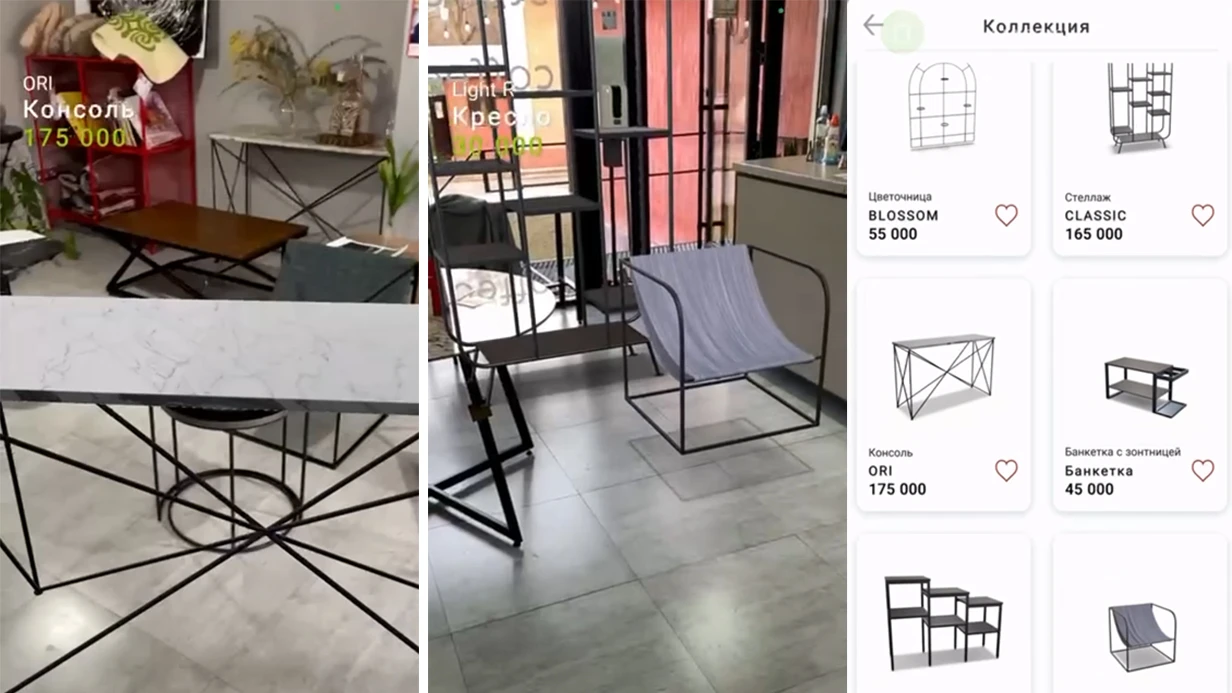
AR navigation solves this problem without extra signage or rearranging the hall. Visitors simply point their smartphone camera—and arrows, hints, and information about points of interest appear on top of the real-world image.
Guests immediately see where to go and also notice promotions and booths they would otherwise ignore.
For business, this means higher sales: every visitor reaches the right spot and sees what they came for. The visitor experience becomes predictable—more time for shopping, less stress, higher loyalty, and a greater likelihood of repeat visits.
We have been implementing such solutions for over ten years, helping companies turn complex navigation into a clear, profitable tool.
What Benefits the Technology Brings to Business
AR navigation turns an ordinary trip to a store or event into an engaging quest. The visitor opens the app, sees prompts on the screen, and easily reaches the desired department, booth, or location—no confused glances at signs and no queues asking “where is it?”.
This immediately changes attitudes toward the brand: guests feel cared for, and the smartphone becomes a bridge between the physical space and digital service.
For business, the key point is that such experiences convert into measurable results. Here are five effects we regularly see in projects:
- Increased loyalty: visitors get exactly what they were looking for, without stress. They come back more willingly and tell their friends about you—word of mouth works in your favor.
- More time spent at the venue: when guests have an interesting route and tasks, they don't rush to leave. Every extra hour on site means additional purchases, participation in promotions, and deeper engagement with your assortment.
- Brand awareness: an unusual AR scenario is a reason to take photos and post them on social media. Users generate content about your company themselves, expanding reach without advertising costs.
- Visitor data collection: anonymous smartphone telemetry shows where people linger, which routes they choose, and what interests them most. This data helps improve floor layouts, product placement, and crowd flow logistics.
- Convenience and reduced workload: fewer questions to staff, shorter queues at information desks, and no need for extra printed materials.
Importantly, this is not about “technology for technology’s sake.” The client receives a working tool that is implemented quickly and delivers results within the first few weeks.
We use proven solutions and always tie functionality to business metrics—so you see not just nice animation but also growth in engagement and returning visitors.
AR Navigation Formats to Match Your Venue’s Needs
Each venue dictates its own navigation rules: in a shopping mall, people need to find stores quickly; in an airport, they must not miss their flight; in a museum, they want to cover the exhibits. Static signs force visitors to search for maps and ask staff.
AR navigation shows the route on top of the camera view: people see arrows and explanations right on the screen and immediately know where to go. This reduces staff workload and improves the overall impression of the venue.
We select the format based on the venue’s tasks and scale. The result is fewer inquiries at information desks, higher visitor engagement, and more time spent shopping or exploring.
Formats for Different Venues
| AR Navigation Format | Best For | What It Delivers to Clients |
|---|---|---|
| Routes to specific stores | Shopping malls | Visitors find a boutique quickly, don't get distracted by searching, and spend more time in the shopping area. |
| Navigation to the departure gate | Airports | Passengers miss flights less often, and pressure on information services decreases. |
| Guide to halls and exhibits | Museums | Guests choose a route, receive prompts at points of interest, and stay in the exhibition longer. |
| Production facility tour | Factories | Visitors see production lines without interrupting operations, and managers don't have to guide every group personally. |
In any format, AR navigation works on visitors’ smartphones—no need to buy expensive equipment. We configure the system to match your venue’s layout and points of interest, so routes accurately reflect the logic of your space.
How the Project Works: 6 Steps of Implementation
We structure the work so that at every stage you understand what is happening, what results have already been achieved, and what comes next. No “black box”: from brief to launch, you participate in key decisions and get exactly the outcome you agreed on.
- Brief and task discovery. We study your space, visitor scenarios, and business goals. You receive a description of how AR navigation will change routes and which areas will become more attractive.
- Prototype and implementation plan. We align the navigation’s visual style, content volume, and timelines. You see a calendar plan of project stages with the team lineup and areas of responsibility.
- Development and content delivery. We build the navigation: map, points of interest, routes, and hints. We fill it with your data and adapt it to the specifics of your premises.
- Testing in real scenarios. We test navigation under the conditions of your venue—with different lighting and crowd levels. We collect feedback and fix any issues before launch.
- Launch and team training. We train your staff to update content and track statistics on their own. We launch navigation for visitors without complex technical preparation.
- Support and evolution. We monitor system stability, answer questions, and help improve scenarios. You can extend navigation to new areas or add features without rebuilding the entire system.
What Is Included in the Delivery
After the project is completed, you receive not just code but a working solution integrated into your venue’s processes. The package includes everything needed for AR navigation to start working immediately and add value—without outsourcing developers.
The full delivery package is as follows:
- Working AR application — configured for your venue, with maps, routes, and points of interest. Visitors see a familiar interface, not an “experimental prototype.”
- Navigation content — 3D wayfinding cues, arrows, labels, and object markers. All elements are already uploaded, tested, and ready for use on launch day.
- Management system — an intuitive tool that lets your staff update routes and information themselves. No need to wait for a contractor for every change.
- Team training — a short practical session for administrators and staff. After it, employees confidently work with the system and assist visitors.
- Clear documentation — instructions for staff and a guest guide. Everything is written in plain language, without technical details.
- Warranty and support — we take responsibility for the stable operation of the application under the stated conditions. We stay in touch after launch: we promptly fix issues and help with implementation.
The warranty period covers the correct operation of the navigation, and support does not end with the signing of the acceptance certificate. We stay close so you can focus on your event or venue operations rather than technical questions.
Ultimately, you are not buying development as such, but a ready result: visitors find their way without staff, the brand gets a modern tool, and your team gets an understandable system that requires no external specialist.
Case Study: How the Technology Increased Conversion in a Shopping Mall
In a large shopping mall, visitors easily get lost: signs confuse them, the store they need is hidden behind escalators, and time for searching keeps shrinking. Every such lost guest means an unrealized purchase and lower rental revenue for the owner.
We solve this problem with AR navigation—a system that shows the route directly on the smartphone screen over the real-world space.
Our first pilot project was carried out in a mall with a flow of 1.5 million people per month. We implemented navigation throughout the entire building—from the parking lot to the café on the upper level.
Results over two months: the share of visitors who reached their target store grew by 27%, and the average search time dropped from 14 to 6 minutes. People stopped wandering and started reaching the brands they wanted. Repeat visits to the mall also increased—by 15% compared with the same period before launch.
The mall director assessed the effect this way: “We expected this to be just entertainment, but AR navigation turned into a working tool: tenants noticed higher revenue at their locations, and guests became more willing to come back.”
What This Means for Business
The project paid for itself in three months—thanks to higher conversion in rented spaces and reduced pressure on the information service. We received transparent route statistics: tenants can see how often their store is searched for and adapt their promotions accordingly.
After the trial period, we signed a contract for ongoing maintenance and expansion of the system across the entire chain of malls. This confirms that AR navigation is not a toy but a measurable revenue-driving tool.
How to Choose the Right Format for Your Venue?
Choosing an AR navigation format starts with the task, not the technology. For one venue, targeted prompts are enough; for another, a full route with waypoints is needed. The answer to the question “what should the user accomplish?” determines which option will deliver results.
If you need to quickly guide a visitor from the entrance to the right booth or office, simple navigation with indicators on the smartphone screen works well.
If the goal is to engage guests in exploring the area, distribute visitor flow, and reduce staff workload, it is worth considering a scenario with multiple points of interest and gamification elements.
For a large venue with several zones, stage-by-stage routing is effective, while for a compact space AR markers on the camera view are sufficient.
In every case, we select the format for your task: visitor coverage, conversion into target actions, and collected movement data—all of this affects both return on investment and the guest experience.
That is why we conduct a consultation before development: we analyze event goals, audience expectations, and success criteria. Based on this, we propose a specific navigation type—without unnecessary options or extra costs.
You get a solution that solves your actual business problem, not just a demonstration of technology’s possibilities.
Frequently Asked Questions About Implementation and Warranties
Clients ask the same things before every AR navigation project: what happens if the equipment fails, how will staff handle the new system, and what are the realistic timelines. These are normal concerns—implementing technology affects equipment, people, and workflows alike. To help you make a calm decision, we address each concern point by point.
What happens if the AR navigation equipment breaks down?
We work with professional equipment designed for intensive use in retail halls and public spaces. But even it sometimes needs attention.
Therefore, the contract specifies device replacement within one to two days, and for critical scenarios—a backup set while repairs are being made.
Support does not end after launch. Our engineers monitor device status remotely and often notice a problem before it affects visitors.
Will the new system create additional workload for staff?
No, if it is implemented correctly. We design the interface so that it does not require constant oversight from employees: visitors manage on their own, and help is needed only in unusual situations.
We train frontline staff in an hour and a half—a practical session covering typical scenarios. No forty-page manuals or lengthy training courses.
What implementation timelines for AR navigation are realistic?
A typical project takes four to eight weeks: brief, planning, development, on-site testing, and launch. The timeline depends on the floor area, the number of zones, and how ready the source materials are: floor plans and information about points of interest.
The main risk to the schedule is not technical challenges but delays in feedback from the client. That is why we set approval milestones in advance. At every stage, you see the intermediate result and understand exactly what will be ready by a given date.
What warranties do you provide for system performance?
The warranty is specified in the contract and covers two levels: the correct operation of the application in agreed scenarios and technical support for the entire service life. We do not disappear after the project is delivered.
If the layout changes in six months or a new point of interest is added—you know who to contact and how long it will take. These are predictable costs, not an open question.
We are ready to discuss any of these points in detail at the briefing stage and record the commitments in the contract. Your task is to voice concerns; ours is to close them so you no longer have to think about them.Order Custom Development for Your Task
Large-scale spaces—from shopping malls to business campuses—often turn the visitor journey into a quest: signs don't work, staff get distracted, guests are late and frustrated.
AR navigation solves this problem naturally: a person points their phone camera and sees arrows, hints, and points of interest right on top of the real-world space.
But every venue is unique—corridors, halls, access zones, peak loads—which is why you need custom development rather than a boxed solution.
Over 10 years, we have built dozens of such systems for events, exhibition centers, offices, and tourist sites. We take care of everything: from site research to launch and support.
You receive a ready-made tool that saves visitors’ time, increases their loyalty, and reduces staff workload.
Leave a request—and within 2–3 business days we will return with a cost estimate and project plan. The plan will include:
- use case scenario: where exactly, how, and for whom the navigation works;
- audit of the premises and existing equipment;
- interface mockup—you will see in advance how it looks from the user’s perspective;
- calendar plan of development and launch with clear deadlines;
- detailed estimate by stages—with no hidden charges;
- recommendations for integration with the website, app, QR codes, and other contact points.
The estimate and plan come with no obligations. You simply get an understanding of what to do next and what the cost will be. Send a description of your task through the form—we will respond the same day.
The sooner we start, the faster your clients and guests will stop getting lost in your space and begin enjoying every minute of it.