





Why Customers Leave Due to Inconvenient Furniture Selection
Choosing furniture is always a risk for the buyer. They see a sofa in a catalog or showroom, but not everyone can imagine how it will fit into their living room.
Doubts about color, size, and how it matches the rest of the decor make them postpone the decision, and in the end they go to those who helped them decide without unnecessary questions.
For a store, this means lost orders and customers who never make it to checkout. An inconvenient selection process hurts revenue even with a good assortment and attractive prices.
Until the buyer is confident the furniture will look right, they won't part with their money — they'll keep looking elsewhere.
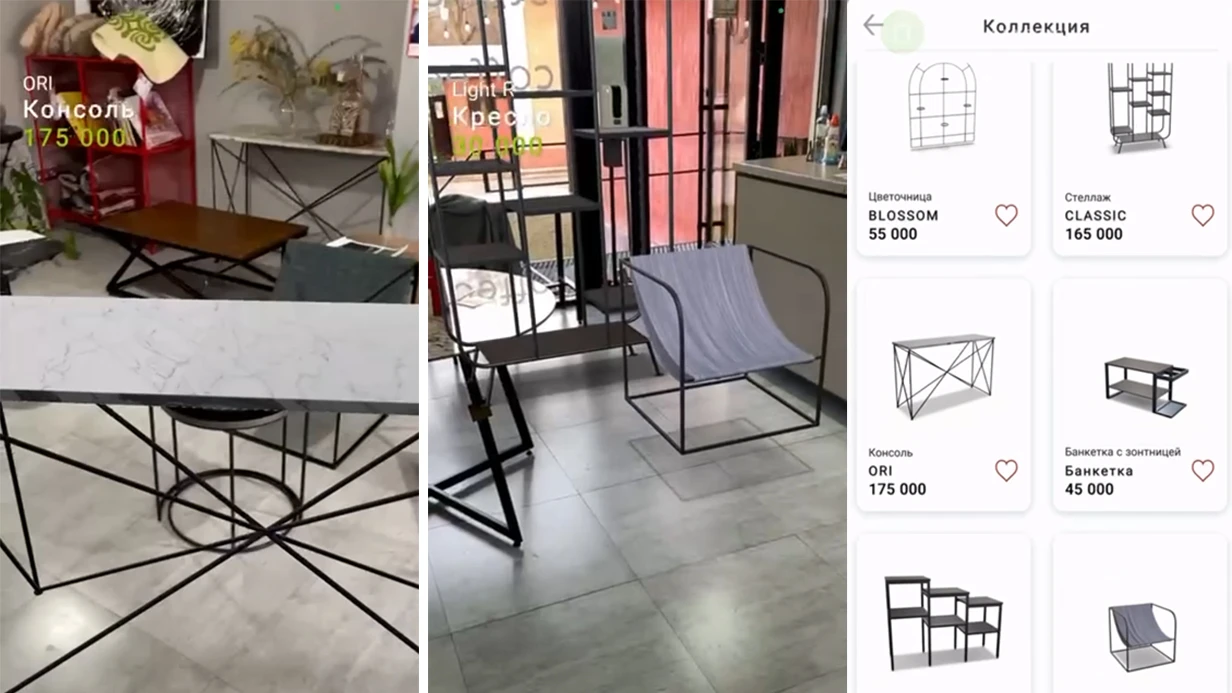
AR furniture visualization flips this scenario. The buyer points their smartphone camera at their room and sees the selected sofa, wardrobe, or armchair right in their interior. They can move the item, change the color, and immediately see how well everything fits. This removes the main fear and turns selection from guesswork into a confident decision.
For a furniture store, this is not just a nice feature but a conversion tool. A buyer who sees an item in their own home makes a decision much faster and returns items less often.
So implementing such visualization pays off from the very first orders and builds loyalty that brings customers back for future purchases.
We help launch AR furniture visualization without unnecessary complications. We understand the needs of your showroom or online store, select the right solution, and implement it so that it starts generating orders rather than simply looking high-tech.
What AR Visualization Brings to Furniture Sales
Furniture buyers rarely make a decision right away: it's hard for them to imagine how a sofa or wardrobe will fit into their living room, whether the size and color will work.
This fear of making a mistake is what most often holds back a purchase and causes them to delay their choice.
AR visualization removes the doubts: a person sees the item they like in their real interior, can move it, change the upholstery color — and within a few minutes feels confident in their decision.
In a showroom, this directly affects conversion. The buyer doesn't just look at a display but "tries on" furniture for their own room. Fewer questions like "how will it look?" means fewer rejections and returns.
The salesperson gets a visual argument, and the customer gets the feeling they've already seen the result.
This interactivity speeds up the selection process and increases the average check — people are more willing to choose a more expensive model when they see it in their own space.
An interactive catalog with AR mode turns an ordinary browse into a live experience. Instead of static photos, customers work with scale, materials, and lighting.
This holds a visitor's attention in the showroom and on the website, boosts interest in the assortment, and helps a brand stand out from competitors. Customers remember not just the furniture but the impression of a convenient service.
Loyalty also grows: a buyer who was helped to make a decision comes back for new furniture and recommends the store to friends. AR visualization becomes part of the customer experience they are willing to pay for and talk about.
For business, it also reduces the load on sales staff — customers resolve many questions themselves, navigating the catalog at their own pace.
Implementing AR visualization pays for itself through higher sales and fewer returns. We help configure this tool for your assortment and embed it into showroom operations so the technology delivers measurable results within the first month.
AR Furniture Display Formats for Your Task
Furniture buyers cannot imagine how a sofa will fit into their room: they doubt the scale, color, and compatibility with the rest of the interior. These doubts drag out the decision and increase the number of abandoned purchases.
An augmented reality mode removes the main barrier — the customer sees the product within their own walls, can walk around it, move it, and assess the dimensions.
For a furniture business, this is a way to reduce returns and increase conversion without changing the usual sales process.
Which AR visualization format should you choose? It depends on the point of contact with the customer: one solution works well on the website, another in the showroom, and a third during a measurer's home visit. We match the scenario to your sales funnel and show how it will affect the result.
| Format | Purpose | What It Gives Your Customer |
|---|---|---|
| Web visualization | Catalog on the website, social media promotion | The buyer opens a product card and immediately views the model in their room — without installing apps or registering. |
| Mobile app | Consultant work in the showroom and on site | The manager shows a sofa, wardrobe, or kitchen in the customer's interior, helps them choose, and speeds up the deal. |
| AR showroom display | Demonstrating the entire collection in a limited space | The customer projects the items they like directly onto the showroom floor and compares models in a minute. |
| Virtual room | Creating a complete furnishing setup | The buyer puts several items together in one ensemble, sees them as a whole, and orders the set. |
We configure each format to your specific needs: we fill the display with your models, connect it to your accounting system, and train your staff. You get a working sales tool with clear analytics and technical support at every stage.
How a Furniture Visualization Project Works
A furniture visualization project consists of transparent development stages: from brief to launch and support. You are involved at key points, see intermediate results, and approve every decision.
You don't need technical knowledge — it's enough to understand how your customers behave and what the outcome should be.
Work Stages
-
Project brief. We capture the assortment, usage scenarios, and timelines. We determine how customers will choose furniture in their interior.
-
Preparing digital copies. We turn your samples into dimensional models that can be placed in a real room.
-
Scenario design. We decide how users will place furniture, change colors, and work with materials. We approve the interface before development begins.
-
Prototype development. We build a working version of the app, you test the logic and make changes.
-
Testing and approval. We check stability and usability, eliminate errors, and approve the final version before launch.
-
AR app launch. We publish the solution, set up access for customers and managers, and provide a link or QR code.
-
Support and growth. We add new items, update collections, and improve the interface based on feedback.
What Is Included in an AR Application Development Project
When you order the development of an AR application for furniture, it's important to understand that you're getting more than just a "program." The delivery package includes every component your team needs to start using the solution immediately: from structured data to a ready-made guide for employees. Below is a complete checklist of what is included in the project.
- Documentation package — technical and user documentation describing the solution: installation instructions, configuration guides, and update rules. Your specialists can understand the system without a long dive into implementation details.
- Source materials and files — all 3D furniture models, textures, and ready-to-use settings templates for adding new items created during the project. You remain the owner of all digital assets and can transfer them to any team in the future.
- Staff training — a hands-on session for employees who will work with the application: launching, showing customers different interior options, and updating the assortment. A recording of the training remains with you to quickly onboard new staff.
- Technical support — for an agreed period, direct communication with engineers to resolve any issues. You get bug fixes, configuration help, and consultations without worrying about the technical side.
- Update procedure — a simple guide for your employees on how to make changes to the furniture catalog: adding new models, changing prices and descriptions. After brief training, this can be done without developer involvement.
In short, this is a transparent and complete package with no "blind spots." You are not investing in a "black box" but in a manageable solution: documentation, files, a trained team, and support at the start — everything needed to make the project a working business tool.
Case Study: How AR Visualization Increased a Showroom's Sales
Furniture buyers often hesitate: will the sofa fit in terms of size, will it blend with the interior, will there be enough room to reach the wardrobe?
These doubts stall the deal or make the customer leave to "think it over." For a furniture showroom, we built an augmented reality service: a person points their smartphone camera at their room and sees a sofa, table, or wardrobe immediately in real size.
The result of this AR visualization case was noticeable within the first month. Conversion to inquiries increased many times over: customers stopped hesitating and began arranging delivery during their visit.
Managers gained a simple tool for handling objections, and buyers gained the ability to change the color and placement of the item in their own living room rather than in their imagination.
The Mebel-Style showroom tested the service on its upholstered furniture line. Over two months, the number of consultations grew by a third, and the share of inquiries with completed orders rose by 40%.
Customer feedback: "People spend 5–7 minutes 'trying on' armchairs against their interior — this is the best way to remove the fear of buying. Now neighboring showrooms lose to us before we even meet in person."
After the pilot, the owners ordered augmented reality for a second collection and integrated it into advertising — the ads now show the product in an interior right away.
So one tool solved two problems at once: it increased sales and gave the brand an advantage that can be demonstrated even before a customer walks into the showroom.
How to Choose a Visualization Format for Your Product?
Choosing a furniture visualization format starts not with technology but with a business goal. If a customer buys a sofa from a photo, they need one tool; if you're presenting an entire furniture set in an interior, they need another.
The scenario determines how quickly a buyer makes a decision, how many returns there are, and how many reasons for doubt remain.
For furniture, the decisive factor is scale and harmony with the surrounding environment. Augmented reality lets a customer place your sofa or wardrobe in their own living room and see the real dimensions, color, and texture before purchase.
Virtual reality goes deeper — when an architect or designer wants to "walk through" a designed interior with your furniture and evaluate how all the pieces work together.
Pay attention to where exactly visitors will encounter the visualization. If the task is to increase conversion in an online store, choose an AR module that works on an ordinary smartphone without additional apps.
If you're planning a showroom, exhibition, or partner presentation, a VR format will create a stronger emotional response and a memorable impression.
Preparation time and budget depend on these requirements: AR anchoring to a photo of a room is implemented faster, while a full virtual space requires more development.
We highlight this choice for the client before work begins: we analyze where the customer will see your product — in the catalog, on a marketplace, or at an event. Then we propose a format that reasonably solves the task without unnecessary investment.
Tell us how you want to show furniture to customers — we'll advise which approach will deliver the maximum result for your assortment.
Frequently Asked Questions About Implementing AR Visualization
Implementing AR furniture visualization raises similar questions among business owners. Most often they ask about timelines, budget, compatibility with customers' phones, and integration complexity with the catalog. We answer the main concerns — briefly and to the point.
If your question isn't here, ask it directly: we'll review it and come back with a timeline estimate and a cost guideline.
How long does AR visualization development take?
A typical project takes two to four weeks. The timeline depends on the number of items in the catalog and the complexity of the 3D models. We break the work into stages — you see intermediate results and can influence the course of the project.
Will it work on an ordinary smartphone?
Yes. We develop for the main versions of iOS and Android. The customer simply opens a link or QR code — no app installation needed. This increases reach because the technical barrier for the customer is minimal.
How will this affect furniture sales?
AR visualization helps the buyer "try on" a sofa or wardrobe against their own room. This reduces purchase hesitation and lowers returns caused by unsuitable dimensions. For business, this means higher conversion in the online store and fewer product complaints.
How much does a project cost and how is the price determined?
The cost depends on the size of the catalog and the required features. We offer a fixed estimate after the brief so you know the budget before the start. Transparent pricing — no hidden payments and no "extras along the way."
What if I need to update models or add new products?
We leave a clear guide and, if needed, refine the project after launch. Support is included in the contract — you are not left alone with an unclear system.
Get a Project Cost Estimate for Your Business
The project idea is only the beginning. The decision to invest in AR furniture visualization should be based on numbers: how much time it will take, what resources are needed, and what result you'll get at the start.
We'll prepare an estimate for your task — taking into account the catalog size, content formats, and expected load.
Order development in the "brief → estimate → plan" format: we'll gather requirements, propose a suitable solution, and define stages with realistic timelines. The consultation gives you a transparent picture — you can compare with other contractors.
What You'll Receive After Your Inquiry
- Budget and timeline forecast — an accurate commercial proposal with no hidden extras: you know what you're investing in and when you'll see the finished product.
- Analysis of your scenario — we'll identify where AR integration will strengthen sales: in the catalog, on the showroom floor, or in an advertising campaign.
- List of formats for your channels — from a web page to a mobile app, so the technology works exactly where your audience is.
- Integration plan for your processes — we'll discuss how the app and 3D content will fit into your current assortment and collection updates.
- Clear work roadmap — no technical details: you see the stages, timelines, and the result of each one.
- Recommendations for future growth — the catalog is scalable, and we'll show how to add new items without unnecessary spending.
The estimate takes 1–2 business days after the brief, and the consultation lasts about 30 minutes via video call. You receive a document you can already use for budget planning and launch.
To get an estimate, contact us in any convenient way — through the form on the website, via messenger, or by phone. Tell us what your catalog looks like and where you plan to use visualization — we'll handle the rest.