





Customers Can't Picture How to Choose Doors Without Trying Them On
Choosing doors and window systems is a decision that affects the entire interior. But how do you explain to a buyer that this particular door will suit their flooring, walls, and lighting? Without a real try-on, they look at the catalog and wonder: how will this look in my home?
It's exactly this uncertainty that makes the customer leave to "think it over" and postpone the purchase for weeks.
The most painful part for business is lost deals that fall through not because of price, but because of the impossibility of trying the product against their own interior. Flat photos on the website don't convey scale, texture, or how the color works with the surrounding space.
The customer is afraid of making a mistake — a door is a long-term purchase, and returns and reinstallation are expensive.
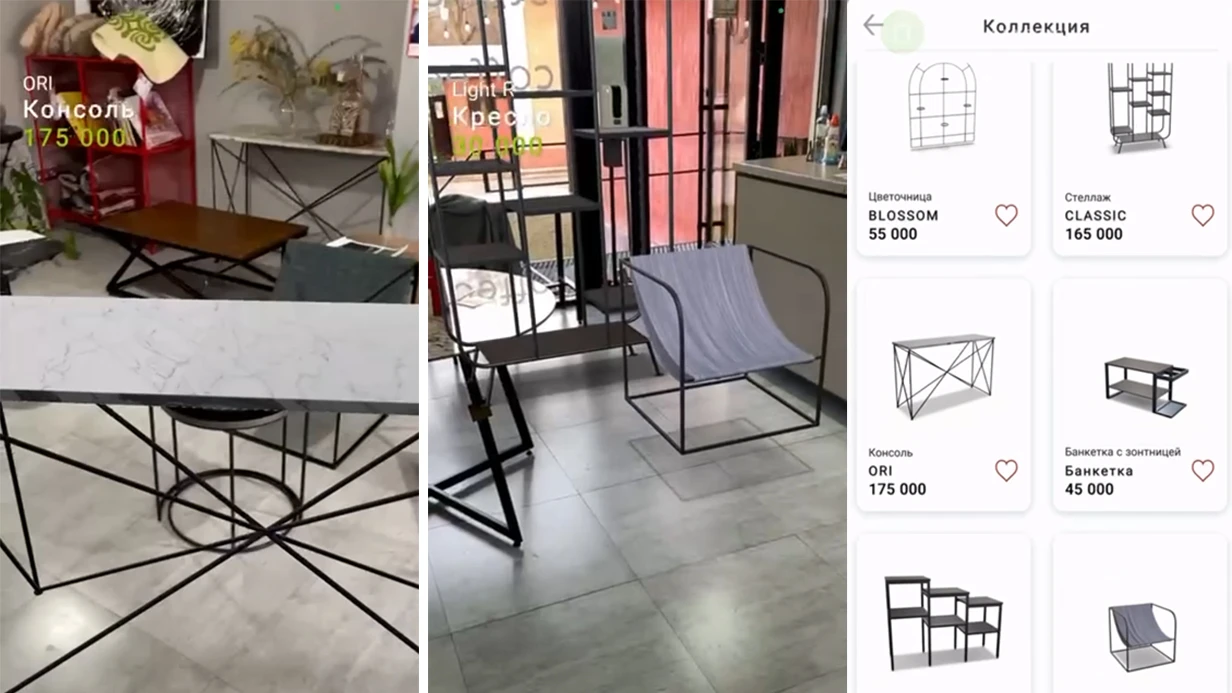
AR try-on solves this pain: the buyer points their smartphone camera at the opening and sees the selected model in their interior, at real scale.
They move the door, change the color, see how light falls on the surface — and they're no longer guessing, they're literally living with the product in their apartment.
This removes the main objection "I need to see it in person" and turns browsing the catalog into an engaging experience.
When a buyer can "try on" doors and window systems against their real interior, decisions are made faster and with more confidence.
The number of rejections and returns drops, conversion to order rises, and the purchasing process itself becomes like a game people want to share with their family.
The customer isn't just choosing a product — they already see it in their home, and that image helps close the deal.
We address this need: we build an AR try-on that embeds into your website and works without complex setups. The buyer opens the page, scans their opening, and within a couple of minutes is ready to order.
It's a simple way to noticeably boost sales and set your brand apart from competitors who still only offer flat photographs.
What AR Try-On Will Do for Your Business
AR try-on for doors and window systems isn't a tech experiment — it's a working sales tool. When a buyer sees how the chosen door or double-glazed unit looks in their own opening, they stop doubting.
The result is higher conversion: the customer decides faster, and the average ticket grows because they confidently choose more expensive options.
Fewer returns is the second key effect. "Eyeballing" mistakes and mismatches between expectation and reality disappear: before buying, the person already understands the scale, color, texture, and fit with the interior. This reduces exchanges and complaints — and that saves your logistics and reputation.
Customer engagement also reaches a new level. Instead of flat catalogs and samples — live interaction with the product. A visitor can "try on" different models, change the finish and lighting, and save favorite options.
This kind of 3D visualization holds attention far longer than regular photos and naturally nudges toward ordering.
Online presentation is especially important when a client can't get to the showroom. You send a link — and they explore the products at home, at their own pace, together with family or a designer.
This expands the geography of your sales and removes the main objection "I need to see it in person."
In the end, AR try-on works across the entire funnel: it attracts attention, engages the customer, boosts confidence in the choice, and reduces returns. For business, that means faster sales growth without expanding showroom space or adding staff.
AR Try-On Formats for Doors and Window Systems
Every door and window buyer first wants to see how a model fits into their interior. But hauling heavy samples to sites isn't realistic, and not every customer has a showroom nearby.
AR try-on solves this: the buyer "places" a door or window onto their wall right from a smartphone, tablet, or in the showroom — and decides faster.
We offer three AR try-on formats so you can choose what fits your task: for the website, for showroom managers, and for mobile sales. They all use the same 3D models of your products, so the result is equally accurate in any channel.
| AR Try-On Format | Who It's For | What It Gives the Customer |
|---|---|---|
| Web try-on on the site | Catalog visitors choosing a model online | The buyer sees the door/window in their proportions without installing apps — fewer doubts, more leads |
| Mobile app | Sales managers and surveyors | Right on site, they show the customer the finished picture in their opening — speeds up approval and reduces returns |
| Interactive showroom kiosk | Showroom visitors | Customers change color, hardware, and glazing themselves on a large screen — higher average ticket and loyalty |
| AR catalog for tablet | Sales reps and exhibitions | The whole collection on one device: show 20+ models in a single visit instead of three physical samples |
Which format should you choose? If your main sales channel is your website, start with the web try-on: it pays for itself through higher conversion. For active field sales, add the mobile app for your managers.
For an offline showroom, an interactive kiosk turns an ordinary browse into a hands-on game with the product — visitors stay longer and order more often.
We'll help you decide on a format for your budget and sales channels. We'll tell you where AR will deliver the biggest impact and prepare a demo using your products. Leave a request — we'll show the try-on on a real door or window.
How We Launch AR Try-On Turnkey
When you order AR try-on development, it's important to understand what happens at each stage, but you don't want to dive into technical details. We've set up the process so you always see where the project stands, what you're getting in the end, and how it will affect sales. Below is a clear outline of how it works.
-
Development brief — we discuss your goals, target audience, and use scenarios. We find out exactly how buyers will try on doors and windows and which models are needed first. The output is a documented vision of the project that rules out misunderstandings.
-
Mockup approval — we create a visual prototype of the interface: how the user will pick a product, change the color and size, and see how it fits into the room. You see this before development starts and make edits — that saves time and money.
-
3D content preparation — we source or create realistic door and window system models that match your catalog. The customer sees your actual products, not abstract rectangles — that builds trust and conversion.
-
Development and testing — we assemble the app and test it on different devices: smartphones and tablets. We verify that the try-on runs stably, without freezes or errors. You get a product that's ready for real use.
-
Project launch — we publish the app to stores or integrate it into your website and set up access for users. Everything works out of the box — all you have to do is send the link to customers and managers.
-
Team training — we hand over short instructions and tips: how to use the app, how to help a customer with the try-on. Your staff feels confident and won't burden you with questions.
-
Support and development — we stay in touch after launch. We update models, add new catalog items, and monitor performance. You're not left alone with the product — you get a long-term partner.
What You Get When the Project Is Done
We deliver not just a prototype but a working solution for your business. On handover day, you receive a complete package that lets your team launch AR try-on for doors and window systems right away — without outside developers.
- Project source files — the full code and all assets stay with you. You're not dependent on the contractor and can make changes with your own specialists or any other team.
- Launch and setup guide — clear documentation in Russian: how to install the app, update the catalog, and add a new door or window system model.
- Employee training — we run a hands-on session for managers and consultants: how to show a customer a product in their interior in 2–3 minutes and answer common questions.
- Usage analytics — we set up data collection: how many users opened the try-on, which items were viewed most, where visitors lingered longest. This data helps you remove unpopular items and promote bestsellers.
- Access to updates — we'll send instructions or remotely update the project for new profiles, colors, and sizes of doors or window systems.
In the end, you get not a one-off "picture" but a working sales tool. A couple of weeks after launch, you can see which models are ordered more often and how much time customers spend in the try-on — that's your return on investment.
Case Study: Increasing Conversion with AR Try-On
A door and window system buyer rarely makes a decision from a single picture. They need to see how the product will fit the interior and whether the color and size work.
Without that, the consultation drags on and the order is postponed — conversion drops, and managers waste time on endless clarifications.
That was exactly the problem a door manufacturer brought to us. We developed an AR try-on for their catalog: the visitor points their smartphone camera at a doorway and sees the chosen model at life size — changing color, texture, and hardware. The solution runs in the browser, with no app install, so it's available to every customer.
Project results two months after launch:
- Conversion to lead grew by 40%.
- Average model selection time dropped from 20 to 7 minutes.
- The share of orders without deep manager consultation increased 1.5 times.
The numbers show the key point: a buyer who has already "tried on" the door against their own opening moves to a decision faster and hesitates less. The company owner described the effect this way: "AR try-on has become our key sales argument.
People see the product in their own interior — that removes the main objections even before they meet the manager."
"Door Standard", CEO: "We used to lose customers at the visualization stage. Now buyers immediately ask about delivery times and installation. Orders are up, and returns due to 'it didn't fit' have almost disappeared."
For a door and window manufacturer, AR try-on is not a showpiece "for looks" but a working sales tool. It shortens the customer's path from interest to payment, reduces the load on managers, and increases the average ticket. This is a case where technology delivers measurable business results.
How to Choose a Format for Your Task and Budget?
Choosing a format isn't about technology — it's about what task you're solving and for whom.
There's no one-size-fits-all answer: what works on a website may not work at an exhibition, and a budget pilot for the sales department can deliver more value than an expensive system nobody uses. So first, together, we define the goal, audience, and budget — and only then pick the format.
If you need to show a customer how a door or window fits into their opening, a lightweight AR try-on that runs on a smartphone is enough. If the goal is to run a presentation for dealers or train staff, a virtual showroom works better.
For a busy exhibition, we choose simple and fast scenarios so visitors don't waste time waiting and don't leave without a result.
Budget affects the depth of work, but it doesn't cancel the value. You can start with a limited version for one product and one scenario, then expand the functionality — that way you stay on schedule and don't overpay at the start.
Timelines depend on the format: a pilot AR try-on is built noticeably faster than a full virtual catalog.
We take care of technical requirements: we analyze which devices your customers and managers use and pick a solution that runs reliably for them. We put together a clear spec, lock the budget and timelines — you get a transparent plan with no surprises. In the end, you pay for what genuinely helps you sell and saves your team time.
Simply put, we help you avoid a mistake when choosing a format: we discuss the tasks, audience, and budget, suggest the optimal option, and deliver it turnkey. Send us a description of your task — we'll send a recommendation on which format fits best.
Frequently Asked Questions About AR Try-On
We've gathered the questions clients usually ask before starting a project. Below are short, clear answers with no technical detail.
How much does AR try-on development cost?
The cost depends on the number of catalog items and model complexity: doors, windows, glazing. At the start, you receive a fixed estimate — the total doesn't change during the process. An additional charge only applies if you add new items after signing the contract.
What are the timelines?
A typical project takes 3 to 6 weeks: from catalog upload to a working version. The timeline is affected by the number of models and the depth of detail. Every week you receive an interim demo, so you see progress and can adjust tasks without missing deadlines.
Do customers need to install an app?
No. The try-on works in the browser on a smartphone — just open a link or point the camera at a QR code. It's one click, no registration or install, so the reach is maximum: any visitor can try it, not only those willing to download new apps.
How does AR try-on integrate into a website?
We place the module on the product card or on a separate page — like a video or 3D viewer. The customer selects a door or window, clicks "Try it on," and sees the visualization in their room. The integration suits standard catalogs and online stores without redesigning the site.
What devices does it work on?
On modern iOS and Android smartphones and tablets. No special equipment is required — it uses the device's camera and sensors. You don't limit your audience by phone model or the customer's technical know-how.
Want the same try-on module for your door and window catalog? Get in touch — we'll show you live projects, give you timelines, and lock in the cost after a short brief.Order AR Try-On Development for Your Catalog
Leave a request — and we'll help you order AR development that fits naturally into your catalog. In 15 minutes, we'll discuss the tasks, pick the right format, and prepare a transparent cost estimate.
From there, you get a concrete launch plan, with no extra calls and no getting lost in technical details.
After you reach out, you'll receive:
- A consultation on AR try-on possibilities for doors and window systems — which scenarios actually pay off and which won't deliver results.
- A project cost estimate in two or three variants: from a quick start to a full-scale implementation.
- A format recommendation: mini-app, web version, or integration into an existing site — based on your tasks and budget.
- A technical specification describing the scenarios: how a buyer will choose size, color, and hardware without a consultant's help.
- Launch recommendations: promo materials, QR codes for the showroom, instructions for managers.
- A support and catalog update estimate for after launch — so you can plan expenses in advance.
Importantly, this is not a commitment but an action plan. You understand the scope of work and timelines before signing the contract. You can reach us through the form on the website or via messenger — we work remotely and will fit your schedule.
To get an estimate and format recommendation for your catalog, send a request — we'll reply within one business day. We'll discuss the assortment and number of items, and on that basis propose the optimal solution. The first clients typically get a working AR try-on within a few weeks of the project start.