





Why Customers Leave to Competitors Over Curtains and Window Textiles
Customers choose curtains with their eyes, but in the catalog and even in the showroom, they only see fabric in a picture or on a roll. It's hard for them to imagine how the textile will look on their window, under their lighting, and in their interior.
Doubt creeps in: "What if it doesn't fit? What if the color is darker than in the photo?" — and the decision is postponed.
At that moment, the customer starts looking for someone who can remove their doubts.
Competitors offering visual curtain fitting through augmented reality look more convincing: the customer sees the fabric right on their window, switches options, and no longer fears making a mistake. Choosing curtains stops being a lottery, and the store itself appears modern and customer-focused.
Without such a tool, you lose not only the specific sale but also trust. Today, a catalog and promises aren't enough — customers want to try the product before buying.
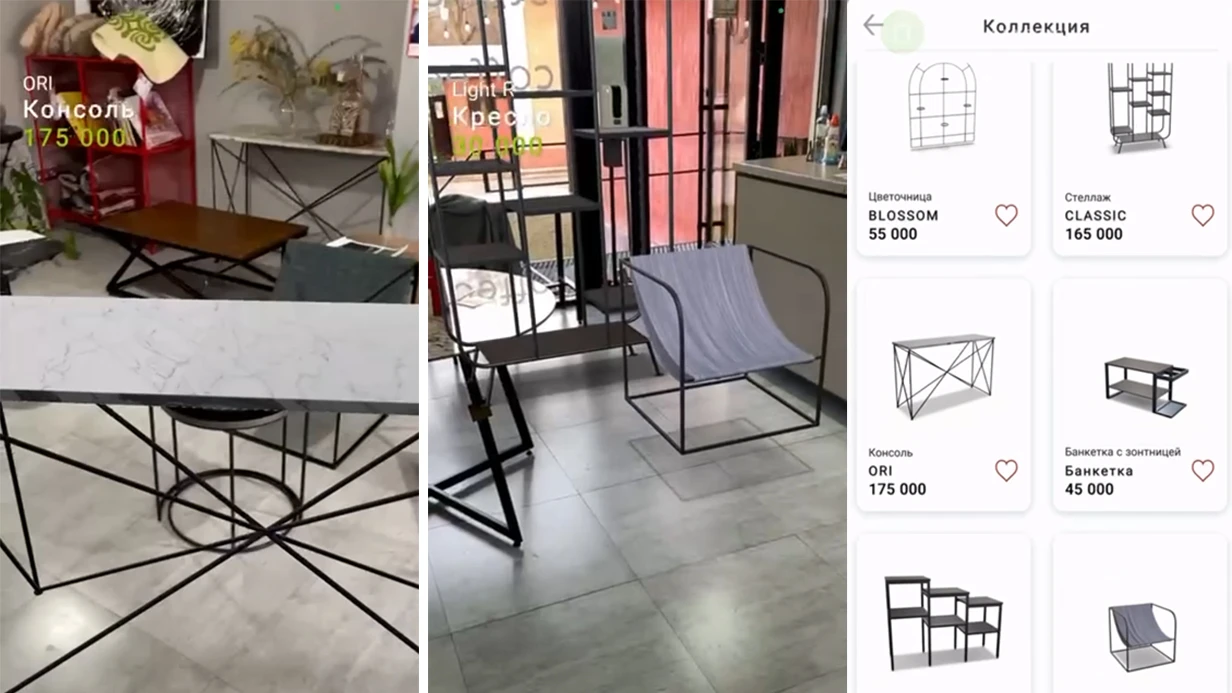
A curtain app with augmented reality functionality closes this need: in a couple of minutes, the user "puts" drapes on their window, comparing density, texture, and color in real lighting.
Implementing this technology pays off through reduced doubt and returns. The customer decides faster, and confidence in the choice increases loyalty.
If you show customers how the curtains will look in their home before they place an order, they will very likely choose your store — because you removed the main barrier on the path to purchase.
That's exactly why we build virtual fitting rooms that work on your website or in your app and help customers choose without risk.
What AR Fitting Brings to Your Business
Customers buying curtains and window textiles face one main problem: imagining how the fabric will look in their room. In the catalog, colors and patterns look different than in a real interior. AR fitting removes this uncertainty.
Sales Growth and Average Order Value
When a customer sees the selected curtains right on their own window, their doubts disappear. They make a decision faster and more often add complementary items to the cart — tiebacks, curtain rods, accessories.
The online configurator lets them change fabric and color on the screen: the customer finds the option that matches their wallpaper and furniture and doesn't look for alternatives at competitors.
Fewer Returns and Reorders
Size or color errors are the main cause of returns in online stores. AR fitting shows the true scale: window width, rod height, fabric folds. The customer sees the result before paying, so the likelihood of a mismatch drops dramatically. This saves your logistics budget and preserves customer trust.
Customer Engagement and Time on Site
Interactive fitting holds attention: people browse many options, consult with family, and return to the solutions they liked. Spending several times longer in the catalog, the customer gets to know the assortment more deeply and remembers the brand. This format is convenient both for ordering from a phone and in a showroom.
The bottom line for your business — more confident orders, fewer returns, and higher customer loyalty. AR fitting turns curtain selection from a lottery into a clear process that benefits both you and your customer.
AR Fitting Formats: For Any Customer Need
Every seller of curtains and textiles faces the customer question: "What will this look like in my home?" Showing a catalog or fabric samples is slow and not always convincing.
AR fitting solves this problem: the customer sees the curtains on their window before ordering, and the seller shortens the path from interest to deal.
The format depends on the task. Some need a quick start with minimal investment; others need a custom scenario in line with their brand style; agencies and furniture showrooms need a ready-made product under their own brand. We've put together three basic formats to cover almost any request.
| Format | For Whom | What It Gives the Customer |
|---|---|---|
| Ready-Made AR Solution | Curtain and textile stores, e-commerce | Quick launch of virtual fitting in an existing app or on a website. The customer points their camera at a window and sees the selected model in their interior. You gain higher conversion without a long development cycle. |
| Custom Development | Fabric manufacturers, design studios, large chains | A fully custom curtain app with 3D visualization: your own collections, non-standard selection scenarios, integration with your catalog and cost calculation system. It works in line with your brand style and business processes. |
| White-Label for Agencies | Marketing and digital agencies | A ready-made solution under your brand for your clients. You can quickly offer an AR fitting service without investing in development and earn from implementing it in projects for furniture showrooms and textile brands. |
In every format, the core value is the same: the customer confidently chooses curtains because they see them in real conditions. Fewer returns, more satisfied customers, higher average order value.
Tell us about your project — we'll recommend the optimal format and prepare a demo for your collection.
How the Curtain Fitting App Development Works
The development of a curtain fitting app follows clear stages — you always know what's happening and when the result will be ready. We take responsibility for the project timeline: from the brief to the mobile app launch — a fixed plan without drawn-out pauses.
The key stage is AR implementation: augmented reality technology lets the customer see how the selected curtains look on their window, right through the smartphone camera.
-
Brief and task immersion. We study your range of curtains and window textiles, define the customer profile and usage scenarios: how they choose fabric, try it on, and make a decision. We set clear goals so the app solves exactly your task.
-
Prototype and user scenario. We create an interactive app blueprint: fabric catalog, window type selection, fitting control buttons. You see the logic and make changes before development — this removes surprises and unnecessary costs.
-
Interface design. We design the screens in your brand style and refine the control elements. The customer doesn't need to understand the technology — they simply point the camera at the window, and the app shows the option.
-
Mobile app development. We build the app for iOS and Android: connect a fabric catalog with realistic textures, configure curtain overlay on video, and add color and scale changes. You get a sales tool that works without physical fabric samples.
-
Testing on real devices. We verify accuracy and stability on different phone models and fine-tune display details. As a result, the user gets a smooth, high-quality fitting experience and can easily share the result on social media.
-
Launch and publication. We publish the app in the App Store and Google Play and configure the download. You receive a link to share with customers — use it in advertising, on your website, and in the showroom. The standard project timeline is 4 to 8 weeks.
-
Support and evolution. We stay in touch after launch: update the fabric catalog, add new features, fix bugs. The app grows with your business, so you don't need to search for a new contractor.
What's Included in the AR Solution Delivery
After signing the acceptance certificate, you get not just a working fitting tool, but a complete sales instrument that remains fully yours.
We hand over source materials, rights, and knowledge — so you can develop the solution, connect new showrooms, and change content independently.
- Project source materials — all graphics, 3D fabric models, interface settings, and workflow logic. You own the product, not rent it.
- Exclusive rights to use the AR solution — use it in your showrooms, with dealers, at exhibitions, and in training programs.
- Instructions for catalog content management — you can add new curtain collections, update prices, and run seasonal promotions yourself, without a programmer.
- Staff training — we conduct a training session for your managers: in one day, they master the launch, catalog changes, and customer demonstrations.
- Technical support after launch — we support the rollout at every showroom, answer questions, and help with updates.
- Warranty service — we fix bugs and refine the solution for your new tasks during the agreed period.
- Documentation for website and CRM integration — so leads from the fitting tool automatically reach your managers and never get lost.
This package addresses the customer's main risk: after the project is delivered, you are not left alone with someone else's code. Everything you need to operate, grow, and support the solution — is already in your hands.
Case Study: How a Curtain Salon Increased Sales by 40%
A curtain salon in St. Petersburg faced a typical problem: customers spent a long time choosing fabric but postponed the purchase because they couldn't picture how the finished curtains would look on their windows.
Consultants spent up to 40 minutes per visitor, yet some orders still fell through at the measuring stage — the customer left to "think it over" and never came back.
We proposed a simple solution — AR fitting for curtains and textiles. The visitor points their smartphone camera at the window and sees the selected model in their interior: they can change fabrics, colors, density, and immediately assess how it works with the furniture.
Technically, it's built on the professional Unity toolkit — stable performance on any device and precise alignment with the window geometry. Setup took five days, and the salon didn't need to buy any additional equipment — everything runs on visitors' smartphones.
Results After Two Weeks
The effect exceeded expectations. Conversion from visitor to buyer grew by 35%, and sales increased by 40%. The average order value rose by 12%: customers began ordering complete sets for multiple windows more often instead of a single curtain.
Measurements and repeat orders also became more frequent — customers come back for additional models because they've already seen how the fabric looks in their room.
Why It Works
AR fitting removes the main objection — the fear of making a mistake. The customer sees the result before the purchase and decides faster.
The salon gained a tool that works like a round-the-clock consultant: visitors can "try on" curtains even outside business hours, and managers spend time only on customers ready to buy.
This case shows that AR technologies pay off within the first weeks. We're ready to design a similar solution for your task — from textile fitting to virtual showrooms. You'll get higher conversion, fewer returns, and loyal customers who come back for new orders.
How to Choose the Right AR Fitting Format for Your Needs?
There's no one-size-fits-all AR solution: what works perfectly for a small workshop with custom orders won't suit a salon with ready-made collections.
That's why choosing a format starts not with technology but with your goal — bringing people into the showroom, showing fabrics without a store visit, increasing the average order value, or cutting returns. We help you figure out which AR fitting tool will solve your specific problem and pay off fastest.
If the main goal is attracting passersby to your window display, an interactive storefront makes more sense: a person sees how a selected curtain looks on their window before even entering the store.
If your customers often live in another district or city, online fitting on a website or in an app is more effective — it works like a sales consultant at any hour.
And for a fabric catalog, an AR filter that overlays texture on a real photo of the window from a smartphone is a good fit.
At the first step, we analyze the specifics of your business: who your audience is, how they make purchase decisions, and what range you offer — curtains, tulle, blinds, Roman or roller shades.
Based on that, we propose 2–3 formats and compare them by cost, implementation complexity, and expected impact. This way, you choose the option that fits your budget and real sales processes rather than a "trendy gimmick."
Our consultation on choosing an AR solution is non-binding. We'll explain how digitizing your storefront can affect reach and sales specifically in your niche, and answer questions about compatibility with your current website, social media, and catalogs.
Even if you eventually postpone the launch — you'll have a clear picture of where to start and what results to expect.
The right AR fitting format isn't just "convenient for the customer" — it's a working tool that saves your managers' time and increases order conversion. We'll help you find the right one for your tasks — reach out to us, and we'll share the details.
Frequently Asked Questions About Implementing AR Fitting
Implementing AR fitting for curtains and window textiles raises questions among business owners — and that's normal. Below we answer the ones we hear most often: about compatibility, timelines, warranties, and staff training.
How quickly can AR fitting be launched?
A standard project takes 2-4 weeks. The timeline depends on the number of fabrics and the complexity of the catalog: the more items that need to be digitized, the longer it takes.
We handle everything turnkey — from shooting to publication — so you don't need to hire additional contractors.
Will the technology work on our devices?
Yes. The fitting works through a browser on any modern smartphone — the visitor doesn't need to download an app. Your staff can also run it from a tablet or laptop for consultations in the showroom.
What does your team need to provide for the launch?
Very little: access to the fabric catalog and one shooting location. We handle the rest — digitization, setup, and integration. Staff training takes one short briefing: your team will be able to help customers the same day.
What guarantees do we get?
We lock in timelines and results in the contract. If something is unstable, we finish the project properly at no extra charge. After launch, we stay in touch: we answer questions and update the virtual catalog for new collections.
What happens when the catalog is updated?
You send us new samples — we digitize them and add them to the system. This is faster and cheaper than reshooting everything from scratch. Your customers always see the current assortment, and you save on printing and shipping physical samples.
Book an AR Fitting Demonstration
You already know that AR fitting helps sell curtains and textiles faster, but what it will look like specifically in your salon is still an open question. We suggest settling it in one short step.
Fill out the form below — and we'll get back to you within one business day. We'll show a demo on your actual curtains, discuss the usage scenario, and offer a trial period. This way, you can evaluate the effect before making a decision.
What you get after submitting your request:
- A demo session with your real assortment — see how customers will "try on" fabrics on windows right in the salon or on your website.
- A cost estimate tailored to your project: accounting for the number of items, customer traffic, and the formats you need.
- A trial period on part of your collection — test how AR affects selection time and average order value, without a full process overhaul.
- A personal consultant: they'll answer questions about integration, equipment, and staff training.
- Examples of similar projects in the textile and furniture industries — see the results others have achieved.
- A confidential discussion of details — all your business data stays private.
Leave your contact — this is non-binding. We'll show you that AR fitting for curtains and textiles truly works and delivers value, and then the decision will be yours.