




Why Virtual Property Viewing Solves the Sales Problem
A homebuyer makes a decision within a few minutes of viewing. If they can't see the floor plan from the right angle or can't imagine what an empty room will look like after renovation — their interest fades.
Without a virtual tour of the property, you only show what made it into the camera frame, while your competitor already lets buyers "walk through" the apartment. The client goes where everything is clear without a word.
Online property viewing has long ceased to be an option — it's now a standard expectation. Out-of-town buyers, busy professionals, families with children: everyone needs a fast way to assess a home without extra trips.
AR for selling apartments works at the moment of choice: a person sees the dimensions, light, materials, and makes a decision faster. Without it — hours of back-and-forth messaging, doubts, and the customer turning to a competitor.
This is especially important for buildings under construction, where there's nothing to show — just a construction pit and promises. A virtual apartment tour with accurate floor plans and finish options lets you sell at an early stage.
The client can explore several options, compare them in the app, and come back to you to make a purchase.
We create these solutions: professional AR applications where your property looks realistic and easy to understand. This removes the objection "it's hard to imagine," reduces the number of wasted showings, and speeds up the deal. In the end, property is sold to those ready to decide in your favor — not in a competitor's favor.
What Benefits an AR App Delivers to Your Clients
Your clients decide whether to buy within an average of 7–10 seconds of viewing a listing. Regular photos don't convey a sense of space, so serious buyers go on multiple viewings, waste time, and often end up postponing the deal.
An AR app solves this: a person sees the property at real scale in their own apartment or on their plot — and immediately understands the floor plan, dimensions, and spatial logic.
Interactive Viewing Removes the Biggest Questions
Instead of a dozen similar meetings — one targeted showing. The client has already "been" to the property, studied the details, and chosen the option that interests them.
People only come to in-person meetings with a specific intention, which means every meeting brings you closer to the deal. You shorten the sales cycle and increase the conversion rate of every showing.
Trust in a property grows when a person themselves "walks" through the apartment, moves furniture, opens doors. This is their own experience — and people trust their own experience more than any words or renderings.
This format also works with those currently in another city: a remote viewing becomes a full-fledged introduction to the property, after which the client is left with the feeling they've already been there.
Consistent Results on Professional Hardware
We build the app on ARCore by Google — a refined tool that delivers stable performance on most current smartphones. The client gets not a "toy" but a reliable sales tool that won't let them down at the most critical moment — during a client demonstration.
Augmented reality technology pays for itself within the first few deals: fewer meetings, higher trust, faster decisions. Your clients remember not just a listing — they remember the experience of "trying on" the property for themselves.
- Fewer in-person showings — down to one or two per deal.
- Client attention held 3–4 times longer than when viewing photos.
- Ability to show the property to clients from other cities without them traveling.
- A new level of service that sets you apart from competitors.
Order an AR app — and your clients will feel the difference at the very first viewing. Leave a request, and we'll prepare a cost estimate for your project within one business day.
Formats for Virtual Property Viewing: From Tour to Floor Plan
Every buyer wants to see an apartment before visiting, but not everyone has time for dozens of real showings. Virtual property viewing removes this limitation: the client explores the property from anywhere and at any time.
The developer's task is to choose a format that fits the stage of the deal and the type of audience — not just to "make it look nice."
We help you choose the right option from three basic AR app formats and 3D tours, then deliver it turnkey. Below is a brief comparison so you can see which scenario each format covers.
| Format | Who it's for | What it gives the client |
|---|---|---|
| Panoramic viewing | For initial introduction and broad reach | Quick inspection without installing an app; easy to share in messengers and social networks. |
| 3D tour of the apartment | For buyers ready to study in detail | Free movement through rooms, a sense of presence, and the ability to return to the viewing at any time. |
| AR navigation through the property | For those who want to "try on" the floor plan | Overlay of virtual furniture, checking dimensions and lighting, choosing finishes at real scale. |
We always tie the format choice to your task and audience behavior. If you need to quickly show a property to remote clients — we use panoramas. When it's important to hold attention and nudge toward a decision — we reinforce it with a 3D tour. And for premium properties we add AR navigation so the buyer can feel the space before their visit.
As a result, the number of irrelevant viewings decreases, and people who come to a real showing are already "familiar" with the apartment. This saves managers' time and increases buyer loyalty — they make decisions faster and with greater confidence.
How the Development and Approval Process Works
Work on a virtual property viewing app follows a transparent scenario — you always understand what stage the project is at and what you'll get as a result. We handle all technical matters, while your role is to participate in key approvals and oversee the outcome.
-
Brief and goals. We analyze your business process: which properties you show, who your audience is, and what tasks the app should solve — replacing part of the live viewings, working with out-of-town clients, or building a base for repeat inquiries.
-
Prototype and layout approval. We put together the logic: screens, navigation, virtual viewing scenario, brand elements. At this stage, you see the future app "on paper" and can make edits before development begins — this saves time and budget.
-
Development and content. We build the app, upload 3D models and floor plans of your properties, and configure realistic presentation of apartments and houses. We use proven augmented reality tools to ensure stable image quality across different smartphones.
-
Testing and final refinements. We test the app on popular devices and polish the user experience. You also test the product on your side — we collect feedback and make changes.
-
Launch and handover. We publish the finished app in official stores, prepare instructions for your staff, and a short guide for clients. From then on, you simply send the download link — the app does the rest.
-
Support and growth. After launch, we stay in touch: we help with updates, add new properties, and refine functionality as business needs change.
The entire journey from the first conversation to publication takes two to four weeks.
You receive not a "rough" demo but a ready-made tool that increases the number of viewings without extra burden on agents and attracts clients who aren't yet ready to visit the property.
What's Included in the Property Viewing App Package
When you order a virtual property viewing app, it's important to understand in advance exactly what you're getting. We specify the complete delivery package so you can launch viewings, serve clients, and update content without being constantly dependent on the developer.
Here's what's included:
- Ready-to-use app for smartphones and tablets: with your logo, brand colors, property descriptions, and floor plans. You receive the installation file and access to the current version in the app stores.
- Content management panel: add new apartments, change prices, photos, and texts yourself — without a programmer and at any time.
- Source materials and rights: all graphic assets, scripts, instructions, and created 3D models remain yours. No "locked" data that can't be taken away.
- Documentation: clear guides for installation, setup, updates, and resolving common issues. Everything is written for a manager, not an engineer.
- Staff training: we conduct an online session for your managers and agents — showing how to launch a viewing, use the panel, and answer client questions.
- Technical support: throughout the warranty period, we answer questions, help configure new devices, and release compatibility updates.
- Correct-functioning guarantee: if a screen doesn't display or a feature doesn't work — we set a fix timeline and resolve it at our expense.
This package covers the client's main risk: you're never left alone with a product that no one supports. Everything needed to launch and grow your virtual viewing capability is already included.
Case Study: AR Showing of a Residential Complex Increased Inquiries 1.8 Times
The developer «Severny Park» faced a typical market challenge: sales happen at the foundation stage, and buyers can't picture an apartment from a 2D floor plan.
Not everyone can visit the construction site, competitors were already offering video tours, so it was important for the developer to give clients the ability to "step into" their future apartment long before the building was completed.
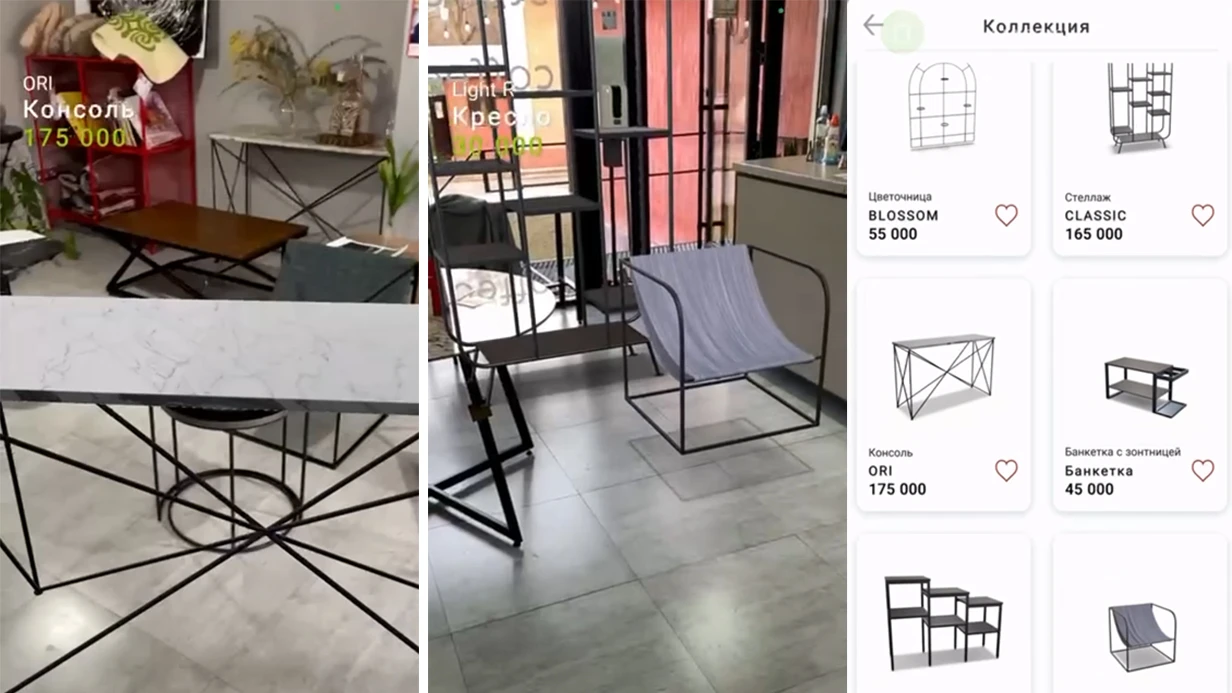
We developed a mobile AR app based on ARCore — it works in the sales office and right on the construction site. The buyer points the camera at a marker and sees the floor plan, finish options, furniture layout, and the view from the window at real scale.
No complex training required: visitors intuitively flip through options, change materials, and even measure distances. The app loads quickly and works even on visitors' ordinary smartphones.
What Changed for the Business
At the complex's open showings, we measured the first results: 120 guests over three hours conducted 340 AR sessions — nearly three viewings per person. Average interaction time was 6–7 minutes, compared to 20–30 seconds with printed floor plans. A month after launch, the number of inquiries to the sales department grew 1.8 times.
Importantly, buyers didn't come just to "look at a picture" — they came with specific requests: naming the required building, floor, and finish.
The manager only had to confirm details and process the application — this shortened the deal cycle and increased the share of qualified contacts.
The effect proved stable, so the developer didn't stop at a one-time launch. The company ordered a second AR solution from us for a new residential complex, and the experience from the first project became the foundation of their sales standard.
Answers to Questions Before Development Starts
Before development of an AR app for property viewing begins, clients tend to have the same doubts: timelines, smartphone compatibility, and practical business value.
We answer honestly, drawing on the experience of our team — all three questions are resolved at the brief stage, so the project starts without uncertainty.
How long does AR app development take?
A typical project takes 6 to 10 weeks from the moment the technical specification is approved. The timeline depends on the number of properties to be virtualized and the complexity of the user scenarios.
At the start, you receive a calendar plan with milestones and know when the first test version will be ready.
Will the app work on my clients' phones?
Modern Android and iOS smartphones support augmented reality — for your audience, this is already a familiar technology. We check compatibility across different models and adapt the graphics so the app runs smoothly even on mid-range devices.
The client won't need to configure anything complex — they simply point the camera at the apartment floor plan or the property card.
What exactly will the client see on screen?
The virtual property viewing appears as a volumetric 3D model of the floor plan that emerges over the real-world image. The user can inspect the apartment from different angles, zoom into details, and even "walk through" the rooms.
This is not a static image but an interactive experience that holds attention and helps the buyer decide whether to view the property.
We integrate the project into your current processes: the brief takes one day, and you see test results on real smartphones. This approach eliminates surprises at the final stage and lets you launch virtual property viewing exactly on schedule.How to Choose a Format for a Non-Standard Property
When a property has a complex layout, unconventional angles, or special presentation requirements, standard tours don't work.
Regular panoramas only show the space from one angle, while a potential buyer needs to understand the space as a whole — how rooms connect, how much light each room gets, and where walls could be moved.
We solve this with a custom AR project: the virtual viewing is built around the specific property, not the other way around.
For complex spaces, this means multiple free viewing points, the option to "cut through" the building and look inside the structures, and the ability to demonstrate reconfiguration options — with changes to partitions, openings, and zoning. This way, the buyer gets a complete picture before the visit, and you get fewer wasted viewings.
Importantly, for a non-standard property we don't choose a format by template — we base it on your objectives: what exactly needs to be shown — scale, details, architectural features, or usage scenarios for the spaces.
At the start, we discuss your special requirements, propose a walkthrough scenario, and agree on the scope of work before launch. You see results at intermediate stages and refine them until they fully match expectations.
As a result, even a complex property becomes clear and visual for the client: they spend less time viewing, make decisions faster, and with greater confidence. And you get a tool that drives sales — for any floor plan, any level of detail, and any specifics of your offering.
Leave a Request for a Project Estimate
Leave a request — and we'll prepare a cost and timeline estimate for your project.
For virtual property viewing, it's important to understand the scope of work in advance: how many properties and angles, what devices clients will use, and whether integration with your website and client database is needed. Based on this information, we'll provide a transparent quote and launch plan.
We work remotely, so you can receive an estimate without a meeting. The first step is a brief: short questions that help precisely define the objectives.
What you'll get after submitting a request:
- A response within one business day with questions about your project.
- A brief — a structured questionnaire so nothing is missed.
- A preliminary cost estimate, with the cost calculated after audit of your format — office, residential complex, cottage, or commercial space.
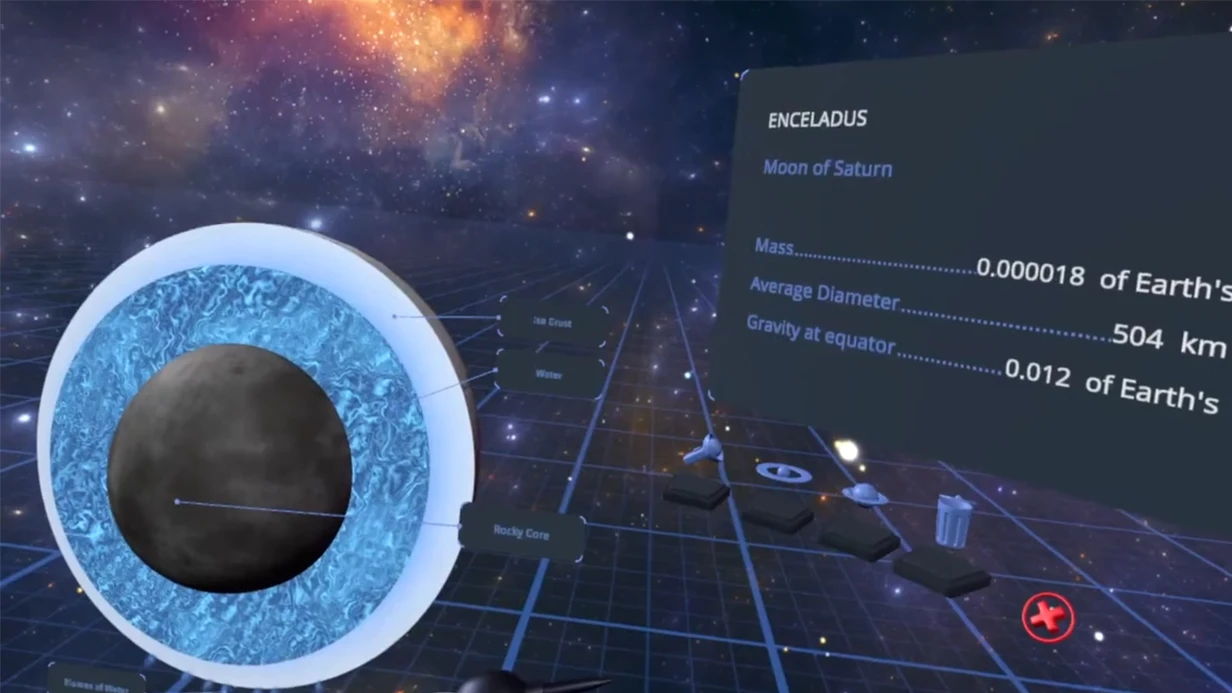
- Recommendations on the presentation format: AR on the client's smartphone, a VR zone in the showroom, or a hybrid option.
- A clear plan of next steps with no obligations and no hidden conditions.
We don't ask for prepayment for the estimate, and we don't pressure you to decide. The estimate request exists so you understand the budget, timeline, and options before starting. Send us a few words about your project — we'll help formulate the rest during the brief.