



Why does visualization of equipment indoors boost sales?
Selling complex equipment in B2B always comes down to the same question: how do you show the client the equipment in action without hauling it to trade shows and offices.
Large-scale machine tools, industrial lines, and medical devices cannot be quickly brought to a meeting, and the customer wants to see the product “live,” in their own space. Without a physical sample, the deal stalls: the client hesitates, compares, puts off the decision.
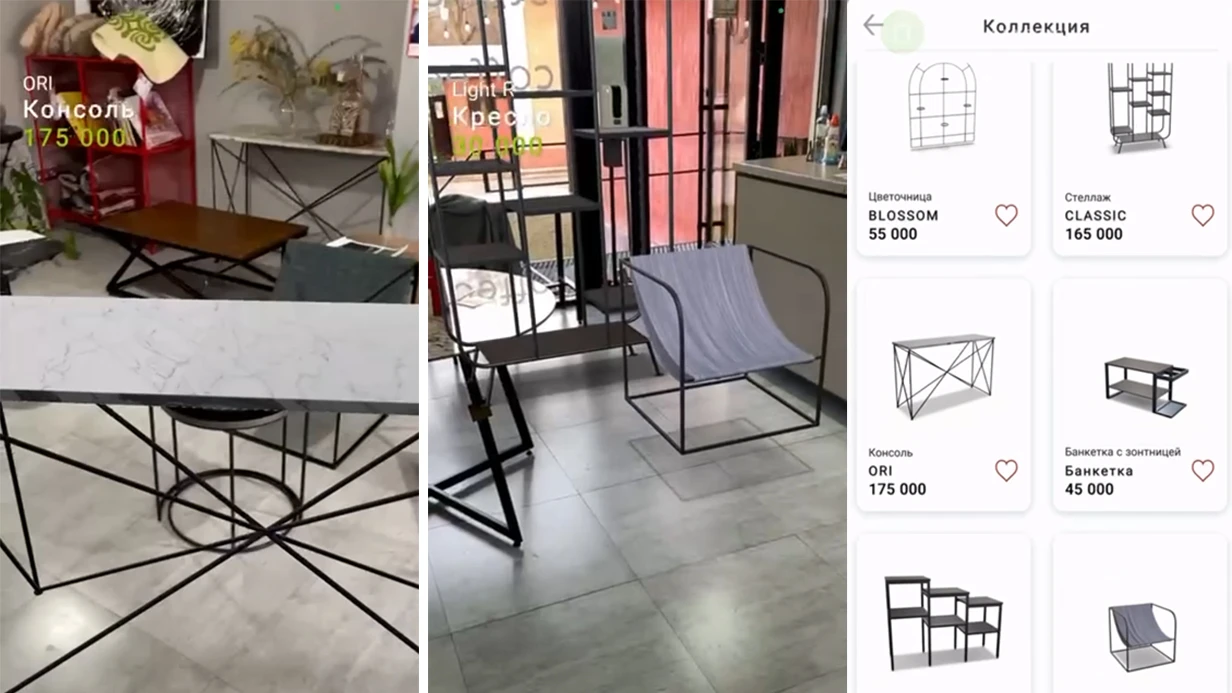
AR visualization solves this problem. A mobile app literally places a 3D model of the equipment into the customer’s real space — through the camera of a smartphone or tablet.
The client sees the equipment at full scale, walks around it, assesses dimensions, placement, compatibility with other objects. This is not just a “nice picture” but a working sales tool that removes the main objection: “I don’t understand how this will fit at my place.”
Such visualization shortens the deal cycle, reduces the number of site visits, and increases negotiation conversion. The salesperson can show the equipment to several decision-makers at once without arranging logistics or spending budget on transporting a sample.
We help you develop a mobile app with AR visualization for your business needs — from demonstrations in a warehouse to presentations in a meeting room.
What you get from an AR solution for your business
The buyer cannot picture large equipment in their own space — hence the doubts and delayed decision. Ordinary photos and videos do not convey the real scale, while sending a sample or using a showroom is expensive and not always possible.
A mobile AR app solves this right at the site: the client sees the equipment at full size, walks around it, evaluates the dimensions and how it fits the interior.
Growth in sales conversion
Demonstrating products with augmented reality shortens the distance between interest and purchase. When clients see the equipment in their office or workshop, they find it easier to decide — they are already mentally using it.
The manager does not need to describe dimensions in words: the buyer sees for themselves that the equipment will fit through the opening, will not hit the ceiling, and will not block the aisle.
Our clients note that such demonstrations speed up approvals and increase the share of successful deals.
Savings on samples and logistics
Each physical demo costs money for delivery, installation, insurance, and carries a risk of damage. An AR app replaces the sample with a digital copy: the same product can be shown to a hundred clients in one day without a single shipment.
The mobile solution runs on an employee’s tablet or smartphone, so it requires no special equipment or staff training. For a company, this means lower product demonstration costs and the ability to reach more clients in different cities.
The technological foundation is provided by the ARCore platform, which accurately anchors the virtual object to the floor surface — the equipment looks stable and realistic. We customize the visualization for your models: materials, colors, configuration. This approach turns a dull presentation into a lively interaction that is remembered and discussed.
Ultimately, you get a sales tool that simultaneously increases conversion and reduces the budget for samples. Every one of your managers can run an impressive demonstration in any space — from a meeting room to a production workshop. It is a fast and flexible solution that pays for itself after the first demonstrations.
AR project formats for different client needs
There is no one-size-fits-all solution for visualizing equipment indoors — each business task has an optimal format.
Some need to quickly show a product to a client in a meeting room, some need a permanent sales tool for managers, and some want to integrate augmented reality into an existing catalog or website. We select the format based on your audience, use case, and budget.
Below is a comparison of the main options we implement in projects.
| Format | Who it's for | What it gives the client |
|---|---|---|
| Web AR | Sales managers, clients who do not need to install apps | Instant launch via link from any smartphone. Lets you show equipment at real scale right on the office or warehouse floor — without downloading apps or preparation. |
| Mobile app | Companies with a permanent product catalog | A personal sales tool: the AR-enabled catalog works offline, saves viewing history, and helps the client return to the right model. Increases loyalty and the number of repeat contacts. |
| AR integration into existing systems | Large businesses, distributors | Augmented reality becomes part of your website, CRM, or configurator. The user sees the product and its parameters in one window without switching between programs — the decision cycle is shortened. |
Each format we implement on professional platforms, including ARCore, which guarantees stable operation on most modern Android devices.
The technical details remain on our side — you get a ready-made solution that simply works and delivers a measurable result: more visual presentations, faster deals, higher order conversion.
If you are not sure which format suits you, request a consultation. We will analyze your task, show live examples, and offer an option with the optimal balance of value and benefit for your business.
How we structure the development process
Buying a ready-made, off-the-shelf app is quick, but it rarely accounts for the specifics of your equipment and facility. That is why we built the development process so you understand each stage: what happens, what is needed from you, and when the result appears. You are not handing the project to a black box — you guide it together with us.
- Brief and goals. You tell us which equipment we are showing, where the app will be used, and what problem it solves. We ask clarifying questions, record the goals, and prepare a preliminary timeline estimate.
- Concept approval. We show the operating scenario: how the user points the camera, how the equipment appears in space, and what actions are available. You approve the logic before development starts — this prevents expensive rework.
- Design and 3D model. We create the interface look and a digital copy of the equipment with the required level of detail. You receive visual materials and example viewpoints for review before all resources are committed.
- Working version development. We assemble the app on a professional platform, configure plane detection, and stable model anchoring in space. You see not mockups but a live product that you can already open on a phone.
- Testing on your device. We hand over an intermediate build for testing in real conditions — on your equipment and in your facility. You collect feedback from employees or visitors, we make edits and return an update.
- Launch and handover. We deliver the app in the required format, help with installation on devices, and set up access for the team. We provide a short briefing — after it, your specialist can launch and demonstrate the app independently.
At each stage you understand what is happening and how much remains until launch. Changes can be made in advance, not after the budget has already been spent.
What's included in the AR app delivery and support
We hand over not just an app but a ready-to-use working tool that your team can start using immediately. The delivery package is designed so you are not dependent on the developer: from source code to staff training.
The delivery and support include:
- Source code with usage rights — you become the full owner of the app and can hand it to contractors or improve it yourself.
- A ready AR app for your task — already configured for showing equipment in your facility: at an exhibition stand, in a showroom, or on a sales floor.
- 3D models of your equipment — detailed, with correct proportions and materials, looking realistic in augmented reality.
- Admin panel — change the catalog, specifications, prices, and add new items through a simple interface without a programmer.
- Staff training — we conduct a session for your team so managers and consultants confidently use the app with clients.
- Technical support — we answer questions, release updates, and help with configuration for an agreed period after launch.
- Documentation and instructions — a detailed user guide and technical documentation for your specialists.
This set lets you avoid dependence on the developer and quickly adapt the app to new tasks — for example, when adding a new piece of equipment. You get not a black box but a transparent solution with a trained team and support at every stage of operation.
Case study: AR catalog for an industrial equipment plant
For an industrial equipment plant, the main sales pain point is bringing clients to a demonstration site. Heavy machine tools and cranes take up dozens of meters, demonstration logistics eat weeks, and the decision is still postponed.
We closed this pain with an AR catalog based on ARCore: the app brings 3D models of the equipment to life right on the buyer’s smartphone.
How it works
All you have to do is point the camera at a marker in the workshop — and the machine appears at real scale. The customer walks around it, inspects the components, moves it, and understands how the equipment will fit their site. This removes the main objections and moves the deal off the dead point.
Results in numbers
Here is what the case for TekhnoProm showed: conversion from inquiry to payment doubled, and the average deal timeline dropped from 45 to 12 days.
Managers no longer need to take clients to demonstration sites — the virtual tour happens right in the meeting room or at the client’s facility. Clients themselves request new models in AR, so repeat orders and referrals also went up.
What this means for you
The same approach scales to any industrial equipment catalog. You get a tool that shows the product in real-world conditions and helps sell faster. After the launch, we stay in touch: we update models, optimize speed, and help managers build AR into their negotiations.
We will calculate how much your deal cycle will shrink — we will send you an estimate within 2 days after the brief.
Frequent client questions and our answers
Before starting a project, clients most often ask about compatibility, timelines, and cost. We answer briefly — we will discuss the rest at the consultation.
On which devices will the equipment visualization work indoors?
The app works on modern Android smartphones and tablets. At the demo we will check compatibility with your devices and give an exact list of models. Your staff will not have to buy new equipment.
Is it difficult to integrate the app into workflows?
We handle the integration. The app installs like a regular mobile application and syncs with your accounting system. We provide a short training session — employees will get the hang of it within an hour.
How long does development take?
Typically from 3 to 8 weeks, depending on functionality. At the start, we set milestones and show intermediate results. You stay informed and can influence the work.
How safe is the app to use?
The app only uses the smartphone camera and does not affect the operation of the equipment. We work under a confidentiality agreement and, if needed, deploy the solution on your internal server. Your data stays under your control.
How much will this cost?
We calculate the cost based on your task and lock it in the estimate before we start. The price does not change during the process unless you add new features yourself.
Still have questions? Leave a request for a consultation — we will reply within a business day and calculate a preliminary cost.How to choose the right visualization option for your industry?
The choice of visualization format depends on two factors: what exactly needs to be shown — large dimensions, internal structure, or operation in action — and who will be looking: an exhibition visitor, a sales manager, or the client’s technical specialist.
For large equipment that is difficult to bring to a site, augmented reality is more convenient: the model is overlaid on the space at real scale, letting the viewer walk around the object and immediately assess its size.
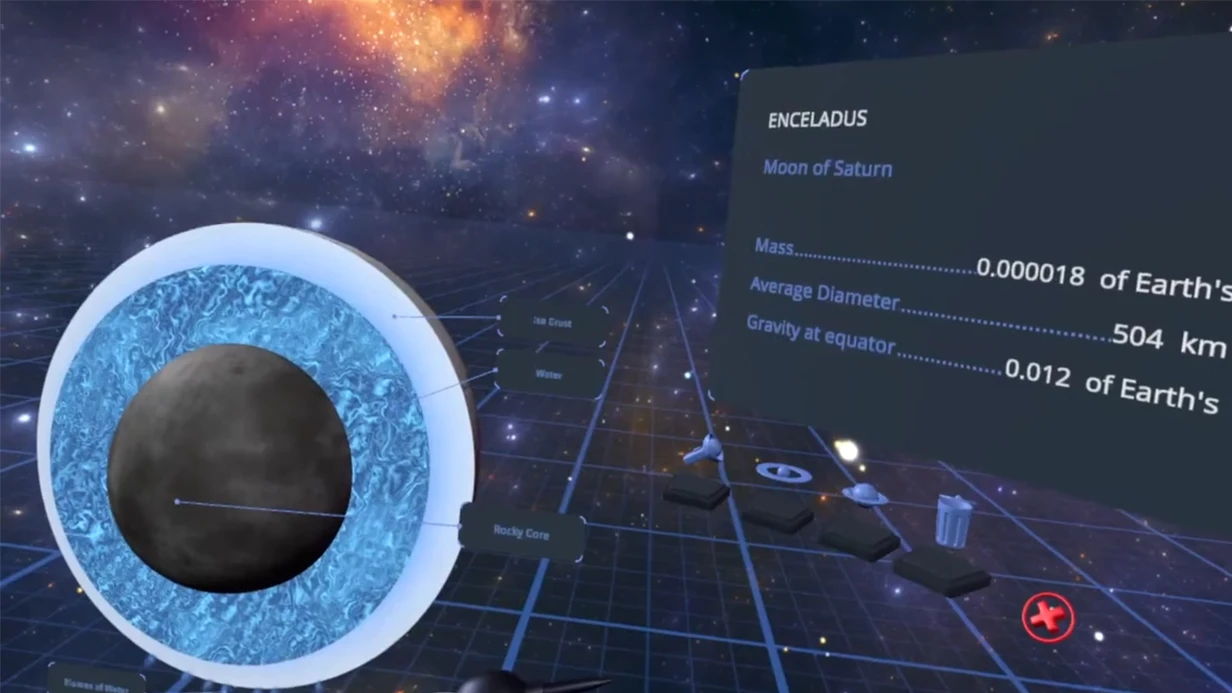
If you need to demonstrate mechanics or hidden components, an interactive 3D model with disassembly and close-up views is more effective.
For a mass audience, simplicity matters: two or three taps, no instructions, immediate immersion. The visitor should figure out what to do on their own and get an emotional response in seconds.
Professional buyers and engineers, on the other hand, value detail and reliable information: the ability to measure, compare with specifications, and evaluate alternatives.
There is no universal solution, so before we start we analyze your industry, equipment type, and audience expectations — and propose the scenario that solves the specific business problem.
In some cases, the best effect comes from a combination: a short AR scenario to attract attention at a booth and an in-depth 3D model for personal demonstration during negotiations.
For example, at an exhibition a visitor points their smartphone camera at a marker and sees the equipment in the hall — this creates buzz and foot traffic.
Then, in a meeting with a manager, the same object opens in an interactive mode with real parts and calculations — this helps remove objections and speed up the purchase decision. Such a flexible setup pays for itself even with a single large contract.
We have worked through dozens of scenarios for different industries — from construction equipment to medical devices — so we know exactly which format will work for your audience.
At the start, we conduct a quick audit of your task and offer a solution with a clear result: visitor engagement will increase, product explanation time will be reduced, and more clients will leave with a clear understanding of their purchase.
Contact us for a consultation — together we will choose the best option for your budget and timeline.
Discuss your task and get a proposal
We understand that before ordering a mobile AR app for visualizing equipment indoors, you need to align the budget, timelines, and expectations. That is why we do not start development “blindly”: first, we clarify your task, calculate the cost, and prepare a clear proposal.
You don't need to understand technical details — just describe how you want to show equipment to clients: in a showroom, at an exhibition, or during on-site sales. From there, we handle both design and implementation.
- Request — you send an inquiry through the website or by phone, briefly describing your task and desired result.
- Clarifying conversation — we contact you and ask questions about the use case, facility specifics, and target audience.
- Cost and timeline estimate — based on your answers, we lock in the key parameters and prepare a transparent estimate.
- Proposal — we show a rough solution plan, scope of work, and timelines, and align the details.
- Contract and project start — after your confirmation, we begin developing the app for equipment visualization indoors.
- Delivery and support — you test the result, receive instructions, and get post-launch support.
This way, you know in advance what you will get, how much it will cost, and when it will be ready. Leave a request — we will get back to you with an estimate and proposal within one business day.