




Why You're Losing Clients Without Architectural Project Visualization
Developers and architects lose clients not because of the quality of their projects, but because of how they present them.
Ordinary renders and drawings leave the buyer too much room for imagination — and in that space, doubts are born: "what if the house looks different," "will the furniture fit," "won't it be too dark."
When a client can't picture the future property, the deal drags on, and some buyers leave altogether for a competitor with a more visual approach.
While you're explaining things "on paper," another developer is already letting the person walk through their future apartment and feel it as their own.
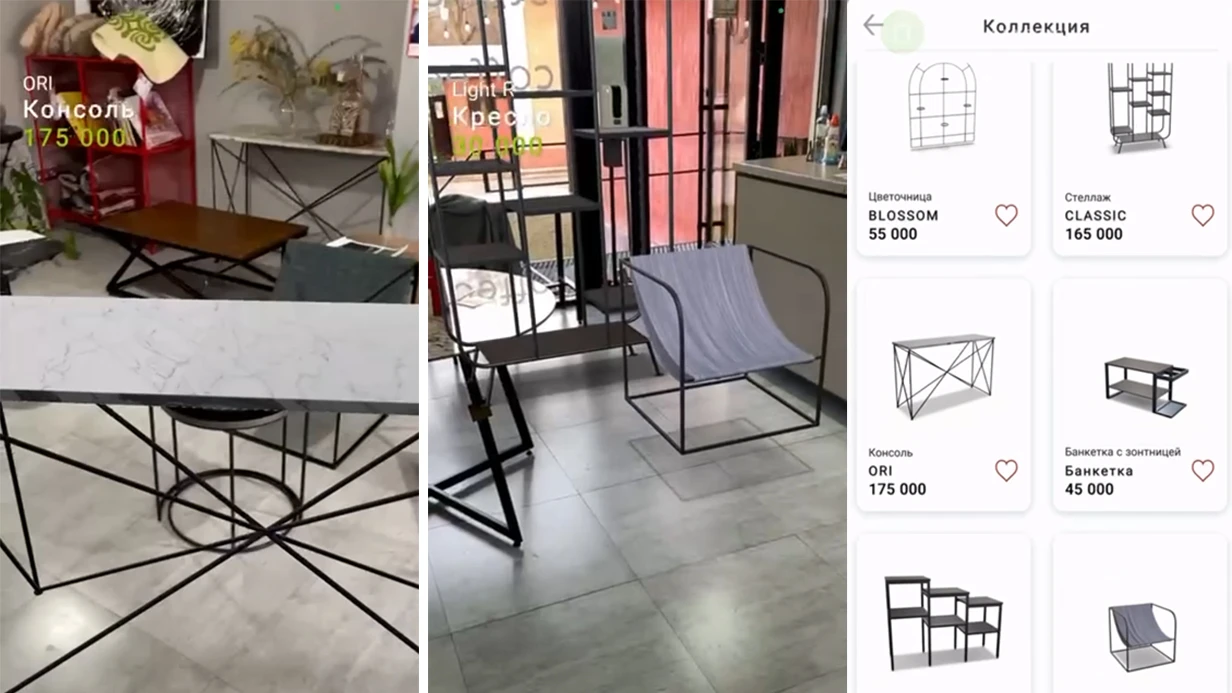
AR project visualization solves this pain point. The buyer points their smartphone camera at a floor plan or plot — and sees the building at real scale, walks around its perimeter, goes up to the needed floor, changes the finishes with one touch.
This isn't a picture, but a full AR project presentation that turns abstract square meters into a clear and desirable image of the future home.
For business, the benefit is obvious: faster approvals, fewer objections at the final stage, higher conversion from inquiries to deals. AR for architecture is not a presentation decoration, but a working sales tool that sets you apart from dozens of similar offers.
The same project can be shown in a showroom, at a meeting with an investor, and in advertising — the effect multiplies.
We have already helped developers launch such solutions and know how to make an AR application for a developer simple for your clients and useful for your team.
We take on the entire development — from idea to publication in app stores — so you get a ready-made tool that starts working for sales immediately after launch.
What an AR Application Will Give Your Business
A real estate buyer finds it hard to understand a layout from drawings and renders — they see an image but don't feel the space.
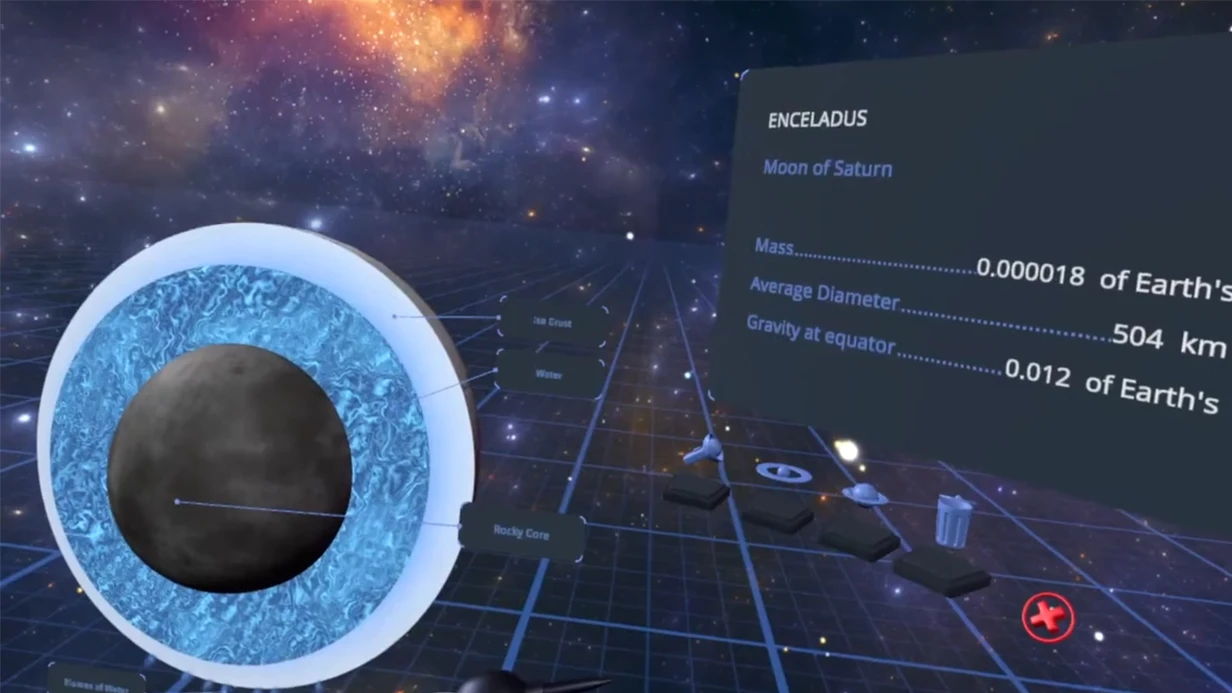
Augmented reality removes this barrier: just point the camera, and the future property appears on screen in real proportions, with details and lighting. The client immediately assesses the dimensions, layout, and atmosphere.
We build such applications on ARKit — the professional platform for augmented reality. This means the visualization runs smoothly on ordinary smartphones and tablets, without additional expensive equipment. Your manager shows the property right at a business meeting — and it makes an impression.
Here's what changes in your sales:
- ✓ Clarity. Instead of abstract diagrams — a three-dimensional object at real scale. You and the client see the same thing, so reaching agreement on details is easier and faster.
- ✓ Engagement. An AR presentation holds attention three times longer than a standard one. Visitors film videos and share them on social media — that's brand recognition without advertising costs.
- ✓ Time savings. Developers reduce the number of meetings and approvals. Questions about materials, light, and layout are resolved right at the demonstration, not over a week of email correspondence.
- ✓ Sales growth. Buyer emotion is the main driver of the deal. When a person "walks through" their future apartment, doubts recede, and they arrive at a positive decision faster.
This isn't entertainment, but a tool that pays for itself on the first properties. Want us to calculate how much time and how many deals you'll save with AR visualization? Leave a request — we'll demonstrate it on your project.
Choosing the AR Application Format for Your Task
Architectural project visualization today isn't limited to a render on a screen. An AR application allows drawings to "come to life" and places the building directly on the plot — even before construction begins.
But the solution format depends on the task: showing a concept to an investor is one thing, verifying installation on site is another.
We use several AR solution formats and select the optimal one for your scenario. Below is a brief table showing which option suits which audience.
| Format | Who It's For | What It Gives the Client |
|---|---|---|
| AR on smartphone | Architects, design studios | Quick project demonstration on the actual plot right at the meeting |
| AR on tablet | Construction site managers, author supervision | Overlaying the model onto the real site to verify accuracy |
| Interactive 3D model in the app | Developers, sales departments | Reviewing layouts and finish options without physical models and brochures |
These are not mutually exclusive options. Often a client starts with one format — for example, mobile AR to show projects to an investor — and then adds an interactive 3D model for the sales department.
We also implement combinations: a single application that includes both an overlay-on-site mode and a layout catalog.
The key thing you get is the ability to show the project at 1:1 scale without waiting for construction. The client can walk around the future building, assess the views from the windows, and the location on the plot. This eliminates questions at the discussion stage and speeds up approvals.
How Development Works: From Brief to Launch
We have structured turnkey AR application development as a clear six-stage process — from the first brief to delivery of the finished product. You don't need to understand technical details: at every step you see the result, understand the timeline, and control the budget. Below are the AR development stages we follow with every client.
- Brief and immersion into the task. We define the project goals: which properties we're showing, who the target audience is, where the application will be used. The output is a technical specification with clear acceptance criteria.
- Prototype and scenario. We build an interactive scheme of the future application: how the user opens the camera, selects a project, and moves through the space. You see the logic before development begins and can make changes without extra cost.
- Design concept. We develop the visual style: selecting graphics, icons, fonts, and animations. The design is refined over several iterations until it accurately reflects the project's brand identity.
- Development and intermediate builds. We program the AR functionality and integrate your 3D models and materials. Every 1–2 weeks we show a working version — you see the progress and can test it on your device.
- Testing and final tuning. We check stability across different smartphones, tracking accuracy, and loading speed. We fix bugs and optimize so the application runs smoothly even on mid-range devices.
- Launch and support. We publish the application in app stores, configure updates, and monitor feedback. You get a ready-made presentation tool, and we stay in touch for refinements and product evolution.
This approach eliminates the "black box" risk: you always know what stage the project is at and what you'll receive in the end. Ordering an AR application from us means getting a predictable result within agreed deadlines and with transparent cost at every stage.
What's Included in the AR Application Delivery
When you order an AR application for architectural visualization, it's important to understand exactly what you'll receive. We don't just hand over a "program" — we deliver a working tool that your team can use and manage without depending on the developer.
The package includes everything: from code and documentation to access credentials and training materials.
Here is the full delivery scope:
- Project source code — you become the full owner of the solution. The source code can be handed to any other team, refined, or used as a foundation for new projects.
- Technical documentation — a description of the architecture, data structure, and application logic. It allows your specialists to quickly understand the system, and a new contractor won't need weeks to study the code.
- Admin panel — a simple interface for uploading new 3D models, editing texts, and settings. Your employee can update the project showcase without a programmer.
- Publication guide — a step-by-step manual for uploading the application to the App Store and Google Play, including account setup and certificate handling. You can release updates on your own.
- All access credentials and accounts — developer, hosting, analytics, and third-party service accounts. No "private keys we'll keep for ourselves" — you control everything.
- Employee training materials — short video guides and checklists on how to use the application and the admin panel. Minimal questions, quick start for your team.
The entire package is handed over with an acceptance certificate, and you receive warranty support after launch. This approach lets you avoid dependency on any single contractor and develop the product with confidence.
Case Study: How We Helped a Developer Show Their Project
A business-class residential complex developer was struggling with sales: buyers couldn't picture the apartments from layouts and renders, so they postponed decisions.
Every presentation ended with questions like: "What will it actually look like in real life?" Our team developed a mobile AR application for architectural project visualization — now buyers just point their phone at a floor plan or plot, and a three-dimensional model of the building appears before their eyes, with apartments, finishes, and lighting.
Instead of static images, the client got a living tool: in the showroom, buyers could select a floor, assess the view from the window, and "walk through" the rooms. The application worked on ordinary smartphones — no special equipment or preparation required.
Buyers began spending an average of 4 minutes with the project instead of 30 seconds, and the share of viewing requests grew by 40%.
What Changed for the Developer
- Time spent interacting with the project grew 8 times — people study the apartments in detail.
- Conversion to inquiries increased by a third — visitors move from interest to action faster.
- The average decision-making time dropped from two weeks to three days — less time for doubts.
A month after launch, the developer ordered a second phase — AR visualization of commercial spaces and the parking garage. This confirms: the technology didn't just impress guests, it genuinely accelerated sales and paid for itself. That means AR for construction works as a sales tool, not as entertainment.
Frequently Asked Questions Before Starting a Project
Typical concerns before starting an AR project come down to three things: budget, timeline, and how difficult it will be to integrate the application into your current workflow. Sound familiar? We answer openly — so you understand what you're investing in before signing the contract.
We work on a transparent model: we name the exact cost after the brief and lock it into the estimate. Below are answers to the questions we hear most often.
How much does AR visualization for an architectural project cost?
The cost depends on the number of scenes, object detail level, and format: simply showing a project in augmented reality, or letting the client change the layout on the fly. After the brief we give a specific figure — no hidden fees or "surprise" surcharges. For typical tasks we stay within a clear budget.
What is the development timeline for an AR application?
A typical solution takes 4 to 6 weeks. If you need a comprehensive project with integration into your website or CRM, we plan 2–3 months. We agree on stages and milestones in the contract and show intermediate results every week.
Is it difficult to integrate AR with our current tools?
Your employees won't need to retrain. The client opens the application via a link or QR code — no special equipment or complex setup required. Our solutions work with the popular planners and CRMs you already use, so integration usually takes a couple of days.
How secure is it to host architectural data?
We sign an NDA and guarantee confidentiality: drawings and 3D models are stored on protected servers, and only you and your clients get access. No outsiders will see the project before the official presentation.
Didn't find your question — write to us for a consultation. our team has been delivering AR projects for architectural studios and developers for over 10 years, so we speak honestly about timelines, cost, and results.Order AR Application Development Today
Every day of waiting means postponed contracts and clients going to competitors. An architectural project visualization application pays for itself from the first presentation: the client sees the future building on the actual plot, not on an abstract image. Start development now so you can impress your clients this very season.
To order AR development, you don't need to prepare a technical specification. We'll conduct the AR consultation ourselves, analyze your task, and propose the optimal format.
The cost of the AR application depends only on the feature set — we'll lock it in before work starts and won't change it along the way.
How the collaboration works:
- Request on the website — you leave your contacts, we get in touch within one business day.
- AR consultation — we discuss your projects, audience, and the application's usage scenario.
- Brief and estimate — we define the requirements and prepare the budget and timeline.
- Development and testing — we build the application, you see intermediate results and make adjustments.
- Launch and support — we publish the application, train your team, and stay in touch.
What you get when you order:
- A ready-made architectural project visualization application that works on smartphones and tablets.
- A clear presentation scenario: the client sees a house, cottage, or residential complex at real scale.
- Control of materials, layout, and surroundings right on site with just a few touches.
- Integration with your material catalogs for fast cost calculations.
- Employee training and technical support after launch.
- Usage analytics — you'll learn which properties clients view most often.
Leave a request today — get a consultation and an accurate cost calculation within two business days. We'll start with a discussion of your task, not with empty promises.
How to Choose a Visualization Format for Your Project?
Choosing a visualization format starts not with technology but with the task: what exactly needs to be shown to the client, investor, or future residents.
If it's a complex layout that's hard to picture from drawings, classic renders and videos work worse than the ability to "walk through" an apartment or office.
So the first step is to define the usage scenario: a presentation at a meeting, an exhibition, apartment sales, or architectural concept approval.
For presenting a project to an investor or committee, high-quality renders and animation are usually enough.
But when you need to involve a person in the project, show scale and detail, AR for project presentation delivers a sense of presence: the client sees the future building in its real surroundings, changes the angle, and evaluates light and proportions. Such interaction is remembered better than static images, which increases the chances of approval.
When choosing an AR format, evaluate three criteria: speed of getting results, level of realism, and ease of demonstration.
A small project with simple forms can be shown as a 3D model on a tablet, while complex districts and detailed facades require a full AR session with real-scale loading.
Speed also matters: if the solution is needed by tomorrow's meeting, lightweight AR scenarios without photorealism are optimal; for a long-running exhibition — full visualization.
A practical rule: choose the format based on the demonstration channel. At a personal meeting, an AR model on a tablet is easy to control; at an exhibition or showroom — a projection or VR zone; for client mailings — a link to an interactive 3D scene on a phone.
After a short brief, we help you select the right solution based on your goal, budget, and timeline, and deliver a format that truly communicates the project's value.