




Corporate Onboarding for New Employees: Why Old Methods Don’t Work
The first weeks on the job decide whether a new employee stays with the company. If staff onboarding comes down to a presentation and a thick binder of regulations, the person never gets a chance to feel valued and quickly loses motivation.
In the end, the company reopens the vacancy and pays for hiring again — and that amounts to a considerable cost per candidate.
According to SHRM, replacing one employee costs 6–9 months of their salary, and nearly half of that cost comes from lost productivity.
The main reason people leave is not poor recruiting but a bad start: the person didn’t get hands-on practice quickly enough, didn’t understand the processes, and didn’t connect with the team. Staff turnover stops being just an HR problem — it becomes a business expense item.
That’s why old onboarding methods are being replaced by virtual and augmented reality scenarios.
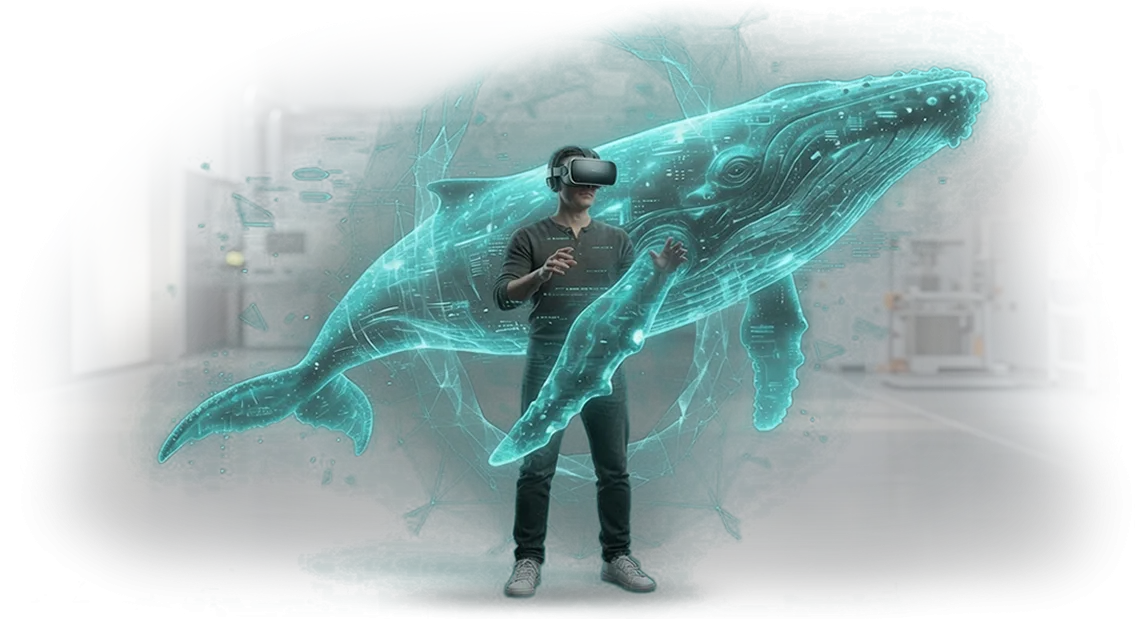
VR for onboarding lets a newcomer experience work situations in a safe environment: hold a first client meeting, master equipment, or learn a system interface — without risking a real process. The employee gains practical experience in the very first days, not after a month of theory.
The AR/VR format engages on an emotional level: people remember actions instead of reading instructions. This shortens time-to-competency and boosts confidence.
We develop these scenarios for the specific needs of your business — from office navigation to practicing complex negotiations. We help reduce turnover and recoup hiring costs within the first months of employment.
What You Get: 5 Key Benefits of AR/VR Training
Traditional onboarding stretches out over weeks: a newcomer reads instructions, watches colleagues, and makes mistakes on real tasks. All this time, the company pays a salary and only gets full productivity later.
AR/VR training changes this dynamic — the employee masters key operations in a safe environment and starts contributing faster.
The main measurable benefit is a shorter time to full productivity. Interactive simulators model real work situations, so a newcomer can practice procedures to the point of automation before their first independent day.
As a result, the onboarding period shrinks by 1.5–2 times — that’s direct payroll savings and a reduced load on mentors.
The second benefit is newcomer engagement. Instead of passively reading regulations, a person steps into a scenario where they need to make decisions and see the consequences. This format holds attention, reduces the fear of making mistakes, and increases confidence.
People are less likely to quit in the first months, which lowers the cost of rehiring and repeat searches.
The third benefit is a unified training standard. With traditional knowledge transfer, each mentor teaches in their own way: some details get lost, and employees develop inconsistent practices.
An AR/VR scenario captures your company’s best practices and reproduces them identically for every newcomer. As a result, everyone works by the same rules, which simplifies quality control and process scaling.
These benefits reinforce one another: fast time-to-productivity, high engagement, and standardized knowledge give you a predictable outcome no matter how many new employees come in.
The technology pays off not only through time savings but also through fewer errors and higher team satisfaction.
AR/VR Project Formats for Your Task
There is no one-size-fits-all format for onboarding new employees. Some need a step-by-step instruction that keeps them focused on the operation; others need to practice rare and high-stakes situations where an error is expensive.
AR, VR, and mixed reality address these tasks differently — and we help you choose the format that delivers measurable results.
The table below is a guide to typical scenarios. It’s not a rigid scheme: in a single project, we often combine two formats to strengthen the effect.
| Format | For whom | What it gives the client |
|---|---|---|
| AR instruction | New employees in manufacturing, logistics, and retail | Step-by-step hints overlaid on a real object — faster onboarding, fewer errors and defects |
| VR simulator | Managers, salespeople, operators of complex equipment | Practicing negotiations, emergencies, and non-standard situations without business risk — skills are reinforced before the real meeting |
| Mixed reality | Teams that need shared data and live interaction | Combining training content with the real environment — higher engagement and better material retention |
The format’s result is always tied to your metrics: time to the first independent shift, number of errors at the start, speed of getting up to speed. That’s why we record your current indicators at the beginning and show what has changed after launch.
How We’ll Run the Project: 7 Steps from Brief to Launch
We designed the process so that you always know which stage the project is at and what you’ll get at the end. You’re not just ordering development — you get a predictable result within an agreed timeline, with no hidden work or surprises.
Each stage ends with a concrete deliverable that you review and approve. This eliminates the “we wanted something different” situation at the final stage and ensures the application actually solves your employee onboarding task. Below are the 7 steps your project will go through.
7 Stages of Developing an AR Application for Onboarding
-
Brief and task immersion — we study your onboarding program, the profile of new employees, and their first-day scenarios. We define the goals: what an employee must know and be able to do after completing AR training.
-
Scenario and learning structure design — we design the app logic: which AR scenes, hints, and checkpoints the newcomer receives. We break the material into short interactive modules that don’t overload attention.
-
Layout and logic approval — you see the screen flows and scenario descriptions before programming begins. We make changes at this stage so we don’t have to rework finished code later.
-
Application development — we build AR scenes, integrate them with your training materials, and configure the hint system and progress tracking. We use professional tools, including ARKit, to ensure stable performance on current iPhone and iPad models.
-
Testing on real devices — we check how the app behaves in different lighting conditions and in your office spaces. We catch and fix issues before your employees ever encounter them.
-
Launch and deployment — we publish the app in your corporate environment or on the App Store under your account, set up access for the new hire group, and prepare installation instructions.
-
Support and evolution — after launch, we stay in touch: we quickly resolve issues, help with updates, and refine scenarios as your training programs evolve.
As a result, you get a ready-made tool that turns a dull lecture into a live interaction with the office and equipment. New employees get up to speed faster, and you save mentors’ time and reduce turnover during the onboarding stage.
What’s Included: Package for the HR Department
The HR department needs more than just code — it needs a working tool that can be deployed without a long setup process. We assemble the entire solution: from the application to methodologies and analytics.
You receive a complete package that stays understandable and manageable without developer involvement.
The package includes:
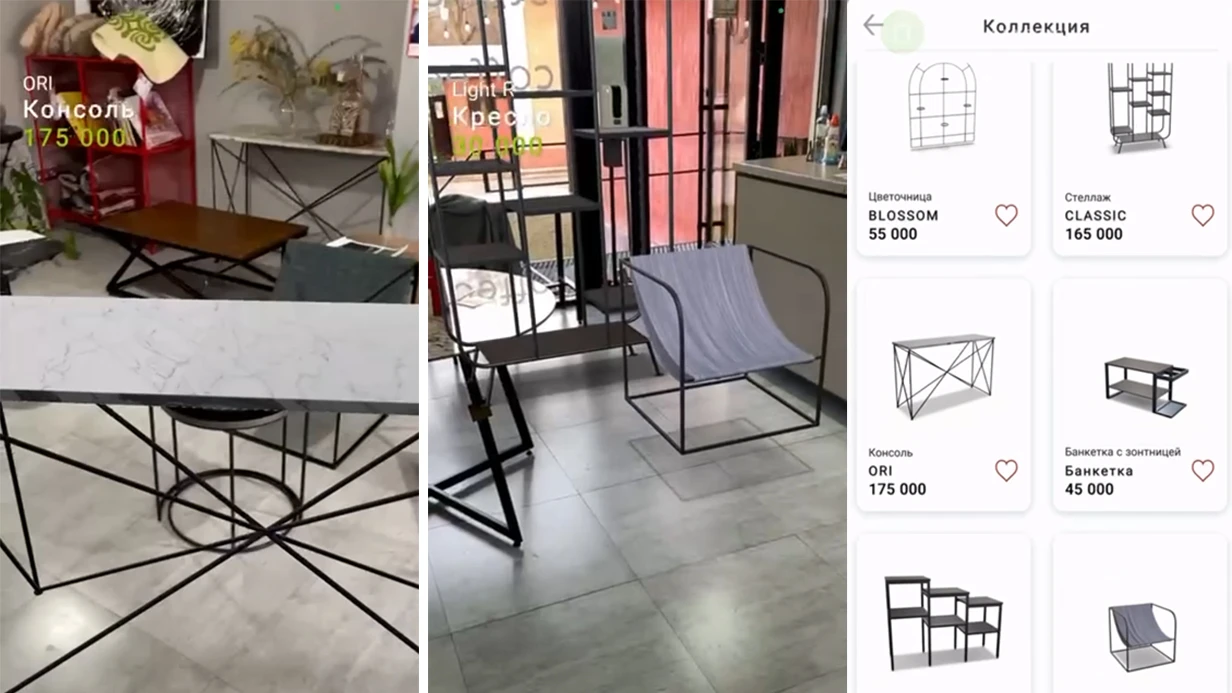
- Mobile app for the new employee — the program introduces the office, team, and processes through an interactive tour. It works on standard smartphones and requires no special equipment.
- Admin panel for HR — you can upload scenarios, update information, and manage employee access yourself. All changes apply instantly, with no need to rebuild the app.
- Ready-made training scenarios — sets for onboarding, orientation, and location-based work. The scenarios are formatted as sequences of tasks and hints that employees complete at their own pace.
- Methodological materials for HR — launch instructions, a guide to the admin panel, and recommendations for integrating the app into your existing onboarding program. This saves your team time.
- Reporting for each employee — you can see who has completed training, where difficulties arise, and what can be improved. Data can be exported in a convenient format for further analysis.
- Support and updates — we remain available after launch: we refine scenarios to your needs and ensure the solution runs smoothly.
This is not a one-off product but a system that embeds into your HR processes and works for results. Launch onboarding in a new format with your next intake of employees.
Case Study: AR Training for a Coffee Shop Chain — Results and Numbers
New employees in chain retail typically spend a week training before they can work a shift. For coffee shops, this is critical: every shift without an experienced barista means queues, mistakes, and lost receipts.
We suggested the HR department replace part of the theory with an AR simulator: a new employee uses a smartphone to see step-by-step hints right at the workstation — how to make a drink, how to take an order, how to handle a non-standard situation.
That’s how a project for a coffee chain with 40 locations came about. Instead of paper manuals and a mentor for every two-hour shift window — short AR scenarios of 20–30 minutes per shift.
Training now happens inside the coffee shop, without breaking away from real work, and mistakes are practiced on the simulator rather than with live customers.
The coffee chain’s results:
- time to working a shift decreased by 40% — from 5 full days to 3;
- the number of remade orders due to incorrectly prepared drinks fell by half;
- turnover among newcomers in the first month dropped by 25%: employees gained confidence faster and were less afraid of making mistakes;
- management received statistics for each location: which scenarios cause difficulty, who needs additional training, and where the process fails.
The HR director of the chain shared the story: what they valued most was the transparency of results. Previously, training effectiveness was measured “by feel”; now they could see actual numbers for every shift.
Three months after launch, the chain ordered an AR simulator for line managers — the second phase of the project.
For us, this case confirms that AR in retail works not as “technology for technology’s sake” but as a tool for operational efficiency. We apply the same principles in other areas: manufacturing, logistics, customer service.
If you have a similar task, write to us — we’ll show you what the simulator looked like and what metrics we achieved.
Frequently Asked Questions About Implementing AR/VR Training
Most often, doubts come down to three things: budget, return on investment timeline, and how new training will fit with existing programs.
We’ve gathered the questions we usually hear at the first meeting and answer them directly — without technical details or complex calculations.
How much does developing AR/VR training for onboarding cost?
The cost depends on the scale: the number of scenarios, the format, and the positions you’re preparing the program for. We select a solution that fits the customer’s budget — from a compact app for a single role to a full-fledged training platform.
During the brief, we settle the detailed estimate so you understand all the investment from the very beginning.
When will investments in virtual training pay off?
The effect is visible after the first few groups: new employees start working faster, make fewer mistakes at the start, and are less likely to leave during the probation period.
Companies save on mentors, training room rental, and repeat hiring — costs are usually covered within a few months. We help you calculate the payback for your scenario even before development begins.
How can an AR application be integrated into the current training program?
We develop a module that complements your existing processes rather than replacing them. It can be connected to your current learning management system or launched as a standalone onboarding stage.
Integration takes a few days and does not require restructuring your internal workflow or discarding familiar materials.
If you don’t see your question in this list — ask it in your application. We’ll explain how implementation would look for your team and prepare an individual estimate for your task.Launch an AR/VR Project: Estimate for Your Task Within 1 Day
Every corporate onboarding project is unique: you have your own specifics, number of employees, and training scenarios. That’s why we can’t name an exact cost and development timeline right away — we need to get into the task.
We offer a transparent path: you leave a request, and within one business day we prepare a project estimate and a commercial proposal for your scenario.
The estimate includes task analysis, identification of key onboarding scenarios (office introduction, process training, navigation), and selection of the optimal format — mobile AR, VR simulator, or a combination.
We define the scope of work, timeline, and expected result, and you receive a clear document with no technical jargon — only numbers, stages, and business benefits.
Within one day, you’ll find out:
- The estimated project cost for your task.
- Implementation timeline — from brief to launch.
- The recommended format: AR for smartphones, VR for stationary zones, or a mixed solution.
- Requirements for employee devices and infrastructure.
- Which onboarding stages can be automated and where you can save.
- A pilot launch plan and effectiveness evaluation criteria.
After the estimate, we offer a consultation: we review options, answer questions, and help you approve the budget. Leave a request on the page — and by tomorrow you’ll have a ready proposal for launching an AR project for new employee onboarding.
How to Choose the Right Format for Your Training Task?
When choosing a training format, it’s important to start not from trendy technology but from the specific task and the conditions your employees will learn in.
There is no universal answer to “which is better”: AR and VR solve different problems, and each format has its own economics — both in implementation costs and operational complexity.
If your goal is corporate onboarding for new employees at company scale, it’s more practical to start with AR. Such an application works on the standard smartphones and tablets your employees already use, so there’s no need to buy expensive headsets or allocate dedicated space.
A new employee just points the camera at a work object or instruction — and immediately gets hints, diagrams, and step-by-step scenarios in the real environment.
This lowers the entry barrier, speeds up launch, and easily scales to hundreds of people without additional equipment investment.
VR makes sense when you need deep immersion and practice of actions that are difficult or dangerous to reproduce in real life: working with rare equipment, acting in emergency situations, practicing procedures without risk to a newcomer.
However, this format requires purchasing headsets and preparing a room, and training becomes less flexible — it can only be carried out in a specially equipped area. That’s why VR is usually chosen for narrow tasks where the value of the trained skill justifies the immersion.
Make your final decision using three criteria. First, the goal: provide broad orientation in processes or refine a rare skill. Second, the equipment budget: AR works on existing devices, while VR requires investment in headsets.
Third, training logistics: AR is available anywhere and at any time, while VR is tied to a specific location. If you are just beginning to digitalize onboarding, the optimal path is a mobile AR app that pays off quickly and integrates easily into current processes. Add VR selectively when tasks appear that require full immersion.