

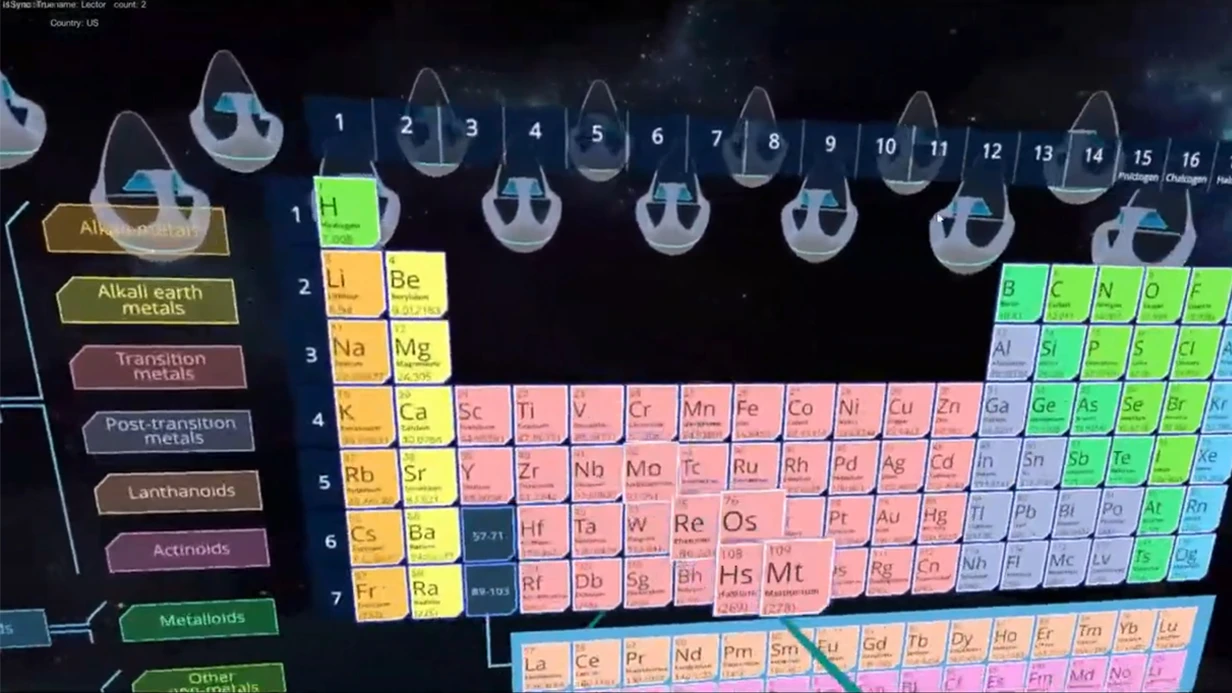


Why You Lose Clients Without Virtual Laboratories
Your competitors are already turning product presentations into immersive events, and clients are voting with their wallets for those who let them try, touch, and live the product.
A regular website or catalog no longer holds attention: modern audiences expect a sense of presence, not feature descriptions. Without virtual laboratories, every such project goes to the one who shows their product in action rather than in words.
Client loss happens imperceptibly: a potential customer compares two proposals and chooses the one that gave them an experience. Companies without interactive formats seem slow and outdated, even if their product is objectively better.
This is why adopting virtual laboratories becomes a matter of market survival, not technology: while you hesitate, competitors are taking your audience through demo booths, virtual tours, and training simulators.
We help close this gap: we audit your customer interaction scenarios, identify where a virtual laboratory will deliver the greatest impact, and support turnkey implementation. You get a tool that retains clients at every stage—from first touch to repeat sale.
As a result, brand awareness grows, the sales cycle shortens, and you gain the very advantage that makes clients choose you.
What Benefits Immersive Technologies Bring
Immersive technologies turn a one-off event into a notable news hook. Guests don't just watch a presentation—they experience the brand story and remember it on an emotional level.
For event managers and marketers, this works toward three goals at once: engagement, reach, and repeat contacts.
Here is a simple checklist of the benefits you get:
- High engagement — visitors interact with the virtual laboratory themselves instead of watching from the sidelines. Average attention span grows many times over.
- Reach without extra costs — each participant takes photos and videos inside the VR/AR zone and posts them on social media. The brand gets free mentions in friends' and followers' feeds.
- Brand awareness — an unconventional format makes your booth stand out among hundreds of identical ones. The immersive zone becomes the place people talk about for a week after the event.
- High-quality product demonstration — a virtual laboratory can show complex processes and devices that cannot physically be brought to the venue.
- Lead generation — before starting a session, guests leave their contact details, and afterward they receive personalized materials. This turns an entertainment mechanic into a source of inquiries.
“We brought a VR zone to an industry exhibition—more than a thousand visitors went through it in two days. The line never ended, and after the event people who saw the photos on social media wrote to us,” shares the marketing director at Event Group.
Does every item bring measurable results? Yes, if you count visits, collected contacts, and social media mentions. We help set up a metrics system from the start so you can see the return from each zone.
Virtual Laboratory Formats for Your Task
Every business solves its own problem: some need to quickly train personnel to work with complex equipment, others need to show a product to clients who cannot physically visit the showroom.
There is no universal application for all scenarios, and choosing the wrong format leads to budget overruns and wasted time. That's why at the start we define your task and select the format that solves exactly that task—with clear timelines and a predictable result.
Below are typical scenarios our clients come to us with most often. Mark yours, and you'll see which format suits you.
| Format | For whom | What it gives the client |
|---|---|---|
| VR simulator | Employee training, emergency response practice, professional development | Fast onboarding, lower injury risk and training material costs, objective skill assessment |
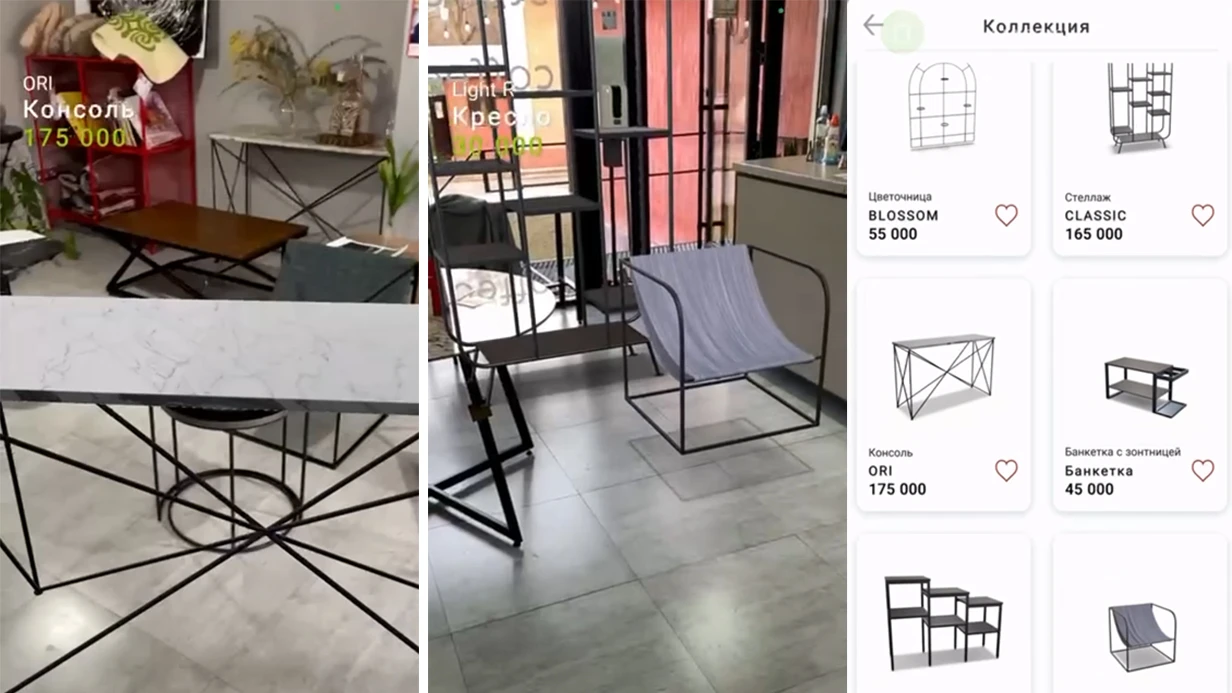
| AR catalog | Product demonstration, exhibition booths, presentations | Audience reach without physical contact with the product, clear advantage over competitors |
| Interactive configurator | Product customization for clients, selling complex solutions | Higher average order value and conversion—the buyer assembles their own option and sees its value |
| Virtual tour | Real estate, manufacturing, turnkey facilities | Savings on logistics and shooting, audience trust, round-the-clock access to the facility |
How to Choose a Format Faster
Articulate what the user should do—make a purchase, practice a skill, or view an object? The choice depends on that. Also assess the scale: one simulator for ten employees and a training program for branches across the country are two different projects.
To keep things simple, at the initial consultation we will propose the optimal option for your task and budget, then show you what it will look like. This is a win-win way to test the idea before development—you see what you'll get and make a decision without technical details.
How a Project Goes from Brief to Launch
Developing a virtual laboratory application is not a black box. We structure the work so the client sees every step—from the project brief to the application launch—with clear timelines and a fixed price. Below is a typical process, adaptable to your task.
-
Project brief. You set goals and describe the audience. We clarify scenarios: what students or employees do, what errors need to be tracked.
-
Audit and work plan. We determine the scope, development stages, and timelines. We agree on the interface logic so all parties understand the result before programming begins.
-
Scenario design. Together with your experts, we map out the user's step-by-step actions—from the first step to the final result. This is the foundation of the future laboratory.
-
Prototype creation. We prepare an interactive mockup of the key screens. You see the future application at an early stage and make adjustments without extra costs.
-
Development and assembly. We turn the prototype into a working application. We show intermediate builds so you can control the progress and timelines.
-
Testing and application launch. We test on target devices, fix issues, prepare instructions, and hand it over for operation.
-
Post-launch support. We stay in touch: update content, add lab exercises, and expand functionality.
This way you get a transparent process, predictable timelines, and confidence in the result.
What's Included in the Delivery of an Immersive Solution
After the project is delivered, you get not a raw product but a complete, working solution your team can use immediately. Everything needed to launch and develop virtual laboratories is already included in the delivery. No hidden fees, no “order this separately.”
Here's what you get at the end of the project:
- A ready-made immersive solution for your task — a virtual laboratory that works on the equipment you already have or on equipment we select to fit your budget. You get a result, not a semi-finished product.
- Full rights to the project — source materials, settings, and the system itself remain yours. No lock-in to a specific contractor: you can develop the solution with us or with your own team.
- Training for your team — we conduct sessions for administrators and instructors: how to launch the laboratory, manage scenarios, and add new materials without programmers. Your staff works independently from day one.
- Clear documentation — short instructions and procedures: how to prepare the space, run a session, and what to do if something goes wrong. No technical jargon, everything in plain language.
- Post-launch support — in the first weeks we stay in touch and help with configuration for your actual sessions; after that, we work according to the agreed procedures. You are never left alone with problems.
- Updates and refinements on request — if in a couple of months you need to add new scenarios to the laboratory or adapt it for a different audience, this is done without rewriting the system from scratch.
Essentially, you get not just a program but the confidence that the virtual laboratory will work toward your business goals: accelerating employee training, reducing material costs, and improving training quality. Everything else is our concern.
Case Study: How We Surprised Guests at an Industry Forum
Industry forums look alike: identical booths, brochures, business cards. Guests walk past in a few seconds, and participation becomes a formality.
We suggested the organizer of an industrial automation forum turn the booth into a space where guests become participants in the process.
With the VR laboratory, each guest could “travel” to a real production facility in a couple of minutes and complete a short scenario: set up a line, find a fault, make a decision. This engages more than any presentation because the person isn't watching—they're doing.
Results for the Client
In two hours of peak activity, more than 120 sessions went through the laboratory. A 15–20 minute queue became the best proof of interest: guests were willing to wait to get inside.
The organizing company collected three times more qualified contacts than at the previous forum with a classic booth.
“Guests didn't just look at the product—they experienced it. We haven't seen that level of engagement from any other activity at the exhibition,” noted the head of the TechnoProm division.
After the forum, the client didn't limit themselves to a one-off event. We received a request to scale up: we are preparing similar zones for three regional events for the company.
For us, that's the main indicator—the VR laboratory solves a business problem rather than just entertaining guests.
How to Choose the Right Format for Your Event?
Choosing a virtual laboratory format starts not with technology but with your event's goals. What matters more: introducing guests to a product, training employees, or creating a news hook for social media?
That determines whether you need a full VR zone with support, a lightweight AR activity on smartphones, or a hybrid scenario combining both approaches.
A typical mistake is choosing equipment first and only then thinking about how to fit it into the event. This approach usually runs into an unprepared venue, complicated logistics, and guests who find the solution inconvenient to use.
The right path is the opposite: we analyze your goals, number of participants, location specifics, and time windows, and only then propose a format that will organically fit into the program.
Individual requirements are the basis for any scenario. One client needs a simulation of lab experience for a university conference; another needs an interactive booth for an industry exhibition.
In each case, a specific configuration is chosen: number of stations, session duration, level of immersion, and the way visitors interact with the group.
Wehave conducted dozens of such analyses over 10 years of work and know what pitfalls arise at real events. That's why we select the format together with you: we lock in the scenario, calculate the equipment load and preparation timelines.
In the end, you get a clear plan with no hidden surprises—what happens before the opening, during the activity, and after it ends.
If you are currently planning an event and are unsure about the format, just start with a consultation. We'll help you determine the optimal option for your goals and show how it will work in practice.
Frequently Asked Questions About Implementation
Implementing a virtual laboratory is an investment, so questions and answers at the planning stage matter more than launch speed. The client wants to understand what risks they take on, how quickly the investment will pay off, and what happens if something goes wrong. We address these concerns directly—without technical fog or hidden conditions.
Below are typical client questions. The answers are based on dozens of real projects, so you'll immediately see how we protect your results.
What risks are involved in implementation, and who covers them?
The main risks are missed deadlines, results not meeting expectations, and low user engagement. We capture all agreements at the start: goals, timelines, and acceptance criteria.
If during the process we find that something might not work, you'll learn about it in advance, not on the day of launch. Plus, you get a test run with real users before the final handover.
What happens after launch? Will you just hand over the project?
After launch, we support the system: we monitor the load, collect feedback from employees, and quickly make edits if something interferes with the work. There is a warranty period and a separate support plan for this—you are not left alone with a new technology.
How quickly will results appear?
The first prototype is available just a few weeks after the brief—you immediately see the logic and scenarios in action. A full launch takes on average 1–2 months. The time depends on the complexity of the scenarios and how quickly you approve intermediate versions.
The implementation decision should not be a leap into the unknown. our team addresses typical fears already at the audit stage: you get a transparent plan, clear acceptance criteria, and real examples, not abstract promises. As our technical director says: “A proper audit turns implementation from an experiment into a controlled process with a predictable result.”Get a Consultation for Your Project
Before launching a virtual laboratory, it's important to understand where it will bring real value to the business and where it will just become an expensive toy.
We help clients assess the potential of the technology before development starts—so you invest in a solution that will pay off, not in an experiment.
The consultation is a short conversation with our VR/AR/MR expert. You describe your task, we ask clarifying questions, and we propose specific implementation options. No obligations—only value for your project.
What You Get After the Consultation
- An understanding of which virtual laboratories will solve your company's tasks fastest.
- A justified estimate of implementation cost and realistic launch timelines.
- Recommendations on format: full replacement of physical equipment, a hybrid approach, or an addition to existing programs.
- An assessment of risks and compatibility with current business processes.
- A pilot project plan that can be launched quickly and tested with real users.
- Answers to questions about employee training, technical support, and future development of the solution.
After the consultation, you'll receive an email with a summary of the conversation and a proposal for next steps. It's not a template document but a summary based on your situation.
Leave a request—we'll call you back within one business day, clarify the details, and help you plan the virtual laboratory implementation. Start with a consultation to make an informed decision.