

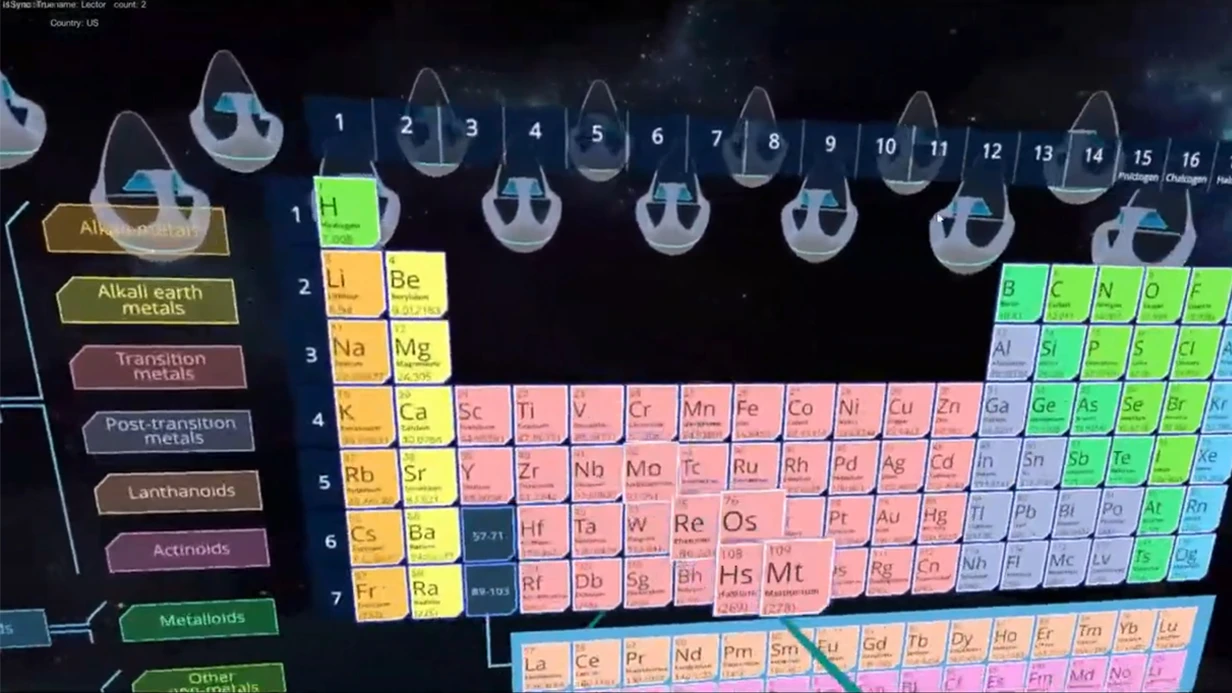


Pharmaceutical Production: How VR Reduces Risks and Improves Quality
Pharmaceutical production is one of the strictest industries, where the price of an error is measured not only in money but also in patient safety.
A failure to follow procedures, a mixed-up batch, a breach of sterility, or an incorrect sequence of operations can stop the line, recall a batch, and undermine trust in the brand.
At the same time, training personnel on a real line is often impossible without stopping processes—which means lost revenue and delays.
A VR simulator and a digital twin solve this problem: an employee practices actions in a safe virtual environment where an error does not lead to defects or penalties.
They train through the full cycle—from incoming inspection and equipment preparation to filling and packaging—exactly replicating real scenarios, including emergency situations.
This way, personnel build skills before they step up to a real line, and the production facility gets employees ready to act without mistakes.
For pharmaceutical production, this means controlled reduction of the main risks: the human factor, GMP violations, and downtime.
Personnel errors become manageable—their number drops after the first training cycles, and the manager sees an objective picture of each employee's readiness before granting access to work.
We create VR simulators based on digital twins of specific production areas. This is not an abstract program but an exact virtual copy of your line: the same instruments, the same procedures, the same critical control points.
We work remotely, support the project from brief to launch, and after implementation we record a measurable result: a reduction in personnel errors and improved production quality without stopping existing equipment.
What VR and Digital Twins Give Production: 5 Benefits
A digital twin of production in VR is not a fad but a working tool that pays off at every stage. It allows you to see and test processes before launch and train employees in a safe environment. Below are five measurable benefits that a pharmaceutical enterprise receives.
The first benefit is safety. Training personnel in a virtual environment eliminates risks to people and expensive equipment. An employee can practice an accident, a leak, or a line failure without consequences for real production.
The second is training speed. Instead of weeks of theory and on-the-job training at a machine, a new employee masters processes in a few days. A VR simulator allows repeating operations until the skill is stable, without stopping production.
The third is error reduction. Training on a digital twin drills actions until they become automatic, so personnel act more confidently on the real line. Errors that previously cost defects and downtime are prevented at the training stage.
The fourth is quality growth. When every operator follows a single well-tuned scenario, products consistently meet the specification. Fewer deviations, less rework, more output produced correctly on the first attempt.
The fifth benefit is compliance control. The digital twin records every operator action, and you always know whether the process meets requirements. This simplifies audits and confirms quality to supervisory authorities.
Implementing VR and digital twins is an investment in predictability. The enterprise gains trained personnel, fewer defects, and consistent quality—factors that directly affect revenue and reputation.
VR Formats for Pharmaceutical Production: From Training to Control
Pharmaceutical production is an environment where the price of an error is especially high: rejected batches, product recalls, risks to patients. Therefore, personnel training and control must be as precise as the process itself.
Virtual formats allow practicing actions before they affect real production—and that is their main value for the business.
We select the format for a specific task: sometimes a simulator is needed, sometimes a digital twin of an entire area, and sometimes augmented reality is sufficient. Below are typical scenarios covered by our solutions.
| VR Format | For Whom | What It Gives the Client |
|---|---|---|
| Virtual simulators | Line operators, technologists | Skill practice without stopping production or risking defects. A new employee reaches independent operation faster, while an experienced one maintains qualifications |
| Digital twin of production | Managers, engineers, quality department | Validating changes before implementation: what would happen if parameters are changed, equipment added, or an area moved. Minimal downtime and cost for experiments |
| Augmented reality instructions | Maintenance teams, inspectors | Step-by-step prompts directly on the equipment: the employee sees what and where to check without flipping through paper procedures. Faster troubleshooting, fewer errors |
Each format solves its own business problem. Simulators reduce time-to-competency, the digital twin supports data-driven decisions, and augmented reality accelerates work with equipment and improves inspection accuracy.
Together, they build a unified training and personnel support system at every stage—from novice to shift supervisor.
We help you choose the optimal set of formats for your production: we analyze processes, risk points, and the team's current skill level, then propose a solution that pays off through reduced defects and downtime.
How a VR Solution Is Developed: Project Stages
We structured the process so that you control every stage and understand what you get as a result. No "black box": first we break down the task, then design the scenario, and only then move on to developing the virtual copy of the production facility. This reduces revisions and speeds up deployment.
Project Stages
- Brief and audit. You describe your goals—employee training, emergency response practice, or demonstration of a production area. We analyze the source materials and determine how the VR solution will fit into your pharmaceutical production processes.
- Concept approval. We present the scenario and structure of the future digital twin: which zones and actions will be included, and how the user interacts with the system. You approve the concept before development starts—this prevents unexpected changes.
- Scenario design. Together with your technologists and engineers, we refine the logic, correct operation sequences, and potential employee errors. The result is a detailed scenario that serves as the basis for development.
- Building the virtual production environment. We model the workshops and equipment and configure the operating logic of the digital twin. At this stage, you see intermediate versions and provide feedback.
- Testing on your scenarios. We verify the system against real working situations: from standard tasks to emergency incidents. We fix issues and confirm quality.
- Deployment and support. We roll out the solution, train your team, and support you through operation. If needed, we update scenarios to reflect changes in procedures.
This sequence allows the project to be launched within a tight timeframe and delivers a result that precisely matches production needs.
What's Included: Project Scope and Additional Materials
A digital twin of pharmaceutical production is not just a VR application but a full-fledged working tool for your team. We deliver it as a complete project where every stage is thought through: from training scenarios to post-launch support.
You won't need to buy anything separately or dig into technical details—you receive a ready-made package that immediately integrates into your process.
The scope of work includes:
- Scenarios for standard and emergency situations — personnel practice actions on a virtual copy of production lines without stopping the real process or risking product quality.
- Technical documentation and procedures — detailed instructions for administrators and operators, plus training materials. Everything can be easily embedded into your existing training and internal control system.
- Employee training — we conduct workshops for instructors and key users. Your staff quickly learns to work with the digital twin and can pass on knowledge to colleagues without external specialists.
- Integration with existing systems — we connect the digital twin to your LMS platform or internal portal so that training results automatically flow into reports and logs. This saves hours of administrative work.
- Technical support — we take on maintenance: monitor system health, promptly update scenarios when procedures change, and answer user questions after launch.
- Additional materials — video instructions, cheat sheets, and quick-start guides. Everything needed for standalone use of the digital twin from day one.
This project scope eliminates hidden costs and surprises at the implementation stage. You clearly understand what you receive, in what timeframe, and how the project will operate after handover.
Most importantly, employees start using the digital twin immediately, without a long adaptation period. This reduces personnel training time and lowers the number of errors in real production.
Real Case Study: How We Reduced the Number of Errors in Production
In pharmaceutical production, the price of an error is especially high: any deviation from the procedure means defects, delayed batches, and reputational risk.
Traditional briefings do not cover emergency situations, so an employee encounters them for the first time on the shop floor.
We built a digital twin of a production line and moved training to VR. Operators worked with a virtual copy of the equipment in scenarios that cannot be safely reproduced in reality.
What We Did and What Results We Achieved
Implementation took less than two months, and the entire shift completed training. After the VR simulator was launched, the number of errors in operations dropped threefold compared to the control period.
Importantly, the result is not a one-time effect: the skill is reinforced through muscle memory. An employee who has practiced the algorithm in a virtual environment acts more confidently and is less distracted by secondary details.
Why It Worked
The digital twin replicates the real operating logic of the equipment, including failures and alarm signals. In VR, the system can be deliberately "broken" so that personnel learn to respond within seconds.
The client received not just a simulator but a manageable competency control tool: it shows which employees complete a scenario without errors and who needs additional preparation.
For management, this provides transparency and reduces dependence on the human factor. And for the site itself, it offers a clear system for assessing personnel readiness before a shift. This approach is now being rolled out to other production areas of the plant.
The case became the starting point for expanding the digital twin across the entire production cycle—from raw material receipt to finished product packaging. If you'd like to discuss a similar task for your site, we'll start with a short audit of the processes.
How to Choose the Right Format for Your Task?
A VR format is never "the best"—it is the one that fits a specific task. This is especially important for pharmaceutical production: the same digital twin can handle personnel training, process control, audits, and production demonstrations for partners.
Each scenario requires its own depth of immersion, number of concurrent users, and method of interaction with the system, so the choice starts not with technology but with the question: "What should your employees or clients get in the end?"
If the task is practicing rare and dangerous situations, individual training in a virtual environment is sufficient, where an employee can make mistakes without consequences.
When you need to train an entire shift or conduct a joint review of procedures, a format with multiple simultaneous workstations is convenient.
For presenting a digital twin to investors or regulators, a compact version on a tablet or headset with quick launch and a short demonstration works best.
We help translate the task into solution requirements and select parameters such as immersion depth, session duration, and usage scenario—without unnecessary technical details.
Selecting a VR solution at our team starts with a consultation: you describe the task, and we propose a format that delivers the required result within an agreed timeframe.
Everything that affects practical value is taken into account: what equipment the production site already has, how many people will be involved, how often the solution will be used, and what indicators you consider a success—from the speed of onboarding new employees to the number of correctly completed scenarios.
Over the years, we have built a catalog of typical pharmaceutical scenarios, so we give initial recommendations at the very first meeting.
Thus, format selection is a collaborative process in which we handle the technology and you define the goal.
The result is a solution that immediately fits into production procedures and delivers measurable value: shorter personnel training time, more compelling presentations, and lower risk of errors in critical operations.
Come to a consultation—we'll discuss your task and select a format that will work toward results for your specific production.
Frequently Asked Questions About VR Implementation in Production
First, a few words about what clients most often ask before launching a VR solution in pharmaceutical production. The questions concern timelines, safety, and compatibility—and that's normal: a digital twin should help the business, not hinder it.
How long does implementation take?
We work by a clear procedure: brief → plan → prototype → launch. A basic scenario goes live within a few weeks, and control points allow you to see progress at every stage. If the production site already has a digital model, the timeline shortens even further.
Will VR compromise the safety of production processes?
The VR solution operates as a separate training environment and is not connected to control of real equipment. This eliminates any impact on working processes and meets training objectives without risks to production. All data is isolated, and access to the system is protected.
Is the solution compatible with our equipment and software?
To launch, you only need a standard workstation and professional headsets—no special reconfiguration of production is required. We adapt the scenario to your product line and any existing digital twins, so the solution fits into the current infrastructure.
After launch, we stay in touch: we train employees, update scenarios, and help roll out the VR program to other sites. This makes implementation not a one-off project but a long-term tool for improving efficiency.Ready to Discuss a VR Project for Your Production?
Submit a request, and within 1-2 days we will prepare a project cost calculation tailored to your pharmaceutical production. We'll tell you how long the development of a VR simulator or digital twin will take, what stages are required, and what result you'll get at each one.
No "waiting zones": after the brief, you receive a concrete plan, timeline, and scope of work.
To make the conversation focused, think in advance about what matters more to you: training personnel on procedures, practicing emergency situations, monitoring clean zones, or demonstrating production processes to investors and auditors.
Even if you don't yet know where to start, that's fine—we'll ask the right questions and suggest the optimal format.
After placing an order, you receive:
- a briefing and task audit—a 30-40 minute call to capture goals and constraints;
- a project cost calculation: timeline, stages, team composition, and scope of work—in a clear document;
- a VR solution scenario adapted to your production procedures;
- a prototype or pilot version—you see the result before full delivery;
- employee training on the VR tool—from operator to shift supervisor;
- technical support after launch and refinements to reflect process changes;
- transfer of all source materials—you are not dependent on us after the project ends.
Contact us through the form on the website, by phone, or via messenger. We'll respond within one business day, clarify the details, and suggest a time for the consultation.
The sooner we start the discussion, the faster your employees begin working in a safe and controlled VR environment.