




Why does a cosmetology clinic need a VR/AR format?
Modern cosmetology is a market where the client chooses not a procedure but a guaranteed result. If a clinic does not give the patient the opportunity to see that result before the visit, patients switch to competitors who speak to them in an understandable digital language.
The absence of virtual try-on and online booking is perceived as outdated service, and for a premium-segment clinic this means lost traffic, a lower average check, and reputational risks.
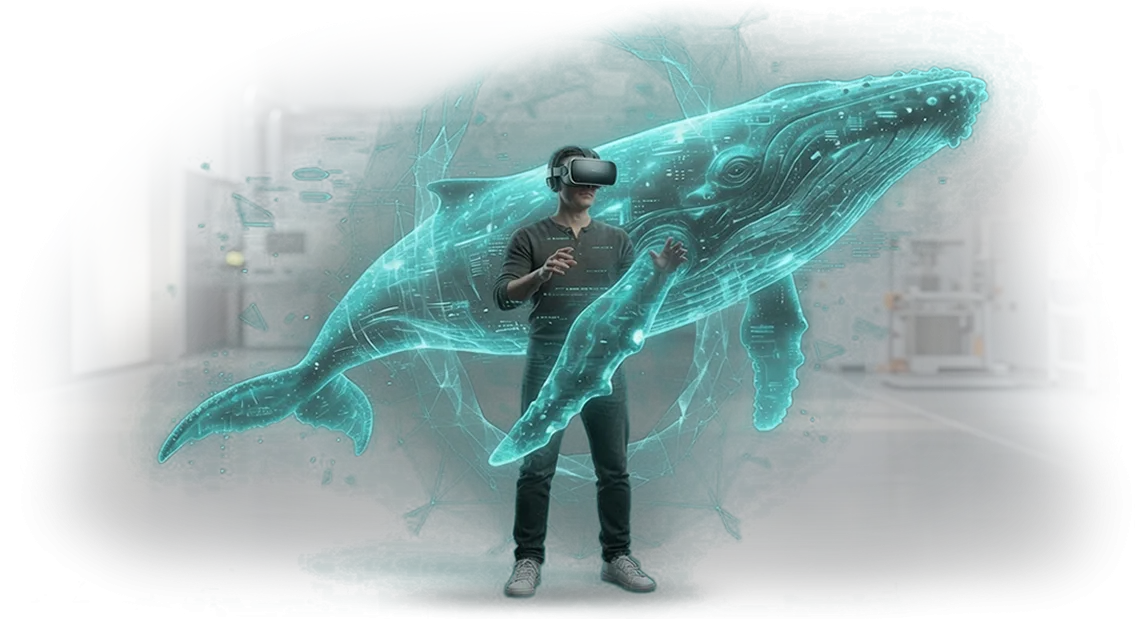
The VR/AR format turns the consultation into a clear, engaging process. The patient uploads her photo or uses a digital twin and sees how her face will change after specific procedures.
This removes the main fear — “what if it doesn’t suit me” — and increases trust in the specialists. Virtual try-on helps choose a care program consciously rather than at random, so the number of cancellations and reschedules noticeably decreases.
A client’s digital twin is also a retention tool. Based on data about the current skin condition, the clinic forms a personal treatment plan, reminds about visits, and shows the dynamics of changes.
The patient sees the care and returns again, while the average check grows through cross-selling of suitable services. For the clinic, this means a predictable flow and long-term relationships instead of one-off inquiries.
Integrating online booking into this process makes the patient journey seamless: from the first encounter with the technology to confirming the visit in a couple of clicks. For the clinic, this reduces the load on administrators and leads to fewer missed appointments.
For the patient, it is the level of convenience they expect from a modern service and are ready to discuss with friends.
By implementing VR/AR tools, the clinic gains the status of a technology leader in its district or city. This pays off through increased traffic, higher checks, and repeat visits.
Investing in a digital format is an investment in competitiveness that cannot be copied with ordinary brochures and promotions. It is precisely such solutions that shape the image of a premium-level clinic.
What does developing a VR/AR/MR application give the clinic?
A clinic competes not only with the quality of its services but also with the impression a patient takes away. A VR/AR/MR application turns an ordinary visit into an event: the person sees the future result, takes part in the process, and remembers your clinic in particular.
Increasing loyalty
Patients trust what they understand. Using a virtual 3D model, the patient sees in advance how their appearance will change after the procedure — the fear of “what if it gets worse” disappears. This reduces anxiety and brings the client back again.
After the first visit, you can send the patient an AR preview of their future result on their phone. They observe the changes every day — and come for the next step on their own, without reminders.
Booking procedures
The application shows a realistic “before/after” result directly on the patient’s face. When a person sees the effect on themselves, they make a decision faster — the conversion from consultation to booking grows.
Online booking is built into the interface, so less than a minute passes from desire to reservation.
Staff training
Employees practice complex scenarios in a virtual environment: a new cosmetologist can train on a digital model before working with a real patient. This accelerates onboarding and reduces the number of mistakes in the first months of work.
Brand awareness
Immersive experience creates a “wow” effect — guests take photos and record videos with AR masks and share them on social media. Each such post is free advertising that mentions your clinic.
People discuss the unusual format and tell friends and colleagues about it, bringing new audiences without spending on promotion.
We have been developing VR/AR/MR solutions for business for over 10 years. We design applications around the clinic’s tasks — from digital twins to training scenarios — and support them after launch.
Digital twin formats for a cosmetology clinic
For a cosmetology clinic, a digital twin is not a single “picture” but a set of formats for a specific task. We select the right option or combine them: a virtual tour for patients, an AR mask for social media, and an MR trainer for staff training.
A virtual tour introduces the patient to the clinic before the visit: the person walks through the reception, treatment rooms, and procedure room, assessing the atmosphere and sterility without leaving home. This removes the fear of the first appointment and reduces no-shows.
The AR mask is a social media reach tool. The patient points the camera at a branded marker or opens a filter — and the “after treatment” effect appears on their face: firmness, skin glow. Such content is spread by patients themselves and looks more natural than standard advertising.
MR staff training is practicing procedures on a digital patient model rather than on a live client. The trainer highlights target zones and common mistakes, so a new employee reaches the master level faster, and the clinic reduces the risks of a poor-quality service.
| Format | For whom | What it gives the clinic |
|---|---|---|
| Virtual tour | New patients | Pre-visit warm-up, fewer cancellations |
| AR mask | Marketing and social media | Reach, virality, brand recognition |
| MR training | Administrator, senior staff | Training speed, quality control |
Each format is ready to use on smartphones, tablets, and VR headsets. Since we assemble digital twins with professional equipment and proven tools, the client gets a stable picture and fast loading without delays.
On request, we combine the tour, AR mask, and trainer into a single digital ecosystem for the clinic.
Write to us about which format suits you best — we will show examples for your clinic.
How turnkey development works
We understand that for a cosmetology clinic, a digital twin is not an experiment but a working tool that must affect bookings, sales, and loyalty. That is why the process is structured so that you see the result at every step and can make adjustments without missing deadlines.
The workflow looks like this:
-
Brief and goals. We define what tasks the digital twin should solve: introducing procedures, showing rooms, booking appointments. We identify the audience and usage scenarios.
-
Concept and prototype. We show how the digital twin will look and work, and which clinic areas will be included. We agree on details before the main development starts.
-
Design and structure. We create a user-friendly interface and navigation: the patient finds the desired procedure or doctor in 2–3 clicks. The design matches the clinic’s style.
-
Digital twin development. We build virtual rooms, add information about services and prices, and connect a booking form. You receive a working prototype and see progress.
-
Testing with your team. Together with administrators and a doctor, we test scenarios: booking, loading, potential patient questions. We fix the issues.
-
Project launch. We publish the digital twin on the website or in the app and set up access via QR code at the clinic. We train staff to work with it.
-
Technical support. After launch, we stay in touch: we update information, add new procedures, and monitor stable operation.
This order eliminates surprises: you know in advance what you will get and control the timeline. As a result, the cosmetology clinic receives a digital twin that brings in new patients from the very first day.
What is included in the project delivery
You get not a “raw” prototype but a complete product for your cosmetology clinic. The delivery includes everything needed to put the digital twin into operation: from the application itself to staff training. Below is the project scope you will see in the contract and in the final result.
- Ready-to-use application. A full-fledged VR/AR solution installed and configured for your equipment. You can use it immediately after handover — for clinic tours, procedure demonstrations, and staff training.
- VR content. The three-dimensional model of the clinic, rooms, zones, and scenarios are already populated. You do not need to model or prepare anything separately — all content is created for your tasks and style.
- User guide. Simple materials for administrators and doctors: how to launch the application, how to demonstrate it to a patient, and what to do in typical situations.
- Staff training. We conduct hands-on sessions with your team. After the training, employees confidently work with the digital twin without developers’ help.
- Rights to source files. You receive the source files and technical documentation. The project remains your asset: you can develop it, change contractors, or add functionality in the future.
- Post-launch technical support. We stay in touch: we help with updates, answer staff questions, and refine content when necessary within the agreed format.
Each item is checked during the acceptance stage — you see exactly what is handed over and accept the work against a clear list. No hidden details or “surprises” after launch: only what is needed for the confident operation of the digital twin in your clinic.
Case study: a digital twin for a clinic network
When a female patient chooses a cosmetology clinic, doubts hold her back: what the treatment room looks like, what equipment is used, who will perform the procedure.
A digital twin removes these barriers — it allows her to enter the clinic virtually, examine the space, and meet the doctors before the first visit.
We implemented such a project for the network of cosmetology clinics Estetika. The application combines branch navigation, 3D room models, and an interactive procedure guide.
The patient gets inside the clinic with a couple of taps and plans her visit without phone calls or extra questions.
Case study results
In the first month after launch, bookings for procedures grew by a third. Not only initial bookings increased — the share of repeat visits also rose. Patients who had “visited” the clinic in advance came better prepared and more often returned for regular care.
We also note an increase in loyalty. When a person sees the clinic from the inside before the visit, they feel calmer and trust the brand.
This affects recommendations: after the app launched, the flow of requests by word of mouth grew — the clinics received new patients without an additional advertising budget.
Why it worked
The solution is based on professional VR/AR equipment, yet the digital twin opens even from a smartphone. The patient does not need to install or configure anything: she simply launches the application and finds herself inside the clinic.
The clinic network was satisfied with the result — within a year we received an order for a second digital twin for a new branch. This confirms that the format works as a sustainable tool for growing bookings and retaining clients, not as a one-time promotion.
How to choose the right format for your task?
Choosing a format always starts not with technology but with the clinic’s task. Who needs a digital product and why: potential clients — to come for a procedure; administrators — to answer questions faster; doctors — to practice scenarios. Once we understand this, the answer becomes obvious.
A virtual tour is a solution for getting acquainted: showing interiors, the reception area, treatment rooms, creating a first impression and removing the barrier to a visit.
It is indispensable if the clinic focuses on atmosphere and location, and the main goal is to increase the number of initial inquiries from the website and maps.
The AR format is needed when it is important to “bring the service to life”: overlay a procedure diagram on a real photo of the patient, show how the face changes after a course, demonstrate the effect of the equipment before booking.
It is an engagement tool that helps the client make a decision right in a dialogue with an administrator or at the reception desk.
A full digital twin is a strategic tool. It combines the layout, equipment, visitor flows, and clinic workflow scenarios into a single model.
It is chosen when you need to train staff without risk to patients, test new services, and plan redevelopment or expansion — in other words, manage the clinic based on data rather than intuition.
You do not need to choose on your own — during a consultation, we analyze your tasks, show what each format will deliver in your specific case, and help you finalize a brief.
You will get not the “most expensive solution” but the one that will bring results at the first stage already. It is the brief that starts the path to a clear and measurable effect.
Common doubts before starting a project
Before investing a budget in a digital twin, most clinic owners have the same questions: “How much will it cost?”, “When will it pay off?”, “Will it break our CRM?” These are normal doubts — strong decisions require confidence. We will address four main fears and show what the project looks like in practice.
Why won’t turnkey development ruin the budget and will instead bring profit?
We work with a scenario that is clear before the start: you receive a fixed cost estimate broken into stages. Payment is made stage by stage — only for the accepted result, not “everything upfront”.
The digital twin pays off through increased bookings: an immersive room holds the visitor 3–4 times longer than a regular website, and conversion to booking grows by tens of percent. You see where the money goes and can adjust the scope without losing quality.
Will the launch take long?
A typical project takes 4–8 weeks to the first version. Everything depends on the size of the clinic and the number of scenarios: first we create the framework of the future space, then fill it with your services, specialists, and brand style.
In parallel with development, you prepare content and receive interim demos every 2 weeks — so you control the process and know exactly when the final result will be ready.
Is it difficult to integrate the digital twin with the existing CRM and website?
Integration is done through standard solutions — we connect the digital twin to your booking system via secure APIs. Nothing changes for the client: they still book through the website or an administrator, but now without queues and with a sense of presence.
You do not need to replace your existing software — we “connect” to what already works and set up synchronization within a few days.
What happens after launch — will you abandon us?
We operate on the principle of long-term support: after launch, a feedback window remains, followed by flexible packages to choose from. We monitor visit statistics, update scenarios, and add new services. If the clinic expands, the digital twin scales with you. Your data is protected, and the system is always under control.
Every doubt is simply a stage that has not been fully explained. Book a short consultation: we will show what the digital twin of your particular clinic will look like and calculate the cost and timeline for your specific situation. It will take 40 minutes and will pay off with your peace of mind before the project starts.Let’s discuss your cosmetology clinic’s project
For every cosmetology clinic, a digital twin is not just technology but a tool that helps increase bookings and patient loyalty. But for it to work, you need to accurately take into account the specifics of your business: services, prices, and client communication scenarios. Ready-made templates are not enough here — an individual approach is needed.
Therefore, we start with a consultation, where we analyze your task and propose a project plan for your budget. You will receive a cost calculation before the work begins, understand the timeline, and see which VR/AR solutions will pay off fastest. No complicated terminology — we speak the language of business.
What you will learn during the consultation:
- Analysis of your task and goals — from patient bookings to staff training.
- Preliminary cost and timeline estimate — you will understand the budget before signing the contract.
- A step-by-step plan for implementing the digital twin, taking into account your resources.
- Examples of solutions for cosmetology clinics from our practice.
- Answers to technical questions — in simple language, without complex terms.
- Recommendations on format: a mobile application, a VR zone at the clinic, or a combined option.
- A clear understanding of what changes will be needed in the clinic and who is responsible for them.
Send a request — we will schedule a consultation within one business day. You will receive a specific plan for your cosmetology clinic and will be able to make a decision based on numbers rather than general promises. It carries no obligation.