



Why a machine-building plant needs a digital twin
Typical machine-building production carries hidden losses: downtime, inconsistency between workshops, firefighting when the product range changes. A manager sees the final figures but doesn't notice where the bottleneck occurs. Each such failure results in missed deadlines and lost contracts.
The most expensive thing is change. Planning a new product line, rearranging machines, launching a section, or retraining personnel requires hypothesis testing. On real production, such experiments are fraught with downtime and risks to people.
Therefore, most improvements are either postponed or implemented blindly, with unpredictable results.
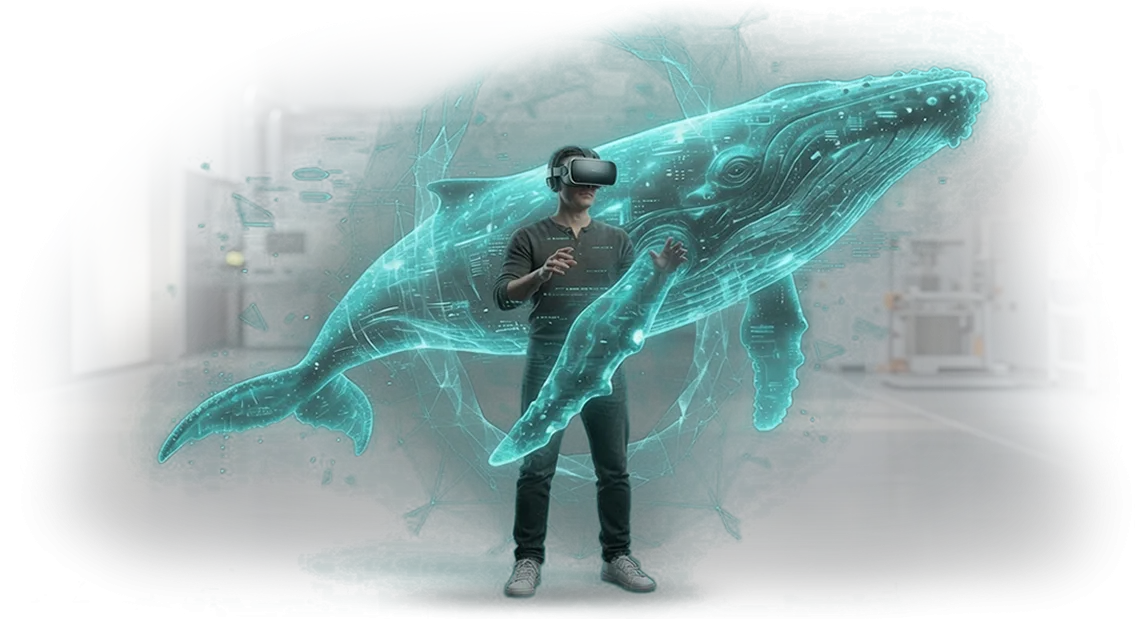
A digital twin of the plant solves this problem. It is a virtual copy of workshops, equipment, and flows created based on real enterprise data.
The introduction of VR/AR allows you to "walk through" a section that doesn't yet exist, see logistics conflicts, check ergonomics, and train employees without stopping production.
This is how Industry 4.0 ceases to be an abstract trend and becomes a measurable cost-saving tool: less downtime, faster launch, safer training.
For a machine-building plant, this is not only cost reduction but also a competitive advantage — the ability to show customers and partners what modern production looks like.
We help plants walk this path. Our specialists build a digital twin for your tasks, implement VR/AR where it delivers quick results, and support the project until completion. There's just one step left — discuss your situation.
What benefits VR/AR implementation brings to production
Benefit 1: Acceleration of production processes
A digital twin of the plant allows testing changes without stopping the conveyor. Specialists see bottlenecks, change logistics, optimize machine placement — all in a virtual environment, without risking real production.
VR/AR implementation reduces equipment setup and changeover time. The customer launches new processes without downtime, brings products to market faster, and stays ahead of competitors.
Benefit 2: Reduction of errors and defects
Production operations are refined in a safe virtual environment. Operators learn new control points in advance, and engineers check the assembly of complex units. The result — fewer defects, less rework, and fewer customer complaints.
AR hints directly on the equipment help avoid incorrect actions: the employee sees the diagram, the sequence of operations, and critical zones. The human factor ceases to be a source of losses.
Benefit 3: Saving time and costs
VR personnel training replaces expensive simulators and specialist business trips. One digital twin of the plant is used for many tasks — from training to pre-project analysis and investor presentations.
Virtual verification of layout and logistics before actual construction helps avoid mistakes that cost substantial sums. The customer saves on materials, metal, and hours of equipment downtime.
Benefit 4: Risk-free personnel training
New employees master complex equipment in a virtual environment. It is safe and visual: you can make mistakes until the skill is automated — and only then move on to real work.
Experienced engineers also benefit: they learn new technological processes faster. The company our team creates VR scenarios for your regulations so that knowledge transfers to real production without loss of quality.
VR/AR project formats for a machine-building plant
At a machine-building plant, VR/AR technology addresses various business tasks: personnel training, quality control, sales, and presentations.
Types of digital twins differ not in "content" but in purpose: training requires a detailed process model, control requires precise geometry of units, demonstration requires impressive workshop visualization.
It's important to choose a format that delivers a quick, measurable effect rather than just "modern technology."
We work with four basic VR/AR project formats. They differ in usage scenario and in what result the plant gets immediately after implementation.
| Format | For what task | What it gives the plant |
|---|---|---|
| VR training in production | Safe practice of operations, onboarding for newcomers | Fast employee ramp-up to standard, fewer errors and injuries |
| VR assembly control | Checking units against the digital twin before physical assembly | Early detection of discrepancies, saving materials and time |
| AR instructions at the workplace | Step-by-step prompts during installation, setup, and maintenance | Reduced downtime, reduced dependence on the master's experience |
| VR presentation | Demonstration of the plant, workshop, products to clients and investors | Visibility without a model and business trips, increased trust in the company |
When choosing a format, the customer gets not an abstract development but a working tool for a specific task. If you need to train 50 newcomers, we make a VR simulator. If you need to check the assembly of a complex unit — VR control.
If necessary, we combine several formats into a single digital twin of the plant to solve tasks comprehensively.
How a digital twin creation project goes
We'll tell you how the creation of a digital twin goes and what VR development stages we go through together with the customer. We work on a transparent scheme — from brief to support.
We coordinate every step with you so that you control the timeline and see results at early stages. Typically, a project takes one to three months depending on the number of workshops and equipment complexity.
- Brief and audit. We discuss tasks: personnel training, investor presentation, process control. We determine which plant areas need to be digitized and how a VR solution will fit into your work.
- Scenario design. We create a detailed usage plan: which operations employees will practice, which scenarios to show management. You receive a cost estimate and clear deadlines.
- Digital twin development. We model production lines, equipment, and plant logistics. We show you intermediate versions — you see the future solution before the final build.
- Build and testing. We build the application for your devices and run tests with real users. We fix errors and tune the interface for the plant's specific tasks.
- Implementation and training. We install the solution and train your team. Employees work in VR without the involvement of developers, and you get a tool ready for daily use.
- Support and development. We support the project after launch and update scenarios as production changes. You're not left alone with the technology.
This approach eliminates surprises: you know what you're paying for and get a working digital twin within the agreed timeline.
What's included in the VR/AR solution delivery
We deliver not just a program but a working tool for your production. The project already includes everything needed for launch and daily use: from licenses to employee training. Below is the delivery scope you receive after the work is completed.
-
Ready-made software adapted to your workshops and technological processes. This is not a demo version but a working system that uses your engineering models and drawings for accurate training and control scenarios.
-
Complete documentation in Russian: administrator guides, operator instructions, maintenance regulations. Everything is provided electronically and remains with you for internal use.
-
Personnel training: we conduct in-person sessions at your site and remote training for technologists, engineers, and the IT department. Employees practice skills before the system is launched, so downtime is eliminated.
-
Access to updates: for the agreed period, you receive new software versions, additional modules, and model libraries at no extra cost. The system grows with your production.
-
Technical support: a dedicated communication channel with our team and prompt response to requests. Response time is fixed in the contract, so you always know when to expect help.
-
Licenses for the required number of workstations. Access isn't tied to a specific employee — you can redistribute it between workshops and shifts.
-
On-site implementation: specialists come to the plant, configure equipment, run test launches, and help integrate the solution into existing processes without stopping work.
Case study: reducing production downtime by 30%
Production downtime is lost revenue. It usually occurs due to the human factor: newcomers need time to master equipment, and a setup technician's mistake stops an entire line. Companies spend months on training, but this doesn't guarantee accuracy. As a result, order deadlines are missed.
We proposed a different path — a digital twin of the plant in virtual reality. It's an exact copy of the line where an operator trains safely: sets up machines, changes tooling, practices emergency situations. Training runs without stopping production, and skills transfer to real equipment.
VR implementation results
For one machine-building plant, we developed such a twin and integrated it into training. After three months, line downtime dropped by 30%, setup time halved, and the number of errors fell by 40%. Operation accuracy increased, and employees stopped fearing new equipment.
Time savings exceeded expectations: newcomers reach the standard in two to three weeks instead of two to three months. This increased production output without expanding workshops. The VR investment paid for itself within one quarter.
The success was confirmed by a repeat order — the twin was scaled to three workshops. Now rare emergency scenarios that were previously unsafe to train are also practiced in VR. The solution continues to deliver value every day.
Frequently asked questions about VR/AR implementation at an enterprise
Enterprises are often cautious about VR/AR: they fear equipment will break, implementation will stop production, and the cost will be unpredictable. These concerns are understandable, but they're usually based on myths rather than real project experience.
We've been implementing digital twins at machine-building plants for more than 10 years, so we answer the questions managers ask most often.
If your question isn't in the list — we'll send a detailed answer based on your situation after a short consultation. For now, let's address the main objections.
Will the equipment break when used in the workshop?
VR/AR headsets are designed for intensive use in industrial conditions: housings are protected from dust and impacts, and for heavy-duty areas we use reinforced versions and protective covers.
If equipment fails due to our fault, we'll replace it under warranty — this is stated in the contract as a simple, clear condition.
Will implementation stop production or require reconfiguring the workshop?
No. Preparation and configuration are done remotely, and on-site work takes a maximum of a few hours: we place markers, calibrate the space, and train your employees. There's no need to stop lines or change the layout — the process continues as usual.
How expensive is it, and will it break the budget?
The cost depends on the task scale and the number of workstations. We always start with a pilot project on one section: you see the result and effect before scaling the solution. This approach eliminates unexpected expenses and lets you plan the budget based on actual data.
Will employees be able to work with an unfamiliar interface?
Yes, because the interface is designed for specific work operations, not in a generic way. The employee sees clear prompts and learns within one day. In practice, operators and technologists master the system faster than management expects.
Book a demonstration of the digital twin
Seeing a digital twin of a machine-building plant in action once is better than studying ten presentations.
That's why we invite managers, chief engineers, and technologists to a personal demonstration: you'll see how a virtual model of the workshop helps train personnel, plan repairs, and practice emergency scenarios without risk to production.
Within 30–40 minutes, we'll show what the system looks like from the inside: how 3D models open, how quickly you can switch between plant areas, how data is displayed in charts and on monitoring panels.
After the demonstration, it will be clear whether the technology suits your tasks, which modules to implement first, and how long launch will take.
If you want a consultation and a fact-based decision — leave a request for a VR/AR demonstration. We'll prepare the meeting with your industry and enterprise specifics in mind.
What you get by booking a digital twin demonstration:
- A live project showcase — you'll see a real case, not promises.
- Analysis of your tasks: training, process optimization, or safety control.
- A clear answer on which VR/MR elements will deliver results at your plant.
- A written conclusion with recommendations and implementation stages.
- End-to-end timeline estimate — from data preparation to workshop launch.
- Project manager support at all stages, including operation.
Fill out the form below — indicate that you're interested in a demonstration and leave your contacts. We'll get back to you within one business day, answer your questions, and agree on a time. The demonstration is non-binding.
How to choose the right format for your task?
Choosing a format starts with the machine-building plant's task, not with technological fashion. Showing a machine's structure at an exhibition, training an employee for an emergency, helping an engineer check a part against a drawing — each scenario has its own requirements. So there's no universal solution.
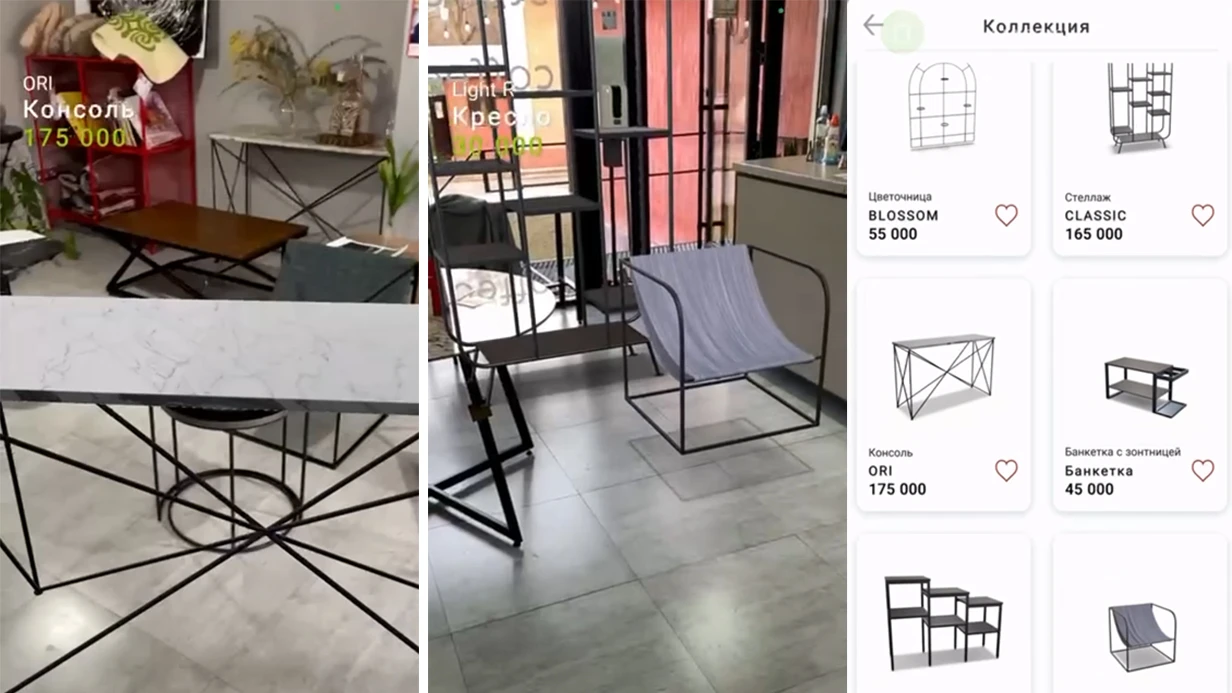
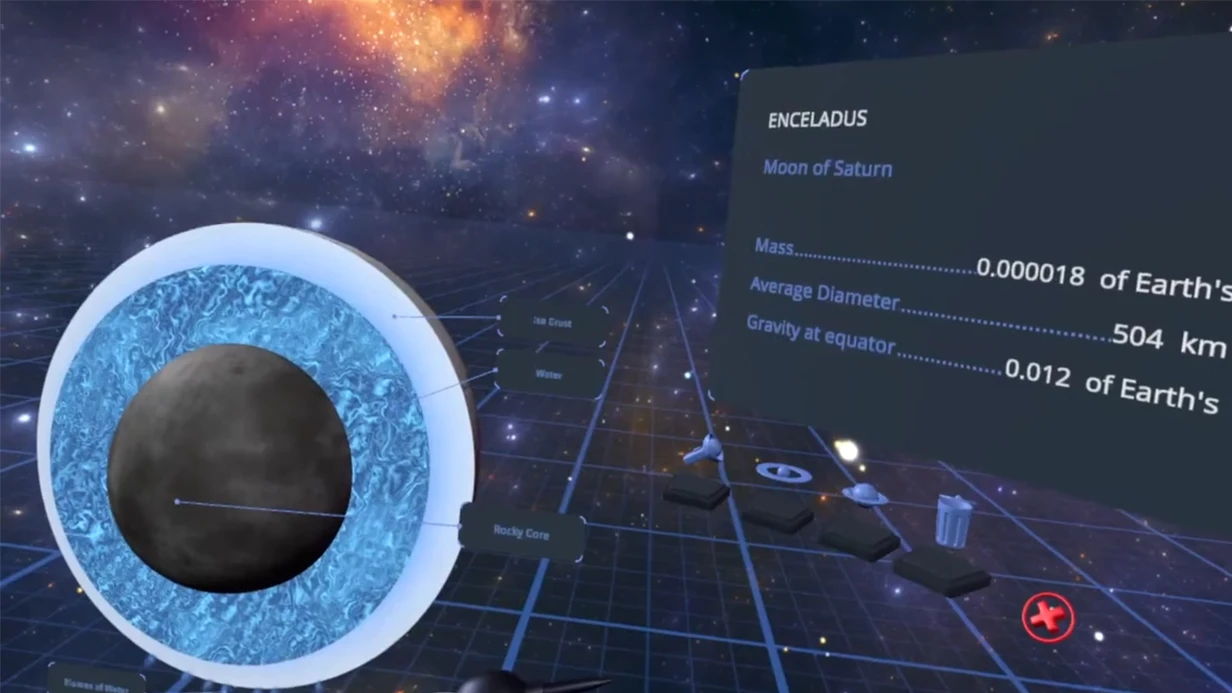
VR immersion suits when full immersion and safe practice are needed: the employee is inside the digital twin of the workshop and can train without risk. AR overlays hints on real equipment — this saves time during commissioning and briefings. MR brings specialists together around a shared hologram for collaborative discussion of changes.
The selection criteria are simple: what exactly does the user do, how long do they work in the environment, and under what conditions. For a short instruction, AR is enough; for a complex operation — VR with a detailed model.
Even within a single plant, different departments get their own formats: the quality control department — augmented reality verification, production personnel — a VR simulator, the sales department — an interactive model for exhibitions.
We help you choose a format for the task and budget: we analyze the process, study operating conditions, and propose a solution. You get a tool that reduces training time, cuts the number of errors, and makes the plant's product clear to customers. That's the main result — measurable value for the business.