



Digital Twin of a Robotic Cell: Less Downtime
Equipment downtime is an inconvenient moment that gets remembered in the thick of production. Every hour of robotic cell downtime means unfulfilled orders, missed deadlines, and extra changeover costs.
At the same time, classic debugging on real equipment takes days, and any operator error turns into new downtime and a risk to the machinery itself.
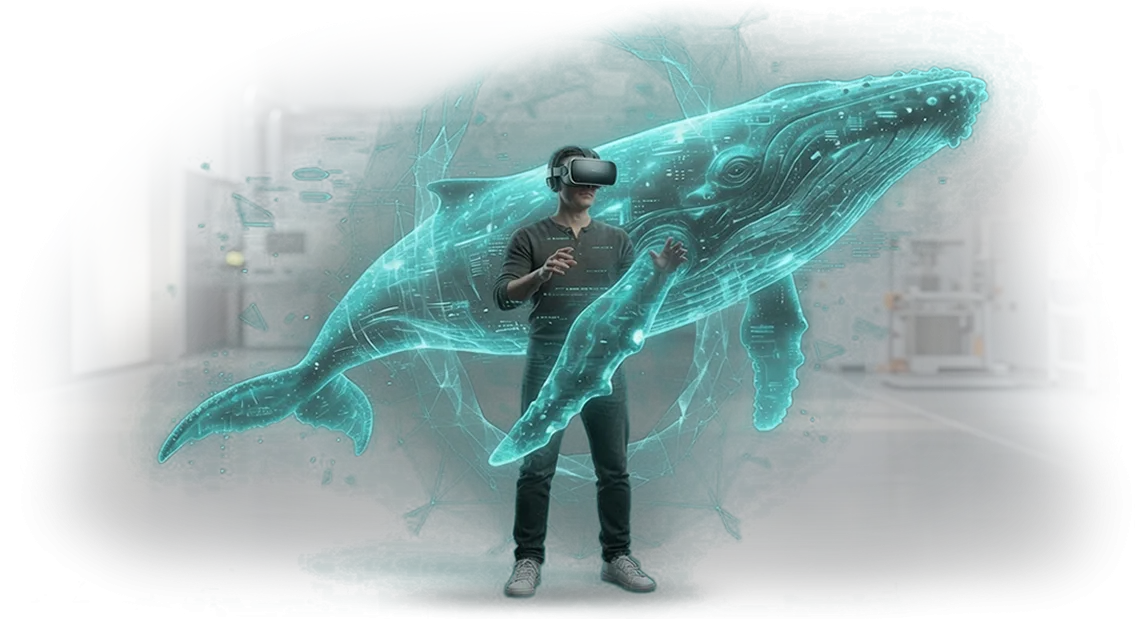
A digital twin of a robotic cell moves setup, verification, and training into a virtual environment. You see how the line will work before launch: you check trajectories, find bottlenecks, and change parameters without stopping production.
Operators train on an exact copy of the equipment, so by the time of launch they already know what to do and avoid mistakes in real work.
As a result, downtime is reduced, quick changeover stops being a problem, and a new cell launches successfully on the first attempt. We handle the entire cycle: from creating the digital copy to training your team. We understand your task, simulate processes, and hand over a tool that is easy to use every day.
What Business Problems Does a VR/AR Application Solve in Manufacturing
Modern manufacturing runs into three expensive problems: trainees take a long time to reach the working rhythm, complex operations on a robotic cell require perfect precision, and errors only surface after the line stops.
VR/AR applications address these tasks through a digital twin — without risk to people and without loss of working time.
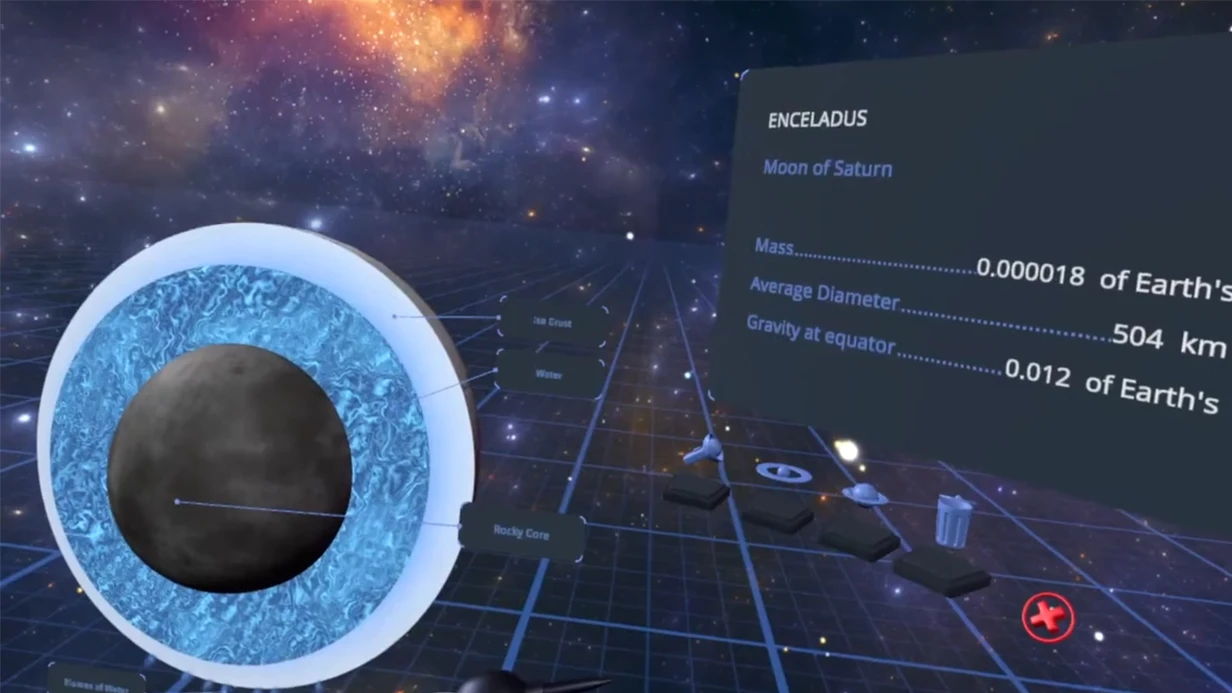
The first task is accelerated personnel training. The virtual simulator reproduces the robotic cell in detail, so a newcomer practices commissioning, changeover, and emergency situations before ever working on real equipment.
Instead of weeks with a mentor, they spend a few shifts in VR, after which the employee confidently performs operations under supervision. This reduces the load on experienced specialists and speeds up the launch of new lines.
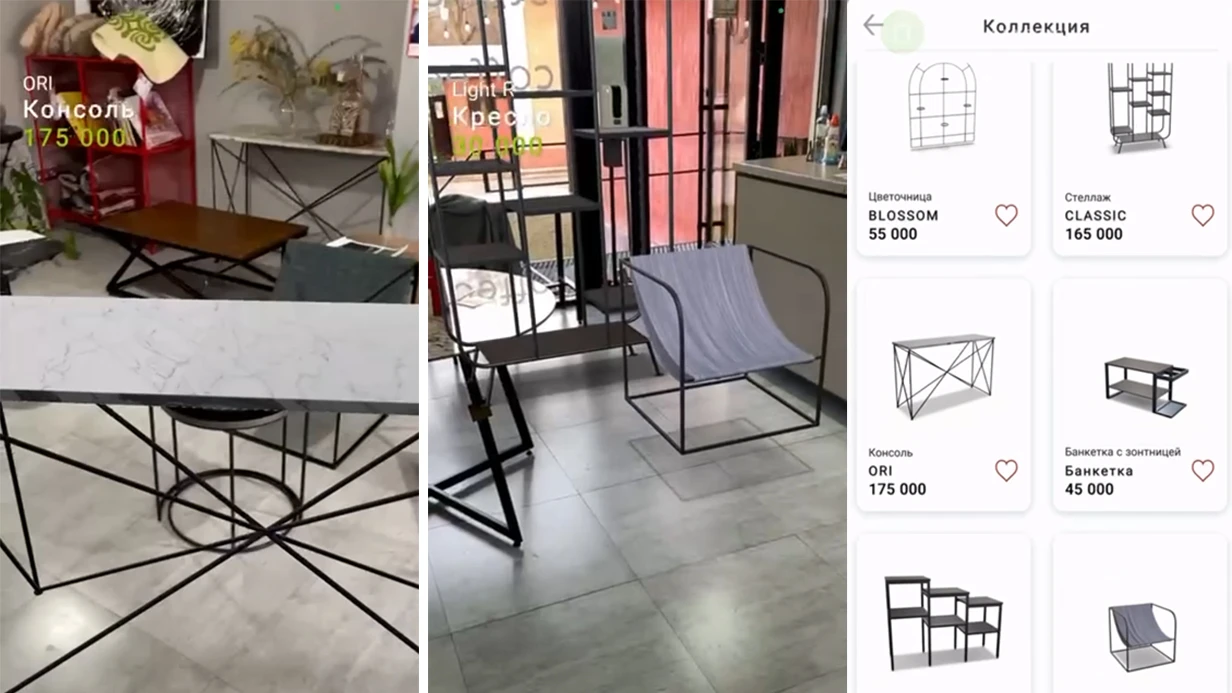
The second is clear AR instructions. The sequence of actions, acceptable parameters, and safe-zone boundaries are displayed directly on the real equipment.
The worker does not have to search for the right item in a paper manual — the hint is right before their eyes and takes into account the current state of the cell.
Such instructions are especially valuable in non-standard situations and frequent product changes, when relying on memory alone is not enough.
The third is visual production control. A digital twin of a robotic cell shows the state of components, load, rhythm, and deviations in real time.
A manager sees the beginning of a failure, not its consequences, and can intervene before defective products move further down the shop floor. This kind of control provides process transparency and helps schedule maintenance without stopping production.
As a result, the enterprise gets faster onboarding of personnel to full working capacity, fewer errors due to the human factor, and control over complex equipment without downtime.
Training stops distracting key specialists, and employees work with clear instructions instead of guesswork — this is the practical value of VR/AR in manufacturing.
Work Formats for Robotic Cell Tasks
A robotic cell is a complex system where every mistake costs dearly: rejects, downtime, injury. To avoid this, you need to properly train personnel, check control programs, and coordinate equipment interaction. We offer three VR/AR formats that cover these tasks individually or together.
You do not need to understand the technology — just know what task each format solves. A VR simulator prepares operators in a safe environment, AR instructions provide hints at the workplace, and a digital twin lets you test the cell before physical launch. Below is a summary to help you choose the right option.
| Format | What task it is for | What it gives the business |
|---|---|---|
| VR simulator of a robotic cell | Training operators and adjusters | Safe practice without stopping production, shorter onboarding time |
| AR instructions | On-site hints for maintenance and repair | Fewer errors, quick access to knowledge, reduced downtime |
| Digital twin of a cell | Testing programs, load balancing, virtual launch | Saving materials and time, risk-free launch for equipment |
The formats are easy to combine: for example, an operator first practices actions in VR, then receives AR hints on real equipment, while an engineer checks the program in advance on a digital twin. This approach shortens launch timelines and reduces the number of errors.
Each format can be scaled — from one cell to an entire shop floor, and projects are easily replicated to other areas.
To choose a format, you do not need to be a technical specialist — we will determine what fits your task and calculate the expected effect: time savings, lower reject rates, faster launch. Start with a short brief — we will handle the rest.
How We Work: From Brief to Support
Working on a digital twin of a robotic cell is a project with fixed stages and clear control points. We designed the process so that you always know what is happening and can influence the result at the right moment, rather than waiting for a "surprise" at the finish.
- Brief and task immersion. We discuss what operations the cell performs, where the bottlenecks are, and what needs to be shown: personnel training, customer demonstration, emergency scenario practice. You receive a document with goals and acceptance criteria.
- Concept and plan. We determine the format: full immersion or augmented reality, number of scenarios, level of detail. We show how the twin will be used in your work and what result it will deliver at each stage.
- Mockup approval. Before development starts, you see a prototype of the future environment: equipment layout, motion logic, interfaces. Edits at this stage are made quickly and without rework.
- VR solution development. We create an interactive model of the cell and transfer real motion and behavior parameters. You get a working environment that replicates the logic of the actual equipment — from the operator's perspective, not an abstract picture.
- Testing on your scenarios. We check how the twin behaves in typical and non-standard situations. For this, we use professional equipment and well-tuned tools — you get a stable result without failures during demonstrations.
- Launch and training. We integrate the solution into your infrastructure and provide a short briefing for employees. The team starts working with the twin on launch day.
- Support and development. We monitor usage, collect feedback, and refine scenarios as tasks change. You can add new modes or expand coverage without starting the project from scratch.
This order helps meet deadlines and budget because each stage is approved before moving to the next. As a result, you get a digital twin that genuinely saves time and reduces risks in training and demonstrations.
What You Get in the Completed Project
When ordering a digital twin of a robotic cell, it is important to understand what is included in the delivery.
This is not a presentation model, but a working system for personnel training, verification of technological operations, demonstration to customers, and process debugging. The finished project is a complete package that starts working immediately after delivery.
- Training scenarios. Step-by-step modules: standard operations, changeover, actions in case of failures. Employees train without risk to equipment and without production downtime.
- Demonstration mode. For negotiations with customers, management, and investors — it clearly shows the cell's capabilities without complex drawings and terms.
- Workstation interface. Clear screens with controls and cell status display. The operator masters the system in minimal time, without programming knowledge.
- Operational documentation. Instructions and regulations stay with the company, so new employees can be brought up to speed without involving the developer.
- Personnel training. Conducted at your site or remotely: staff learn to use the twin, configure scenarios, and apply them in daily tasks.
- Technical support. After launch, we answer questions, update scenarios, and refine the interface to fit changing production needs.
The result: you get not a "model for the sake of a model," but a tool that is used in training, technical preparation, and sales within a week or two.
All materials are transferred together with the system — you keep control and can develop the solution independently or with our support.
Case Study: How a Digital Twin Reduced Setup Time
Our client — a machine-building plant PromIndustria — was preparing to launch a new line for welding housing parts.
Based on experience from previous projects, the robotic cell setup was expected to take about two weeks: configuring trajectories, checking cycles, and hunting for errors directly on the production floor. Every day of downtime meant unfilled orders and tight deadlines for adjacent workshops.
We proposed creating a digital twin of the cell instead of traditional commissioning. In the virtual environment, the client's engineers carried out virtual setup in advance, worked through all scenarios, checked the robots' logic, and trained operators.
By the time of physical launch, most of the errors had been eliminated before the machines were even switched on.
The result exceeded expectations: the line launch time was cut from two weeks to three days, and equipment downtime was reduced by 60%.
The staff reached the planned productivity level in the very first shift, and a repeat order for a digital twin of the next cell came in a month later.
What This Means for Business
A digital twin of a robotic cell is not a technology demo, but a risk management tool. You see the production process before its physical launch, find bottlenecks, and train employees without stopping equipment.
For machine-building enterprises, this means predictable launch timelines, fewer losses on commissioning work, and faster achievement of the line's target capacity. That is why the digital twin case is becoming the standard for those who value their time and money.
Frequently Asked Questions About Implementing VR/AR Solutions
Before starting a project, clients ask the same questions: will the solution work with our equipment, how long will training take, and what happens after implementation. We answer the main ones in plain language, without technical details.
Will a VR/AR solution work with our robotic cell and software?
We begin with an audit of your cell and the equipment used. We set up integration for your specific machine and controller base, so the solution works with your robots.
No additional investment in hardware is required — a VR headset or tablet is enough, and we provide or select one for your needs.
Is it difficult to train employees to work in virtual reality?
No. The interface is designed so that an employee can start working after a short briefing — a couple of hours is usually enough. We conduct training at your site or remotely, and we stay in touch after launch. Employees quickly accept VR as a familiar tool, not a barrier.
What guarantees do you provide for results and support?
We set project goals in the contract — for example, reducing setup time or lowering errors when working with the cell. After launch, we hand over documentation and train your team; the solution comes with a warranty period. Support includes consultations and refinements as your production evolves.
How to Choose a Format for Your Production Task?
The choice of format starts not with trendy technology, but with the production task you want to solve. The same digital twin of a robotic cell may look different depending on where it will be used — and this is what determines the budget and timeline.
If you need to quickly train operators on new equipment without stopping the line, the VR simulator format is more convenient. If specialists on the production floor need instructions right on the real machine, AR hints are more practical.
And if the task is to test changes to the cell before implementing them, a full-fledged digital twin becomes the optimal solution.
Defining the task is the first and most important step that removes most questions. We always start with a short brief: what should change in production, who will use the solution, and what result you want to measure.
After that, we propose a format that gives maximum effect without overpaying for unnecessary functionality.
You should not choose VR/AR just because it looks modern. Each format serves its own purpose: VR — training and scenario practice, AR — real-time staff support, digital twin — planning and optimizing cell operation. When the goal is clear, the choice becomes obvious.
If you are unsure which format is right, you do not have to dive into technical details right away. Send us a description of your production task, and we will guide you on format, timeline, and investment. Then, at the next stage, we will work out the solution in detail.
Let's Discuss Your Project? Start with a Brief
Do not know where to begin with developing a digital twin of a robotic cell? That is normal. Leave a request for the project — and get the first concrete recommendations already at the discussion stage.
We will analyze your task, help you formulate requirements, and suggest how to shorten development timelines.
Then the work follows a clear scenario:
- Step 1. You submit a request on the website — we contact you within one business day and clarify the context.
- Step 2. We conduct a brief: we discuss goals, current processes, constraints, and expectations for the digital twin.
- Step 3. We analyze the initial data: layout, 3D models, operating algorithms of the robotic cell, and accuracy requirements.
- Step 4. We calculate the project: we determine the scope of work, realistic timelines, and stages — without hidden details.
- Step 5. We prepare a plan and agree it with you; after that, development begins.
- Step 6. We provide post-implementation support: help with setup, refine scenarios, and ensure support throughout the entire lifecycle.
This approach helps avoid unexpected costs and missed deadlines. Leave a request — and we will prepare a calculation and work plan for you. We will handle the technical part, and you will get clear reference points for time and results.