



An insurance company needs a digital twin: customers are leaving
Customers are leaving because of slow claim payouts and complicated claims handling.
Each such case is not just a lost policy, but a damaged reputation: a dissatisfied customer tells their acquaintances about the problem, and the insurance company loses even more potential customers.
Customer churn in an insurance company is often not related to price, but to the fact that people do not feel protected at the most important moment. The reason is usually not employee carelessness, but imperfect processes that are difficult to see from within.
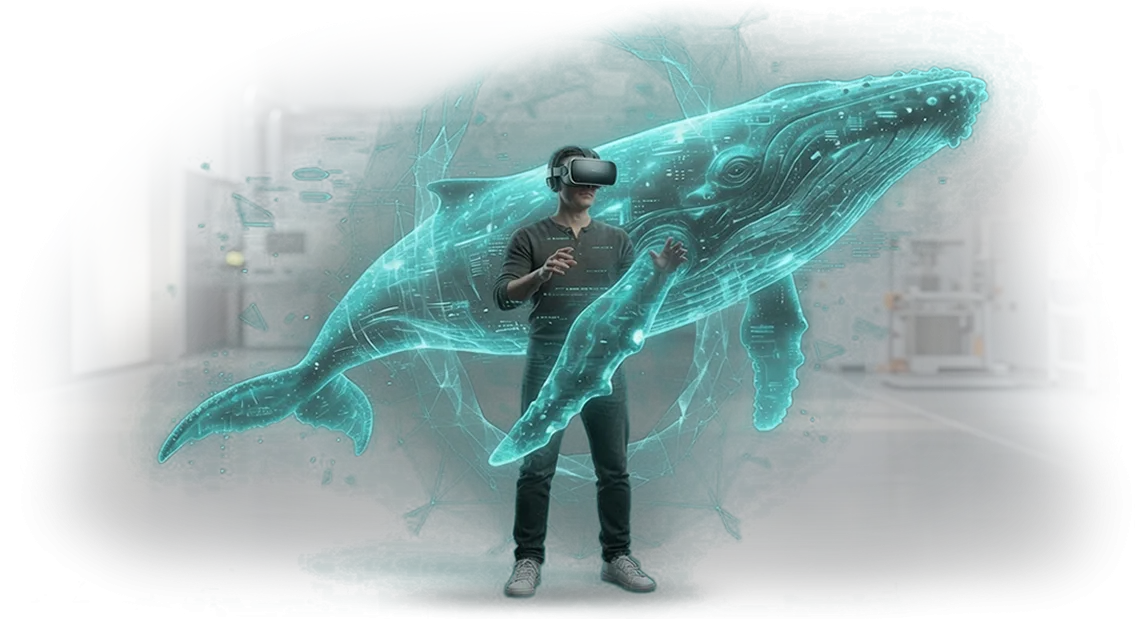
An insurance digital twin is a virtual model in which you can walk the customer journey from application to payout. You see every stage through the customer's eyes: where they wait for a response, where they resubmit documents, and where information gets lost. This visibility reveals real delays and allows you to understand what needs to be changed first.
Improving an insurance company's service ceases to be a series of guesses. Instead of collecting complaints piece by piece, you get a working tool: you can test a new claims handling scheme, see its effect before implementation, and choose the optimal option. This reduces payout times, makes the process transparent, and reduces the workload on staff.
As a result, customers get fast and clear service, and the insurance company gets customer retention and a stream of referrals. A digital twin does not just show the problem—it helps eliminate it.
An insurance company no longer needs to guess why customers are leaving; it just needs to see it with its own eyes and make a decision.
What a digital twin delivers: higher loyalty and lower costs
An insurance company digital twin is a digital model of business processes, from risk assessment to claims settlement. It highlights bottlenecks and shows how changes will affect the portfolio.
Accurate forecasts and fair tariffs
The model analyzes anonymized customer and payout data. The insurer sees which segments generate losses and which generate profit, and can flexibly adjust tariffs. As a result, the customer gets a fair price and stays with the company.
Faster application processing
The digital twin automatically checks standard application scenarios and sends non-standard cases for review. Payout decisions are made faster, customers are satisfied, and the company reduces the costs of manual processing.
Transparency for the customer
The model makes it easy to show what a policy consists of and how insurance works. When customers understand the logic behind the calculations, trust grows and complaints decrease significantly. This drives repeat purchases.
Savings on scenario testing
Any changes—new products, discounts, deductible terms—are first run through the digital twin. This replaces expensive pilot launches and reduces the risk of errors. The insurer learns the consequences of decisions without the cost of a real-world experiment.
Thus, a digital twin simultaneously boosts loyalty and lowers costs. It pays for itself within the first few dozen settled claims and makes the business predictable.
Digital twin formats for an insurance company
An insurance company digital twin is not one technology but three formats that address different objectives, from employee training to strategic planning.
They can be implemented individually or as a unified ecosystem—depending on business priorities and which outcome matters most first.
Three formats—each for a specific task
Each format operates in its own domain: operational, training, or managerial. The table helps you choose your entry point and understand who inside the company will benefit from the digital twin.
| Format | For whom | What it gives the customer |
|---|---|---|
| Virtual insurance office | HR department, branch managers, mentors | New employees master processes on a digital simulator without risking real data. Training accelerates, and workplace errors become less frequent. |
| Claims process simulator | Operators, claims experts, underwriters | Practice complex and rare cases in a safe environment: employees gain experience that previously required months of practice. The customer gets fast and correct decisions. |
| Analytical twin | Line-of-business managers, strategy team | Forecasting the consequences of decisions on a digital business model. You can change tariffs, terms, and scenarios and see the result before changes affect real processes. |
The choice of format depends on where the business hurts most: expensive training, slow claims handling, or a lack of data-backed decisions. If the main pain is a long ramp-up time for new hires, starting with a virtual office shortens that period.
If the key metric is claims settlement speed, a process simulator will help hone skills to the point of automation.
Often, companies start with one format and then expand to a full digital replica of the organization. This makes it possible to spread out costs and see results faster—each format pays off through faster operations, fewer errors, and more accurate management decisions.
How the project unfolds: stages for the client
We start with a clear plan: we lock in the client's business goals and only then move on to the concept and implementation.
An insurance company digital twin is a living tool that should save employees time and simplify life for customers, so every stage is checked against these objectives.
- Brief and immersion into business processes. We analyze how products, sales, and claims settlement work in your company. We identify which scenarios the twin will cover first—policy pricing, program selection, virtual consultation.
- Designing scenarios and user journeys. Based on the brief, we prepare the interaction logic: how a customer enters the virtual office, what data they see, and what actions they can take. At this stage, you receive a clear diagram of the future product and can make changes before development begins.
- Concept and visual style approval. We show an interface prototype and the atmosphere of the virtual space so that the twin matches your brand style and employee expectations. Once you say "yes," we finalize the technical specification.
- Development and content creation. We build the virtual office: premises, documents, interactive hints, training materials. We populate the system with insurance product data so that the twin provides accurate answers and assists with calculations.
- Testing with your team. We run a series of checks involving insurance company employees. They evaluate usability, speed, and information accuracy, and we make final improvements.
- Launch and deployment in your infrastructure. We set up the solution on your devices or provide remote access so that both office employees and customers at webinars or meetings can use the twin.
- Support and evolution. After launch, we stay in touch: we update content, add new products, and improve scenarios based on feedback. Analytics can be included if you wish, so you can see which scenarios are in the highest demand.
Thanks to stage-by-stage approval, you always know what is happening and stay in control of the budget. We work in short iterations, so you see the first interactive prototype within a few weeks of the brief.
In parallel, we prepare documentation for your employees and ensure that the twin integrates seamlessly into your existing sales and customer service processes.
What's included in the delivery: the client package
You receive not just an application but a ready-to-use working tool for the insurance company. The digital twin delivery package includes all the elements your employees need to quickly master the system and use it in daily work—without dependency on the developer.
- Business process scenarios — developed situations: property inspection, risk assessment, claims settlement. Employees train on realistic cases, while managers see how the process flows.
- 3D models of insured objects — digital copies of offices, warehouses, and production facilities, adapted to your company's specifics. The models can be used for underwriter training and customer demonstrations.
- Clear documentation — instructions for users and administrators, work policies for the twin. Your team can independently learn the system and train newcomers.
- Employee training — hands-on sessions for key specialists: how to manage scenarios, analyze data, and integrate the twin into current processes. Staff starts working immediately after implementation.
- Content rights — all developed models, scenarios, and materials remain your property. You can freely use them within the company, expand them, and develop them without additional licenses.
- Warranty support and updates — a fixed support period: consultations, fixing issues, updating scenarios and models. Questions are answered within one business day so that downtime does not affect your business processes.
This package covers the entire cycle, from the first demonstration to confident day-to-day work by employees. You get not a "raw" product but a solution that immediately fits into the insurance company's operations and delivers measurable value.
Case study: a digital twin for an insurance company
Claims handling is always stressful for the customer and demanding for the company. The longer the process takes, the higher the risk of losing loyalty and money.
A large insurance company that commissioned a digital twin from us faced exactly this pain: settlement times stretched over days, experts traveled between sites, and customers waited for payouts.
Weproposed a different solution. Instead of physical inspection, we built a digital twin of the insured object—a virtual copy in which an employee sees the condition of the property, records damage, and immediately generates a report. No site visits and no lost hours.
Implementation results
The first results appeared within a month of operation. Claims processing time dropped by 40%—from the moment a claim is filed to the payout.
One expert was able to handle one and a half times more cases per day, and the company stopped spending budget on travel and arranging inspections.
The line-of-business manager noted that the system paid for itself faster than expected, and—most importantly—the share of repeat applications grew. Customers began recommending the company to acquaintances because a claim no longer means endless waiting.
The client is now scaling the solution to other types of insurance. For us, that is the best indicator: the digital twin works not as a demo but as a tool that delivers measurable business results.
How to choose the right format for your task?
Choosing a digital twin format starts with a question: which insurance company challenge are you solving first.
If the goal is to train employees to work with complex products and customer scenarios, an interactive simulation that drills dialogues, objections, and policy issuance is sufficient. This format delivers quick results and does not require deep integration with your systems.
When forecasts take center stage—portfolio loss ratios, claim frequency, or customer behavior—you need an analytical twin built on historical data.
It does not just show the picture but allows you to test hypotheses: how the situation would change with different tariffs, terms, or sales channels. The key here is being able to run "what if" scenarios.
For modeling business processes—from claims settlement to policy servicing—a full digital twin is the better fit.
It brings together data, logic, and employee interactions in a single environment, making it possible to find bottlenecks and change processes without risking real operations. This is the most costly option to implement, but it pays off at scale.
There is no one-size-fits-all answer: the format is chosen based on the specific goal, data readiness, and timelines.
We help break the task down into components and propose a format that delivers value from the very first stage—whether training, forecasting, or process optimization. The result is a tool that works for your revenue, not just a technical demonstration.
Frequently asked questions about an insurance company digital twin
Before launching a project, clients always have questions—and that's normal. An insurance company digital twin touches sensitive data, internal processes, and customer interactions, so it is important to understand how everything will work.
We have gathered answers to the most common questions. If your scenario is not covered here, just write to us and we will review it individually.
Is it difficult to integrate a digital twin with our CRM and systems?
Integration follows a clear path: we study your processes, identify integration points, and implement them step by step. In most cases, some data is loaded automatically, and the rest through convenient exchange tools. You get a working system without stopping current operations.
How is customer data security ensured?
Data protection is our priority. We design the architecture in line with requirements for information storage and transmission, using proven access control and encryption mechanisms. Only authorized employees gain access to the system, and all actions are logged. For you, this means: the twin handles data securely, and the risk of leaks is minimal.
What are the development timelines and when will results be visible?
Timelines depend on scope: a basic version for a key task can be launched in a few weeks, while a full-scale project takes 2–4 months. We work in iterations: you see intermediate results early and can adjust priorities. This approach reduces risk and accelerates time to value.
What is included in the cost and are there hidden fees?
We fix the scope of work and the cost at the start. It includes design, development, testing, and launch-phase support. All additional tasks are approved separately—no surprise invoices along the way.
If you still have questions about use cases, security, or timelines—ask us directly. We will respond within one business day and help you make an informed decision.Leave a request and get a project estimate
We understand: before commissioning a digital twin, you need to see the numbers—timelines, scope of work, budget.
That is why we start not with a contract but with a short consultation: we review your tasks, show how VR/AR/MR technologies will fit into insurance company processes, and define the outcome you will get.
Following the conversation, you receive a transparent commercial proposal—with a clear estimate, stages, and project timelines. No hidden work or "surprises" at approval: you know in advance what you are paying for and what you get at every step.
What the project estimate includes:
- A development cost estimate tailored to your tasks—no "average market prices."
- A roadmap: from briefing to launch and technical support.
- Format selection—a VR trainer for employees, an AR assistant for customers, or a full digital twin.
- Recommendations for integration with your CRM and accounting systems.
- A preliminary demo plan so you can see the product in action before the final stage.
- Fixed timelines for each stage—you always know when the result will be delivered.
Leave a request for a consultation—we will explain how a digital twin will cut costs and speed up your team's work. After the conversation, we will send you a detailed estimate, not general words.