



Digital Twin of a Textile Factory — How to Turn Your Workshop into a Showcase
Textile buyers make partnership decisions without seeing the actual production. Catalogs and workshop photos no longer work: clients need to verify scale, cleanliness, and quality control, but bringing every customer to the factory is expensive and time-consuming.
As a result, you lose major contracts simply because your production remains "off-screen."
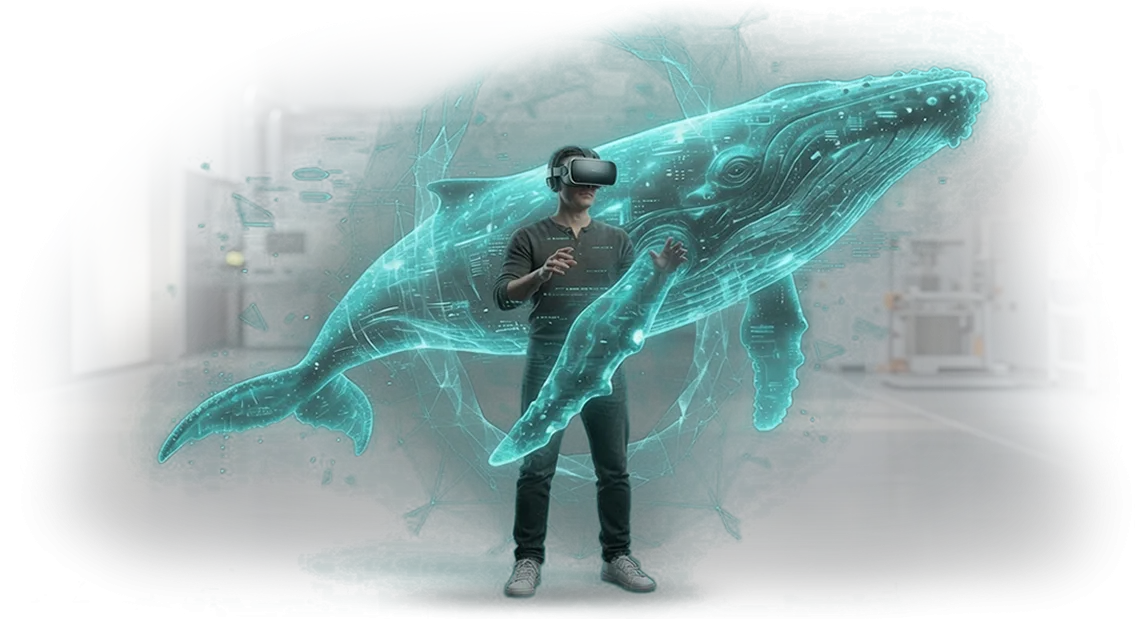
A digital twin of a textile factory turns your workshop into a 24/7 showcase. It is a virtual copy of your production: accurate room geometry, machinery, weaving, finishing, and control stages — everything you can show and explain without a physical visit.
A virtual tour lets clients "walk through" the workshops at their convenience, assess the scale and technology, without taking you away from your work.
For marketing and sales, this is no longer just a demonstration but a deal-closing tool. You use the twin in negotiations, at exhibitions, and in mailings — and every potential customer gets a personal tour of the factory.
This transforms your production presentation from a flat brochure into an experience that sticks in memory and sets you apart from competitors.
We create such solutions with professional equipment and proven tools, so the twin is realistic and the launch is fast.
You do not need to halt workshops or build special routes for filming: we work at your pace and ultimately solve the main pain point — making production visible and understandable for the client.
What a Digital Twin Gives Business and Sales
When a buyer chooses a supplier of fabric or finished goods, they decide based on trust. They need to verify that the factory can handle the volume, meet deadlines, and maintain quality standards.
Usually, this means arranging a site visit — days spent on logistics, scheduling, and waiting. A digital twin removes this barrier: the customer "enters" the factory from their office, seeing workshops, equipment, and processes in detail.
For sales, this means several concrete benefits right away. Below is a checklist of what a business gains after implementing a digital twin of a textile factory:
- Increased customer trust. Buyers see the scale of production, clean workshops, and modern machinery with their own eyes. Doubts about the supplier's capabilities disappear, and negotiations move in a constructive direction.
- Faster deal closure. A virtual reality factory presentation replaces long business trips and site visits. Contract decisions are made in hours, not weeks.
- Repeat orders. The digital copy of production stays with the client — they can return to order details or show the factory to colleagues at any time. This strengthens partnerships and increases the share of repeat inquiries.
- Higher exhibition sales. Instead of static brochures and photos — a live interactive model. Booth visitors remember the factory, and managers collect contacts from interested buyers faster.
- Transparency for audits and tenders. The twin serves as visual proof of capacity and technical infrastructure when participating in tenders — an additional argument in your favor.
We develop digital twins with professional equipment, so the result is stable and works in any scenario. Implementation takes weeks, and the effect — higher revenue and customer loyalty — is visible after the first negotiations.
VR/AR and MR Formats for Your Production
For a textile factory, a digital twin can be delivered in three formats — each with its own purpose.
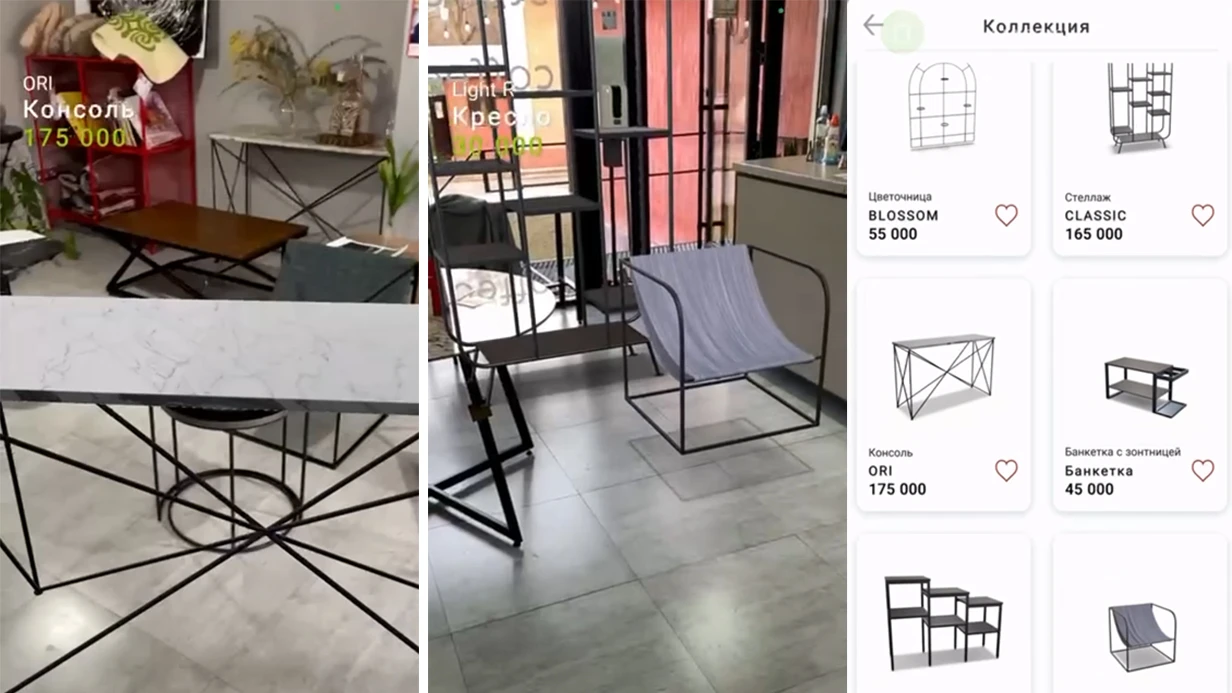
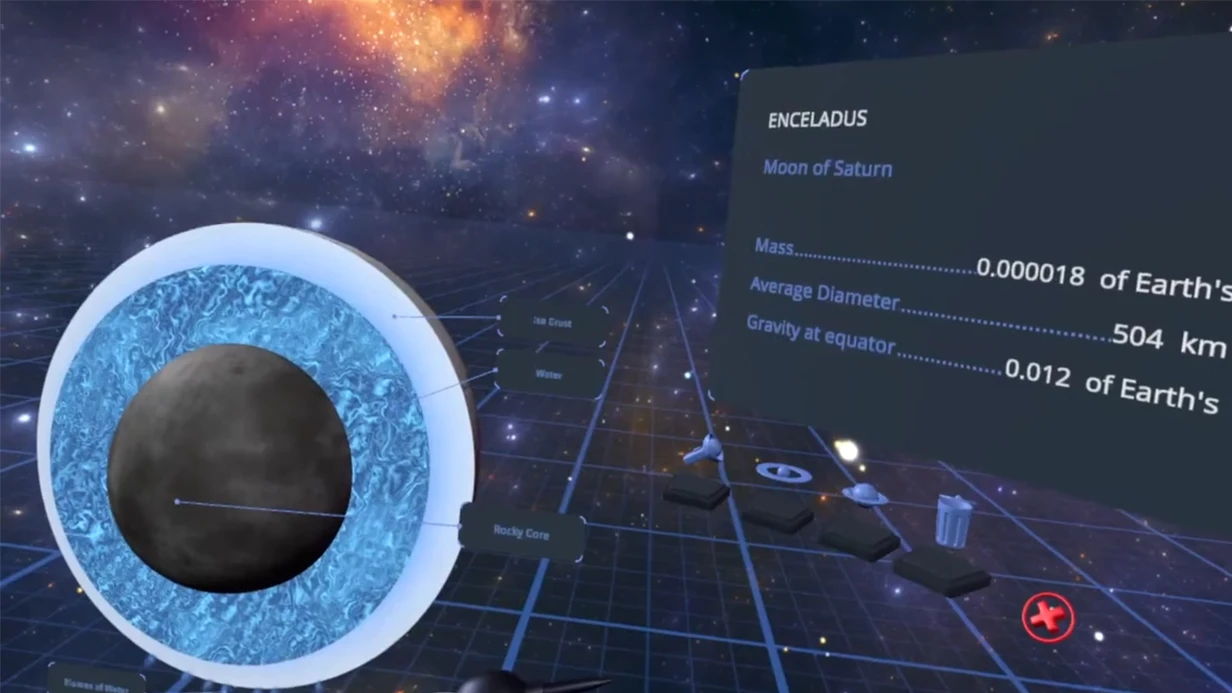
Virtual reality (VR) immerses you in the workshop model, augmented reality (AR) overlays data onto real equipment, and mixed reality (MR) combines both approaches for team collaboration.
What matters is not the format itself, but how quickly it brings you to a concrete result: closing a project sale, training staff, or reducing downtime.
| Format | For whom | What it gives the client |
|---|---|---|
| VR | Executives, investors, customers in negotiations | Full immersion in the future workshop: you show the layout, lines, and logistics before launch. The investor sees the factory through an employee's eyes and makes decisions faster. |
| AR | Process engineers, maintenance crews, operators | Step-by-step prompts right on the equipment: new employees get up to speed faster, repair technicians make fewer mistakes, less downtime and scrap. |
| MR | Project teams, remote experts | One digital twin for multiple specialists at once: you discuss changes on the model rather than on drawings. Suitable for launching new lines and approving decisions. |
How to choose? If your goal is to visually sell a project to investors or show the workshop to a client, go with VR. If you need to train staff and maintain equipment — AR.
If you are launching a new line and want to bring together process engineers, environmental specialists, and contractors — MR.
We have already delivered digital twins for production facilities, so we help you choose a format based on your task, not on a trendy technology. We implement a textile factory digital twin that pays for itself through faster launches, fewer errors, and shorter sales cycles. You get a working tool, not just a pretty demonstration.
Work Stages: From Brief to Launch
Working on a digital twin of a textile factory is a structured project where you understand what happens at every stage. We do not start development blindly: first we study your processes, then design the solution, and only then launch.
This approach protects against missed deadlines and unnecessary costs, and you can always see which stage the project is at.
Below are the typical work stages. They are adapted for each project, but the logic remains transparent: from brief to launch and further development.
-
Brief and production audit. We hold meetings with your team, study workshops, equipment, and technological lines. We define goals: employee training, process control, client presentations, or calculation automation.
-
Solution design. We develop the digital twin concept, define project stages and budget. We agree on the module composition and model detail level so the result matches your objectives exactly.
-
Digital model creation. We populate the twin with your machinery, facilities, and production data. The level of detail is chosen based on goals: from an overview model of the entire enterprise to detailed work on individual areas.
-
Development and integration. We assemble the system and connect it to your accounting systems and equipment. At this stage, you receive intermediate versions and can watch the twin come to life.
-
Testing and revisions. We check scenarios together with your employees and make adjustments based on feedback. We make sure the system works in real factory conditions.
-
Launch and implementation. We deploy the solution, train the staff, and hand over documentation. You get a ready-made tool that is already used in day-to-day operations.
-
Support and evolution. We help update the twin as production changes, add new features, and expand coverage. You are not left alone with the system after launch.
What's Included in the Delivery: Launch Kit
A digital twin of a textile factory is a tool for reducing downtime and training staff, but its value is determined by what you receive in the end. We put together a complete turnkey package: from a detailed scenario to the application source files.
You will not have to coordinate with several contractors — everything you need is delivered at once and works from day one.
The delivery includes:
- Scenario and usage logic. We document how employees interact with the twin: workshop inspection, machine check, emergency response practice. Each scenario is described in production language and approved by you before development.
- VR/AR/MR application. A compiled and configured version for your tasks and equipment. You receive an application that runs without additional setup: entering the desired scene takes a couple of minutes.
- Project source files. A complete archive of assets: models, textures, scripts, configurations. This is your intellectual property — you can make changes with your own team or hand the work to other specialists without worrying about dependencies.
- Technical documentation. Deployment and configuration guide, project structure description, workstation requirements. The materials are designed for an administrator with basic experience, so launch does not require a developer.
- Employee training materials. Videos, cheat sheets, and presentations adapted to your work scenarios. Staff train on real factory situations, not abstract examples — this accelerates adoption.
- Support during implementation. Our specialists assist with deployment, answer questions in the first days of operation, and adjust scenarios if needed. After that, you work independently but retain support for an agreed period.
This package delivers the key thing — you get a working tool and full control over it. No hidden work: the entire scope is fixed in the contract, and after acceptance you can plan the evolution of your textile factory digital twin without depending on us.
Case Study: How a Digital Twin Attracted New Clients
After launching a virtual twin, the textile factory Severnaya Manufaktura gained a tool that changed its sales process. Previously, potential customers spent days on business trips to see the workshop, and some dropped out as early as the planning stage. Now production can be shown online in 15 minutes — right from the client's desk.
Numbers That Speak for Themselves
In the first six months of using the twin, the number of inquiries from new clients grew by 42%. The average rating of production presentations reached 4.9 out of 5 — executives noted they could see the workshop "at a glance" and made decisions faster. Repeat inquiries from clients who had already seen the twin increased by 1.8 times.
The factory stopped spending time on preliminary calls and visit coordination. Clients arrive with a ready understanding of the technology and a concrete technical specification, so the negotiation stage shortened from two weeks to two days.
Client Testimonial
"We now show production to any client without a visit, and this removes the main fear — that the factory will not handle the order.
The twin has become our argument in negotiations: after the demonstration, doubts disappear, and we move faster to discussing terms," comments the company's commercial director.
This case study confirms: a digital twin is not just a nice 3D model but a working sales tool that pays off through greater reach and conversion. We can adapt the same approach to your production needs.
How to Choose the Right Digital Twin Format for Your Task?
Before choosing a digital twin format for a textile factory, it is important to answer one question: what specific problem are you solving?
There is no one-size-fits-all solution — the same factory may need a simulator for operator training, a virtual tour for investors, or a workshop simulation to optimize raw material and finished goods flows. This determines the scope of work, the timeline, and what you get in the end.
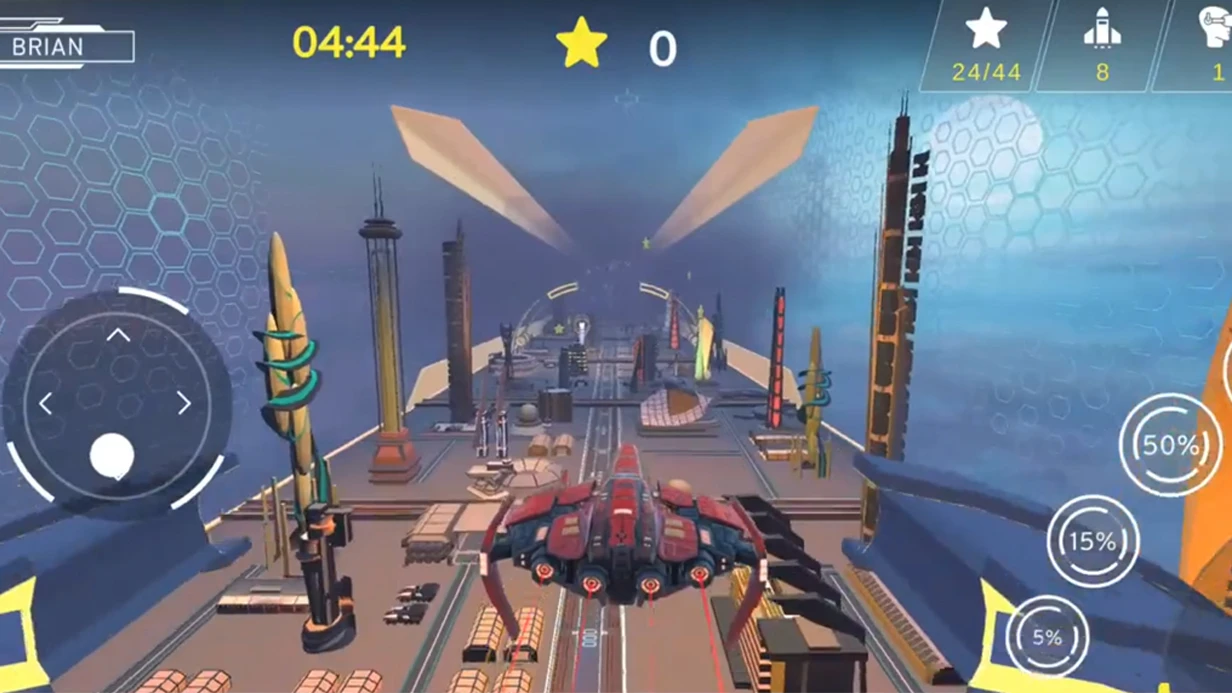
If your goal is to onboard new employees quickly without stopping production, you need an interactive simulator with step-by-step scenarios. It allows practicing actions on complex equipment without the risk of breakdowns or scrap.
If the priority is showing the factory to clients or partners in other cities, we shift the focus to a photorealistic virtual tour: a person walks through the workshops, examines machinery in detail, and sees production in action.
When it is about improving efficiency, we model and analyze movements, machine load, and warehouse operations.
At the start, we conduct a short brief: we figure out who will use the twin, how often, and what result you want to see in numbers. For example, reduce training time by half or increase the number of approved investor inquiries.
Based on that, we propose the format, timeline, and implementation stages. You do not overpay for unnecessary detail and get a solution that solves your specific task — not just an "expensive picture."
The main rule: start with the result, not the technology. Tell us your project goal — and we will help design a digital twin around it. That way you get a working tool, not a set of trendy features.
Frequently Asked Questions About Digital Twins
Customers often ask about digital twins for textile factories: is it too complex, how long will implementation take, and is the solution compatible with current production? We have collected answers to typical questions — concisely and without technical details.
Is implementing a digital twin slow and complicated?
We start with a small pilot area — one line or workshop. First results appear within a few weeks. Then we scale the solution gradually, without stopping production.
What are the implementation timelines for a factory?
A pilot project takes about a month. Full deployment across all areas takes one to three months. The schedule is fixed in the contract so you can control every stage.
Do we need to purchase new equipment?
No. A digital twin works with data that is already collected in production and is supplemented with sensors where necessary. Existing machinery does not need to be replaced.
Is the twin compatible with our processes?
Yes. We adapt the model to the factory's needs: from inventory control to load planning. At the start, we conduct an audit and configure the solution so it fits your current workflows.
How do we know the twin is delivering value?
Before launch, we define metrics: reduced downtime, faster changeovers, lower losses. After implementation, you see them in an easy-to-read dashboard. If the numbers are not moving, we analyze the causes and adjust the model.
Order a Digital Twin Development for Your Textile Factory
For a textile factory, a digital twin is not just a 3D model but an accurate replica of production processes. It allows you to practice equipment changeovers, train employees, and identify bottlenecks without stopping the workshop.
We have been developing VR/AR solutions for industry for over 10 years, so we know how to turn your factory's data into a tool that pays off. To get a cost calculation, leave a request — and we will prepare a proposal for your specific task.
What you get after contacting us:
- A preliminary cost calculation for developing a digital twin tailored to your processes.
- A demo version based on your drawings or 3D workshop models.
- An implementation plan that accounts for current equipment and budget.
- A launch timeline estimate and quality checkpoints at every stage.
- A personal manager who accompanies the project from task to launch.
- A technical support guarantee after implementation.
Leave a request — it is non-binding. We will calculate the cost and show a demo so you can assess the potential of a digital twin for your factory. You can order development right on the website by filling out a short form — we will respond within one business day.