



Mistakes in Railway Hub Design Are Costly
Designing a railway hub involves hundreds of decisions: track layouts, switches, signaling, freight and passenger flows. A mistake made on paper can lead to missed deadlines and serious budget losses.
The most expensive are the flaws discovered after construction has begun or after the facility has been put into operation.
Fixing such errors requires stopping traffic, re-approving documentation, and rework. Most problems are built in at the design stage, and this is where the project's main risks lie.
Eliminating them before construction starts saves months of work and a significant share of investment.
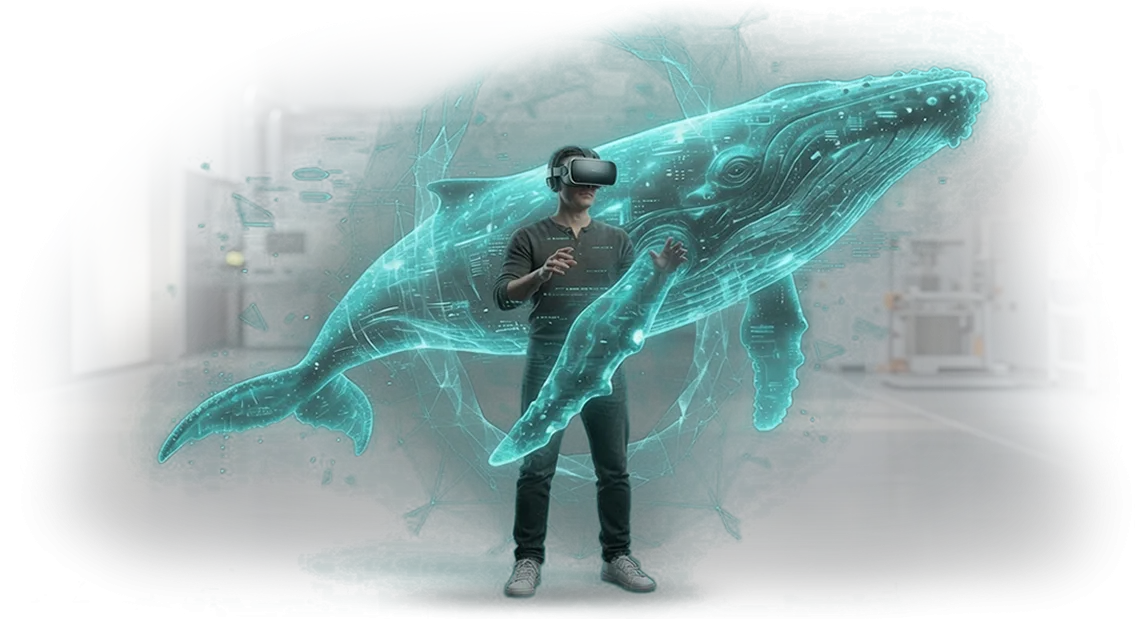
A digital twin of a railway hub transports the future facility into a virtual environment and lets you test it before the foundation is poured.
In the VR application, you can walk along the tracks, assess driver visibility, check logistics convenience, and find conflict points at the junction of different systems.
All this is done at the design stage, when changes cost next to nothing compared to corrections at the construction site.
But a digital twin is not just a 3D picture. It is a working tool for collaboration between designers, operations staff, and the customer. You see the hub through the eyes of future employees, movement scenarios, and actions in emergency situations. Comments can be made and checked in hours, not months of redesign.
As a result, the technology pays for itself by reducing risks, cutting budgets, and speeding up approvals. We develop a digital twin tailored to the specific railway hub—taking into account its loads, infrastructure, and safety requirements.
This lets the customer make decisions based on an accurate virtual model rather than guesses and drawings.
What You Get from a Digital Twin: 5 Key Benefits
A digital twin of a railway hub in virtual reality is not just a 3D model for presentations. It is a working tool that delivers measurable results at every stage: from design to day-to-day operation. Below are five key benefits you get right from the start.
-
Visibility for all participants. Instead of drawings and text descriptions, you get a realistic 3D copy of the hub. Managers, customers, and even contractors see the entire facility at a glance and notice conflicts and flaws in advance, before construction work begins.
-
Risk-free staff training. Employees practice actions on the twin in virtual reality: switching points, giving signals, handling emergency situations. Mistakes on the simulator are safe and do not affect traffic, and skills are acquired faster than by reading instructions.
-
Safety at the real hub. Before launching operations, specialists check scenarios in the twin: driver visibility, track crossings, bottlenecks. You reduce incident risks and increase confidence in the facility among regulatory bodies.
-
Faster project approvals. The project is discussed not through paper documents but in an interactive environment. Participants immediately see proposed changes, make decisions faster, and request fewer revisions. Approval takes considerably less time.
-
Savings across the entire life cycle. Fewer design errors, faster commissioning, cheaper training and scenario drills. The twin pays back its investment already during construction or modernization.
We work on the professional Unity engine—this ensures stable results on any hardware. Tell us about your hub—we'll show you how a digital twin solves your tasks.
VR/AR/MR Application Formats for the Digital Twin
A digital twin of a railway hub is not just a 3D model, but a tool for training, presentations, and control. To make it work, you need to choose the right interaction format: from full immersion to overlaying data on a real object.
We select the format according to the task and audience—full immersion for dispatchers and drivers, and a clear demonstration for management and investors.
| Format | For whom | What it gives the client |
|---|---|---|
| VR format | Dispatchers, drivers, maintenance crews | Full immersion in a digital copy of the hub. Practicing actions in complex situations without risk or infrastructure downtime. |
| AR overlay | Managers, investors, inspection bodies | Interactive presentation right at the site: overlaying digital data onto real infrastructure. Saves time on explanations. |
| MR solution | On-site staff and remote experts | Collaborative work with the digital twin: a remote expert sees the same thing as the operator and gives real-time instructions. |
| Presentation format | Business owners, investors | An impressive 3D presentation for meetings and exhibitions. High engagement and memorability—your project stands out from competitors. |
| Training format | Training centers, training departments | Skills practice in a safe environment. Lower costs for training grounds and instructors, consistent results with every session. |
We will help you choose the right format and show how a digital twin of a railway hub solves your task—from training to reporting. Get in touch, and we'll prepare a demo for your scenario.
Stages of Developing a Digital Twin of a Railway Hub
Any digital twin project of a railway hub starts with a large amount of disparate data and conflicting requirements from different departments.
To turn this into a controlled process, at our teamwe follow a transparent methodology: you see the result at every step and make key decisions—with no surprises in timeline or budget. Below are six development stages that all our projects go through.
-
Brief and immersion. We collect your team's requirements: what tasks the twin must solve, who will use it, and what data already exists. This is the foundation of the entire project—we return to it whenever a contentious issue arises.
-
Planning. We create a detailed plan: break the task into stages, define deadlines and responsible people. You receive a calendar schedule and understand when a specific result will appear.
-
Concept approval. We show scenarios and the structure of the future twin: which objects will be included in the model and how employees will interact with them. At this stage you can make edits while they still require minimal effort.
-
Implementation. We create the 3D model, operating logic, and interface. We use professional equipment and proven tools, so the solution works stably and launches quickly on your devices.
-
Testing and launch. We test the twin against real scenarios: loading speed, stability, interface usability. Together with you, we accept the work, install it on the necessary devices, and train staff.
-
Support. After launch, we stay in touch: update data, add new elements, and quickly fix any issues. The twin evolves with your hub and does not become outdated immediately after project delivery.
What Is Included in the Delivery: From Simulators to Support
The delivery of a digital twin of a railway hub includes everything needed for launch: the model, scenarios, documentation, training, and warranty support. You receive a ready-made turnkey solution, not a set of files—it can be handed to personnel and used without lengthy setup.
- 3D model of the railway hub. An accurate virtual copy of your infrastructure: tracks, switches, signals, buildings, and rolling stock. Employees study the facility in detail without going to the real site.
- Library of usage scenarios. Ready-made scenarios for training beginners, practicing normal modes, and handling emergency situations. You select the required scenario, and the system records each participant's results.
- Documentation. A complete package: training materials, instructions for operating the simulator, and implementation regulations. This simplifies knowledge transfer and allows training to be scaled within the company.
- Training for your team. Our specialists train administrators and instructors to work with the system. Afterwards, your employees can independently run exercises, change scenarios, and track progress.
- Warranty support. After launch, we remain in touch: answer questions, fix issues, and release updates. If improvements are needed, you get help quickly, without searching for outside contractors.
- Room for growth. The model and scenarios can be expanded for new tasks: sections, equipment, and situations can be added. The simulator does not "freeze" at the moment of delivery—it grows along with your needs.
As a result, you get a working tool for training and assessing staff knowledge. All delivery elements are aligned with your objectives at the brief stage, so the result meets expectations and safety requirements.
Case Study: How a Digital Twin Accelerated a Facility Launch
To launch a new railway hub, the customer needed to simultaneously train dozens of specialists and validate hundreds of work scenarios. Conventional training at the real facility was impossible—the station was not yet built, and mistakes are costly.
We proposed a digital twin: an accurate virtual copy of the hub on which personnel could master operations before opening.
The customer was the operator Vostok-Logistics. Together with its technologists, we recreated all key areas—tracks, switches, platforms, and control posts. On the VR simulator, employees practiced routine shifts and emergency situations: from train delays to signal failures.
We measured the results one month after the facility launch. Staff preparation time was cut by more than three times—from three weeks to five days. Errors during the first shifts on real tracks fell by almost half, and the launch went ahead on schedule with no downtime.
Client Feedback
"Previously we relied on instructions and hope that employees would understand everything correctly. With the digital twin, each person arrived at the facility already with work experience.
We launched the hub on time and without downtime," shared the customer's project manager. After the first stage, the client ordered two more VR simulators for neighboring stations—the best indicator of trust.
The case showed: a digital twin is not "nice visualization" but a working launch tool. It reduces risks, speeds up commissioning, and saves budget, because mistakes are worked through in a safe virtual environment rather than on real tracks.
Frequently Asked Questions and Concerns Before Ordering
Customers often postpone a decision about VR/AR development due to common concerns: it seems expensive, hard to integrate, and unclear how it will fit into existing processes.
In fact, if a digital twin of a railway hub solves a specific business task—staff training, emergency response practice, or investor demonstrations—it pays for itself quickly and does not require infrastructure changes.
We have collected the questions we hear most often and answer directly, without technical jargon.
How difficult will it be to integrate a VR solution into our existing system?
We handle the integration ourselves: we connect the digital twin to your data, regulations, and planning systems without stopping current processes. You don't need to hire additional specialists—we support the project from pilot to full launch and remain in touch afterward.
What are the realistic timelines and work stages?
A typical project takes one to two months. First, we lock down the brief and scenarios, then create a prototype, populate it with your data, test, and launch.
We set the exact schedule in the contract and show intermediate results at every stage—you won't face a "surprise" at the end.
What about guarantees and support after delivery?
We provide a warranty on the solution's performance and support it after launch: updates, refinements, consultations. If a question arises, we're available within one business day—we don't disappear after payment. This is documented in the contract.
Won't this be too expensive for our task?
The cost depends on the scale: we can build a compact simulator for one workstation or a full digital twin of the entire hub.
We match the format to your budget and objective—you pay for results: reduced risks, faster staff training, and clarity for management, not for "technology for technology's sake."
What if changes are needed after launch?
We design the solution so it can be flexibly refined. Adding new scenarios or changing parameters is a separate small stage that we agree on and implement as part of regular operations. You're not tied to a "frozen" product.
Leave a Request: Let's Discuss Your Project and Calculate a Solution
Leave a request for the development of a digital twin of a railway hub, and within one business day we'll contact you to discuss the task.
It takes less than a minute and doesn't obligate you in any way: at the initial consultation, you'll get answers to the main questions—whether VR/AR technology fits your tasks, what result to expect, and how long implementation will take.
We have been creating digital twins for transport companies for more than 10 years, so we know the specifics of railway infrastructure well.
We don't need to be told what a station, a hump yard, or a cargo terminal is—we immediately offer working scenarios: driver training, emergency response practice, remote inspection of hub sections, and project demonstrations for customers and investors.
What you get after submitting your request:
- A consultation with our engineer and project manager—you'll discuss goals, scenarios, constraints, and expected impact in plain language, without technical jargon.
- A preliminary project estimate: scope of work, timeline, team composition, and an approximate cost—you can factor the expenses into your plan from the start.
- Recommendations on the digital twin format: a VR simulator for training, an AR instruction tool for maintenance, or an MR simulation for presentations—tailored to your objectives.
- A solution presentation describing scenarios, implementation stages, and metrics that will improve after launch: staff preparation speed, error rates, and clarity for customers.
- A commercial proposal with a transparent cost breakdown and a phased work schedule—no hidden conditions or confusing clauses.
- Priority support at the start: help with drafting the technical specification, approvals, and adapting the solution to your processes.
Leave a request now—it takes a couple of minutes. The sooner you have the estimate, the sooner you can plan the project and train your staff.
We'll prepare a proposal in a format convenient for management approval and stay with you at every stage—from the first brief to launch and support.
How to Choose a Virtualization Format for Your Task?
The answer to how to choose a virtualization format starts not with technology but with the task. For a railway hub, the same digital twin solves different problems: staff training, emergency response practice, infrastructure control, investor presentations.
Each goal requires its own level of immersion, so there is no universal "VR or AR" answer—there is a format that fits your situation.
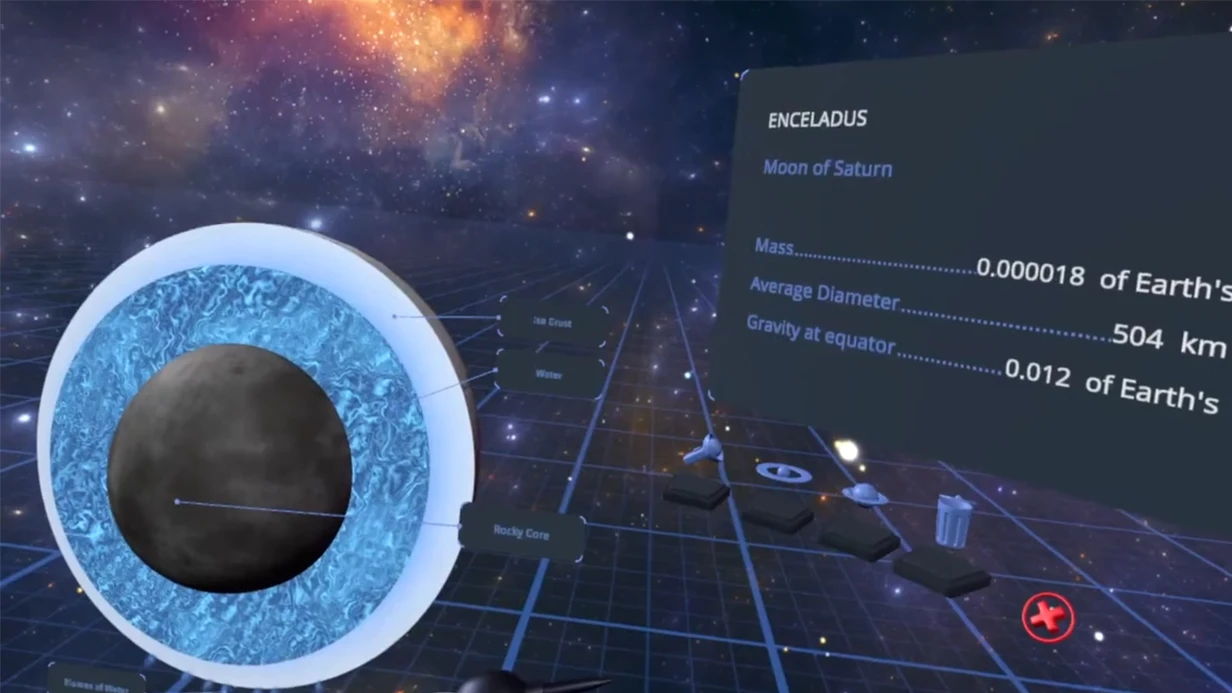
Virtual reality is indispensable when you need to completely isolate the user from the real environment: safely practice actions in the event of a derailment, smoke, or emergency braking.
The driver or operator enters an exact copy of the hub and can make mistakes without consequences for people or equipment. If the task is to quickly train staff to act in dangerous scenarios, VR provides maximum engagement and memorization of procedures.
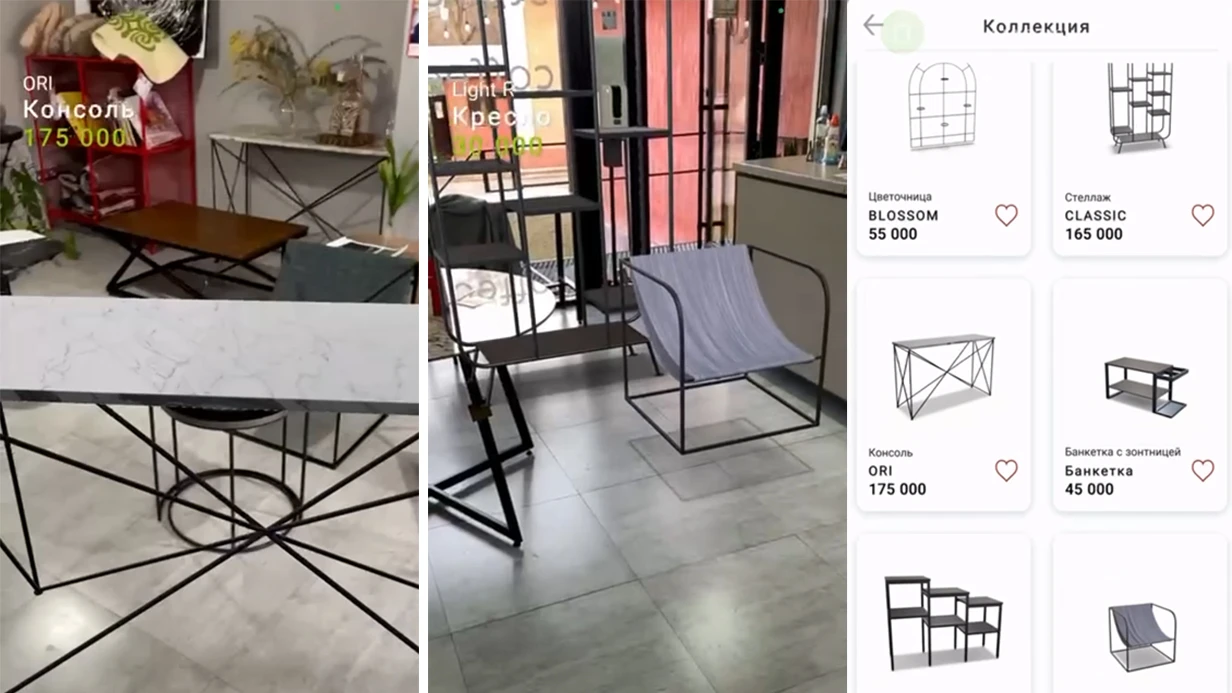
Augmented reality is chosen when digital data is overlaid onto real objects. A fitter sees a cable route diagram right on the wall; a dispatcher points a tablet at a switch and gets a status hint.
This is a solution for "field" work where the employee needs to combine virtual information with physical reality without wearing a headset.
Mixed reality combines both approaches: digital objects interact with physical space. This format is useful during reconstruction planning or in meetings where managers "walk" through a future facility with real track and building geometry.
The main criterion is the task at hand: training and safety point to VR, hands-on field work to AR, and collaborative design to MR.
We save customers from having to understand the nuances of choice: send us a description of the task and audience, and we'll select the appropriate format, prepare a demo on your data, and show the result before development starts.
Leave a request—we'll analyze your situation and propose a solution that will pay off in your conditions.