



Road Construction Machinery: How to Avoid Downtime and Accidents?
Road construction machinery operates under heavy loads and in unpredictable environments. Every operator mistake on the site results not only in schedule delays but in real costs: excavator or bulldozer downtime, equipment damage, and sometimes injuries to people.
At the same time, training operators in real-world conditions is becoming more expensive. Letting a newcomer operate expensive machinery without experience is risky, and there are very few safe sites for practicing emergency scenarios.
As a result, companies end up with personnel who learn from their own mistakes — during actual operations.
VR training solves this problem. The operator trains on a virtual copy of the very same machinery that works on your site, with no risk to people or equipment. Any situation can be simulated, from working under power lines to emergency braking on slippery ground.
This approach shortens the onboarding time and reduces the number of accidents and downtime. The training process is independent of weather, machine availability, or instructor schedule — sessions are held whenever it is convenient for your company.
We develop VR simulators for road construction machinery that integrate into your existing operator training system. We help reduce downtime and improve work safety without stopping the work process.
What Benefits Do VR Simulators Bring to Your Business?
Implementing VR simulators in road construction equipment training delivers measurable results for your business. Below are the key points to consider when evaluating effectiveness.
We use professional HTC Vive equipment — it provides stable operation even under intensive training conditions.
On-Site Safety and Risk Reduction
Every mistake on real machinery is a risk to life, downtime, and repair costs. A VR simulator allows operators to practice dangerous scenarios without deploying machines to the site. The company reduces the number of incidents, injuries, and related costs.
Fuel Savings and Equipment Service Life
Training on a real machine is expensive: fuel, component wear, instructor fees. In a virtual environment, the machine does not consume engine hours, and a single simulator trains operators for different types of machines, from excavators to dump trucks. The cost per training hour drops significantly, and the training room can accommodate more people.
Image of an Innovative Company
Companies that invest in VR appear more reliable in the eyes of customers, contractors, and regulatory authorities. Demonstrating a simulator at a tender or presentation is tangible proof of a high production culture. It also attracts young operators who want to work with modern equipment.
Faster Training and Objective Assessment
The virtual environment reduces training time from weeks to days. The system tracks movement accuracy, reaction speed, and compliance with regulations. Managers can see each student's progress in real time and adjust the curriculum.
VR Formats for Road Construction Machinery
Training for road construction machinery usually involves risks, machine downtime, and fuel costs. VR formats solve these problems: operators train in a safe environment, while equipment does not wear out or consume resources. And for each task — training, service, or sales — there is a suitable virtual reality format.
Below is a comparison table of the main formats to help you choose the one that matches your specific goal.
| Format | Who It's For | What It Gives the Client |
|---|---|---|
| Virtual simulator | Operators, heavy machinery drivers, special equipment drivers | Practice of operating skills without risk to equipment or people. Reduced fuel consumption and equipment wear during training |
| Interactive instructions | Service engineers, repair crews | Clear breakdown of components and mechanisms: employees master procedures faster and make fewer errors during maintenance |
| Virtual tours | Purchasers, clients, dealers | Equipment demonstration without logistics: the buyer "gets into" the cab and evaluates visibility, controls, and features before delivery |
This approach helps reduce new employee onboarding time and improves sales quality: the client sees the equipment in action, not just in pictures.
In addition, all formats can be combined — for example, using a simulator for basic training and interactive instructions for regular knowledge checks.
We work on professional VR equipment and adapt scenarios to a specific road construction machine model. Describe your task — we will help you choose the optimal format and show how it integrates into your business processes.
How VR Solution Development Works: Stages
We have structured the process so that every development stage is transparent and predictable for the client. You know deadlines in advance, see intermediate results, and stay in control of the budget — no surprises or long pauses.
Below is the typical path from brief to support that works for road construction equipment projects.
-
Brief and task immersion. We hold a meeting and analyze how your equipment is used in real conditions: operator training, client presentations, trade show demonstrations. We capture goals and expectations and prepare a technical specification for your approval.
-
Scenario design. We determine what the user will do inside VR: inspect the machine, practice operation, or study safety components. We create a stage plan with clear deadlines and agree on key milestones.
-
Concept approval. We present a prototype of the future solution: interaction logic, overall look, and screen layout. You make corrections before full-scale development begins — this saves time, budget, and nerves.
-
Development of the interactive version. We create a model of your road construction equipment, the environment, and a realistic control simulation. At this stage, you get the first working version and can see how the application looks on the device.
-
Testing with your participation. We test scenarios with real users — your operators or marketing staff. We collect feedback, fix issues, and ensure stable operation before launching VR.
-
VR launch and handover. We install the application on your devices and conduct a brief team orientation. You receive the finished solution, documentation, and the confidence that your employees can use it independently.
-
Support and growth. We stay in touch: we update content, add new equipment models, and adjust scenarios for new tasks. A VR solution is not static — it grows with your business and market demands.
This process lets you keep deadlines under control and always know what stage the project is at and what will happen next.
What Is Included in the VR Application Delivery
What Is Included in the VR Application Delivery
You receive not just a program, but a ready-to-use working tool for training road construction equipment operators.
The delivery package includes everything needed to launch the simulator, train employees, and continue using it independently — without hidden conditions or developer lock-in.
- Source code and all project files. This is your asset: you fully own the solution and can develop it with any team or with your own specialists. - Complete documentation.Administrator guide, operator manual, scenario descriptions, and update procedures — every employee can quickly get up to speed with the system. - Training for your team.We conduct sessions for administrators and instructors so they can confidently launch the simulator, change settings, and support students. - Application warranty. During the warranty period, we fix identified errors and adapt functionality to your tasks free of charge.- Post-launch technical support. A dedicated engineer is available during working hours, plus operational consultations and help with updates. - Installation and setup on your equipment.We deliver, connect, and verify the VR system at your site so you can start sessions on the day of handover.This delivery package eliminates the main risks: you are never left alone with the machinery, you do not lose knowledge when changing contractors, and you can always consult a specialist.We are responsible for results at every stage, from the first launch to regular sessions for your operators.Case Study: VR Simulator for a Road Construction Company
For a major road construction contractor, we developed a VR simulator based on HTC Vive — it fully replicates the operation of road construction machinery.
Previously, new operators were trained right on the job site: that meant risk to people, downtime for expensive machines, and constant fuel consumption. A single mistake by a newcomer led to repairs and missed deadlines.
The simulator moves training into a safe virtual environment. The operator practices earth excavation, site leveling, and working with obstacles without using a single drop of diesel fuel and without any threat to others. The system records every action and immediately shows errors, so skills are reinforced faster.
Results the Client Saw
After three months of use, the company noted a nearly 40% reduction in on-site incidents. Fuel costs and equipment wear during training decreased — previously every hour of practice was a significant expense, now the internship is not tied to a real machine.
Operator preparation time was reduced by a third: newcomers arrive on site with solid skills, and experienced drivers master new equipment models faster. All of this directly impacts project completion timelines and budget.
Client Testimonial
The head of the company's training center highlighted the key point: "The simulator paid for itself through fuel savings and prevented breakdowns alone. Operators no longer fear complex tasks — they have already practiced them in the virtual environment. We plan to expand the program to other types of equipment."
Where to Apply the Solution
A VR simulator for road construction equipment is suitable not only for initial training, but also for advanced training, practicing emergency situations, and skills assessment during hiring.
After the first pilot project, the client ordered additional modules — which confirms the practical value of the solution. We are ready to adapt the simulator to your equipment and work scenarios.
How to Choose the Right VR Format for Your Task?
There is no single "correct" VR format — the right option depends on your specific task, audience, and budget.
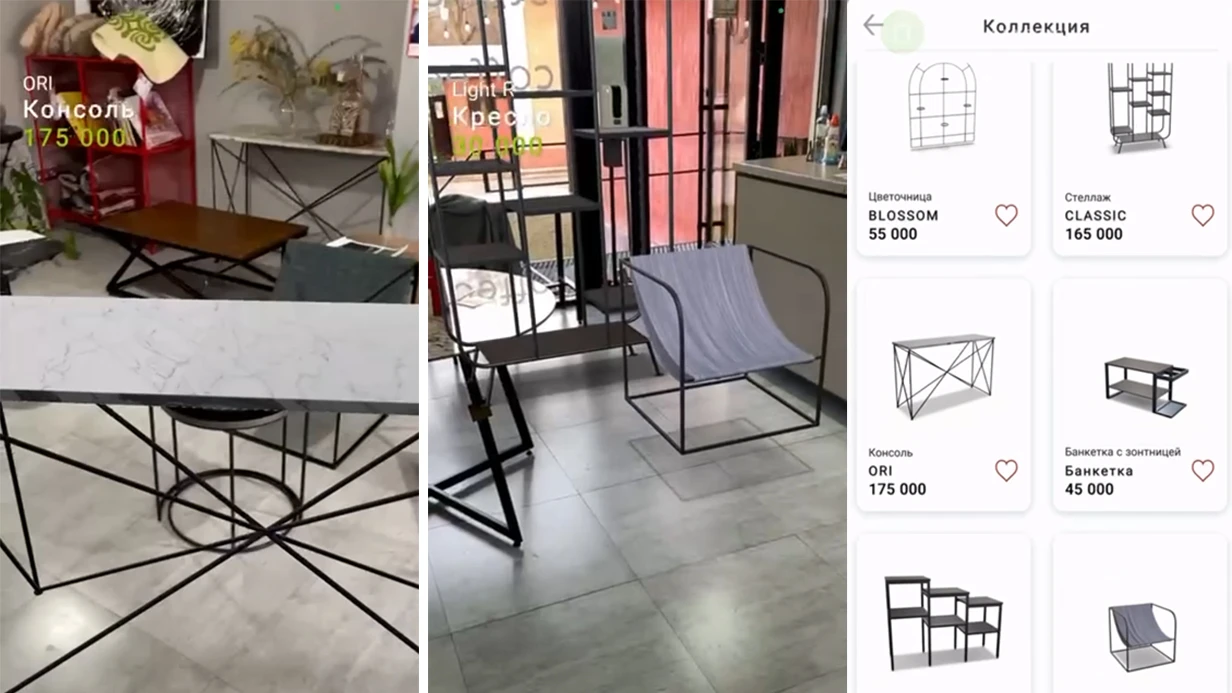
For road construction machinery, it could be full immersion in an excavator cab, an interactive simulator for operator training, or augmented reality that overlays digital prompts onto a real machine.
So the first step is not choosing equipment, but clearly understanding the business problem you are solving: reducing training time, lowering the risk of breakdowns, increasing sales with an impressive demonstration, or setting up remote service support.
Full VR immersion is justified when you need to safely practice rare and dangerous scenarios — for example, working at the edge of a quarry or in poor visibility conditions.
This format delivers the strongest sense of presence and is the most memorable, which is especially valuable when demonstrating equipment to clients at exhibitions and tenders.
If, however, the task is to display digital instructions directly on a real machine component or provide remote expert assistance, augmented reality is more effective: it does not require a dedicated space and works on tablets or smart glasses.
Wehave been helping manufacturers and distributors of road construction equipment choose the right format for more than 10 years.
During the initial consultation, we determine who will use the solution — operators, service engineers, or sales representatives — under what conditions and with what frequency.
We then propose an option that solves your problem with minimal costs, and if needed, we run a short pilot so you can assess the result before full deployment.
As a result, you get not "VR for VR's sake," but a tool that pays off quickly: lower fuel costs and equipment wear during training, fewer staff errors, and compelling materials for tenders and sales.
A correctly chosen format prevents unnecessary investment in equipment you do not need and ensures the technology truly works for your business.
If you are unsure which option is right for you, leave a request for a consultation. We will analyze your task and offer the best solution with a clear implementation plan.
Common Concerns When Ordering VR Development
Clients ordering VR demonstrations for road construction machinery often have doubts: what if the application doesn't fit, breaks down, or doesn't pay off? Let's break down point by point what guarantees and support you receive.
What if the application is not a good fit?
Before final delivery, we show a prototype on your scenario — for example, virtual excavator controls. You can see the mechanics and make edits before launch. After delivery, the agreed functionality is covered by warranty.
Who is responsible if something breaks?
We specify the warranty period and response time in the contract. If a failure occurs at an exhibition or during training, engineers prioritize resolving the issue. For regular clients, we assign a dedicated support specialist.
How quickly does VR development pay off?
Calculate based on three metrics: speed of operator training, safety of emergency response practice, and visitor traffic at the booth. A VR zone typically attracts 2–3 times more people than posters and videos. A single demonstration to a major client often covers the cost of the prototype.
What are the budget risks?
We work in stages: you pay for each completed stage and see the result, not a "pig in a poke." Requirements are fixed in the technical specification, so the final result matches the agreements exactly.
Most of our projects come from companies that return to us again. You receive not just an application, but a solution with a warranty, support, and clear return on investment.Order Your VR Application Development Today
Ordering a VR application is easier than it seems: you submit a request, we clarify the task, and offer a solution within your budget. No lengthy technical specifications at the start — just tell us what the program should do, and we will handle the rest.
What You Get with Your Order
- Free expert consultation — we analyze your task and suggest where VR will deliver maximum impact: operator training, on-site safety, or equipment presentations to clients.
- Cost and timeline estimate within one day — we define the scope, stages, and price. You know the budget before the project starts and do not overpay for unnecessary options.
- A working prototype within a few weeks — you see how the simulator looks and handles, and make adjustments before it is finished. This saves time and money during development.
- One platform for all tasks — we configure scenarios for your equipment, from basic controls to emergency response practice. Updating scenarios takes hours, not months.
- Training for your specialists — we provide instructions and a short course so your team can launch and manage the VR program on their own.
- A discount on repeat orders — if you want to add new equipment models or scenarios, regular clients receive special terms.
We have been creating VR solutions for industry and road construction for over 10 years. That is why we speak your industry's language from the very first call: how to reduce training time, lower the risk of accidents, and present your equipment in the best light.
To start your project, simply leave a request for a free consultation. We will contact you within one business day, answer your questions, and prepare a preliminary cost estimate. No obligations — just a focused conversation about your task. Submit your request now, and within a week the team can begin developing your VR simulator.