




Patients quit medical rehabilitation: how to fix it?
Medical rehabilitation often lasts for weeks and months, and most patients drop out long before the course is complete. The reason is not a lack of diagnosis or willpower — it is the monotony of exercises and weak feedback, when progress remains invisible.
For a clinic, this means lost results, occupied beds, and dissatisfied patients who go to competitors or abandon treatment altogether.
Virtual reality in rehabilitation solves the key problem: it gives patients back their motivation.
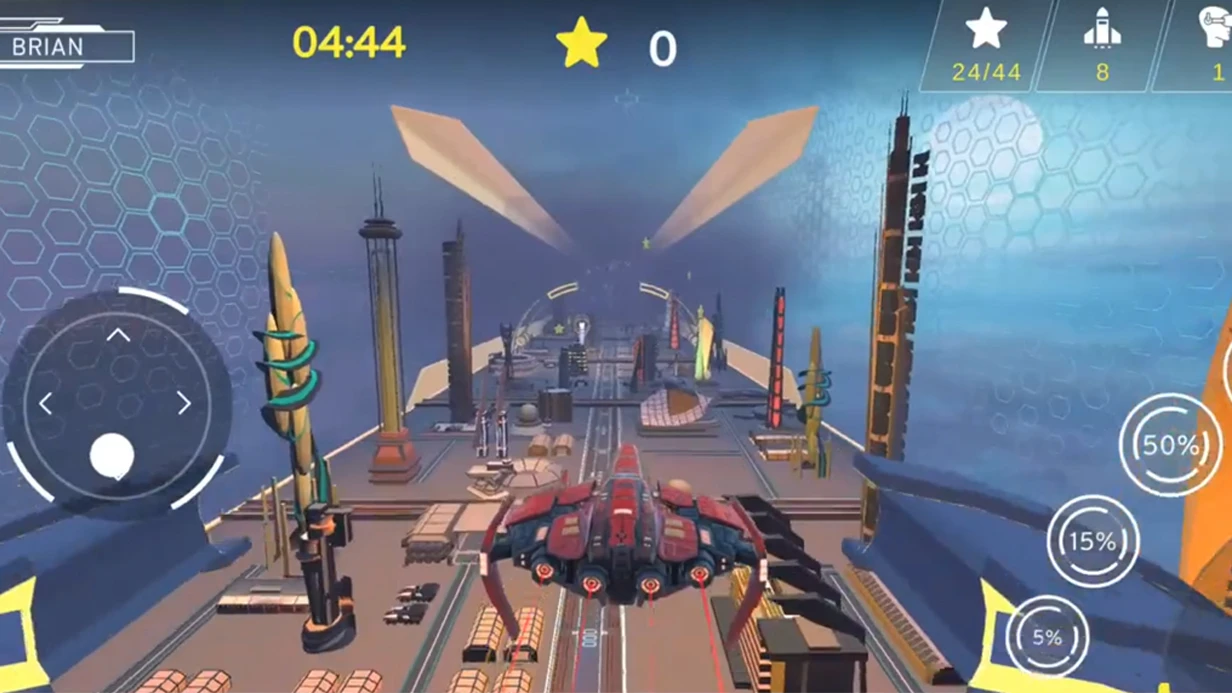
Familiar movements become part of a game scenario — a person is not "performing sets" but progressing through levels, receiving instant feedback on every action, and seeing their progress in a clear form. This changes the attitude toward recovery treatment: sessions are looked forward to, not avoided.
The effectiveness of therapy grows not because the patient "tries harder" but because they are engaged. In a VR environment, patients perform more repetitions, do them more accurately, and return for the next session — treatment adherence increases many times over.
For the clinic, these are direct indicators: shorter rehabilitation timelines, more completed courses, and measurable improvements in patient outcomes that can be shown in reports.
We help clinics and medical centers implement VR rehabilitation solutions adapted to their profile and protocols. We configure scenarios for specific nosologies, train staff, and support the launch so that patient motivation stops being the weak link in treatment.
What you get from implementing VR applications
Patients often perceive rehabilitation as a routine: monotonous exercises, pain, and no quick results. VR changes this — sessions become interesting, and motivation grows. For a clinic, this means tangible business benefits. Below is a checklist of what you will get.
- Increased patient satisfaction. VR training feels like a game, not a routine, so patients are more willing to complete sessions and skip fewer appointments.
- Increased loyalty. Positive emotions create attachment to the clinic. Satisfied patients return for repeat courses and recommend you to their acquaintances.
- Improved reputation. Modern methods set the clinic apart from competitors. The VR direction attracts media attention and strengthens the status of an innovative center.
- Additional revenue. VR programs can be offered separately or included in expanded packages. One system can serve several patients a day, which brings steady revenue.
- Increased department utilization. The rehabilitation cycle speeds up, so you can accept more patients without expanding staff. Treatment room utilization grows, and operational efficiency improves.
- Patient inflow. Having VR is a unique offer that attracts people looking for modern recovery methods. They are more likely to choose your clinic over competitors.
Implementing VR is not just buying a headset — it is launching a new direction. We accompany the project from idea to launch, using proven equipment HTC Vive. As a result, you get a working tool that improves the quality of care and delivers measurable benefits to the clinic.
VR solution formats for medical rehabilitation
Recovery after injuries, strokes, or surgeries requires regular sessions, and ordinary exercise therapy often tires patients with monotony.
Virtual reality in rehabilitation solves this problem: it creates game scenarios that motivate patients to perform exercises, while the doctor sees objective dynamics.
But the format of the solution depends on the scale of the institution and the tasks — what suits a small clinic is not always effective in a large hospital.
We develop VR trainers and hardware systems for different working formats. All solutions combine professional equipment and software that adapts to a specific rehabilitation program. Here are three typical scenarios:
| Format | For whom | What it gives the client |
|---|---|---|
| Compact VR zone | Small clinics and rehabilitation medicine offices | Takes minimal space, launches in one day, suitable for one or two patients, quick payback |
| Hardware system for hospitals | Large hospitals, rehabilitation centers, sanatoriums | Several rooms or zones, simultaneous work with a group of patients, statistics collection for each treatment course |
| Home format | Patients under outpatient observation | Continuing the program after discharge, doctor oversight via a cloud dashboard, reduced workload for clinic staff |
If you have inpatient treatment with a large patient flow, a stationary system pays off through intensive use — it is occupied all day. A small clinic only needs a mobile stand that can be quickly deployed in any room.
And the home format allows you not to lose patients after discharge and maintain continuity of therapy.
Whichever format you choose, we handle equipment selection, scenario adaptation to your program, and staff training. All you have to do is turn on the system and start accepting patients.
How development works: from brief to launch
Developing a VR application for medical rehabilitation is not a black box, but a manageable process with clear stages and deadlines.
We structure the work in five steps — from brief to launch and support — so that you always understand what stage the project is at, what is already ready, and when the solution will start working for your patients.
We rely on proven technologies and professional equipment, including HTC Vive, but the key is a transparent working method and a predictable result.
-
Brief and immersion in the task. We collect requirements from doctors, methodologists, and clinic administrators: what movements, scenarios, and exercises patients need, and what limitations different groups have. The output is a one-page summary of project goals.
-
Plan and project timeline assessment. We determine the scope of work, form a team, and agree on a calendar plan. You receive checkpoints and dates for interim presentations — even before development starts, it is clear when you will see the first results.
-
Technical specification approval. We turn the brief into a detailed technical specification: training scenarios, interface, rehabilitation methods, and readiness criteria.
The spec is approved by you — this protects against unexpected changes at later stages and disputes about the "wrong button".
-
Development and interim presentations. We build a prototype, then work iteratively. You see the application in action regularly and make edits along the way, not after delivery. This shortens timelines and reduces the risk that the final product will not match expectations.
-
Launch, testing, and support. We test the solution on real users — patients and specialists — and refine details. We train staff and hand over documentation. After launch, we stay in touch: updates, consultations, and adaptation to new exercises and methods.
In the end, you get not a "raw program" but a ready-made tool that is embedded in the clinic's workflows and delivers measurable results — you restore patients faster and improve the quality of rehabilitation.
What is included in the delivery: a kit for the clinic
Purchasing VR rehabilitation is not the delivery of "hardware" but the launch of a new direction for the clinic.
The kit is assembled so that doctors can conduct the first sessions immediately after installation — without lengthy setup, troubleshooting, or hunting for information.
- Ready-to-use software — scenarios for training upper and lower limbs, balance, and cognitive functions. Results are recorded automatically for each session, and the doctor sees patient dynamics without extra effort.
- Professional equipment — a virtual reality headset, controllers, and related components adapted for medical use. Materials are resistant to sanitary treatment and meet clinic requirements.
- Methodological recommendations — ready-made session protocols: indications, contraindications, and difficulty settings for a specific patient. The doctor does not need to invent anything — everything is at hand.
- Training for doctors and nurses — a hands-on workshop at the workplace: how to select a program, conduct a session, and interpret reports. Staff master the system in a few days and start working confidently.
- Electronic patient records — training history, progress indicators, and automatic reports for the attending physician.
- Warranty service and technical support — planned maintenance of the system, software updates, and consultations on work-related issues throughout the entire service life. The clinic is not left alone with the technology.
The delivery kit covers not only the technical side but also the organizational side: staff are trained, methods are implemented, and support is in place. This makes it possible to quickly launch the rehabilitation direction and get measurable results from the first weeks.
Case study: results of implementing VR for a clinic
We have been working with medical centers for more than ten years and we see that rehabilitation most often stalls not because of a weak recovery program, but because of patient motivation.
Repeating the same exercises for weeks is hard — people quit, miss sessions, and the clinic loses money and reputation. VR solves this problem directly: it turns boring routine into a game and keeps patients in the process.
One example is a project for a private rehabilitation center specializing in recovery after injuries and neurological diseases. We implemented VR training on professional equipment — designing scenarios from scratch for specific motor tasks.
Challenge and solution
The main problem was the monotony of sessions. Patients quickly lost interest, and the conversion to repeat sessions dropped. We selected scenarios that imitate movements needed in real life: reaching, grasping, and maintaining balance.
Each exercise was adapted to the individual patient's capabilities so they would not be afraid to make an extra movement. Clinic staff received a simple tool for managing load, and patients got a clear goal that was interesting to follow.
Implementation results
The numbers the clinic saw at the end of the quarter speak for themselves: the number of completed sessions grew by 25%, and patient satisfaction in surveys rose by 30%. People began to complete the course to the end and were more willing to recommend the center to acquaintances.
From a business perspective, this means less room downtime, more repeat visits, and a steady flow of referrals.
The Adapt Medical Center continued its cooperation and expanded the program to a second department — the best indicator that VR works not as entertainment, but as a measurable rehabilitation tool.
Frequently asked questions about VR solutions for rehabilitation
Medical directors often ask us the same things: is VR safe for patients, how long will implementation take, and how much will it cost to own the solution. We answer these questions directly — the same way we answer clients during negotiations.
Is VR safe for patients with different diagnoses?
Yes. We design scenarios together with rehabilitation specialists: every exercise takes into account the patient's condition, motor limitations, and response to load.
Sessions take place under the supervision of a specialist, and the system itself is configured individually — from difficulty level to pace of performance.
The equipment we use meets medical requirements and has been validated in clinical practice. So the patient is not just in a safe environment — they receive a controlled load that excludes sudden movements or overexertion.
How quickly can the solution be launched in your clinic?
A typical project takes 4 to 8 weeks. The timeline depends on the number of exercises, the number of scenarios, and how deeply we immerse ourselves in your methodology. The first two weeks go to the brief and plan approval, followed by development, testing, and staff training.
We follow a clear schedule: you know what is happening at every stage and can influence the result. Launch does not require restructuring the department — you simply need to allocate a room and time for sessions.
How much does development cost and what affects the price?
The cost is always individual — we calculate it after the brief, when we see the tasks and scope.
The price is affected by the number of rehabilitation programs, the complexity of scenarios, the need for integration with your accounting system, and the equipment format — rental or purchase.
The main thing the client receives is a solution that pays for itself through an increased number of patients and improved recovery quality. We provide a transparent estimate before the work starts, so you understand the total cost of ownership.
Is it difficult to train staff to work with VR?
No. We make the interface simple and intuitive — a rehabilitation specialist selects a program in a few taps, and control is guided by clear prompts. Only one training session is needed to launch, after which staff work independently and confidently.
In addition, we stay in touch after the launch and promptly help if questions arise. Support is included in the basic package, so you are never left alone with the technology.
Order development of a VR application for your clinic
By submitting a request for development, you get not an abstract promise but a concrete action plan. We consistently walk through all stages with you, so that by the time the project starts, you know exactly what you are getting and why. Below is a checklist of what this plan includes.
- Consultation — we discuss your task and explain how a VR solution will help your specific patients. We honestly talk about opportunities and limitations and suggest where to start.
- Clinic needs analysis — we study the specifics of the department, patient categories, current methods, and rehabilitation goals. This way we form an individual solution that fits into your workflow, not something that "just works".
- Application prototype — you see how the VR scenario will look and function before full development. At this stage, it is easy to adjust details: interface, session duration, difficulty level — before you invest the budget.
- Commercial proposal — we fix timelines, stages, and budget in a clear document. Flexible terms are available for medical institutions. You know exactly what you are paying for and when you will get the result.
- Solution presentation — we show how the product will fit into the rehabilitation room and how doctors and patients will work with it. We demonstrate with examples from similar projects so you can see the final picture before signing a contract.
- Implementation support — we train staff, help launch the solution, and stay in touch after it goes live. Your specialists will gain the necessary skills, and your patients will get a comfortable and safe experience.
Submit a request — within two days we will prepare an analysis and a preliminary individual solution for your clinic. It carries no obligation.
How to choose the right VR solution format for your objectives?
There is no universal VR solution for rehabilitation, and that is normal. The format is determined by the clinic's objectives, patient flow, and budget.
Therefore, the choice starts not with an equipment catalog, but with questions: what motor or cognitive impairments do you plan to address, and how will VR strengthen your current methods?
The key selection criteria are rehabilitation areas, number of patients per day, and budget for VR. If sessions are needed daily and for a large flow, choose a stationary system that allows quick scenario reconfiguration for each patient.
If VR is used for certain groups several times a week, a mobile solution that can be moved between rooms is sufficient.
The budget for VR cannot be reduced to just the cost of the system. It includes scenario setup for your methods, staff training, and technical support.
Clinics that consider this in advance achieve sustainable results faster and avoid downtime caused by incompatibility between technology and processes.
We help determine the optimal option before purchase: we analyze rehabilitation tasks, calculate the actual load — how many patients per day you really need to cover — and compare it with the budget.
As a result, you understand which format to choose now, what will be needed as your flow grows, and which functions will not be required, so you do not overpay.
Choosing the right VR is not about the most expensive option, but about the one that fits your processes and delivers measurable recovery progress. Contact us — we will analyze your situation and select a solution that matches the clinic's goals and budget.