



Metallurgy without VR — lost contracts
When a major contract with a metallurgical holding or a foreign customer is at stake, the decision is made after a meeting, an exhibition, or a tender.
What matters here is not just the tonnage of rolled metal and the price, but how you present your capabilities: outdated brochures, flat drawings, and slides no longer give you an edge.
While you are showing a presentation, your competitor is literally “walking” the client inside their workshop — and the contract goes to them.
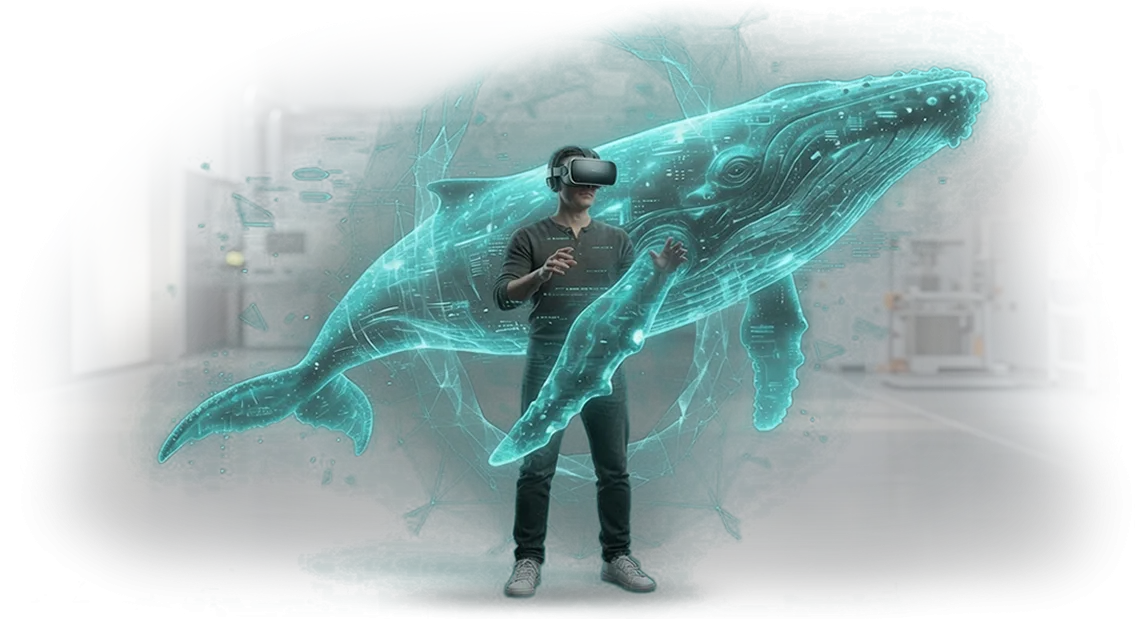
VR for metallurgy changes the rules of the game: the customer sees your rolling mill, foundry complex, or shipping logistics as if they are already working with you.
They walk through the workshops, assess the scale, safety, and speed of processes — without business trips or production downtime. This is a product presentation that cannot be confused with a drawing, and it is exactly what closes doubts at a tender.
Plant owners who have already gone through digitalization and implemented VR get another effect — trust. The client doesn't need to “take your word for it”; they see how the station works, how logistics are arranged, and where quality control points are located.
Such a demonstration shortens the deal cycle and increases the likelihood of repeat orders, because your plant is remembered as a modern and open partner.
We have been creating VR projects for metallurgical enterprises for more than 10 years and know the specifics of the industry: from blast furnaces to rolling mills.
We take on the entire cycle — from filming and 3D modeling to deployment on HTC Vive hardware — so that you get a working sales tool. While competitors show brochures, you show the future of your plant. And this is an advantage that pays off with the very first tender you win.
What VR development gives your business
Interactive presentation of complex technologies
Metallurgical production is processes that are difficult to explain with slides or drawings. A VR application turns them into a visual experience: the customer sees the workshop, installation, or production line in detail and immediately understands how your solution will work.
This is stronger than any brochure: visitors stop, immerse themselves in the process, and start asking questions — you communicate the value of the product faster and more easily.
This format holds attention several times longer than a regular presentation. Interest in the interactive experience grows into a substantive conversation about cooperation — and that is the first step toward future contracts.
Brand recognition growth
A bright VR zone at an exhibition or in a showroom is a magnet for visitors. The queue of people wanting to try it attracts attention, and photos and videos from the virtual workshop quickly appear on social media.
This gives you organic reach without an advertising budget: every guest becomes a carrier of your brand.
An interactive zone easily becomes a reason for publications in industry media. Mentions of the company in reviews and reports keep building recognition long after the stand is packed up.
More inquiries from events and meetings
A VR presentation helps collect contacts of interested visitors. You don't just hand out materials; you capture the potential client's attention and invite them to take the next step immediately — book a demo or send a request for a cost estimate. This is a direct path to growth in the number of inquiries.
VR materials keep working after the event: you use them in negotiations, on the website, and in mailings so that every client sees your product in action. A clear and vivid presentation accelerates decision-making — and therefore shortens the path from first contact to a deal.
VR application formats for your task
In metallurgy, virtual reality solves not only demonstration tasks but also safety, training, and marketing challenges.
Depending on the goal, we select a VR application format: one works as a presentation tool, another as a training ground, a third as a memorable exhibition stand. Below is a visual comparison to help you navigate.
All formats adapt to the specifics of production: the scale of workshops, level of automation, target audience. We don't just “write code”; we design a result that is understandable and useful to your enterprise.
| Format | For whom | What it gives the client |
|---|---|---|
| Virtual production tour | Sales managers, external communications department | Clearly shows the scale and culture of production to clients and partners without logistics costs, strengthens trust in the enterprise |
| VR training simulator | HR department, workshop supervisors | Allows new employees to practice skills safely, shortens the adaptation period, and reduces the number of errors on real equipment |
| Interactive exhibition stand | Marketing and sales department | Attracts attention at industry events, sets the brand apart from competitors, and increases the number of useful contacts |
| VR project presentation | Tender department, management | Convincingly shows the customer design solutions, accelerates approval, and increases the chances of winning a tender |
Each format can be combined with others: for example, a training simulator can be embedded in a virtual tour.
To understand which option will bring the most benefit to your task, start with a short consultation — we will compare options and suggest the best one in terms of investment-to-effect ratio.
How the project goes: from brief to launch
Every project for implementing a VR solution in metallurgy starts not with hardware, but with a precise understanding of your task. We begin the process with a brief to define the goals: staff training, demonstrating technology to investors, or safety control in production. This determines what final product you get and how quickly it starts to deliver value.
What matters to us is not the process itself, but its predictable result. That is why we agree on all key points with you in advance, so the project does not turn into a “black box.” You always know what stage the development is at and control the budget without surprises.
- Brief and task analysis. We gather requirements, study your production scenarios, and determine what benefit the business needs — from reducing accidents to accelerating training for new employees.
- Concept and plan. We propose VR use scenarios for your enterprise. We agree on which areas of the production cycle will be shown and which skills will be trained.
- Prototype approval. We create a draft version with key scenarios. You see the logic and interface before major funds are invested, and you can make edits without overpaying.
- Development and integration. We fill the VR environment with your 3D models, regulations, and instructions. At this stage, we bring in professional hardware to ensure the result is stable even in demanding conditions.
- Testing with your employees. We check scenarios for usability and correctness. Metallurgists or engineers assess how realistic the process looks and provide feedback — we take it into account.
- Launch and instruction. We deploy the system at your sites and train administrators and operators. We provide clear documentation so you can run sessions without us.
- Support and development. We update VR content in line with changing standards, add new scenarios, and keep hardware up to date so the project does not become obsolete.
This workflow comes from practice: the clearer each step is, the greater the final benefit. You get not “raw technology” but a working tool that is embedded in your processes and solves a specific task — training, presentation, or control.
What is included in the VR solution delivery package
When you order a VR solution, it is important to receive not just an application but a working tool that immediately integrates into processes.
The delivery package includes everything needed to launch training in a workshop, production facility, or training center — without “surprises” at the start.
Here is what you receive in full:
- Ready-made VR application for your scenarios: practicing employee actions in the workshop, working with equipment, and handling emergency situations. The content is adapted to metallurgical production tasks, not abstract demos.
- Admin panel for content management and training control. You see who completed scenarios, what results they achieved, and where difficulties arise — without contacting developers.
- Materials for installation and setup of VR hardware: mounting kit, cables, layout diagram — so the system works in your facility from day one.
- Instructions for employees and administrators — in print and electronic form. No technical fluff: step-by-step actions, typical situations, answers to questions.
- Training for your team: we conduct sessions for administrators and operators of the VR zone. After these, staff independently run scenarios, change settings, and help other employees.
- Warranty and technical support for the entire period of operation: consultations, scheduled updates, and issue resolution within agreed timeframes.
Such a package covers the main risk of any implementation — “we bought it, now what?” You get not only the technology but everything needed for its daily use.
Training and support are included, so your employees quickly start working with VR, and management sees measurable results: reduced time for staff preparation, fewer errors, and more confident employee actions in real conditions.
Case study: how a metallurgical plant increased sales
Background
Sales managers at metallurgical plants know how hard it is to engage a client at an exhibition. Dozens of stands with similar pipe and sheet metal samples are working nearby, and within a minute a potential customer moves on to a competitor.
Ordinary catalogs and videos no longer hold attention — you need a way to show the product clearly and memorably.
We solved this problem with a VR presentation. The plant received a virtual production tour: a guest puts on a headset and “walks” into the workshop, sees the rolling mill, the metal processing process, and the finished products.
The controls are simple, so any stand visitor can explore the product independently, without a manager's help. The sales department was freed from repetitive explanations and managed to work with warmer leads.
Result
The demo ran on professional HTC Vive hardware — this ensured stability throughout the exhibition and a quick start for each new guest. We also designed the scenario to hold attention for no more than three minutes: enough to show key advantages and leave a contact.
The effect proved measurable.
The number of stand visitors grew by 40% compared with the previous exhibition, and the average conversation time with a manager doubled — clients immediately asked questions about the substance rather than asking “what do you do?” By the end of the event, the plant had signed three contracts for the supply of rolled metal.
The main takeaway: a VR presentation works as a sales tool, not as entertainment. It helps you quickly differentiate from competitors and shorten the path from first contact to signing a contract.
If you are planning to participate in an industry exhibition or looking for a way to clearly show complex products, this case study can be replicated at your enterprise.
How to choose the right VR development format?
The choice of VR development format depends directly on the business task you are solving: showing a product to potential customers, training employees in safe work, or visually presenting a complex technological process.
There is no universal solution — what works perfectly for a presentation will be ineffective for a simulator, and vice versa.
If your goal is to impress clients and partners at an exhibition or in negotiations, an interactive 3D presentation with realistic product visualization is sufficient. It allows a guest to “walk” through the workshop, examine equipment in detail, and see the product in action.
For staff training, a full-fledged simulator with step-by-step scenarios, error tracking, and employee performance assessment is better suited — this format reduces risks in real production.
And for process analysis and optimization, virtual copies of areas are created where you can change parameters and observe the result without stopping production.
A properly selected format determines not only usability but also the economics of the project: you pay for the amount of work that is actually needed.
We help formulate goals, choose the level of interactivity, and prepare a technical specification, avoiding unnecessary costs and rework.
During the consultation, we analyze your task, show examples of solutions in metallurgy, and offer the optimal format — from a light VR presentation to a comprehensive simulator that can be replicated across multiple sites.
In the end, the choice comes down to three questions: who will use the application, what result it should lead to, and under what conditions it will work.
The answers provide a clear specification before development even begins — you know in advance what you will get and how it will affect your business.
If you are unsure, we will conduct a short audit and offer an option that solves your task with the best value-to-investment ratio.
Common doubts: what if VR doesn't pay off?
The main objection when ordering a VR solution is, “aren't we just throwing money away?” In metallurgy, the effect is visible not in a pretty picture, but in reduced injuries, faster staff training, and less equipment downtime.
We help calculate the payback before you start: we show which operations VR saves hours and resources on, and we set target metrics that we verify after implementation.
It is important to understand: the technical base is not an obstacle. If the enterprise does not have suitable hardware or a support team, we handle this stage: we select headsets for your tasks, configure them for your infrastructure, and give employees clear instructions. After launch, we stay in touch — we update content, help with operation, and develop the system.
How can we tell that VR will pay off specifically in our workshop?
We calculate it together across three items: personnel training time (including trainees), the number of emergency situations, and equipment downtime. To do this, we conduct a short audit of your process and show the calculation using real figures. If savings are not visible, we honestly tell you so before the contract.
We don't have the technical base or specialists to handle this.
This is a typical situation for plants. We select hardware according to your budget and tasks, deliver it as a complete package, and set it up. We train two or three of your employees so they can run the simulator without our help. If needed, we take over technical support entirely.
What happens after launch? Who fixes, updates, and supports it?
After the project is delivered, we don't disappear. We sign a support agreement: we update scenarios in line with changes in regulations, add new exercises, and help with hardware repair and replacement. For urgent cases, there is a hotline — an engineer gets in touch within a business day.
What if the VR simulator does not deliver the promised effect?
We are invested in the result, so we record metrics before and after implementation. If the indicators have not improved after the pilot launch, we refine the scenarios at our own expense. This approach lets you try the technology without the risk of losing budget.
We address objections not with words, but with a clear calculation and guaranteed support at every stage. We are ready to show examples for metallurgical enterprises and conduct an audit of your process — this comes with no obligation.Order a VR solution for your enterprise
Metallurgical production involves complex technological processes where a mistake costs a lot. A VR solution allows you to refine operations without risk and downtime, but to evaluate the effect, you need to see it on your own task.
That is why we suggest starting with a short conversation — you tell us about your situation, and we show how VR will fit specifically into your processes.
Leave a request — and within one business day you will receive from us:
- a consultation with a specialist who understands industrial tasks, not just games;
- a preliminary cost estimate for a VR solution tailored to your volumes and requirements;
- examples of projects for metallurgy, mechanical engineering, and related industries;
- a description of scenarios: staff training, emergency response practice, assembly control, product presentation;
- an implementation plan that takes into account your production and downtime;
- a clear proposal without technical jargon — with timelines and results for each stage.
In essence, this is an opportunity to order a VR solution without unnecessary risk: first you get the numbers and a plan, and only then make a decision. There are no obligations at this stage — you simply receive materials that help you decide.
Fill out a simple form or write to us in a messenger — we will find a solution that pays off in your conditions. Start with a cost estimate: it is a quick way to understand what VR will give your enterprise.