



Why Shipbuilding Loses Contracts Without VR Technologies
Shipbuilding is an industry where the cost of a mistake is especially high, and competition for contracts grows with every project.
The customer makes decisions under tight deadlines and a huge budget: they need not just to see drawings, but to understand how the vessel will look, work, and feel in operation.
This is where outdated methods of project presentation lose out — and shipbuilding enterprises lose orders during the negotiation stage.
The general director of a shipyard or the technical customer is not ready to read hundreds of pages of specifications and look at flat renders. They choose the one who can present a solution convincingly and quickly.
Companies that continue to rely on static 3D models and drawings face misunderstandings, prolonged approvals, and ultimately — the loss of contracts to more technology-driven competitors. The crisis is not in the quality of the vessel itself, but in how you sell it.
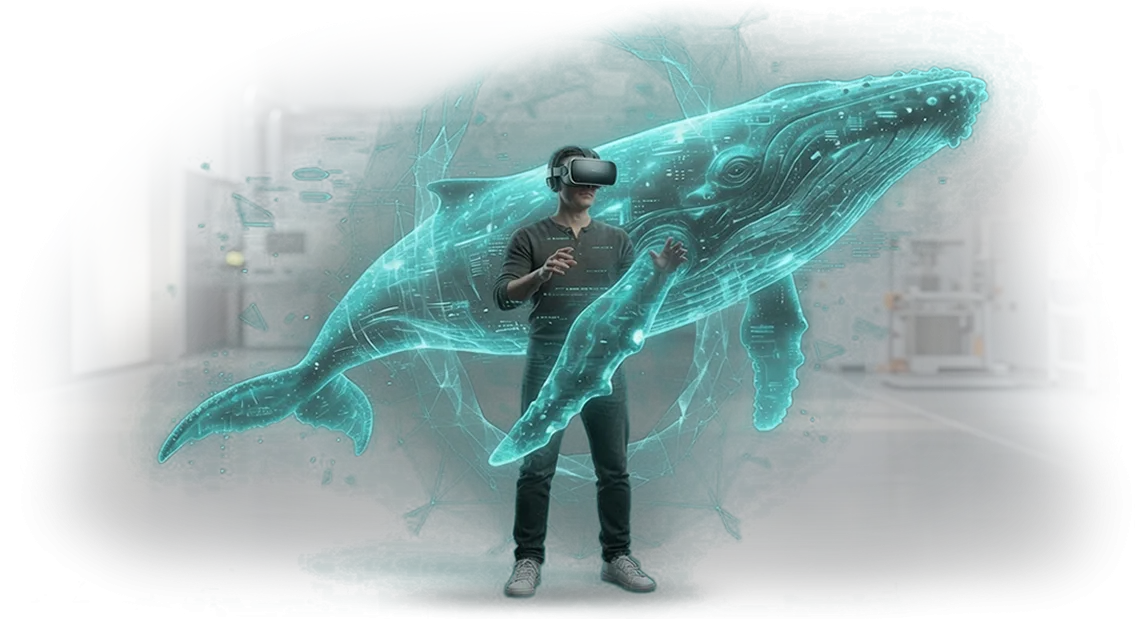
VR in shipbuilding changes the game: it gives you the ability to present a full-scale model of the vessel to the customer, walk along the deck, assess the ergonomics of cabins and equipment layout before physical construction even begins.
Such a demonstration shortens the approval cycle from several months to several days, reduces the risk of expensive changes at later stages, and gives you back control over the client's decision.
This is a direct advantage at the negotiating table that strengthens your reputation and increases the competitiveness of your enterprise.
We have already helped shipbuilding companies implement VR solutions for tenders and internal project reviews, and each time the result is the same: more trust from customers, fewer mistakes, and a steady flow of repeat inquiries.
The technology is not a luxury — it is a tool that lets you close deals faster than your competitors.
VR/AR in Shipbuilding: 5 Key Benefits for Production
VR/AR in shipbuilding are no longer an experimental technology — factories and design bureaus use them to solve specific production tasks, from engine room layout to welder training. In our experience, five areas deliver a measurable impact at every shipyard.
Five Key Benefits of VR/AR for Shipbuilding Production
-
Faster design and approvals. A 1:1 scale VR model of the vessel lets you see the future hull before the keel is laid. Designers and customers find errors in pipe routing at an early stage, when fixing them costs pennies, not millions. The time to issue working documentation is reduced by 20–30%.
-
Safe personnel training. Welding, work at height, engine maintenance in confined spaces — all of this can be taught without risk to people or equipment. Trainees make mistakes in a virtual environment, not on a real facility. Skill retention is no lower than with traditional mentoring.
-
Reduced costs for mock-ups and test benches. A VR prototype replaces physical mock-ups and stands. The same digital model is used by designers, technologists, supply specialists, and the future vessel crew. Material and reconfiguration costs are reduced by about a third.
-
Quality and ergonomics control. Engineers "walk" through the digital vessel: they check access to valves, service convenience, and instrument visibility.
The project is perfected in virtual space rather than in metal — this reduces the number of rework operations on the slipway.
-
Certification and professional development. VR simulators allow regular knowledge and skill checks without stopping production. Results are recorded objectively, simplifying interaction with regulatory authorities.
"We launched a VR simulator for assembly of units — the number of reworks in the area dropped by about 40%. People enter the virtual workshop like a game, and return to the machines with a full understanding of the technology," — chief technologist of Korabel Shipyard.
VR/AR Solution Formats for Shipbuilding Tasks
Shipbuilding is one of the most conservative industries, where mistakes in welding, assembly, or project presentation cost millions and human lives.
That is why VR and AR have taken root here faster than anywhere else: they allow you to train personnel, control quality, and present a future product without risks.
We work in your industry and know that there is no such thing as "just an app." There is a format that solves a specific problem: welder training, on-site instruction, customer presentation. Below are the three main formats we implement at shipbuilding plants and design bureaus.
| Format | For whom | What it gives the client |
|---|---|---|
| VR welding simulator | Training centers, personnel training workshops | Skill practice without material consumption or injury risk, objective qualification assessment, reduced training time |
| AR assembly instructions | Assembly workshops, installation crews | Step-by-step hints directly on parts, fewer defects, faster onboarding of new employees |
| VR project visualization | Sales department, design bureau | Clear presentation of the vessel and its compartments before construction, customer approvals without expensive mock-ups |
The table does not cover all options — for example, VR simulators for crane operators or AR geometry control. But it shows the logic of selection. We provide consultation and offer a solution for your task — from prototype to full implementation.
Stages of VR Implementation in Shipbuilding: From Brief to Commissioning
Implementing VR in shipbuilding is not about buying equipment — it is a project that must fit into your production processes. We have built a step-by-step workflow so that you see results at every stage, understand timelines, and control the budget.
- Brief and task immersion. We discuss exactly which problem VR will solve: welder training, assembly feasibility checks, or vessel presentation to the customer. We record goals and success criteria — this is the foundation for all further work.
- Production audit. We visit the shipyard or workshop, study drawings, regulations, and real operations. We find the points where virtual reality will deliver maximum effect and cut out what is not needed — this saves your budget.
- Project approval. We show the usage scenario, the set of scenes and stages, timelines, and cost. You approve the scope before development starts, so hidden surcharges and unexpected "surprises" midway are excluded.
- VR application development. We create a virtual copy of your facility — from the vessel hull to internal systems and mechanisms. The interface is tailored to your employees' tasks so they can work easily without special training.
- Testing and refinement. You and your engineers check the application on real scenarios. We make changes before the system goes into permanent operation — this is the guarantee that the result actually solves your problem.
- Employee training and commissioning. We conduct instruction for personnel, deliver clear materials, and set up equipment at your site. After launch we stay in touch: we support the project, update scenes, and help expand the use of VR.
The result: a predictable outcome within agreed timeframes, with each stage confirmed by documents and reports. You always know where the project stands and what you will receive in the end.
What Is Included in the Delivery of an Industrial VR Project
After implementing a VR project at a shipbuilding enterprise, you receive not scattered files, but a complete, ready-to-use package.
It includes software, configuration, documentation, and training — everything your specialists need to start using the technology immediately, without constantly involving external contractors. Here is what the delivery includes.
- A software package built for your task — a ready VR environment with the vessel model, assemblies, and mechanisms, adapted to a specific scenario: assembly, repair, instruction, or acceptance. The system runs on industrial equipment and does not require special IT skills from employees.
- Setup and adaptation — we deploy the package at your facilities, connect it to engineering data, and align it with your production regulations. You receive a tool that fits into current processes rather than existing separately from them.
- Complete documentation — we provide user instructions, scenario descriptions, an administrator guide, and maintenance regulations. All materials are written in plain language so any employee can understand them without developer assistance.
- Personnel training — we conduct practical sessions for operators and engineers, practicing typical operations on your real tasks. Then staff work confidently from day one, without a long adaptation period.
- Warranty service — during the agreed period we fix errors, update content, and consult your employees. You are never left alone with problems after project delivery.
- Methodological materials — we provide cheat sheets and video instructions for independent repetition and quick onboarding of new employees. This is especially important in shipbuilding, where staff turnover and mentoring are part of daily work.
- Remote support — we stay in touch after launch: we answer questions, help with configuration, and accompany the first weeks of work. If needed, we come to the site, but most issues are resolved remotely.
In the end, you receive a full-fledged tool that can be replicated within the enterprise and used at different stages — from design to crew training. All rights and materials remain with you, so you are not dependent on the developer in day-to-day work.
Case Study: How a VR Simulator Cut Assembly Time by 30%
At a shipbuilding plant that assembles large units, the bottleneck had always been the training of new workers. Theory from drawings took weeks, and practice on real equipment was expensive and dangerous: a beginner's mistake leads to defects and downtime.
To speed up the process and reduce risks, the enterprise implemented a VR simulator based on HTC Vive.
The worker enters a virtual workshop, sees the assembled unit at full scale, and performs all operations with their hands — from part selection to torque control.
The simulator guides the sequence of actions, records mistakes, and allows practicing the skill to the point of automation without touching real equipment.
The effect was measurable. In the first six months, assembly time in the area dropped by 30%, the number of installation errors fell by nearly half, and new employees were onboarded twice as fast.
The plant gained not only time savings but also a noticeable improvement in quality — defects caused by the human factor decreased several times over.
"Previously, a newcomer would watch a master for weeks and only then try the work themselves," says the plant's process engineer. "Now they first train in VR, where mistakes are possible without consequences.
It is a fundamentally different level of training: people come to the workplace already understanding the technology, and we record fewer errors in real production."
This training format pays off quickly and works for the long term. The virtual instructions created for the simulator stay at the enterprise and are used to train future shifts — knowledge is not lost when experienced specialists leave.
How to Choose the Right VR Format for Your Production?
Every shipbuilding operation works with unique tasks: personnel training, assembly verification, repair operations practice. Therefore, the first step is not buying equipment, but defining the goal: what should change after VR implementation.
We help formulate expectations in measurable terms — time to train a specialist, number of assembly errors, speed of unit approval.
Selecting a VR/AR/MR format starts with three criteria: who will use the solution, under what conditions, and what result the business needs.
For engine rooms and workshops with heavy equipment, autonomous scenarios with hints work well; for design bureaus, collaborative model reviews; for on-the-job training, simulators with action tracking. The same enterprise often uses several formats at different stages.
It is important to consider the individual requirements of production: space limitations, the need to integrate with existing documentation, and the skill level of employees. We visit the site or conduct online interviews with technologists to understand real scenarios.
Based on this, we build a prototype and show it to your employees — this eliminates non-working options before full-scale development.
Choosing the right VR format saves up to 30% of the implementation budget, because you pay only for the functions actually used in production.
We provide a recommendation in the form of a roadmap: which scenario to launch first, how to scale the solution to other workshops, and how to measure the effect.
If you are unsure which option fits your plant, send us a description of the task — we will propose 2–3 formats with an assessment of the result. This is non-binding.
Frequent Questions About VR Implementation in Production
Shipbuilding enterprises implement VR when they need to reduce costs for mock-ups, speed up approvals, and avoid mistakes at early stages. However, managers often have the same doubts. Below are honest answers to the main questions we hear in production.
How long does VR application development take?
A typical project takes 4 to 12 weeks, depending on model complexity and the number of scenarios. We break the work into stages and show intermediate results at each step — so you always understand where the project stands and what comes next.
How expensive is this, and how do we evaluate payback?
The cost depends on the volume of the virtual model, the number of scenarios, and integration with current systems. But the project pays off: prototype expenses are reduced, there are fewer defects, and approvals are faster. At the start, we conduct an audit and fix the cost estimate — without hidden payments.
Our staff are not tech-savvy — will it be difficult?
We design the interface around production tasks — without complex settings or unnecessary functions. Training takes from a few hours to a couple of days, and then employees work independently. After launch, we support the team and answer questions.
Is it safe to use VR in production?
The VR area is isolated and does not affect production processes. The virtual environment allows checking ergonomics and honing skills without risk to people or equipment — this is safer than training on a real facility.
Request a Cost Estimate for a VR Solution for Your Plant
Leave a request — and we will prepare a cost estimate for a VR solution tailored to your plant, taking into account your tasks and current processes.
We do not need a technical brief: a short conversation is enough to understand where VR will deliver quick results — personnel training, project acceptance, assembly control, or product presentation to customers.
After your inquiry, you will receive:
- Expert consultation — we will analyze which operations at your production site should be moved into VR and what effect this will bring.
- Cost estimate matched to your scale — a transparent estimate with no hidden items: from scenario development to support and updates.
- Solution selection for your tasks — we will propose a format that fits into your existing infrastructure: from single workstations to training an entire workshop.
- Timeline and stage assessment — you will see exactly when the first scenarios will be ready and when you will start using the solution.
- Examples of implementations at shipbuilding enterprises — we will show how VR helped other plants reduce training time and lower the number of assembly errors.
- Clear deployment plan — with your engineers and our specialists, including setup and personnel instruction.
We work remotely and have been delivering VR projects for industry for 10+ years, so we do not waste your time on "selling" — we speak directly about real tasks.
The request takes a couple of minutes: you describe the situation, and we come back with an estimate and a proposal that fits your plant.
Leave a request — and get concrete options today that you can use to start implementing VR.