

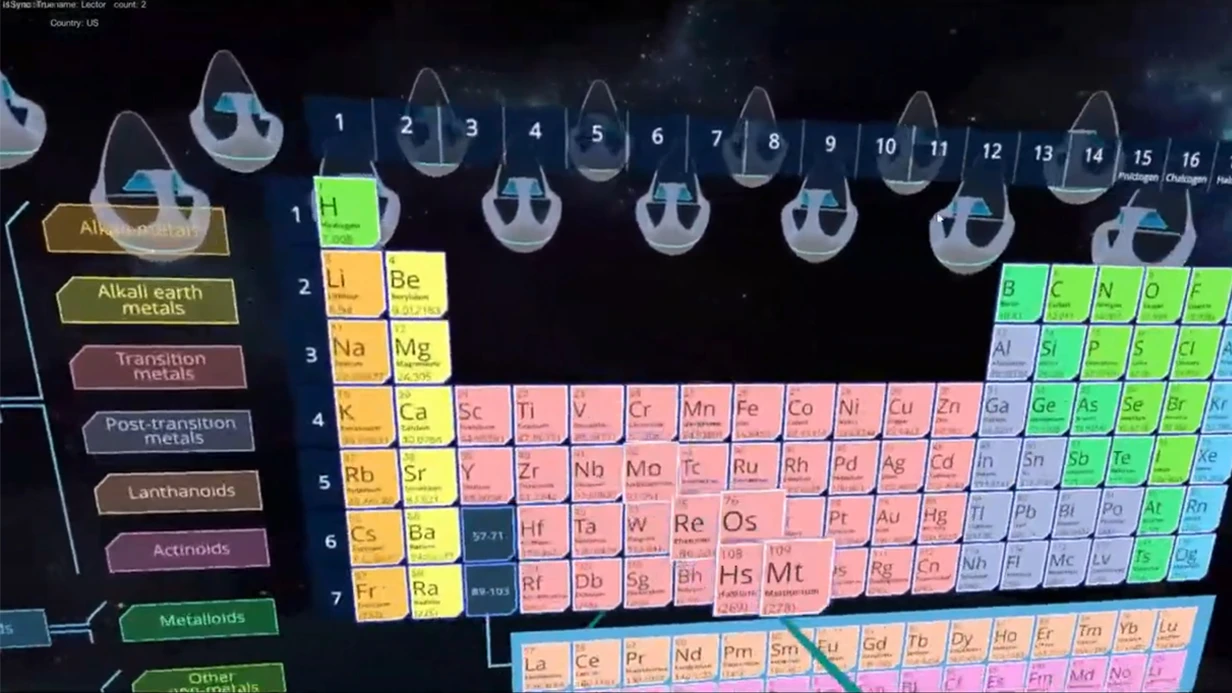


Why Telecommunications Lose Money on Training and Downtime
In telecommunications, an employee error costs a lot: incorrect equipment configuration, wrong diagnostics, or a slow response to an outage result in network downtime and subscriber loss.
Every minute of service unavailability is direct losses and a blow to the operator's reputation. At the same time, traditional training on real equipment is dangerous and ineffective: beginners need a mentor, and any exercise carries the risk of stopping commercial traffic.
That is exactly why most telecom companies face a vicious circle. Employees are not allowed to perform complex tasks until they learn, but there is nowhere to gain experience — training stands do not reproduce the full complexity of a live network.
As a result, knowledge is tested on real subscribers, and the price of each mistake grows along with the infrastructure load. Companies lose money on downtime, repeat visits, and compensation.
VR training solves this problem: an employee trains in a safe virtual copy of the network where it is possible to make mistakes without consequences. A technician practices routes, switching, fault finding, and emergency response — at any pace and as many times as needed.
Real equipment remains in operation, and the quality of training no longer depends on the availability of a free mentor or a free "window" at the site.
For telecommunications, this means not just cheaper training. It means reduced downtime, fewer accidents caused by personnel, and fast onboarding of new employees to full-capacity work.
VR training pays for itself after the first prevented incident, and then keeps working as a permanent advantage in service speed and reliability.
We help telecom operators implement VR simulators for their specific tasks — from training field personnel to practicing emergency response. We design scenarios based on real processes so employees learn exactly what they encounter on the job.
What VR Implementation on HTC Vive Gives to Business
Implementing VR based on HTC Vive in a telecom company delivers measurable results at three levels: training, service quality, and marketing.
VR in telecom is not entertainment but a business tool that pays off through shorter training cycles, fewer costly errors, and more inquiries.
-
Faster training. New employees master equipment and tariffs in a virtual environment in days instead of weeks. No need to wait for simulator availability or a site visit — scenarios are practiced right in the office in safe conditions.
This is especially important when launching new products, when every week of delay costs market share.
-
Fewer errors. Virtual simulators model rare emergency situations that are hard to create in reality. Employees train the correct response until it becomes automatic, so the number of errors on the job drops — and with them, losses and support load. Stable service directly affects subscriber loyalty and reduces churn.
-
Greater visibility and more leads. A VR zone attracts attention at exhibitions and in sales offices. A line of visitors creates genuine interest, and the interactive demo collects contacts of potential clients — that is leads without an additional advertising budget. Plus, photos and videos from the VR zone spread across social media and increase reach.
These three directions reinforce one another: faster training launches projects sooner, fewer errors mean more stable service, more leads mean higher revenue.
The company gets a comprehensive effect from a single implementation, and we are responsible for the result from the first brief to launch.
VR Solution Formats for Telecommunications: Training, Service, Sales
In telecom, time decides everything: from network deployment speed to the quality of technical support. VR solutions help compress timelines and increase efficiency in three key scenarios.
| VR Format | Target Audience | What the Client Gets |
|---|---|---|
| Interactive simulator | Technical specialists, installers, engineers | Practice of equipment installation and configuration on virtual models without risk to infrastructure. Beginner training is 2 times faster, and errors at sites are reduced. |
| VR service maintenance simulation | Maintenance crews, emergency services | Step-by-step instructions for replacing components and troubleshooting. An employee trains on complex cases before going to the site — you get less network downtime and faster ticket resolution. |
| Virtual service presentation | Sales managers, client departments | A visual demonstration of cloud solutions, smart home, or corporate communications right in the showroom or at a meeting. The client "steps inside" the product, understands its value — the deal cycle shortens. |
| Interactive onboarding | New employees, call centers, telecom retail stores | Fast staff adaptation to scripts and systems. Playing out challenging situations with a virtual conversation partner boosts employee confidence within the first week on the job. |
Each of these solutions integrates into your existing IT infrastructure and server architecture. Your employees work in intuitive VR scenarios, and you see analytics: where mistakes are made and how well the material is absorbed. The result is measurable value in money, time, and service quality.
How the Project Proceeds: From Brief to Launch
For a telecom company, VR is a way to quickly train employees to work with equipment or show subscribers the benefits of tariffs through hands-on experience. To make sure the project delivers value rather than remains a showpiece, we have built a clear seven-step process. You always know what stage the development is at and can influence the outcome.
- Brief and task audit. You describe the goal: staff training, service presentation, or a virtual showroom. We propose a scenario and specify the expected result.
- Concept and technical specification approval. You receive a document describing what the user will see, what actions they will take, and how this will affect the business. After approval, we start development.
- Prototype creation. We build a basic version with key scenarios. You test it on the equipment and make changes before major resources are committed.
- Full application development. We fill the project with graphics, video materials, and interactive elements, and, if needed, connect integration with your systems.
- Testing on real equipment. We test the application on HTC Vive under near-real conditions: session duration, control convenience, and absence of failures. We fix any issues before launch.
- Launch and team training. We install the application, configure the equipment, and train the employees who will use VR in their work.
- Post-launch support. We stay in touch: update content, add new scenarios, and help with technical questions.
What Is Included in Delivery: A Growth Kit
We assemble a turnkey VR solution — from idea to launch. The delivery includes not only the application but everything employees need to start using it on the first day and for you to see the business value.
- Ready-made VR application tailored to your tasks: service demonstrations, staff training, virtual tours. It works on HTC Vive headsets and is adapted for telecommunications scenarios.
- Instructions and regulations — simple reference guides for employees on startup and setup. Any manager can figure it out; no dedicated administrator is needed.
- Team training — sessions and hands-on practice with VR. Staff confidently uses the solution with clients from the very first days.
- Technical support and updates — we stay with you after launch, answer questions, and refine scenarios based on pilot results. You work without interruptions.
- Usage analytics — reports on the number of sessions, duration, and interest. You see which scenarios deliver results and develop them further.
This kit turns VR from an "expensive toy" into a working tool: faster training, more compelling presentations, higher client loyalty. We handle the technical side — you get a solution you won't be embarrassed to present to management.
Case Study: How We Reduced a Telecom Operator's Downtime
A large telecom operator came to us with a pain point typical of the industry: every hour of equipment downtime means lost calls, unhappy subscribers, and missed revenue.
At the same time, training new engineers for emergency restoration crews took weeks, and mistakes on real network nodes only increased downtime.
Telecommunications operator "Volna" asked us to create a VR simulator that would allow repair operations to be practiced before going to the site. We developed a virtual copy of a typical communication node, as close as possible to the real equipment.
An engineer wearing a VR headset performs the same actions as in practice: switching, diagnostics, module replacement — but without the risk of damaging the working network.
The results exceeded expectations. In the first quarter, emergency crew downtime dropped by 30%, and at the training stage — by 45%. The operator reduced the onboarding period for new employees from several weeks to several days.
The number of errors during real work halved — VR achieves such results because engineers managed to practice complex scenarios dozens of times before going to the site.
The most important metric — the client came back to us again: now we are expanding the simulator to regional divisions.
This VR telecom case study shows: downtime reduction is not a slogan but measurable figures that directly affect the company's operational performance and revenue.
How to Choose a VR Format for Your Task?
Choosing a VR format in telecommunications starts not with technology but with a question: what exactly do you want to change in your business?
Some need to quickly train employees on new tariffs, others need to spectacularly show the network coverage area at an exhibition, and still others need to organize remote support for complex equipment. Each of these tasks has its own optimal format, and we help find it.
To choose correctly, evaluate three things. First — who your audience is: clients at an event, employees in offices, or a mass user with a phone. Second — where the solution will be used: a stationary site, a mobile campaign, or ongoing work processes.
Third — what result you need: attract attention, teach a skill, or increase recognition. Answers to these questions immediately narrow down the list of options.
If the task is to impress guests at an event, stationary VR zones with professional equipment are suitable: they are tuned, do not fail at the crucial moment, and give each visitor an experience in 2–3 minutes.
If you need to train employees in different cities — standalone headsets are better, as they are easy to ship to an office and use without preparation.
And if you want to showcase a service to a mass audience, use augmented reality: a user points a smartphone camera at a banner or brochure and sees the needed information about tariffs and coverage.
We determine the VR format requirements together with you in a short brief. We consider the number of participants, the venue, timelines, and the desired result.
Our experience in telecommunications allows us not to experiment but to offer proven scenarios right away — for example, a coverage zone demonstration in VR or an interactive simulator for installers. You get a solution that works toward your goal rather than just creating a "wow effect."
Leave a request for a consultation — we will analyze your situation and select a format that delivers real value to the business. We will help launch the project turnkey: from idea to the final result.
Common Client Questions and Concerns
Telecom clients come with the same concerns: will VR work with existing systems, how quickly will it pay off, and who will be responsible for support after launch.
These fears are normal — how clearly we address them before the contract determines peace of mind at all stages of the project.
We have been implementing virtual reality for telecom operators for over ten years, so we start every project with an audit of the current infrastructure and an honest plan: what integrates right away, what requires refinement, and what is not needed at all. Below are answers to pre-purchase questions that come up most often.
Won't we end up spending the budget while VR delivers no result?
We start with a pilot on a small audience and track specific metrics: employee training speed, sales conversion, subscriber engagement. The pilot costs a fraction of a full implementation, and you make the scaling decision based on facts, not promises.
How long will integration with our CRM and billing take?
A typical project takes from a few weeks to two or three months, depending on the number of scenarios and the readiness of your systems. We connect through standard interfaces, do not touch running processes, and do not interrupt subscriber service during the work.
What about warranty and support after launch?
We hand over the project along with team training and sign a maintenance contract. We update content, monitor compatibility with new device versions, and help add scenarios for new tariffs. Critical issues are resolved remotely within one business day.
Won't employees refuse to use VR because it is too complicated?
We design the interface around real tasks — so that after a short instruction, a person can work without deep technical knowledge. We hold a demo day for your team, collect feedback, and refine the scenarios before the final launch.
Order VR Application Development for Your Company
Putting together a technical specification is only half the work. Then comes the most important part: the right sequence of steps that protects you from wasted budgets and missed deadlines.
We have walked this path dozens of times and prepared a checklist for a telecom company executive planning to order a VR application.
Leave a request for a project estimate — and you will receive a presentation with solution options for your tasks. Here is what happens after you reach out and what to pay attention to:
- A brief instead of a questionnaire — we ask about your audience, usage scenarios, and current sales channels, not about the "technical wish list" of your engineers.
- A demo prototype at the start — before full-scale development, you see how the VR solution works with your product: tariffs, coverage, equipment.
- Payback calculation — we calculate how many clients the virtual showcase or showroom must attract for the project to justify itself.
- Pilot launch at a single office — you test the solution with real visitors and only then scale it.
- Integration with your services — we define in advance what data is needed from CRM and billing so the showcase does not work in isolation from the business.
In this section we have collected typical questions that telecom company executives ask before starting a project. Spoiler: most of them concern not hardware but management, timelines, and accountability.