

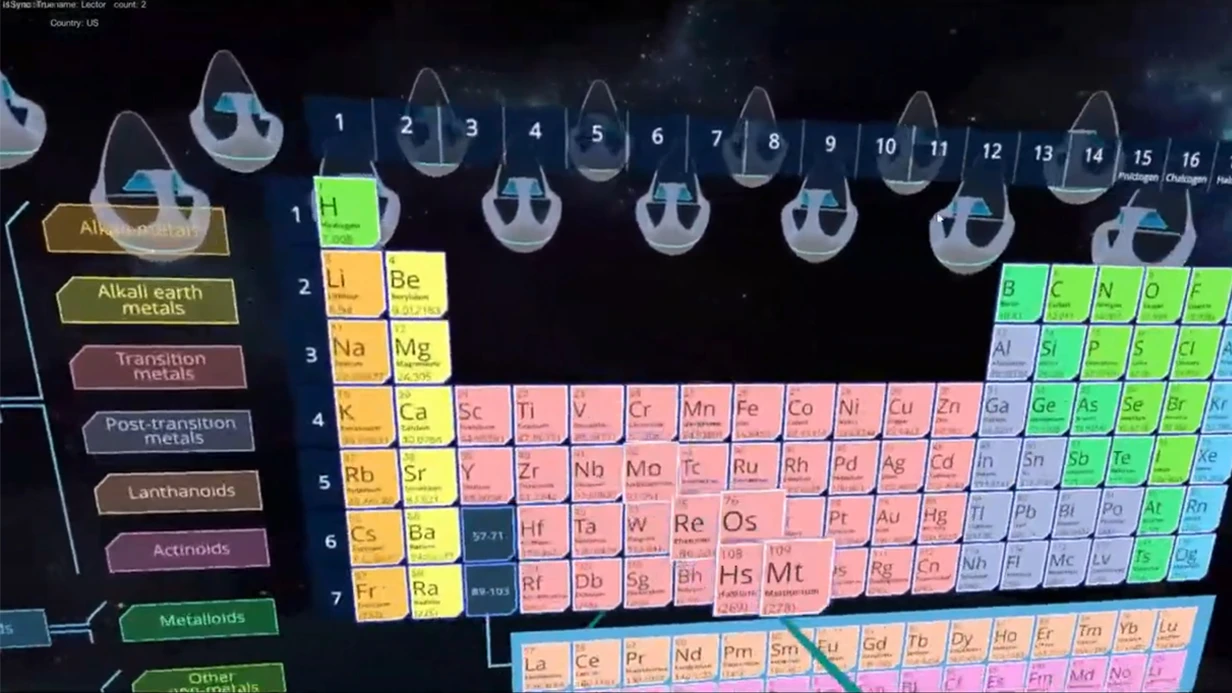


Why do your projects lose to competitors without VFX and special effects?
In VR/AR/MR projects, the first thing a user sees is visual credibility. High-quality VFX and special effects create the feeling of an expensive product, hold attention, and build trust.
If the visual quality is weak, even an interesting idea and a working scenario won't save it: the project looks cheap, and the team looks unprofessional.
A client who comes to you for an impression to deliver to their own customers picks up on this in seconds and draws conclusions.
The market is saturated, and competitors are already investing in visual quality. Without VFX, your project loses in comparison, doesn't get recommended, and fails to retain attention.
This is especially noticeable in product presentations, training, and events, where emotion directly affects decisions. Your clients are also comparing: they see world-class work and expect the same from you.
The result is not just an "ugly picture." It is lost contracts, weakened brand, and doubts about your competence. Clients who hesitate go to those who look more confident.
The outcome is a decline in the competitiveness and attractiveness of your offering to new customers.
We close this gap: we focus on high-quality VFX and special effects that make VR/AR/MR projects strong and compelling. Your events, presentations, and training programs start working for you, and clients get a result that speaks for itself.
What You Get from a VR/AR/MR Application for Business
A VR/AR/MR application is not a tribute to fashion but a working tool that changes audience behavior. It holds attention, creates vivid impressions, and subtly guides a person to the desired action — leaving a request, making a purchase, remembering the brand. Below are the key benefits for two main business scenarios.
For the Event Industry
At exhibitions, presentations, and conferences, a visitor passes dozens of booths and remembers only a few. An immersive VR/AR format sets a company apart from the noise: a person becomes a participant in the story rather than a passive observer.
This dramatically increases engagement — guests stay longer at the booth, willingly interact with the product, and share their impressions on social media.
Such an event automatically works for the image: the company looks like a technological leader that people trust. And most importantly, conversion grows: after a striking experience, visitors are more willing to leave contacts, schedule meetings, and reach a deal. The emotional footprint turns into real business results even before the event ends.
For Training and Simulations
When it comes to employee training, VR and AR deliver something that regular simulators and lectures cannot — full immersion in the work process.
An employee practices skills in scenarios that are as close to reality as possible, from customer service to complex production operations. Engagement in this format is many times higher: people don't just listen; they act, make mistakes, and correct them in a safe environment.
For business, this means shorter training time, lower costs for consumables, and the removal of risks associated with training on real equipment. It also builds a strong employer image that cares about team development.
Employees appreciate the modern approach, while clients and partners see a company that invests in quality and knowledge.
In both scenarios, the key outcome is the same: technology amplifies the conversion of every contact — whether it's a booth visitor, a training participant, or a potential client. You get not just a striking picture but a measurable contribution to profit.
VR/AR/MR Application Formats for Your Task
VR/AR/MR formats are hard to compare head-to-head — each one solves its own task: to hold a guest's attention, train an employee without risks, or show a product that cannot be brought on site.
That's why we select the format for a specific goal and add VFX and special effects where a vivid picture and a "wow" effect are needed.
Main Formats for Typical Tasks
| Format | For Whom | What It Gives the Client |
|---|---|---|
| Interactive presentation | Exhibitions, conferences, product presentations | Holds attention, creates a wow effect, and increases brand memorability. The visitor interacts with the product directly instead of watching slides. |
| Virtual tour | Real estate, hotels, production facilities | Saves time and travel budget. Shows the location anytime, remotely, in detail — expanding reach to clients from other cities. |
| VR training | Industry, medicine, service departments | Reduces costs for training grounds and equipment. Employees train in a safe environment and memorize procedures faster — fewer mistakes in real work. |
| AR filters and masks | Advertising campaigns, social media, events | Provides viral reach: users share branded content themselves. Brand recognition grows without large investments in seeding. |
| MR visualization | Architecture, design, engineering | Visually combines a real object and a digital model. Speeds up project approval, reduces the risk of errors, and cuts the number of revisions. |
How to Select a Format
In most projects, we recommend combining 2-3 formats — for example, an interactive presentation at an exhibition and an AR filter for social media from the same event. This way, one budget works for both the offline impression and post-event reach.
We help you decide on the format at the briefing stage: we look at your audience, usage scenario, and ultimate goal — sales, training, or recognition. Then we design the scenario, add VFX and special effects, and deliver a result you can measure.
How We Develop a VR/AR/MR Project: Stages and Control
Developing a VR/AR/MR project for VFX and special effects is a process where we combine creativity and technical reliability. We don't just write code — we create a tool that amplifies the effect of your product and delivers measurable results.
To ensure you always understand where the project stands and what happens next, we have built a transparent stage system with checkpoints.
How the Work Is Organized
-
Brief and task immersion. We gather all requirements: where the application will be used, who your audience is, and what goals need to be achieved. Together we define success criteria — reach, engagement, growth in sales or recognition. At this stage, you get a clear understanding of how VR will help your specific business.
-
Concept and scenario. We develop the idea, visual style, and interaction logic. For VFX and special effects, this is the key moment: we determine which techniques will create the desired impression — surprise, delight, trust. You approve the concept before development begins, so there are no surprises at the finish.
-
Work plan and technical specification. We fix the scope, timeline, team composition, and demonstration milestones. You receive a document that makes it easy to control the process — without unnecessary calls or verbal reports. All agreements are documented in writing.
-
Application development. We create 3D scenes, effects, interfaces, and integrations with professional HTC Vive equipment. At this stage, you see intermediate demo versions and can make edits — we incorporate them early, when changes are cheap and don't shift deadlines.
-
Testing on real equipment. We check usability, picture quality, and fault tolerance during long sessions. The application must work reliably at the most critical moment — your event. We run typical scenarios as "guest" and as "operator."
-
Launch and support. We help with installation, setup, and training for your team. We are present at the launch, stay in touch after the event, and quickly make changes if you decide to develop the product further.
At every stage, you receive a brief report and a clear understanding of what has been done and what comes next. As a result, you launch the project on time and with confidence that it works toward your goal.
What's Included in a Finished VR/AR/MR Solution
A finished VR/AR/MR solution for HTC Vive in the field of VFX and special effects is not just an application that works at an event. It is a fully complete product: you get not only the code but also everything needed for operation, development, and support by your own team.
What's Included in the Delivery Set
- Documentation — architecture, scenario descriptions, and all technical details. This is enough for your specialists to quickly understand the application's logic.
- Source code — you own the product entirely. No "rental": the code stays with you, and you can modify it with any team.
- Launch instructions — a step-by-step guide to setting up and using the system. Staff can prepare the venue without our engineers present.
Warranty and Support
- Warranty — official commitments in the contract: stable operation of all functionality and free troubleshooting during the agreed period.
- Team training — we conduct hands-on training for technical specialists. After the training, they independently manage the system and handle typical tasks.
- Access to updates — we regularly improve the product: adding new scenarios, enhancing performance. You receive updates as part of support.
All conditions — technical, legal, and organizational — are fixed in the contract. You get a transparent project with clear rules rather than a "black box."
Case Study: How VFX and Special Effects in a VR Project Paid Off in 3 Months
The company manufactured complex industrial equipment. Buyers couldn't evaluate it in person — you can't easily bring a sample everywhere, and a photo presentation didn't convey the scale.
As a result, negotiations dragged on, conversion dropped, and the sales team spent hours explaining.
We proposed a VR presentation based on HTC Vive with real VFX and special effects. Inside the headset, the client saw the product in detail, launched animations of the mechanisms in action, and entered a simulation of real operating conditions.
The special effects made the demonstration spectacular and understandable — the buyer immediately saw how the equipment solved their task.
Result and Payback
The project took five weeks. Conversion from presentation to inquiry doubled — clients began making decisions right in the meeting room. The average deal cycle shortened, and development costs were recouped in three months thanks to new large orders.
"We showed the product in a way that the client understood it in ten minutes for the first time. VR with effects became a key argument in negotiations," noted the department head at the client company.
This case confirms: VFX and special effects in VR are not decoration but a working sales tool. We apply this approach to projects of any scale — from a single product presentation to a full-fledged virtual showroom.
How to Choose the Right VR/AR/MR Format for Your Task?
Choosing a format is not a question of "what's trendier" but "what your project needs to achieve." VR, AR, and MR solve different tasks: virtual reality fully immerses a person in a digital world, augmented reality overlays effects on a real image, and mixed reality combines digital objects with physical space.
So first define the goal: to surprise and deliver a "wow" at an event, train an employee in a complex process, or show a product to a client in a way that makes them buy it.
Then assess the audience and conditions. Festival visitors are unlikely to put on a heavy headset and go through 20 minutes of training — they need instant contact, vivid visual effects, and minimal instructions.
Engineers on a production floor or doctors in training, however, are willing to spend time on immersion so that they can then work faster and without errors.
Budget and timeline also matter: an AR scenario with mobile devices usually launches faster and costs less, while a VR project requires more development time but gives complete freedom in creating special effects — from zero gravity to explosions at arm's reach.
If your goal is to sell a product or service at an exhibition, augmented reality allows you to overlay a 3D model onto a real booth or catalog.
If you need full control over the impression — from the scene to every detail — virtual reality gives you one hundred percent control: you create a world with its own physical laws, and the viewer sees exactly what you intended.
Mixed reality is well suited for collaborative work when you need to combine live people with digital objects — for example, interactive simulators or design projects on a real site.
Our portfolio contains examples of all three formats, and we always start with a brief rather than a ready-made solution.
Within a couple of days, we propose a scenario, estimate timelines and budget, and then prototype the key scene — so you can see how the effect works before launching the full project. This turns the format choice from an abstract question into a clear plan with a predictable result.
Frequently Asked Questions About VR/AR/MR Development
Clients rarely ask about technologies — they care about something else: how much time it will take, whether it will work on the equipment they already have, and whether the project will bring real value to the business.
Timelines, compatibility, and payback are the three most common fears before starting a VR/AR/MR project. We answer them not abstractly but based on dozens of completed projects in the event industry, retail, and corporate training.
Before starting work, we always conduct a short audit: we study your tasks, current customer communication channels, and target metrics. Based on this, we prepare a plan with stages, checkpoints, and expected results. No hidden surprises — you see what happens at every step.
What if development takes longer and doesn't pay off?
This is the main risk that concerns clients, which is why we work differently. First, we fix timelines and budget in the contract, then show intermediate versions stage by stage — you control the process rather than waiting for a result at the end. If something goes off plan, you learn about it in advance and can adjust the solution.
We also calculate payback before launch: for events, it's reach and guest engagement; for training, it's employee onboarding speed; for retail, it's conversion growth.
For most projects, the return becomes noticeable within a few months thanks to reduced costs for rental, logistics, or material reproduction.
Ready to Discuss Your Project? Leave a Request
We'll discuss your task during a consultation — tell us about the scenario, show examples, or simply describe your idea. We'll assess which VR/AR/MR format will deliver maximum value for your audience and budget.
A request for a cost estimate does not obligate you: we'll send a realistic estimate, timelines, and implementation options so that you can make a decision based on numbers, not promises.
What's included in the consultation:
- analysis of your scenario and event goals;
- format selection: interactive zone, show, training, or presentation;
- approximate cost and launch timeline;
- answers to questions about equipment and venue;
- clarity on next steps — without "fluff" or technical jargon.
After placing an order, you get:
- a developed scenario and technical specification approved by you;
- a full turnkey development cycle — from design to launch at the venue;
- a team with 10+ years of experience creating projects for events and business;
- support at the event: we'll set everything up, test it, and train your staff;
- a result guarantee and a post-production report.
Leave a request on the website or write to us in a messenger — we'll respond within one business day. We'll show examples of similar projects, clarify details, and prepare a cost estimate for your specific venue and audience.
Start with a consultation — it takes 20 minutes, and you'll understand how VR/AR/MR can enhance your event.