

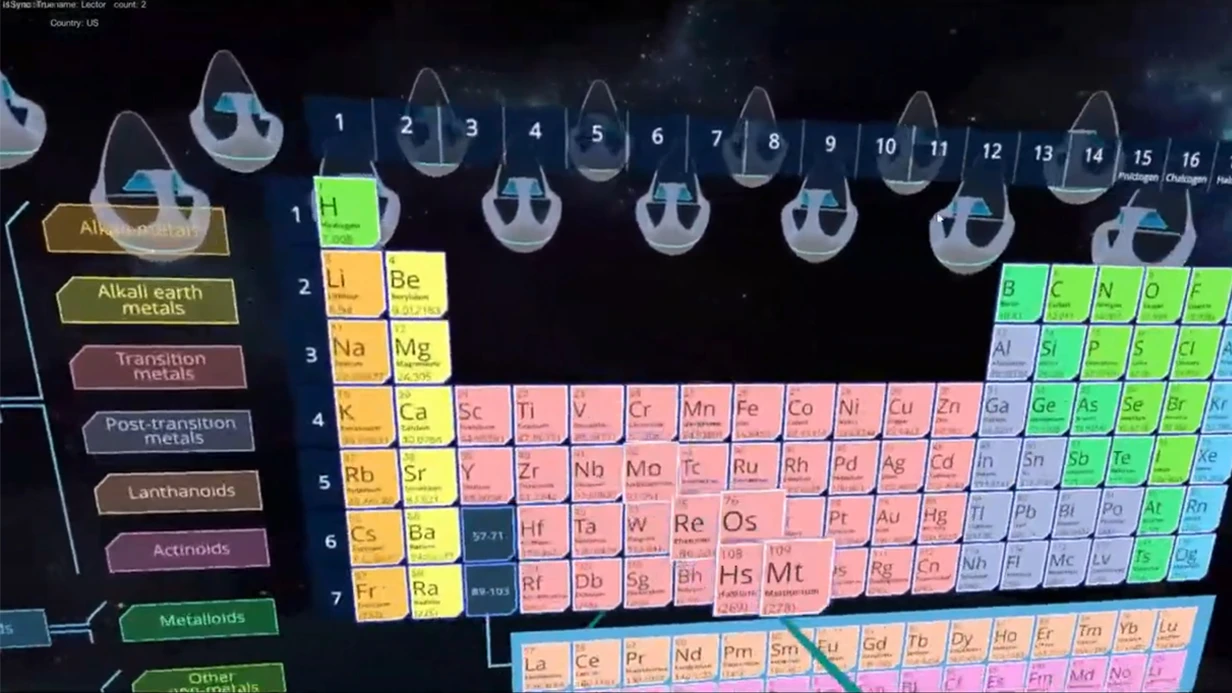


Why Pharma Loses Clients Without VR Solutions
Pharmaceuticals is an industry where the cost of error is especially high: a doctor prescribes a drug, a pharmacist counsels the patient, and every word must be precise.
At the same time, new molecules and treatment regimens appear constantly, and traditional lectures and brochures no longer work. Employees forget up to 80% of information, cannot confidently answer a client's question — and trust is lost, competitors take your market share.
Client attrition begins where a company fails to demonstrate the advantages of its product.
Slides and tables are not enough for a doctor: they need to understand the mechanism of action and see the effect "live." Pharm marketing without visual clarity loses: buyers do not perceive the drug's value, and pharmacy staff cannot present it competently. Without modern training and presentation formats, even a strong product goes unnoticed.
VR for pharmaceuticals solves both tasks. Immersive scenarios take a pharmacist through real situations: patient consultation, selecting an analogue, reviewing contraindications.
By simulating interaction with a drug in a virtual environment, the employee absorbs knowledge through practice rather than rote memorization. Such training builds confidence that the client reads within seconds — and they come back.
Companies that are already implementing virtual solutions gain a measurable advantage: higher training conversion, less time onboarding new employees, and a clear presentation language for doctors and distributors.
If you still rely only on classical methods — you are giving the market to those who speak to the client in their language through technology.
We create VR products for pharma training and marketing that turn your expertise into tangible results and stop client attrition from the very first point of contact.
VR for Pharmaceutical Companies: Key Benefits
VR in pharmaceuticals is not just a technology but a sales and training tool. It turns an ordinary meeting with a doctor or a conference booth into an interactive experience that generates leads and increases brand loyalty.
More Leads and Higher Conversion
At industry exhibitions, doctors' attention is scattered. A VR booth stops visitors and holds them at your display.
A virtual presentation helps start a conversation, and after the session, guests leave their contacts. This way, you get hot leads for pharma without cold calling.
Fast Training for Medical Representatives
A new product portfolio requires rapid team preparation. In VR, medical representatives practice negotiations with doctors and learn drug mechanisms of action in an interactive format.
Training takes significantly less time, and knowledge retention improves. Employees go into the field with confidence and a consistent level of argumentation.
Virtual Product Presentation
Brochures and slides give way to a three-dimensional model or an interactive scheme of how a drug works. The doctor clearly sees the benefits, and questions are resolved faster.
Such a presentation is easy to use at meetings, conferences, and training centers — it works as a standalone tool.
Brand Recognition and Memorability
A vivid VR experience stays in memory for a long time, and photos and videos from the virtual presentation spread on social media. This expands reach without an additional advertising budget.
We deliver projects on professional equipment — including Meta Quest headsets — so every session runs stably and the image quality is flawless.
VR Application Formats for Pharma Tasks
In pharmaceuticals, the deciding factor is not only product quality but also how quickly you train employees, persuade partners, and communicate value to doctors and buyers.
Classic presentations and instructions no longer hold attention: information is forgotten within the first hours, and complex drug mechanisms are difficult to explain in words.
VR formats solve this problem — they immerse a person in an environment where they see, hear, and interact with an object, and therefore remember much more.
We develop VR projects for the specific business needs of manufacturers, distributors, and pharmacy chains. The format is selected based on the goal: staff training, product presentation, or a tour for partners. Below are typical scenarios already working in the industry.
| Format | For Whom | What It Delivers to the Client |
|---|---|---|
| VR simulator for staff training | Manufacturers, pharmacy chains | Skill practice without risk to patients or products; fast onboarding of new employees; standardized knowledge across all branches |
| Virtual production tour | Manufacturers, distributors | Process transparency for partners and auditors; increased trust without physical visits; time savings for key employees |
| Interactive 3D product presentation | Medical representatives, marketing departments | Clear drug mechanism of action; doctor engagement at exhibitions and conferences; higher negotiation conversion |
| VR simulation of equipment operation | Production sites | Safe operator training without stopping the line; fewer errors and injuries; practice of rare emergency situations |
| Interactive catalog for pharmacies | Pharmacy chains | Increased customer loyalty; an additional service that sets the pharmacy apart from competitors |
The choice of format depends on your goal: training an employee to work with a new product line is one thing, showing an investor the advantages of a production site is another.
We help determine the right scenario at the briefing stage and package it into a finished VR product that integrates into your current training, sales, or marketing processes.
Every project is backed by support and adaptation to new tasks — you get not a one-off demo version but a working tool for regular use.
How We Create VR for Pharma: Project Stages
We understand that for pharmaceuticals, what matters is not just technology but a predictable result: faster employee training, confident negotiations with doctors, fewer errors in working with drugs.
That is why the VR application development stages are built as a transparent process where you see the intermediate result at every step and can influence it.
-
Brief and immersion. We meet with you and your experts and analyze who exactly will use the solution: medical representatives, doctors, or patients.
We define the project goals and success measurement points — for example, reducing training time or increasing the number of successful drug presentations.
-
Scenario and methodology. Together with your medical specialists, we outline the scenario: what situations the user plays through, what decisions they make, where they practice difficult dialogues.
The output is a detailed description that is approved before development begins and protects against unnecessary costs.
-
Prototyping. We quickly build a working prototype with the key steps. You put on the headset and check the logic, usability, and realism. Edits at this stage cost significantly less than at the end — this is an important budget saving.
-
Development and design. We create a full-fledged interface, graphics, and interactive elements that run on professional equipment and require no technical knowledge from the user.
The goal is for your employee or doctor to be fully immersed in the scenario without being distracted by controls.
-
Testing with the target audience. We invite real users — for example, medical representatives or doctors — and collect feedback: whether it is clear, comfortable, and whether the exercise achieves its goal. We refine until it is market-ready.
-
Launch and support. We deploy the application on your devices or on a turnkey basis and train administrators and supervisors. After launch, we stay in touch: we update content, add scenarios, and help with technical issues.
This process makes project launch predictable: you see what you are paying for, receive a working program on time, and are not left alone with problems after implementation.
What Is Included in the Delivery of a Business VR Solution
When we talk about delivering a VR solution for pharmaceuticals, we mean not "raw" code but a finished product you can use from day one.
The package includes everything needed for launch, employee training, and further system development — you get a complete toolkit, not just an application.
-
Working application. A VR program adapted to your scenario: training medical representatives, demonstrating drugs, virtual production tours. The application runs on Meta Quest equipment, and we handle setup and optimization for your tasks.
-
Source code. You receive full rights to the code. This means you are not dependent on us as the sole contractor: you can develop the product with your own team or bring in any specialists.
-
User documentation. Clear instructions for employees: how to launch the program, run a session, and change content without developer assistance.
-
IT documentation. Integration diagrams, architecture descriptions, and deployment procedures. Your team can quickly connect the VR solution to corporate systems.
-
Instructions and regulations. Ready-to-use scenarios: how to embed VR into staff training, use it at exhibitions, or in presentations for doctors.
-
Technical support and updates. We do not abandon the project after launch. We stay in touch throughout the entire lifecycle: answering questions, fixing bugs, and regularly updating content in line with market changes.
In the end, you receive not a set of files but a working system with support. A team of specialists accompanies the project, guaranteeing stability and relevance of the solution. If you want to expand functionality — we are right there.
Case Study: Meta Quest VR Project for Sales Training
The client was a pharmaceutical company with a team of medical representatives: negotiations with doctors are the main sales channel, and the cost of a mistake here is high.
Conventional training with lectures and role-playing games dragged on for weeks, but in a real doctor's office, employees lost their bearings, forgot the protocol, and ruined the visit.
The Task and the Solution
The need was not just to transfer knowledge but to bring skills to the point of automaticity — without risking real relationships with doctors.
We developed a VR simulator on Meta Quest headsets: the employee enters a realistic doctor's office and fully experiences the visit — from greeting to drug presentation and handling objections.
The simulator includes typical roles: a busy doctor, a skeptic, and a doctor loyal to a competitor. Each session is followed by error analysis and recommendations.
Results
Preparing one new medical representative used to take three weeks; after the simulator was introduced, it took one and a half. The conversion rate of successful visits after VR sales training grew 1.3 times compared with the group trained classically.
Employee confidence also increased: they get less flustered by unexpected rejections and bring the conversation back on track faster.
The training manager appreciated the effect: the project was extended for the next period and expanded to pharmacists in pharmacies.
The case showed that VR evolves from a one-off experiment into a permanent element of the training system — and delivers measurable sales growth for the business. For a pharma company, this is a working tool: employees ready faster, fewer missed visits, more stable conversion.
How to Choose the Right VR Application Format for Your Task?
Choosing a VR application format starts not with technology but with the business task.
For pharmaceutical companies, this is usually training medical representatives, demonstrating a drug's mechanism of action to doctors, virtual booths for conferences, or instructing production staff. The depth of development and the required investment depend on which specific task you are solving.
Most often, we suggest starting with a simple interactive solution — for example, a virtual drug demonstration or a short training scenario. This format allows you to get results quickly, test the idea with a real audience, and collect effectiveness data.
If the experiment confirms the value, we move on to a full-fledged application with simulation, voice instructions, and user action assessment. This is a sequential path that reduces risks and keeps the budget under control.
When selecting VR, it is also important to consider both the audience and the use cases. A one-off demonstration at a negotiation is one thing; regular training of hundreds of employees across different regions is another.
We analyze these factors, formulate project requirements, and offer options with different timelines and investment levels. This gives you a transparent picture: what each format will deliver and when the result will come.
Our task is to remove uncertainty. You do not have to understand the details of virtual reality: based on your goals and budget, we select a format that solves exactly your task.
In the end, you understand where the money goes, how quickly a measurable effect will appear, and what steps to take next. That is the right selection — without overpaying or unnecessary complexity.
Frequently Asked Questions About VR Development for the Pharma Market
The pharma market demands precision and compliance with regulations, so clients naturally have questions: will the project drag on, how to integrate VR into existing processes, and is it justified in terms of budget. We answer the main concerns — briefly and to the point.
How long does VR application development take?
A typical project takes 6 to 12 weeks: from briefing to a launch-ready solution. The timeline depends on the number of scenarios and the need for integration with your CRM or training system. At the start, we set stages and checkpoints — you see progress every week.
How is the cost calculated?
The price depends on the number of VR modules, the complexity of interactives, and the depth of content development. We calculate the cost based on your task, not by an "hourly rate." After the briefing, you receive a transparent estimate — with no hidden extras.
Will VR fit into our IT infrastructure?
Yes. The solution runs standalone or connects to your systems through data exchange interfaces: loading scenarios, recording training results, and exporting reports. On our side, there is clear documentation and support during the integration stage.
How difficult is the process for employees?
We design the interface for an average user — training takes about 15 minutes. The employee puts on the headset, selects a scenario, and acts in a familiar logic: the simulation mirrors real steps with drugs. Supporting materials and support are included in the project.
After launch, you are not left alone with the product: we hand over source materials, train your team, and continue to support the application. Ask your question — we will discuss the details of your project.Order a VR Application for Your Company
Pharmaceuticals demands precision: staff training, presenting drugs to doctors, and working with distributors all rely on visual clarity and memorable scenarios.
A VR application solves these tasks faster than conventional materials, but the key is to design the project correctly from the very beginning.
Leave a request — and we will discuss your task, suggest scenario options, and calculate the cost for your task. This is a preliminary step: you will receive a clear project plan and an understanding of whether it is worth implementing.
What you get after reaching out:
- Expert consultation: how VR will solve your specific task — training, sales, or promotion.
- Turnkey development cost estimate: you know the budget in advance, with no hidden extras.
- Project plan with timelines and stages: you understand when the first results will appear and when the product will be ready.
- Recommendations on content and formats: which scenarios will deliver maximum value for doctors, employees, or clients.
- Equipment and hosting selection: we account for your Meta Quest device fleet and prepare everything for launch.
- Guarantees and post-release support: you are not left alone with the product.
Getting in touch with us is simple — fill out the form on the page or write to us in a messenger. You can order a VR solution today: we will respond within one business day, prepare an estimate, and offer a realistic implementation plan.
Start with one step — leave a request, and we will guide you from idea to a working application.