



Manufacturing Is Losing Orders: Employee Training Takes Too Long
Every manufacturing operation faces the same crossroads: putting a new employee on the line without experience risks defects and injuries, while keeping them in lengthy training means equipment downtime and missed deadlines.
While a newcomer is acquiring skills, machines sit idle, mentors are distracted from their own work, and the shop floor fails to meet its planned output. Downtime on each piece of equipment means lost revenue, and every missed delivery undermines customer trust.
In the end, contracts go to companies that can bring new people up to speed faster and maintain production rhythm.
Employee training is not an expense item but a direct investment in productivity. If preparation takes weeks, the company loses orders from the very start.
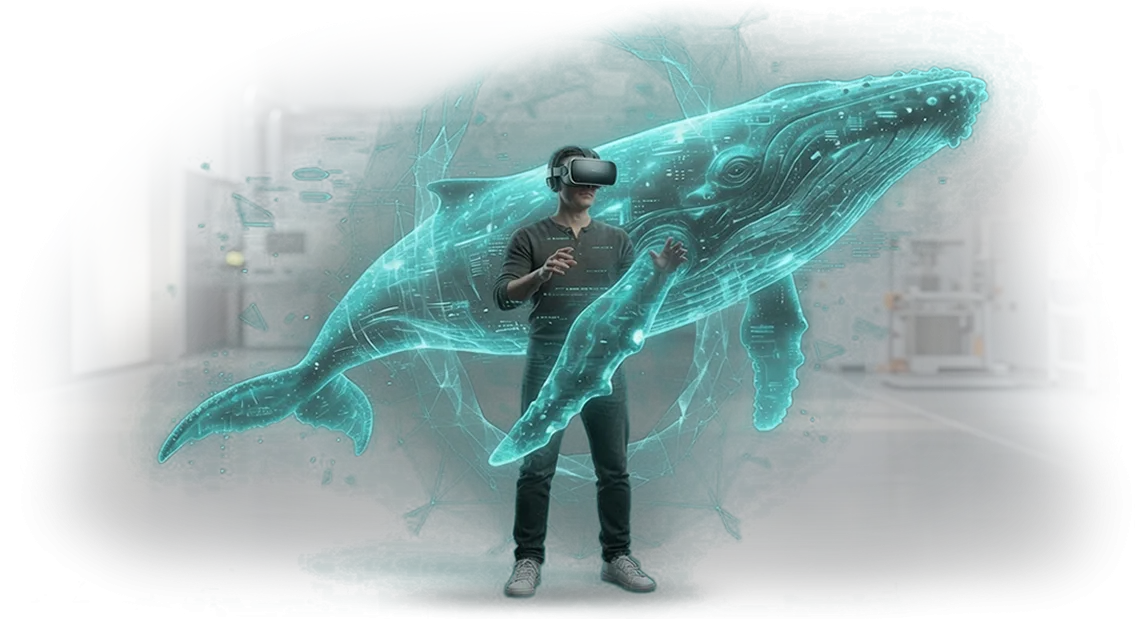
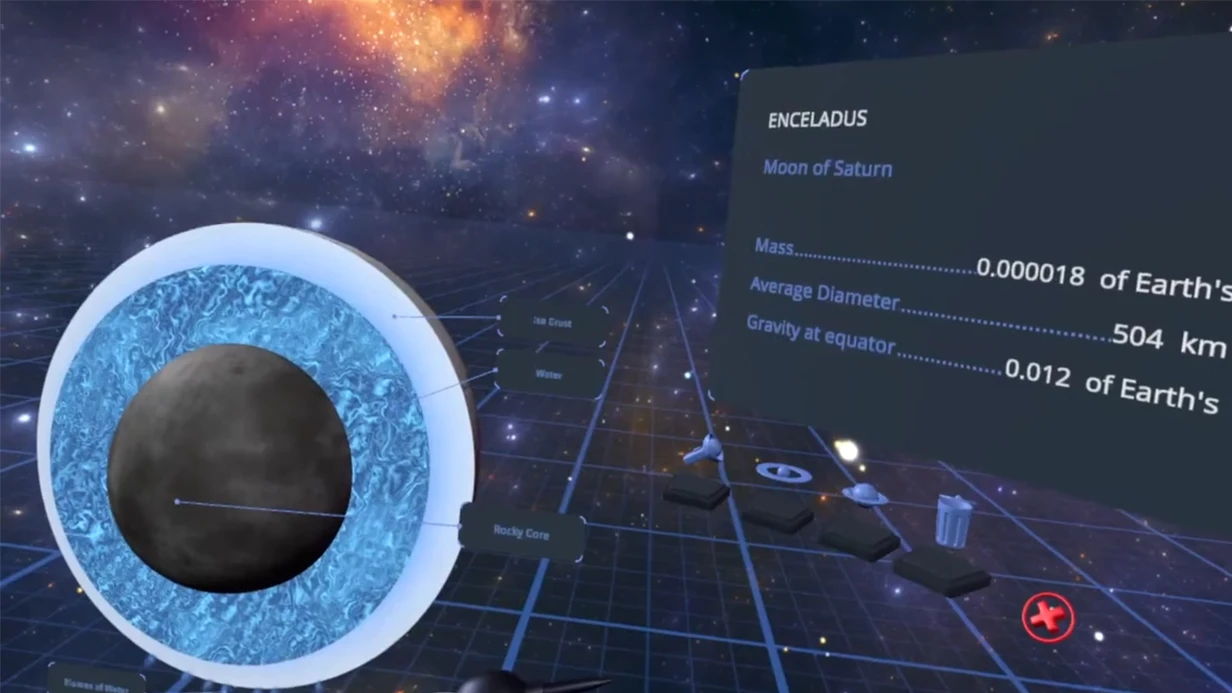
VR simulators change the economics of this process: an employee repeatedly practices operations in a virtual environment before their first contact with real equipment, and the plant never stops its lines for even a minute.
Training effectiveness increases manyfold, while error rates and production losses decline — with no spending on consumables, no risk to people, and no time taken from mentors' core duties.
We address this pain comprehensively: we analyze your technological processes, design VR scenarios for specific operations, integrate them into your existing training system, and support the launch.
You get a trained employee faster, the shop floor gets stable workload, and production gets its commitments to customers fulfilled.
What Results You Get from VR/AR/MR Implementation
Implementing VR/AR/MR in manufacturing is not about technology; it is about measurable results: faster training, fewer risks, lower costs, and greater employer attractiveness.
Even a single pilot project shows results within the first months, while systematic use opens up an entirely new level of efficiency.
Employee training is accelerated manyfold. Instead of stopping the line or allocating expensive equipment for beginners to practice on, employees build their skills in a virtual environment.
Complex operations can be repeated dozens of times without fear of error, and onboarding time shrinks from weeks to days. At the same time, retention is better than with traditional instructions.
Risk reduction is another key outcome. Workers gain experience in abnormal and emergency situations without any real threat to health or equipment. Mistakes on the simulator do not lead to injuries, defects, or downtime.
As a result, workplace injuries decline, and the occupational safety department gets a clear system for practicing hazardous scenarios.
Savings appear in several areas at once: less money spent on consumables and equipment wear, and no need for a dedicated training ground or separate workshop.
Defect-related losses drop because only employees who have proven their skills in the virtual environment are allowed to work on real operations. In addition, costs for outside instructors decrease — training can be done right on-site.
Modern training formats make manufacturing attractive to young people. VR simulators are seen as a sign that the company keeps up with the times; they increase employee engagement and loyalty.
This helps retain talent and win the competition for specialists, especially in regions where the labor shortage is felt most acutely.
In the end, you get not just a “nice demonstration” but a working tool: rapid employee ramp-up to target metrics, safe production, and savings that can be calculated after the first implementation cycle. We support the project from task audit to launch and measure the results together with you.
VR Solution Formats for Manufacturing Tasks
In manufacturing, VR solutions address three tasks: employee training, knowledge assessment, and site design. Each task requires its own delivery format, so let's look at the main options.
| Format | For Whom | What It Gives the Client |
|---|---|---|
| VR equipment rental | Companies that need to quickly run a demonstration or training without purchasing | Savings on equipment and maintenance, fast start, mobility |
| Ready-made VR simulators | Manufacturers with standard operations: welding, assembly, equipment operation | Proven scenarios, quick setup, clear training metrics |
| Custom development | Plants with unique equipment, complex technological processes, or safety requirements | An exact replica of workstations, training on real scenarios, integration with your systems |
| VR space design | Layout, logistics, and occupational safety departments | Visualization of workshops and warehouses, ergonomics validation before construction, visual instructions |
Which format should you choose? If your goal is to show VR capabilities to management or test employee reaction, rental is enough. For regular training on standard operations, choose ready-made simulators.
But if it concerns your unique equipment that cannot be replaced with an equivalent, only custom development will do. We work in all formats and will advise what will pay off in your case specifically.
Production: How We Build an App for Your Scenario
Building a VR application is a process where you remain in control. We have broken the work into clear stages so that at each one you know what is happening and what result you will get. No black boxes: only transparency, control, and a focus on your business objective.
- Brief and task immersion. We study your production cycle, bottlenecks, and scenarios where VR will deliver the greatest impact. We define goals: employee training, skill practice, or product presentations to clients.
- Scenario design. We determine how the employee will work in the virtual environment, what steps to perform, and how to receive hints. We align the logic before development begins — this eliminates rework.
- Prototype and approval. We show a working model at an early stage: main screens, interaction, controls. You see the future product and make changes while it is still cheap.
- Application development. We build a full VR environment with details from your production, instructions, and feedback. We use proven tools to ensure a stable result that works on your equipment.
- User testing. We invite your employees or clients for a trial immersion. We gather their feedback and refine the scenario so there are no surprises at launch.
- Implementation and launch. We install the application on devices, configure it, train your team, and hand over documentation. After launch, we stay in touch for tweaks and further development.
Thanks to this workflow, you control the budget and schedule, and the risk of the result not meeting expectations is minimal. You get not “just VR” but a working tool that increases employee efficiency and delivers measurable benefits.
What Is Included in a Ready-Made VR Solution Delivery
You receive not just a software product, but a fully equipped solution for your manufacturing operation. We provide it with all accompanying documentation, train your staff, and remain on call after launch — so the rollout is fast and without downtime.
- Working VR application — a ready-made tool for employee training, operation control, or safety drill practice, tailored to your technological process.
- Staff instructions — simple step-by-step guides for working in the headset, clear even to those encountering virtual reality for the first time.
- Employee training — we conduct training on-site or remotely so operators and supervisors confidently use VR from day one and stay focused on their tasks.
- Administrator regulations — session configuration, user management, result tracking — all documented in a clear manual.
- VR support service — a dedicated project specialist available during working hours to resolve issues without waiting or downtime.
- Updates and refinements — we adapt VR scenarios to production changes: new components, operations, or safety requirements.
- Reporting module for managers — statistics on errors, completion times, and progress for each employee, so you can see training effectiveness in numbers.
We do not simply hand over a project; we support you for as long as the solution is in operation. This eliminates the risk of a “dead” product and ensures that investments pay off through a growth in team competencies and fewer errors on the shop floor.
Case Study: How a VR Simulator Paid Off at a Factory
A large industrial equipment manufacturer came to us with a pain point: training new operators took up to two weeks, and their first shifts were marred by errors and line downtime.
Each hour of downtime cost significant amounts, experienced employees were pulled away from their work to mentor newcomers, and product quality suffered because of the human factor.
We proposed a VR simulator that reproduces work operations on a virtual replica of the production site.
PromKomplekt — the factory's name — gained the ability to practice actions before working on a real machine: safely, without consuming material, and without risking the equipment.
Operators practice their sequence of operations until it becomes automatic and arrive at their shifts already prepared, while mentors no longer waste time on repeated explanations.
Results from the first months of implementation: new employee training time fell from 14 days to 5 — a 60% reduction.
The number of errors on first shifts dropped by 40%, and the site's throughput increased by 18%: newcomers reached working pace faster and stopped the line less often.
The factory paid back its investment in four months — and that is without accounting for reduced injury risk and costs of spoiled parts. The metrics were confirmed by the client's internal reporting.
After that, the client expanded the project to other areas — the simulators are now used to train welders and machine setters.
The client's main takeaway: a VR simulator pays off not as a “toy” but as a tool that accelerates production ramp-up and reduces losses from the human factor.
Frequently Asked Questions About VR in Manufacturing
Before launching a VR project in manufacturing, clients ask the same questions. Here are our short answers: compatibility, timelines, impact on current processes, and cost.
Is VR compatible with our equipment?
We work with any site: machines, conveyor lines, assembly shops. First, we conduct an audit — we study the tasks and the technological process. Then we propose a scenario that fits into the existing setup without replacing equipment. In 9 out of 10 cases, integration takes place without stopping production.
How much work will our team need to do?
Minimal, on the client's side. It is enough to allocate one technologist for a couple of hours a week for consultations. We handle the rest: modeling objects, assembling scenarios, testing, and handing over the finished solution. Your employees are not distracted from their main work.
How long does implementation take?
A working prototype for one site is ready in 2–3 weeks — enough to evaluate the value of VR on a real task. Full deployment, including configuration for several workstations and employee training, takes 1–2 months. You receive a clear plan with milestones and checkpoints.
How is the cost determined?
The price depends on the complexity of the scenario, the number of locations, and the required level of detail. After the brief, we provide the exact cost and a stage-by-stage breakdown.
Typically, the project pays off through accelerated training for new employees and reduced defects — we include these indicators in the effectiveness calculation.
If you still have doubts, ask us directly: we will send examples of solutions for your industry and show how VR fits into the production cycle.How to Choose the Right VR Solution?
Choosing a VR solution for manufacturing starts not with equipment, but with a question: where do errors, time losses, or risks to people most often occur?
If such areas exist, virtual reality makes it possible to practice operations to the point of automation without idling machines or risking injury.
If the processes are unique and rare, such as commissioning once a year, simple formats like 360° training videos are enough, without complex development.
The main criteria are task repeatability and the cost of an error. A simulator for assembling a component that is performed hundreds of times pays off after eliminating just a few percent of defects.
And for evaluating work station ergonomics or movement routes around a shop, a virtual walkthrough is more advantageous, where you can quickly change the layout before making real changes.
The format is determined by the specific goal: training, quality control, interactive instruction, or a digital twin of the line.
VR payback is calculated as reduced downtime, defects, and accident rates. If an installation error leads to reworking an entire batch, a single well-developed scenario can resolve the problem after the first few dozen training sessions.
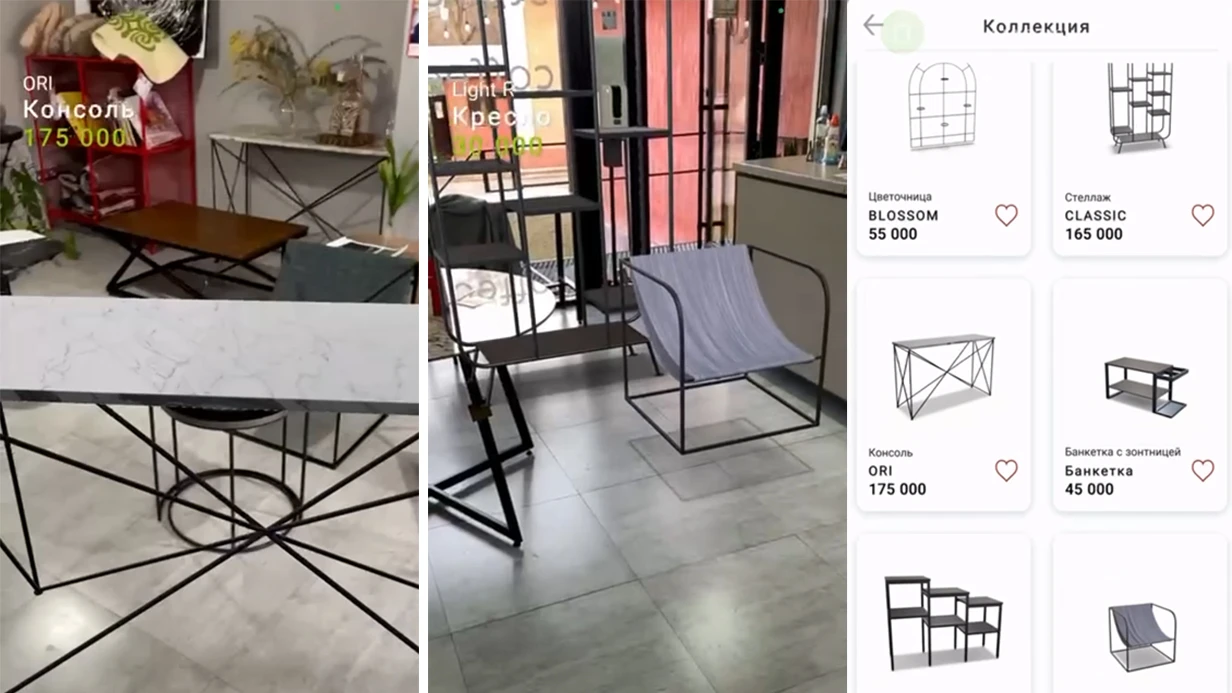
But if the operation is non-standard and infrequent, ongoing support of a VR scenario is not economically reasonable — here, tablets with augmented reality that overlay hints directly onto the equipment are better.
To help you find your bearings, we offer a short audit of your manufacturing tasks. Drawing on experience from dozens of projects, we show which format will deliver a measurable effect and which will be just a nice demonstration.
At the end, you receive a recommendation: start with a pilot training scenario, launch a virtual prototype of a new site, or do without custom tools altogether.
Ultimately, the choice comes down to three questions: is the operation repeatable, is the cost of error critical, and are you ready to invest in refining the process.
When the answers are clear, the decision on the VR format becomes obvious — and we are ready to help you make that decision quickly and without unnecessary expense.
Ready to Discuss Your Task? Leave a Request for VR Development
You already know what VR technologies can do in manufacturing — now it is important to understand exactly how they will work in your process. We are ready to analyze your task, show examples from adjacent industries, and propose a solution that delivers measurable results.
Leave a request for a consultation — tell us about your situation, and we will advise which VR application format will give you the greatest impact.
If you need to quickly test a hypothesis, we will discuss launching a pilot project: with it, you will see the result on a real site before large-scale implementation.
When you contact us today, you also receive:
- Priority booking for a consultation with our team's lead engineer — with no waiting in line.
- Express audit of your manufacturing process: we identify the points where VR will deliver a quick and visible effect.
- Demonstration of ready-made VR solutions for your industry — see how they work before the project starts.
- A personalized pilot project program with clear criteria for evaluating effectiveness.
- We fix the timelines and cost at the discussion stage — no surprises after the work begins.
A consultation and a pilot project are not an obligation, but an opportunity to make an informed decision. We speak the language of your production floor, without unnecessary technical complexity, so you will immediately receive clear next steps.
Leave a request, and we will contact you to choose a convenient time for a conversation. Take a step toward a manufacturing operation where employees work faster and processes are more transparent.