



VR Sports: How to Keep Fans Engaged
Modern sports events face a difficult challenge: holding the attention of a viewer who is used to constantly shifting content. A broadcast screen shows the picture but doesn't convey the stadium atmosphere, the adrenaline of the stands, or the drama of every moment.
Without an engaging format, a fan switches to another match or leaves the arena, taking away the emotions the brand had hoped to capture.
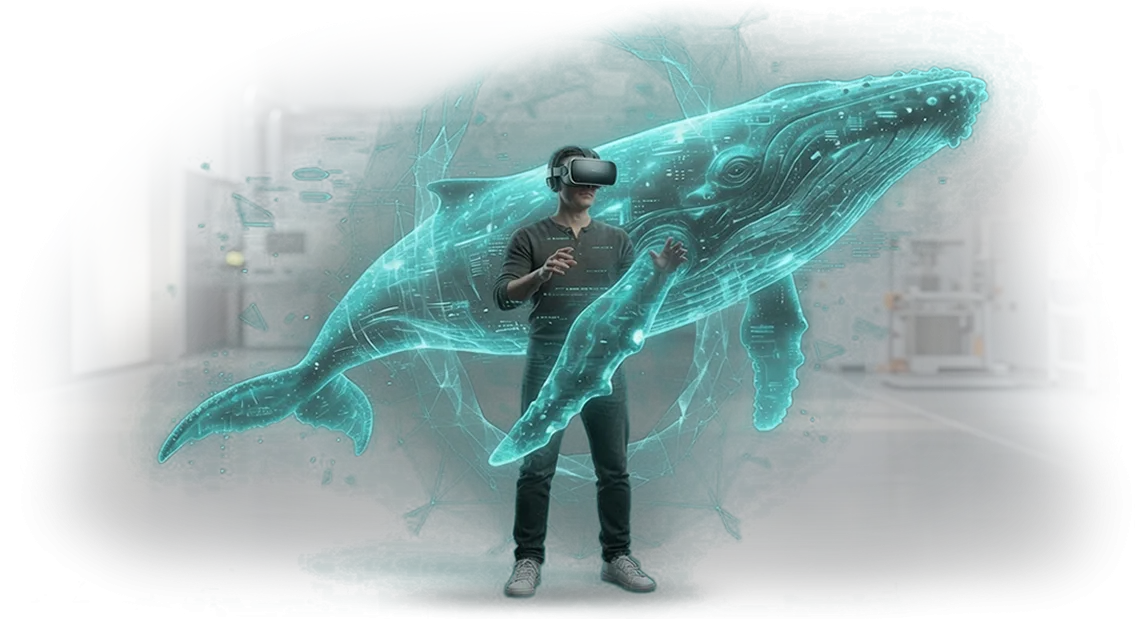
Immersive technologies solve exactly this problem: they transport the viewer inside the event.
Instead of passive watching, a person gets the opportunity to be at the center of the sports drama — to see the game from the athlete's point of view, feel the dynamics of the moment, or look around the stadium at their own pace.
A fan doesn't just watch—they experience what's happening, and therefore stay longer and share impressions with those around them.
For sports clubs, leagues and brands, this means measurable results: increased contact duration, more social media mentions and repeat visits.
VR apps for Meta Quest and other professional platforms turn an ordinary match into an event that people talk about days after the final whistle.
We help create such formats — from virtual grandstands to interactive fan zones — so that sport remains at the center of attention for an audience that values vivid impressions.
What Benefits the Organizer Gets from VR Technologies
Every organizer wants to surprise guests and stand out among dozens of similar events. Ordinary concerts and receptions no longer have the desired effect: guests get used to the same type of entertainment and simply don't notice the brand.
A VR zone breaks this pattern, turning the event into an adventure people talk about for a long time. The technology works directly with emotions and delivers measurable results for the business.
The first thing the organizer gets is the guests' live reaction. When a person puts on the headset, they are completely immersed in the atmosphere: genuine delight, laughter, surprise. These moments can't be faked, so guests film each other and share emotions on social media. The brand gets ready-made content that looks alive and authentic.
Social media reach grows by itself. Every guest with a virtual reality video becomes an ambassador: posts, shares, and comments continue to bring mentions weeks after the event ends.
The brand gets a wave of free promotion among its target audience, and reach translates into thousands of impressions without an advertising budget.
Brand recognition grows through association with innovation. The logo on headsets and info kiosks appears in every photo, and the space itself feels like care for the guests.
The organizer builds the image of a modern brand that isn't afraid to experiment and follows trends — this is remembered by clients better than any slide.
An additional plus is new leads. Contact collection is easy to build into the game mechanics: the guest is asked to leave an email to find out their result or receive a prize.
At the peak of engagement, conversion to a request is significantly higher than with traditional promotions, and the collected database is immediately ready for email campaigns and further work.
Bottom line: a VR zone solves several marketing tasks at once. You get guest emotions, noticeable reach, increased recognition, and a flow of real contacts — not a one-time activity, but a tool that systematically works to promote your business.
VR Sports Formats for Your Project's Goals
The format of a VR solution determines exactly how sport will engage the audience: watching, competing, or training.
We select it according to the project's task — from brand promotion to technique training — and implement it on professional equipment, including Meta Quest headsets. Below are three basic scenarios most commonly used as a base.
| Format | For whom | What it provides |
|---|---|---|
| Training simulator | Sports schools, fitness clubs, rehabilitation centers | Movement practice without injury risk, progress tracking, increased number of sessions |
| Virtual stadium tour | Clubs, arenas, sponsors, travel services | A new way to discover the venue, additional ticket and merch sales |
| Interactive challenges | Brands, event agencies, corporate teams | Guest engagement, competitive excitement, viral social media content |
Training simulators are especially valuable for learning and rehabilitation: an athlete repeats exercises in a virtual environment, and the system records accuracy and dynamics.
For a club, this is an opportunity to scale personal training and attract clients who are shy about coming to the gym.
Virtual stadium tours turn a “closed” area into an accessible product. A fan can walk through the corridors, look into the locker room, and feel like part of the team — this strengthens loyalty and increases time spent interacting with the brand.
Interactive challenges work at events and in corporate sports. Guests compete in accuracy or reaction, earn points and a photo of the result — this creates emotion and the desire to share it. And for the organizer, it's a clear engagement metric and a reason for repeat visits.
Such formats rarely exist separately: a simulator is supplemented with a tour, and a challenge is integrated into a workout. We assemble a solution for your business goal and help you choose the scenario that delivers measurable results — from recognition to revenue.
Stages of VR Application Development for Your Project
A clear process is the key to a predictable result. We specifically structured VR application development so that at every stage you understand what is happening, how long it will take, and what you'll get in the end. Below are six steps we go through together, from the first brief to post-launch support.
-
Brief and task immersion. We interview your team, study the target audience, usage scenarios, and the sports project's objectives. We capture expectations and success criteria — this eliminates 80% of rework at the start.
-
Plan and estimate. We create a detailed work plan with stages, timelines, and a budget without hidden payments. You know in advance what will be ready at each stage and what you'll pay for.
-
Concept approval. We show prototypes of the future application and interaction scenarios. You can see how the product will look before the main code is written — and adjust details without extra costs.
-
Development. We create the application using professional equipment and proven tools. Every 1–2 weeks, we show intermediate versions — you stay updated on progress and make edits at early stages, not after release.
-
Testing and refinement. We test the product on real devices, involve a focus group from your audience, collect feedback, and fix any issues. The result is a stable version that won't let you down during competitions or training.
-
Launch and support. We help with publishing in the app store, train your staff, and hand over instructions. After release we stay in touch: technical support, updates, and feature improvements — on request.
This workflow helps us deliver projects on time, and gives you a working tool that amplifies sport, engages participants, and achieves business goals.
What's Included in a VR Solution Delivery
The full delivery package is not just a software file. We've put together everything you need to launch a VR direction in your sports club: from an adapted application to staff training and ongoing support. With this set, you can start training as early as next week.
Here's what's included:
- Ready-made VR application for Meta Quest — adapted to your sport, with the required training scenarios and branded style.
- Simple management system — your staff can add exercises and change settings without programmers.
- Video instructions and text guides — for a quick start for coaches and administrators.
- Staff training — we conduct a hands-on session, after which employees confidently work with VR and help visitors.
- Technical support — we answer questions during business hours and help resolve operational issues.
- Scheduled updates — we regularly improve functionality and add new features.
- Methodological recommendations — ready-made workout scenarios built into the application.
- Adaptation to your space and load — we account for the specifics of the hall and number of visitors.
Each item addresses a specific task, from first launch to daily operation. You get a complete turnkey solution that will quickly start bringing value to you and your clients.
Case Study: How We Increased Engagement at a Tournament
A rare case when competition guests don't leave after the final whistle. At one tournament, the organizers rented a VR zone from us to keep fans engaged between matches — and got not just entertainment, but a tool for retaining the audience.
What We Did
We set up a virtual reality zone right in the arena lobby — several stations with professional equipment and our polished sports scenarios. Guests tried their hand as players, competed with each other, and took photos in virtual locations.
Numbers That Matter to the Organizer
Results exceeded expectations. The time guests spent at the venue increased by 40% — people stayed after matches, brought friends, and returned to the stations several times. Over two tournament days, the VR zone collected 2000 unique photos that guests posted on social media.
From a marketing perspective, this worked as extra reach: every photo with the tournament logo appeared in the feeds of hundreds of users. The organizers got free advertising, and guests got a reason to spend more time at the venue.
Why the Client Was Satisfied
For the organizers, this was a risky experiment — a new zone with unclear payoff. But VR turned out to be exactly the format that holds attention during breaks and after events.
The crowd at the stations created real buzz, and photo content continued working for the tournament for weeks after it ended.
The client came back to us again — this time for the next competition season. We know how to adapt the format to a different venue, guest count, and brand goals.
our team solves the issue not with “cool technology” but with measurable value: more time at the venue, more content, more return visits.
If you're organizing a sports event and want to repeat this result — we'll start with a short brief, calculate the zone for your audience, and show that VR really works for engagement.
How to Choose a VR Application Format for Your Task?
The VR application format isn't a technical detail, but a solution for a specific business task. Different scenarios suit training, spectacular events, or contact collection, and each produces its own result.
So first, it's worth answering the question: what matters more — engaging the audience in regular sessions, surprising guests, or growing the client database.
If the goal is to build a training system and retain clients, choose the personal VR trainer format. The user gets engaging exercises in a virtual environment, and you get a tool that motivates repeat returns. Such an app turns boring sport into a game and also gives you data on each participant's progress.
When the priority is spectacularity and event reach, the interactive competition format is effective. Guests compete in virtual sports, results are shown on a shared screen, and participants' emotions become advertising themselves.
Such a show is memorable, creates a news hook, and gathers dozens of photos and videos on social media — your venue becomes a center of attraction.
If the main task is to collect potential client contacts, use the VR quest format with mandatory registration before the start. In a few minutes, a participant completes a short scenario, leaves their data, and receives a personalized offer.
This way, the entertainment works toward the sales funnel, and each session delivers a useful contact, not just emotions.
Our advice: first, define the desired outcome in simple words — who you need to attract, what they should feel, and what they should do after the session.
Describe this task to us, and we'll suggest a format that solves exactly it — whether it's revenue growth, audience reach, or repeat visits.
Frequently Asked Questions About Implementing VR Solutions
Before launching VR training, club and gym owners often have the same doubts. We answer the five most common ones — briefly and to the point.
We develop all solutions for the Meta Quest headset — the most in-demand in sports projects — so most questions are resolved already at the negotiation stage.
Will VR work in our facility if we already have equipment and our own software?
Yes. We build integration around your needs: we connect VR to booking systems, attendance tracking, and schedules. The headset works autonomously — no powerful computer or server is needed near the training area. All you need is a free 3×3 meter space and a power outlet.
How much does developing a Meta Quest application cost?
The cost depends on the scope of scenarios: for a fitness club it's usually one or two workouts with competition elements; for a sports brand, a full tournament or immersive presentation.
After discussing the task, we lock in the exact estimate and timeline, so the price doesn't change during the process.
What are the implementation timelines?
We prepare the basic version for one location in 1.5–3 months. This period includes a prototype, testing with real visitors, and training your instructors. After that, you can scale to other venues or add new scenarios.
Can guests who have never tried VR handle it?
We specifically design scenarios for people without experience. The first session lasts 3–5 minutes: the guest gets acquainted, performs simple movements, and sees hints. The instructor doesn't need to supervise every session — a short briefing is enough.
According to statistics, 9 out of 10 visitors successfully complete a trial session on the first try.
How fast does a VR zone pay for itself?
The average usage of a VR zone in a fitness club is 4–6 hours per day. With a membership or one-time payment, the zone pays for itself in 4–6 months, and then generates net profit. For many clients, VR becomes a separate paid service that raises the average check.
Take the First Step: Request Development
Starting a sports VR project on Meta Quest headsets is usually slowed down not by the idea, but by uncertainty: how much it costs, when it will be ready, and whether the format suits your audience.
Spending time on scattered questions makes it easy to get stuck in details and postpone the decision.
To help you move quickly, we've structured the inquiry process as a transparent six-step route. Leave a request via the form — and on the same day you'll get an initial consultation and approximate budget boundaries.
- Specialist consultation (within one business day). We analyze your idea in the context of sport: attracting fans, competitive mode, training, corporate team building.
- Filling out a short brief. Together we define the project's key metrics: engagement, participant statistics, event reach — what matters specifically to you.
- Cost and timeline calculation. We prepare an estimate for your scenario, so you can see the investment boundaries in advance and plan your budget.
- Production roadmap. We break development into stages with checkpoints: from concept to release in the Quest app store.
- Commercial proposal. We bring all agreements into one document: team composition, timelines, areas of responsibility, payment terms.
- Launch plan. We show how testing with real users will go and what steps are needed to present the project at your sports arena.
No obligations or complex technical requirements on your side — our consultation is designed to answer questions and show the way forward. If your goal is not abstract development, but a working sports project with a clear result, start with a clear plan instead of guesswork. Leave a request, and we'll determine together how to launch your case faster.