



Why Tourism and Entertainment Businesses Lose Customers Without VR Solutions
Familiar situation: visitors come to a museum, park, or shopping mall, take selfies, look at the exhibits, and leave.
Holding their attention is getting harder — classic screens and displays lose to smartphones, and the emotions that make people want to return simply don't happen.
While you offer familiar formats, a venue with interactive attractions opens up nearby, where guests step into another reality in a minute.
That's where competitors take your audience — people share their experiences on social media, recommend the place to friends, and plan return visits. In the end, you lose not only one-time revenue but also long-term loyalty.
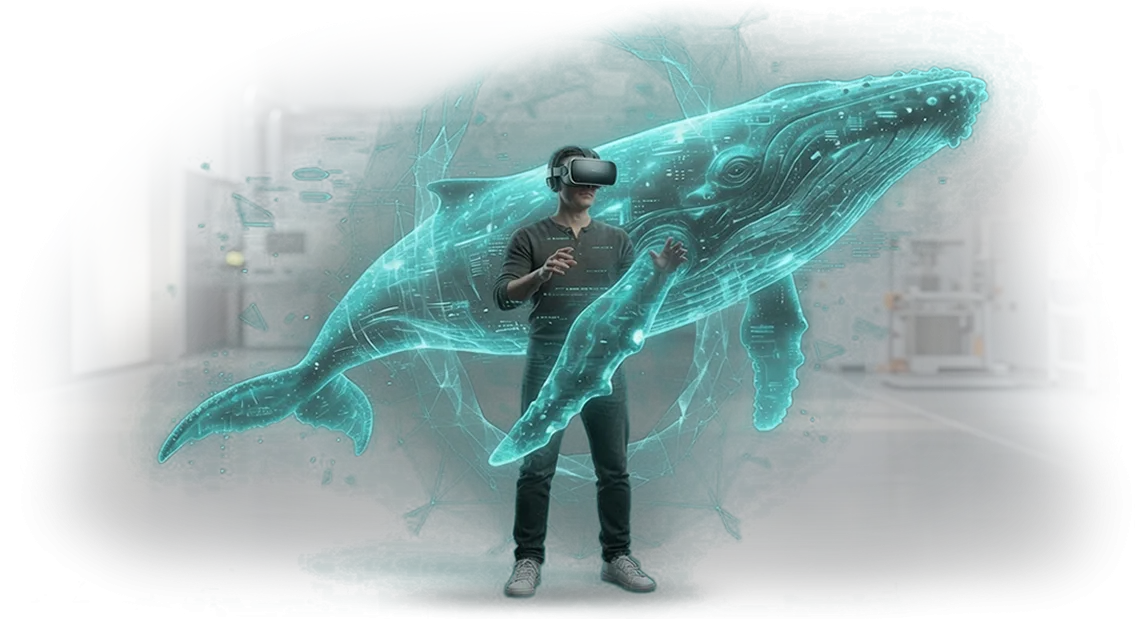
VR in entertainment solves this problem. Virtual reality lets you offer visitors a unique experience: a flight over the city, a journey through a historical era, an immersive quest — everything that's impossible in a regular exhibition.
These formats are easy to adapt to any venue and any brand, and most importantly, they create strong emotions that bring guests back with family, with friends, and attract new customers.
Virtual reality for business is not a fashion trend but a tool for improving key metrics: increasing dwell time, growing the average check through additional services, and boosting repeat visit frequency.
Plus, it creates a natural hook for social media and press coverage that builds awareness without an advertising budget.
We help address this need: we design VR attractions tailored to a specific venue's goals, structure the process so integration happens without stopping your core operations, and support the launch until stable results are achieved.
What Benefits Does a VR Application Bring to Your Business?
A VR application in tourism and entertainment is not just a digital toy but a working growth tool. It changes the entire visit format: instead of a standard sightseeing tour or waiting in line, the guest gets a memorable personal experience worth coming back for.
The first benefit is increased engagement. A guest spends several minutes in a VR scene, lives through a small story, takes photos, and keeps the emotion. This directly increases the time spent at your venue, raises the average check, and creates a reason to return.
The second is free reach and awareness. Guests record the unique VR experience on their phones and post it on social media with a geotag and your venue's name. Each such post works for your brand and brings in new audiences without ad spend.
The third is lead capture. A VR session can easily be arranged through a short registration or mini-survey: you get guests' contacts and interests, and then you can offer new formats, memberships, and special events. This turns a one-time entertainment into long-term communication with the customer.
In the end, a VR application helps boost attendance, create a memorable image for your venue, and generate a stream of warm leads. For businesses in tourism and entertainment, this is a measurable result that becomes visible within the first weeks of operation.
VR Application Formats for Tourism and Entertainment
VR formats have long stopped being an experiment and have become a working tool that delivers measurable results. For tourism and entertainment, they're a way to surprise guests, extend contact with the brand, and create the emotion that makes people return.
The key is choosing the right format for your goal, not just "implementing VR for the sake of technology."
Below are four standard formats we most often deliver for clients. All of them adapt to your venue, audience, and business goals.
| Format | Who It's For | What It Gives the Client |
|---|---|---|
| Virtual Tours | Travel agencies, hotels, museums, cities | Showcases attractions and locations before the trip, increases bookings, and lowers the "unfamiliar place" barrier |
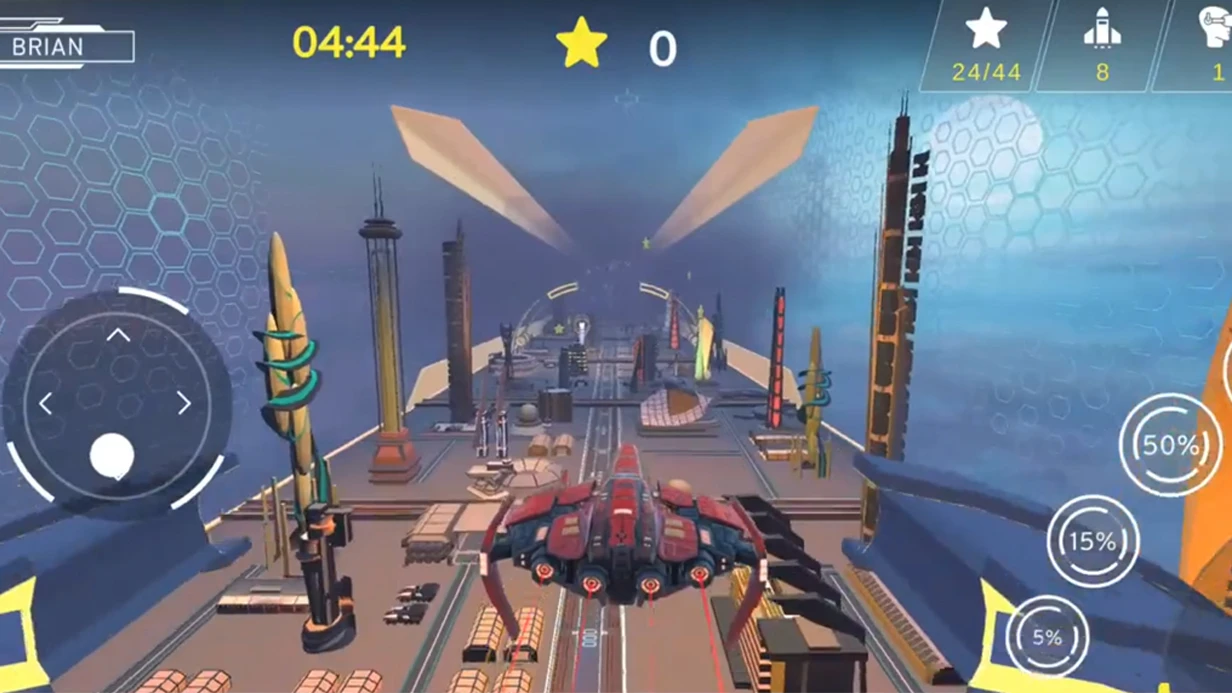
| VR Attractions | Amusement parks, shopping malls, family centers | Attracts visitor traffic, generates word-of-mouth, and creates an upsell point within existing space |
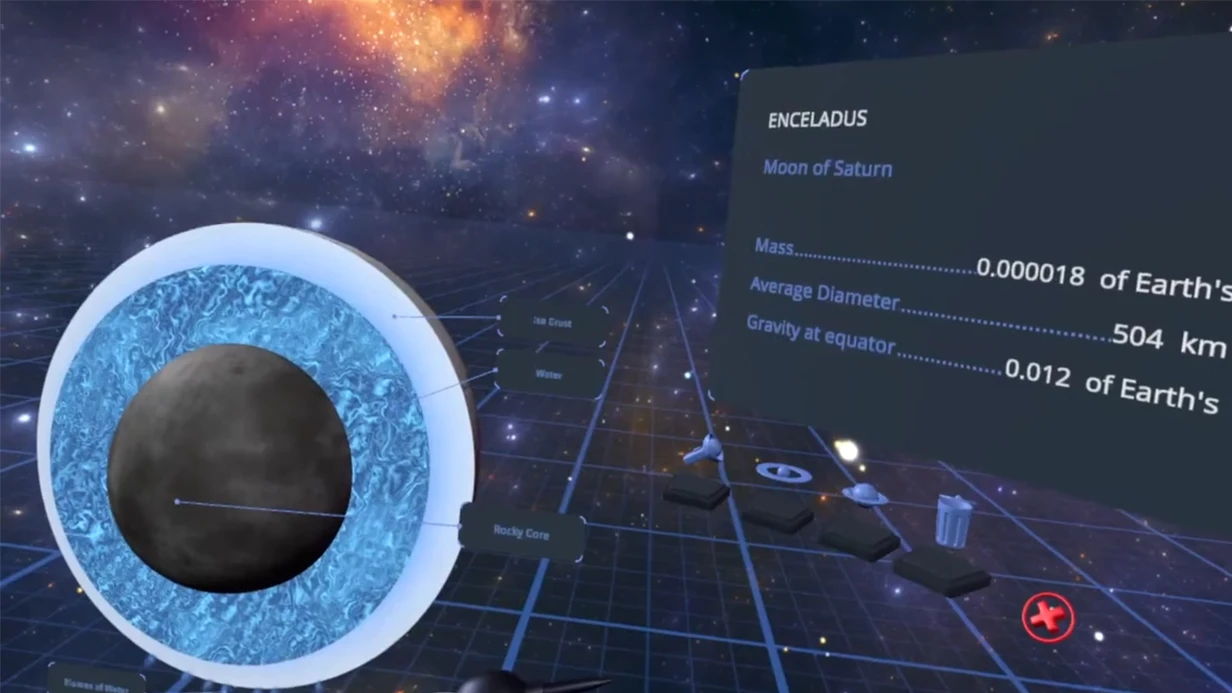
| Training and Simulations | Museums, educational centers, corporate spaces | Turns boring information into a visual experience, holds attention, and improves retention |
| VR for Events | Event organizers, brands, event agencies | Creates a wow effect, collects photos and videos for social media, boosts reach and brand recall |
Virtual tours are especially effective for tourism: a person can "walk through" a hotel or city without leaving home and make a decision faster. For parks and malls, VR attractions become an anchor that brings groups of friends and families back.
The events format turns a regular event into a talking point that stays relevant long after it ends.
Not sure which format fits? During a consultation, we'll review your task, audience, and budget — and propose a solution that pays off. You'll get not just an "application" but a ready-made tool for growing key business metrics.
How We Develop a VR Application: Stages of Work
A transparent process eliminates the client's main fear — "we don't know what we'll get." That's why we mark out stages, timelines, and approval points from the start: you always understand how the VR application development is progressing. We work remotely, so the process is equally smooth for clients from any city.
- Brief and immersion. You tell us about your audience, goals, and event format. We clarify details and propose initial solutions that will form the project's foundation.
- Concept and script. We describe how the guest moves around, what they see, and what emotions they experience. We align the logic so the product solves your marketing objective.
- Approval and estimate. We fix the scope of work, timeline, and deliverables. You get a clear plan with no hidden stages or "surprise add-ons along the way."
- Development. We build a prototype and fill it with visual content, sound, and interactivity. We show intermediate versions — you see the product live, not in a presentation.
- Testing. We check ease of control, absence of motion sickness, and stability. We fix issues before launch so guests get a flawless experience.
- Launch and support. We set up equipment and prepare instructions for staff. You receive a turnkey solution and clear operating rules. We stay in touch: we update content and add new scenarios.
This approach has already helped dozens of projects in tourism and entertainment launch on time and earn positive guest reviews. You don't need to understand VR — we handle the technical side, and you get predictable results and control at every stage.
What's Included in the VR Project Delivery Package
When you order a VR project, it's important to know in advance exactly what you'll get. We put the delivery package together so you can launch the solution immediately and manage it without constant developer involvement.
Below is a list of what's included in the cost of VR development — this is the standard set for stable business operations.
- A ready-made VR application tailored to your tasks. This is the key result: a product that's already installed, configured, and integrated with your infrastructure. You get exactly the scenario you discussed at the start — for tours, entertainment, or presentations.
- An admin panel for content management. You update texts, prices, descriptions, and media files in the application yourself — without a programmer or technical team. A task that used to require a developer request is solved in minutes.
- Staff training. We conduct hands-on sessions for your team: how to start sessions, help guests, and handle unexpected situations. Your staff works confidently from day one instead of figuring things out "on the spot."
- Clear documentation. Operating, maintenance, and administration instructions for the system. The documents describe every step — from powering on to replacing components — so even a new employee gets up to speed quickly.
- A warranty on the VR project. We set a warranty support period during which we fix bugs and answer questions. You're protected from issues that couldn't have been foreseen during approval.
- Room for project growth. You get not an anonymous product but a solution with clear terms for future improvements. When you need to add new scenarios or scale the system, you know how to do it and how long it will take.
This package answers the question of what's included in the cost of VR development. You won't need to buy "something extra" or hire separate specialists for setup: everything necessary is already accounted for.
In the end, you get a working tool that delivers value from day one and remains manageable for your team.
Case Study: How VR Increased Park Attendance by 40%
Amusement parks today compete not on the number of rides but on vivid experiences that guests want to repeat and share with others.
Traditional carousels and roller coasters no longer generate the same buzz they once did, so venues are actively looking for formats that can surprise and retain visitors.
We delivered such a project for a city park — we created a VR attraction based on Meta Quest.
Instead of the standard "put on a headset and look around," we offered a full-fledged adventure: guests explored the park from a new angle, completed quests tied to the location's history, and competed with each other in team scenarios.
Each session lasted about ten minutes — long enough for strong emotions, but not so long that guests got tired.
The result was visible within the first month: park attendance grew by 40%, and ticket sales increased by about a third. The average guest dwell time rose by two hours — visitors first go to the VR session and then stay for a coffee or a walk around the grounds.
The attraction runs without downtime: sessions start every 10–15 minutes, and up to twenty people can complete it in an hour — more than many of the park's classic attractions.
The owners also noted an additional marketing effect: guests film the experience on their phones and share videos on social media. The park received hundreds of free mentions with zero ad spend.
After two months, we updated the scenario — added a new difficulty level and a seasonal location so that those who had already visited would want to come back. It worked: repeat visits accounted for about a quarter of all new attraction visits.
By the end of the season, the park ordered a second complex from us and expanded the area for group sessions.
For us, this confirms that a properly built VR project delivers measurable results for business: increased traffic, higher ticket revenue, and free promotion on social media. Want a similar effect? We'll tell you during a consultation how to adapt this to your venue.
How to Choose the Right VR Format for Your Task?
Actually, choosing a VR format starts not with equipment but with answering the question: what should your company achieve — attract new visitors, keep them longer, or create a bright, memorable reason to come back again?
For example, a travel agency may be perfectly served by a compact VR station with virtual tours of destinations, while a hotel or museum might need a full interactive entertainment zone.
The budget, launch complexity, and even the number of specialists supporting the project all depend on this.
When we say "VR format," we mean three main scenarios. The first is a virtual tour or 360-degree video: a person puts on a headset and "finds themselves" in another place.
This is an ideal solution for the travel industry when you need to show a hotel, resort, or landmark without an actual trip.
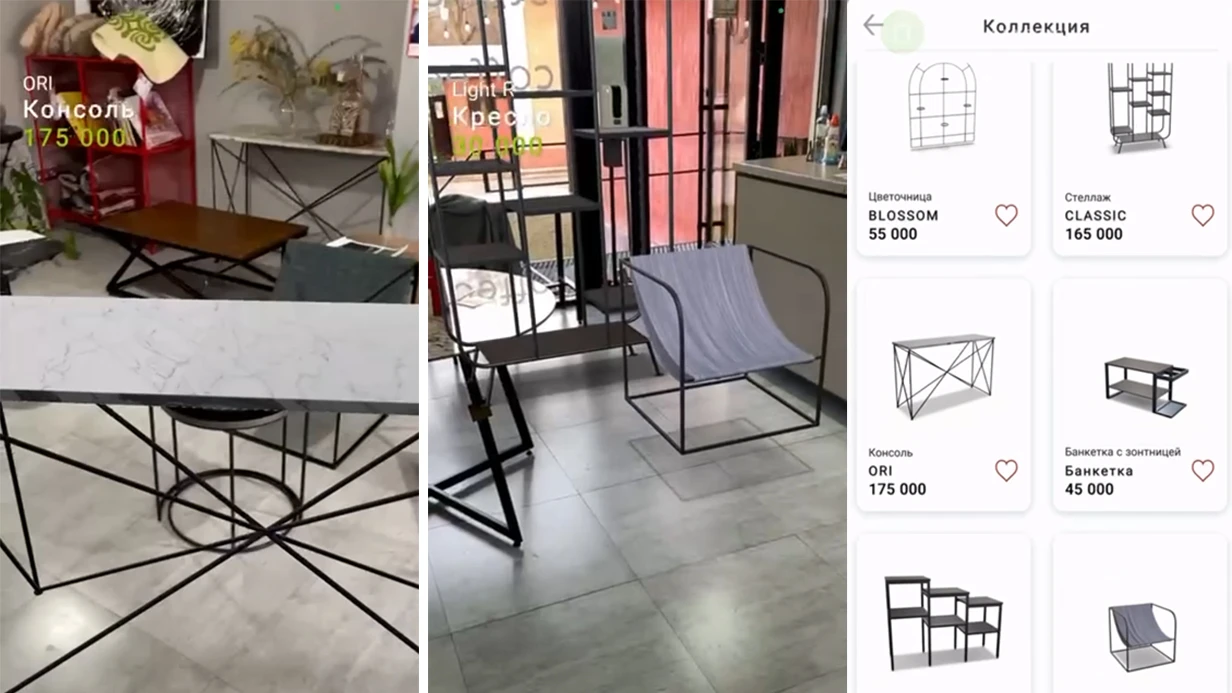
The second is an interactive application with hand or controller tracking: the user doesn't just watch but acts — collects artifacts, solves puzzles, completes quests. The third is mixed reality, where virtual objects are overlaid on the real space.
This format suits shows, exhibitions, and educational programs where it's important to combine physical presence with digital effects.
The more complex the scenario, the stronger the impression — but also the more development resources required. For a local promotion or presentation, a mobile solution based on regular smartphones is enough — inexpensive, fast, and easy to scale.
If you need an atmospheric attraction that works for years and becomes a point of gravity, autonomous VR headsets and professional development are the smarter choice.
In any case, we select the format so that you don't overpay for unnecessary complexity and get exactly the result that can be measured: number of sessions, reach, repeat visits.
To keep you from drowning in options, we start with a VR consultation. Tell us who your audience is, where the project will be used, and what result you want to achieve — and we'll propose 2–3 suitable formats with timeline and investment estimates.
This approach has already helped dozens of projects in tourism and entertainment: clients choose formats deliberately, not because "everyone's doing it." By inviting us, you get not just development but a ready-made solution that works for your revenue and brand awareness.
Leave a consultation request — together we'll determine which VR format delivers the most value for your business. There's no obligation, but it will save you weeks of researching technologies and test launches. And if you already know what you want, we'll go straight to the brief and implementation plan.
Common Doubts Before Starting VR Development
Before launching a VR project, clients have the same doubts: won't development be too expensive, will the staff handle new equipment, and what if visitors don't like the result?
That's normal — VR is still a new technology, and it's important to understand what benefits it brings to business. Below, we address the main fears and explain how we resolve them in practice.
The cost of VR development — why is it expensive and when does it pay off?
The cost is made up of the scenario, the number of scenes, and the level of detail. But it's important to look not at the price but at the result: a VR attraction in an amusement park pays for itself through visitor flow, while a training simulator reduces staff training costs. We offer several implementation options for different budgets.
Ease of use — can staff handle it without technical training?
Employees don't need to understand technology. The interface comes down to two actions: put on a headset and select a program. Everything else happens automatically. A short training session is usually enough, and the system runs itself from there.
The risk that VR won't work or guests won't like it?
We don't abandon the project after delivery. We run testing with real visitors before opening, configure everything for your space, and provide a warranty on hardware and software. If something goes wrong, you won't be left alone with the problem.
If you still have questions, ask us. We'll show project examples and provide a preliminary cost estimate for your task.Discuss Your VR Project With Us Today
Tell us about your task — and we'll advise on how VR can strengthen your tourism or entertainment project. During a consultation, we'll review the scenario, audience, and goals so you understand what result you'll get and how long implementation will take.
We'll send a cost estimate and solution options — from a simple attraction zone to a full-fledged virtual tour.
We work with businesses in tourism and entertainment, so we speak the language of your objectives: attracting guests, holding attention, repeat visits, and growing the average check.
You don't need to understand technology — we'll propose the solution ourselves and explain why it will work for you specifically. With over a decade of experience in immersive projects, you're getting not an experiment but a refined tool for your business.
Ordering a VR application from us, you get:
- Personal consultation: we'll review your idea and propose implementation options for your budget.
- Accurate cost and timeline estimate: before work starts, you know all the numbers and stages.
- A clear project plan: what we do, in what order, and why — without technical jargon.
- Adaptation for Meta Quest: your guests use a popular device without complex equipment.
- Support at all stages: from concept to launch and ongoing maintenance.
- Optimization for business goals: we focus on growing reach, engagement, and revenue, not just on technology.
Leave a consultation request — we'll respond within one business day with timeline and cost guidance. There's no obligation, but you'll get a clear understanding of how VR works in tourism and entertainment and whether it fits your specific project. Together we'll shape the concept, package it into a plan, and launch it so guests are thrilled.
Contact the VR developers at our team— take your idea from concept to launch together.