



Why Heavy Machinery Loses Orders Without VR Solutions
In heavy machinery, the customer buys not a machine or a line, but confidence that the equipment will solve their production tasks. This confidence cannot be conveyed by drawings, a catalog, or a photograph.
The customer needs to see the equipment in operation, understand how it will fit into their workshop, what operations it will perform, and what will happen in an emergency.
If you show static material — the buyer starts looking for alternatives where they are offered a clear presentation.
Competition in machinery manufacturing is built on speed and ease of decision-making.
While you are arranging a visit to the production site and choosing a convenient date, a more technology-driven supplier is already conducting a virtual demonstration right in the client's office.
In tenders this becomes decisive: the winner is not the one with the best specifications, but the one who proved the benefit of their proposal for a specific production faster and more clearly.
Outdated sales methods lead to direct loss of orders. The deal drags on for weeks due to approvals, some clients leave for competitors before the commercial proposal stage, and the sales department has to spend time explaining simple things from drawings.
Meanwhile, competitors using VR for industry let the customer “walk through” a virtual workshop, see the equipment in operation, and even change the configuration in real time — this removes objections before the final meeting.
This is lost profit that technology turns into your advantage. We develop VR/AR/MR solutions for machinery manufacturing that replace stacks of catalogs and long trips with a single interactive format — the buyer understands your proposal faster and makes decisions faster. This way you stop chasing competitors and set the standard in your niche.
What VR/AR/MR development gives your production
Heavy equipment manufacturing faces costly errors at the design and approval stage. Changes after series production launch are expensive, training on real equipment is slow and risky.
We move product verification and demonstration into a virtual environment — before resources are spent on physical prototypes.
Digital prototype and virtual testing
Assemble a virtual model of an assembly or the entire machine and test it at real scale. Engineers and designers see parts, fasteners, and service access before metal is ordered — this accelerates project approval with the customer and related departments.
Conduct load, collision, and ergonomics tests in the same virtual environment. Instead of building an expensive test bench, you get data on how the structure behaves under different conditions and reduce the number of iterations before series production.
Staff training in VR
An operator learns to control a crane or excavator without risk to people or equipment. Errors in training do not lead to breakdowns, and the employee remembers actions at the muscle level, while one simulator serves many trainees.
Product presentation in negotiations
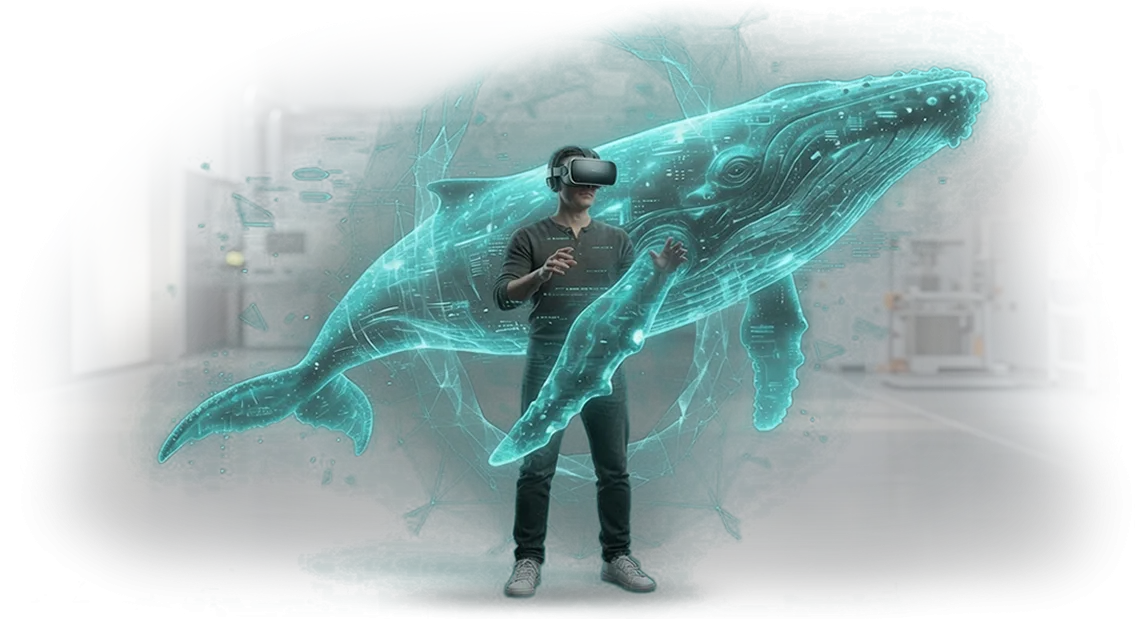
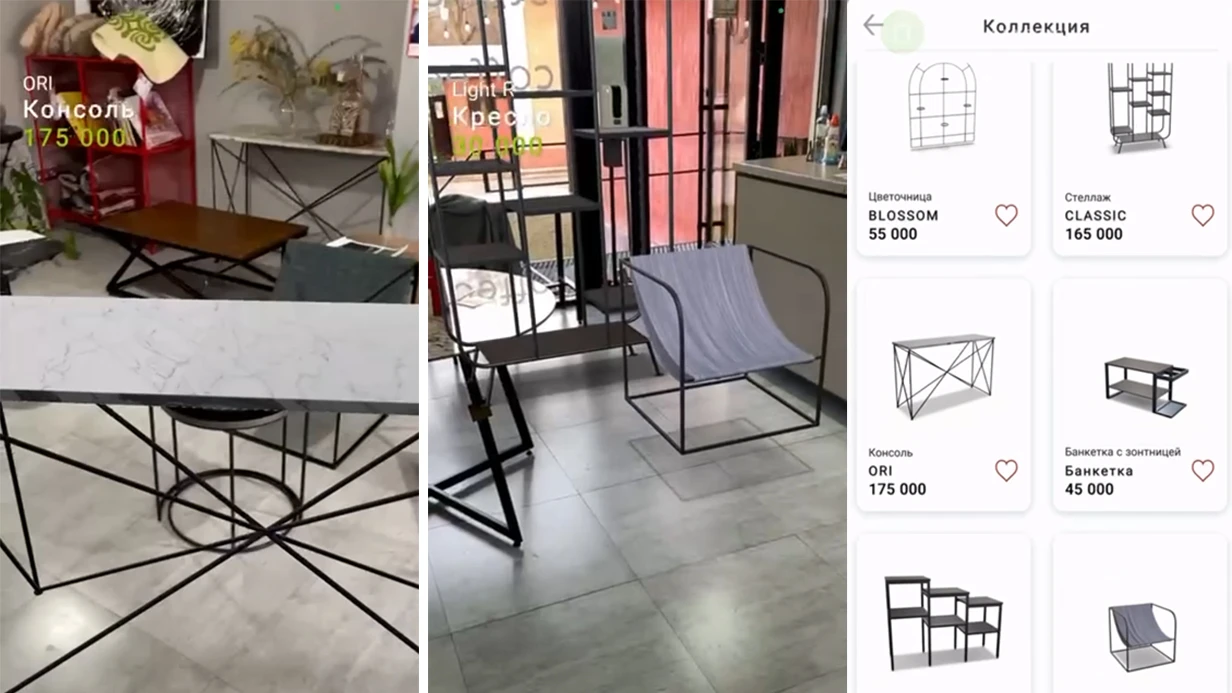
Show the machine at full scale at an exhibition or in the client's office, even if it still exists as a 3D model. AR/MR solutions overlay it onto real space, VR immerses the customer in the cab — this shortens the sales cycle and increases conversion.
Formats of VR applications for machinery manufacturing tasks
In heavy machinery, the cost of an error is high: training on real equipment takes weeks and involves risks for the beginner and the production. Demonstrating a new product line requires logistics for multi-meter machines, which drags out negotiations and increases costs. Digital formats remove these limitations — but each works with its own task.
We choose the format for the customer's specific scenario: from a VR simulator to a virtual showroom. Here is what it looks like in practice.
| Format | For whom | What the customer gets |
|---|---|---|
| VR simulator | Training centers, vocational training instructors | New employees master operations up to 2 times faster, without risk of breaking equipment and without stopping production |
| AR instruction | Repair teams, operations personnel | Reduced downtime and errors: step-by-step prompts appear directly on the machine units |
| MR overlay | Chief designer's department, technologists | Shorter approval cycle: a 3D model is combined with a real sample without paper drawings |
| Virtual showroom | Commercial department, tender teams | Sales without transporting equipment: the demonstration works anywhere in the world and at any time |
These formats can be combined or implemented in stages. At the first step, we audit the task and propose a solution that will bring a measurable result within a few weeks.
In each project, we adapt the interface to the user's level, and prepare reports for management in clear metrics: training time, number of errors, approval speed, conversion to order.
Project stages: from brief to launch
We work according to a transparent procedure: you see what is happening at every stage and participate in decisions. No “black boxes” — only clear steps with recorded agreements and control points.
- Brief and task audit. We analyze which processes at the plant need to be accelerated or simplified: staff training, assembly control, equipment maintenance. We fix goals, timelines, and result criteria.
- Scenario design and approval. We propose the logic of the future VR solution — what the user sees, what actions they perform, what data they receive. We approve the scenario before development starts to avoid expensive changes later.
- Development and intermediate demonstrations. We create the application and show working versions in short cycles. You provide comments, we quickly incorporate them — so the final product exactly meets expectations.
- Testing in factory conditions. We test the application on real equipment, taking into account lighting, noise, and employee movements. We practice emergency situations so that there are no failures in operation.
- Deployment and training. We bring the equipment, configure it for your site, and conduct instruction for personnel. We provide clear manuals — the operations department will not need to figure things out on their own.
- Support and development. After launch, we stay in touch: we update content, add new scenarios, and help expand the use of VR to other areas. You get not a one-time delivery, but a working tool with maintenance.
The entire process takes from several weeks to a couple of months, depending on the scale of the task. At each stage you understand the budget of time and resources.
The result is a solution that takes root on the shop floor and provides a measurable effect: faster training, fewer errors, higher safety.
What is included in the delivery: a kit for the customer
You do not just get a ready-made VR solution — you get a complete kit to implement it and develop it further. After the project is delivered, the customer retains all rights and materials: from source code to instructions and support.
- Source codes and a compiled version of the application for Meta Quest. You own all intellectual property and can transfer the project to your team or any other contractor.
- VR technical documentation: architecture description, scenario logic, instructions for setting up, updating, and deploying on multiple headsets.
- User instructions for operators and administrators. Short guides on how to start a training session, select parts, and view results.
- Training in working with VR for your team. We conduct a practical session with administrators, instructors, and technical specialists, and review real cases.
- Application warranty. During the warranty period we fix errors and refine the solution according to the customer's comments free of charge.
- Administrative support after launch. We help configure session accounting, access rights, and organize training stations.
- A base for development. You can order new functionality — additional parts, modes, or integrations — on an already-debugged solution without rewriting from scratch.
This way you get not a one-off product but a manageable solution that works at the enterprise for many years.
Case study: how a VR simulator for heavy machinery paid off
In heavy machinery, every mistake by a novice means line downtime, damaged equipment, and risk of injury. That is why trainees are kept under supervision for months, and reaching full productivity is delayed.
Training on real equipment costs too much, and training stands do not give the feeling of real work.
We solved this problem for a large metallurgical enterprise. We developed a VR simulator on Meta Quest headsets that fully replicates the factory's production site.
The trainee learns to operate an overhead crane, follow the technological regulations, and act in emergency situations. Everything happens in a safe virtual environment, but with a full sense of presence.
What changed after implementation
The customer measured the results immediately. Operator training time decreased from three months to three weeks — six times faster.
The number of errors on real equipment among trainees dropped by 60%: they had already practiced dangerous situations in VR to the point of automaticity. An additional effect is that instructors freed up time, and the production schedule does not suffer from training.
Payback and scaling
The simulator paid for itself in less than a year — primarily due to the absence of downtime and reduced accident rates. After the pilot launch, the enterprise ordered a second simulator for another workshop.
This is the best indicator of value: clients return when they see concrete results in saved time and money.
How to choose the VR solution format for your task?
The VR solution format is always determined by the production task, not by the technology trend. Before choosing, it is worth answering three questions: where time losses or errors occur, who will use the solution, and what result you want to measure. The answers immediately narrow the list of suitable formats.
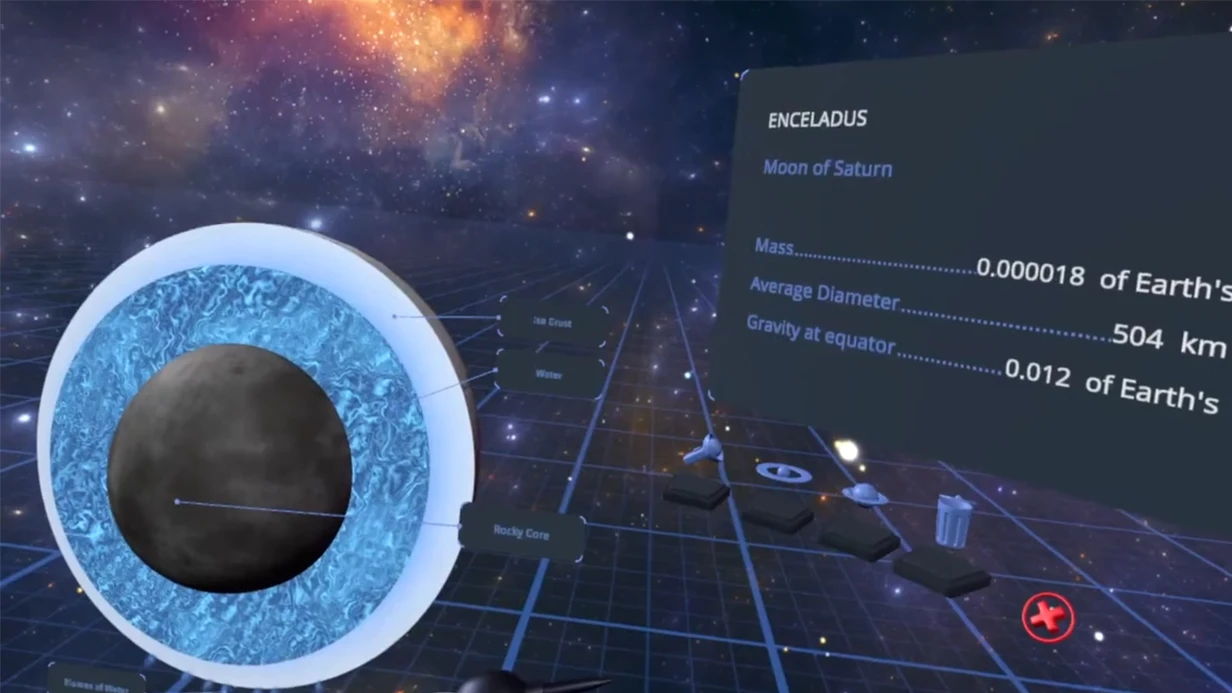
If the task is training on large equipment where a mistake is expensive, a full VR simulator is effective. It immerses the operator in a virtual copy of the workshop or installation, allowing them to repeatedly practice scenarios without risk or production downtime.
For mass training or practicing emergency situations, this is the fastest way to achieve stable skills.
If the task is quality control, repair, or assembly at a real site, augmented and mixed reality (AR/MR) is better suited.
The technology overlays digital schematics, dimensions, and instructions directly onto the equipment — the employee sees prompts at the right moment and is not distracted by paper documents. This reduces operation time and significantly lowers the number of errors.
The third scenario is joint work between designers and technologists on a new assembly. In MR, you can assemble a full-scale 3D model, walk around it from all sides, and make edits before manufacturing begins. Such a digital mock-up saves weeks of time and the budget for physical prototypes.
Often a factory needs a combination of formats: VR for safe preparation, AR for support during work, MR for engineering analysis. Our selection of VR for factories starts with an audit of production processes and only then moves to choosing specific types of VR/AR/MR.
We help you orient, implement the solution, and measure its effect — in hours, quality, and the money of your production.
Answers to frequent questions about VR implementation
Customers in heavy machinery are often wary of VR: a new format, unclear timelines, data security concerns. Below are answers to what is asked most often before starting.
How long does VR application development take?
Depends on the task. A prototype to demonstrate capabilities — 3–4 weeks, a full solution built into a training or production process — 2–4 months. The stages are fixed in the contract, and you see interim results every one to two weeks.
What are the risks in a VR project and how do you reduce them?
The main risks are the result not meeting expectations, delays, and incompatibility with current equipment. We remove them at the start: we collect a detailed brief, make a prototype before the main stage, and approve each iteration.
We work on professional platforms, including Meta Quest, so the solution is easily integrated into your infrastructure.
How secure is the data inside the VR solution?
Drawings, 3D models, and technological maps remain within your perimeter. We configure role-based access control, protect data transmission channels, and sign a non-disclosure agreement. You decide which employees and from which devices can work with the system.
How is the cost of VR development calculated?
The budget depends on the complexity of the scenario, the number of models, and the depth of integration. Based on the brief, we propose two or three options — from a training module to a full digital copy of the workshop. This allows you to start with a pilot project and scale the solution after the first results.
Is the solution compatible with our CAD models and systems?
Yes. We use standard import formats, so data from your engineering systems is transferred without manual rework. If necessary, we connect the VR application to your internal accounting and training systems.
If you have any other questions — we will send examples of solutions for machinery enterprises and calculate timelines for your scenario.Ready to discuss a VR project for your plant?
In heavy machinery, an error in staff training costs dearly: breakdowns, downtime, injuries. A VR simulator lets you practice actions on a digital copy of the equipment without risk or stopping production. This is a proven way to reduce accident rates and accelerate the onboarding of new employees.
Take the first step — leave a request for VR development. We will send a preliminary estimate of timelines and investment, and suggest implementation options for your tasks. Or book a VR consultation — we will discuss a specific workshop and answer questions about equipment.
When ordering, you receive:
- task audit and format selection: simulator, virtual demonstration hall, or assembly visualization;
- calculation of training savings and downtime reduction;
- a phased work plan with dates and the composition of deliverables;
- demonstration of the solution at your site or in our demonstration hall;
- a complete set of documentation and support after launch;
- product warranty and the ability to scale to other workshops.
Leave a request on the website or call us — we will call back within a working day, clarify details, and suggest the next step. Let's calculate how much your plant will save with VR.