



Livestock farming loses profit due to untrained staff
Livestock farming today faces a double problem: experienced specialists leave, and newcomers don't have time to gain hands-on experience without risking themselves and the livestock.
A mistake by a milking parlor operator or a farm employee results not only in injury — it means hours of equipment downtime, disruption to the feeding schedule, and lower milk yields.
At the same time, classic on-the-job training takes weeks and requires a mentor's constant presence, while the staff shortage leaves no time for easing in.
An additional factor is worker safety. On a farm, machinery and cattle create an environment where an inexperienced employee puts both themselves and others at risk. Every emergency is not only medical and legal consequences, but also a halt in key processes.
As a result, the enterprise loses profit twice: while the newcomer is learning and while equipment sits idle due to incidents.
Farm digitalization opens the path to a solution, but simply converting documents to electronic form is not enough. What is needed is a tool that allows an employee to safely master complex operations and actions in emergency situations without stopping real production.
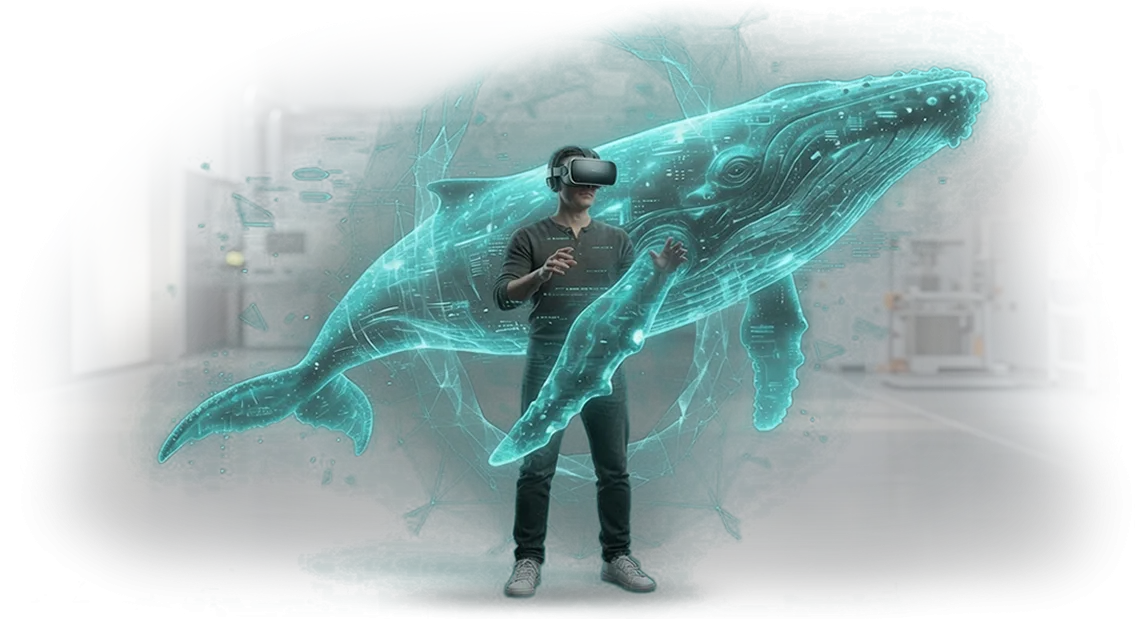
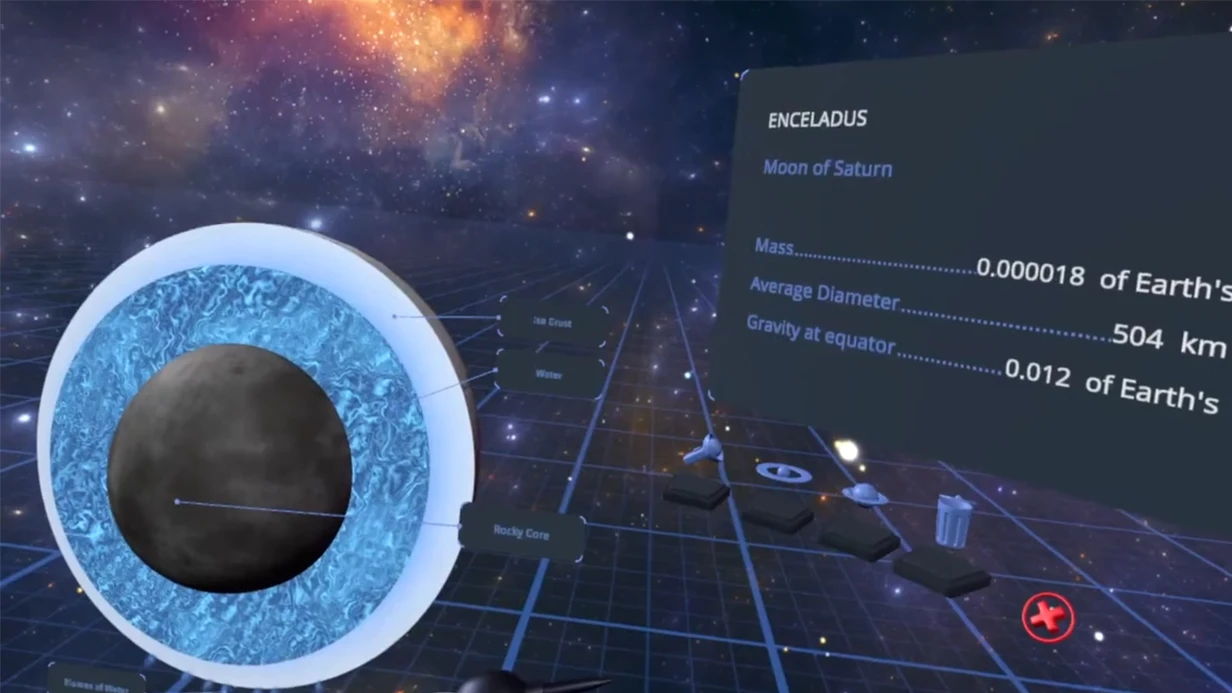
VR simulators deliver exactly this: a person immerses in a realistic farm environment, practices algorithms to the point of automaticity, and gains confidence without contact with dangerous objects.
Virtual training reduces onboarding by multiple times: days instead of weeks, with training quality measured not by a mentor's subjective assessment, but by clear operation performance criteria.
An employee who has undergone such training makes fewer mistakes, handles animals and equipment more carefully, which means less downtime and better livestock preservation.
The manager gets a predictable result and the ability to scale training across multiple farms without interrupting production.
We help address this pain point: we develop VR programs for a specific farm's tasks — from safety instructions to practicing emergency responses. More details on scenarios and results below.
What you get after implementing a virtual simulator
Implementing a virtual simulator in livestock farming solves three key tasks: accelerates staff training, reduces operating costs, and makes production safer. This is not just a fad — it is an investment that pays off through fewer errors and losses.
We develop VR simulators based on Meta Quest so that you get a stable result without extra infrastructure costs.
Fast training without risks
Beginners learn processes in a virtual environment before any contact with animals. This shortens the adaptation period from weeks to a few days and prevents mistakes that lead to injuries or livestock losses. Training can be done at any time, regardless of season, without interrupting other tasks.
Cost reduction
Each employee error means the cost of feed, veterinary drugs, or lost weight gain. A virtual simulator hones skills to automaticity, so staff act precisely on real production. Companies reduce onboarding costs and cut damage from the human factor.
Employee motivation
Modern training increases engagement: instead of boring briefings — visual scenarios with clear feedback. Employees see their progress, and the employer gets a loyal team.
This is especially important when competition for experienced livestock specialists is high in the labor market.
Attractiveness to partners
Transparent and safe processes are an argument for auditors, investors, and product buyers. Implementing VR shows that the enterprise is keeping pace with the times and cares about quality standards. This increases trust and opens new opportunities for collaboration.
VR solution formats for livestock farming to match your task
Livestock farming is an industry where an employee mistake is costly: loss of livestock, disrupted feeding schedules, and violation of veterinary standards.
Standard training takes weeks and doesn't guarantee that staff have absorbed the algorithms, and it is difficult to explain a farm's prospects to an investor in words and figures. Digital formats solve both tasks — quickly, clearly, and with a measurable result.
For your task, we select one of three formats or combine them. The table below shows typical scenarios so you can immediately see which option covers your need.
| Format | Who it is for | What it gives the client |
|---|---|---|
| VR simulators | New employees, agricultural college students, farm operators | Safe training in working with animals and equipment without risk to livestock; practicing skills to the point of automaticity, reducing onboarding time |
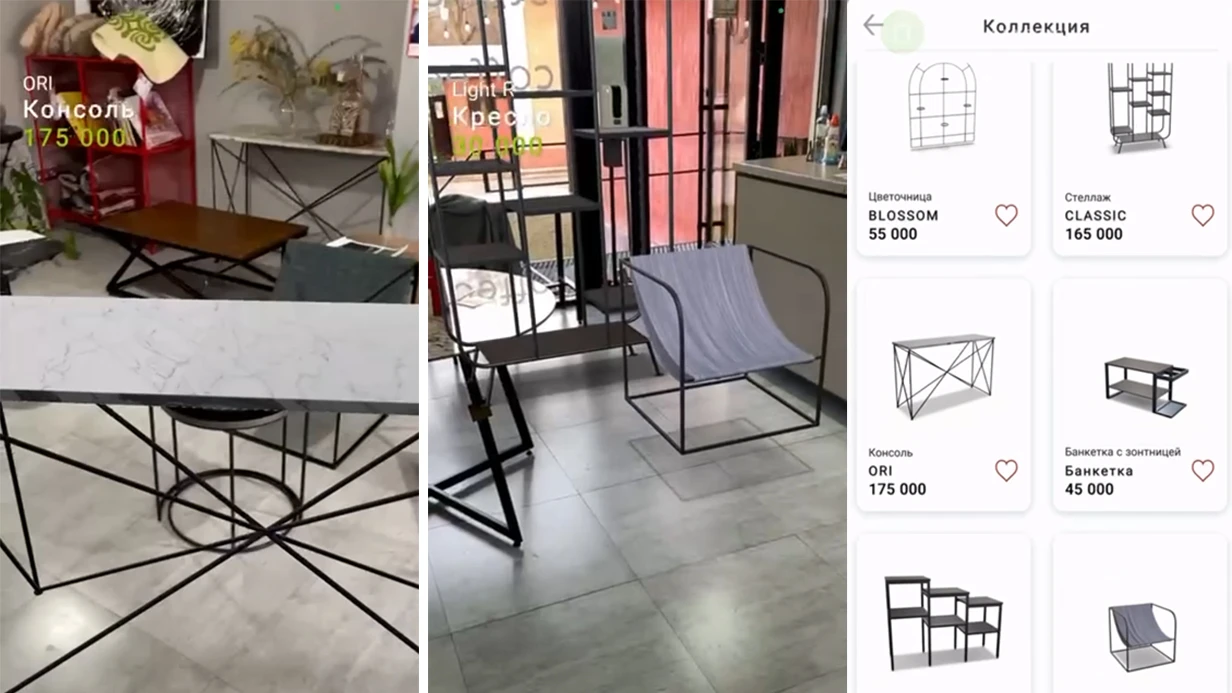
| AR instructions | Farm staff, technical services | Step-by-step cues right at the workplace — fewer mistakes, faster task completion, control over compliance with procedures |
| MR presentations | Investors, partners, government representatives | Visual demonstration of a future farm or technology — clear project payback and increased trust in your business |
The choice of format depends on the specific task: if you need to train staff, take a VR simulator; to speed up field work, AR instructions; to present a project to investors, an MR presentation.
We will help you decide during a consultation and adapt the solution to your specifics: animal breeds, facility types, and team skill level.
How the project goes from brief to launch
Developing a VR application for livestock farming is a project divided into seven clear stages. We don't disappear into a fog for months: you see progress at every step and make key decisions. Below is the route from brief to launch.
- Project brief. We discuss your task: training staff to work with animals, showing the farm to investors, practicing veterinary skills. We record goals, audience, and desired outcome.
- Plan and approval. We propose a step-by-step development plan with scope of work and time milestones. You approve the plan before we start, so you know in advance what you will get and when.
- Scenario approval. We show how the application will work on paper: scenes, user actions, learning logic. You make edits before development begins.
- VR application development. The team builds the application, and we show an intermediate result every 1–2 weeks. You see the project turn into a finished tool.
- Testing on your scenario. We test the application with your employees or with your participation: is it easy to control, is everything clear, are there any errors in the scene. We fix deficiencies before launch.
- Application launch. We install the application on your equipment, configure it to the farm's specifics, and conduct a short briefing for the team.
- Support and development. After launch, we stay in touch: we make edits, add scenarios, and help update content when farm processes change.
This way you control every stage and understand what you are paying for. The result is a working VR application that solves a specific task: trains staff faster, presents the farm more clearly, and delivers value within the first month after launch.
What is included in the application delivery
You receive not just a "program," but a ready-to-use working tool that employees will start using from day one.
The delivery package includes everything needed to launch VR training at your enterprise: from the application installed on the headsets to clear instructions and post-implementation support.
- Ready-to-use VR application for Meta Quest headsets, adapted to livestock farming tasks: practicing insemination techniques, diagnosing diseases, equipment handling rules. The application runs without a computer connection, so it can be used directly in a utility room or training classroom.
- Launch and operation instructions — short quick-reference guides for the administrator and user. They cover typical scenarios: how to turn on the headset, select a scenario, and track an employee's progress.
- Staff training — we conduct a session for your employees where they learn the interface and basic scenarios. We choose the format to fit your schedule: in person or remotely.
- Technical support after launch — we stay in touch to help with configuration, updates, and emergencies. Questions are usually resolved within a business day.
- Methodological materials for built-in monitoring — recommendations on how to integrate VR training into shift schedules, evaluate results, and use them for staff professional development.
- Updates and refinements — if necessary, we adjust scenarios to changing processes and add new exercises.
All installation, configuration, and initial training work is already included in the cost. You get a working tool and support — without hidden stages or additional expenses for "polishing" after project delivery.
Case study: virtual farm for a training center
A training center for livestock operator training approached us with a pain point: every session with real animals is a risk of injury for both the student and the livestock.
A beginner's mistakes on a farm are costly for the business — from stress in animals to loss of productivity. Classic lectures do not build muscle memory, and a mentor physically cannot keep track of everyone.
We proposed a virtual farm based on VR headsets. Instead of abstract slides — realistic scenarios: animal restraint, equipment handling, emergency situations.
The student repeats actions until they become automatic in a safe environment, and the instructor sees mistakes and reviews them immediately. This makes training predictable and independent of the farm schedule.
Measurable result
The client measured results in the very first cohort. The time to prepare an operator for independent work decreased by 40%, and the number of errors during the first week on a real farm almost halved. They also noted a reduction in injuries — both for people and animals.
That is why the center not only kept the simulator in its program, but also expanded the number of scenarios to fit its tasks.
Our team's approach is to build VR so that it works for business metrics, rather than being an "attraction". First, we immerse ourselves in the client's process, then we design scenarios that address specific loss points.
As a result, the client gets a tool that pays off through fewer injuries, faster operator readiness for shifts, and improved quality of operator work.
How to choose the right format for your task?
Choosing a VR solution format starts not with technology, but with the specific task of the farm. To train staff to work with milking equipment, a short simulator scenario is sufficient, while presenting a new complex to an investor requires a full virtual tour.
The same product can solve different tasks, which is why overpaying happens precisely when the format is chosen "by eye" rather than for a measurable result.
At the consultation, we always ask three questions: who will be the user, how often, and what metric should change after launch. If the goal is to reduce the adaptation time of new employees, we choose a scenario with step-by-step instructions inside the headset.
If the goal is to show the layout of a future farm to an investor, we create a detailed flyover of the facility with key zones. This logic lets us cut unnecessary functionality and save budget.
Practical advice: write a one-page technical specification. Describe how the process works today, where the pain point is, and what should change. This is enough for an initial assessment of the format and cost.
If you don't have internal expertise, order a consultation: we will analyze your situation, offer two implementation options with a difference in cost, and explain what each item is based on.
The main rule is not to start with the question "how much does VR cost," but with the question "what should happen on the farm after implementation." When the goal is clear, choosing a format becomes an engineering task, not a guessing game. You get exactly the functionality that pays off, and you don't pay for features you will never use.
Addressing common concerns before you start
Clients in livestock farming have rarely worked with VR, so the same questions come up before starting: will the headset break, how quickly will employees get used to the controls, will we meet deadlines, and what happens after launch.
That's normal — we address every concern before the contract is signed, so the decision is based on facts rather than emotions.
What happens if the equipment fails?
We provide an official warranty and replace a faulty device within a few days. During the repair time, we supply a replacement headset so that practice and training don't stop for even a day.
How quickly will employees get used to VR?
The interface is deliberately simplified for livestock farming tasks: large elements, hints, and voice guidance. Basic training takes two to three days, and within a week staff works without an instructor.
What about deadlines and updates?
We fix dates in the contract and work in short iterations — you see intermediate results and know the project is on schedule. After launch, we don't disappear: we regularly update scenarios and refine functionality to match changes in your processes.
The Meta Quest platform receives updates automatically, and we monitor their compatibility and stability.
This approach removes the main barriers already at the discussion stage. You get a working tool that doesn't disrupt processes but integrates into them — with predictable timelines and clear support.A detailed breakdown of each of these questions is in the next section. If your concern isn't there, write to us: we'll answer personally and prepare an estimate for your task.
Let's discuss a VR project for your farm
Modern livestock farming is not only pens and feed production, but also digital tools that reduce losses and speed up staff work.
VR simulators, AR hints, and 3D visualization help beginners get acquainted without risk to livestock, and experienced employees practice rare situations.
To understand what suits your farm specifically, let's start with a short conversation. You describe the task — we come back with an implementation plan, timelines, and a project estimate.
No abstract promises: during a consultation, we find out where time and money are currently being lost, and how VR/AR can fix it.
We work with agricultural companies of different sizes — from family farms to holdings. Therefore, in the estimate we take into account the specifics of a particular site, rather than selling a standard solution.
What you get after submitting a request:
- A consultation with a specialist who understands technologies for the agricultural sector.
- A project estimate tailored to your task: scope of work, stages, budget.
- Recommendations on the format — a simulator, augmented reality instructions, or a 3D exhibition.
- Launch timelines accurate to the week and a fixed commercial proposal.
- An implementation plan without stopping farm processes.
- Post-launch support and training for your team.
Leave a request or call us — we'll get back to you with a plan, timelines, and an estimate within one business day. We'll discuss your project without haste and without obligations.