

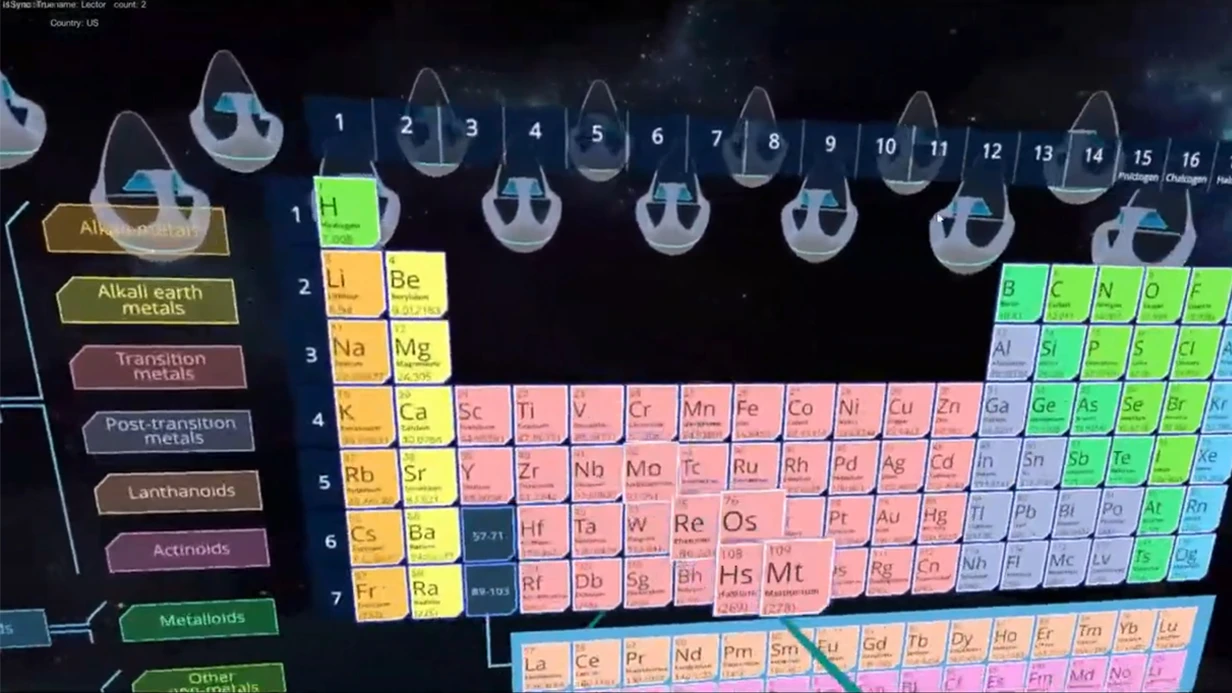


Adaptive Learning for People with Disabilities: VR/AR/MR Solutions
Standard training programs are built around the "average" employee: a uniform pace, identical texts, a familiar interface.
For a person with a disability, this approach becomes a barrier — information is absorbed less effectively, skills don't stick, and confidence drops. Businesses don't get the full return from their staff, and development spending doesn't yield results.
VR/AR/MR solutions change the approach. Adaptive learning for people with disabilities is built on an individual scenario: the virtual environment adjusts to each person's capabilities and pace.
You can regulate difficulty, change presentation formats, use prompts, and practice skills without the risk of making mistakes in real-world conditions. This format provides equal access to knowledge regardless of physical limitations.
For a company, this is corporate training that actually works for everyone. An accessible environment stops being a formality and becomes a development tool: onboarding time shrinks, engagement grows, and learning outcomes are predictable. AR/MR solutions enhance work processes with prompts, supporting employees directly in the task.
We design VR for people with disabilities tailored to your goals and audience — from onboarding to practicing complex operations. Turnkey adaptive learning includes needs analysis, scenario design, customization to your company's specifics, and implementation support.
You get not "technology for technology's sake," but a tool that boosts team effectiveness and creates a genuinely accessible environment.
What You Get: Engagement, Reach, and Brand Awareness Growth
Ordinary booths and presentations lose the battle for attention: a visitor walks past because they see nothing new. VR and AR formats turn brand discovery into a personal experience.
A person doesn't read about a product — they step into an environment where they feel emotions; this works at the level of memorable impressions.
Our team creates such scenarios on professional equipment and with the audience's specific needs in mind, so the experience is stable and safe even for people with disabilities.
For business, this delivers several effects at once: guest engagement, brand awareness growth, and warm leads. While a person is in the VR zone, they are fully absorbed, and afterward, they share their impressions on social media, generating free organic reach.
In corporate communications, VR solves another task: through adaptive training scenarios, a company demonstrates inclusivity and care for employees and clients with disabilities. This strengthens reputation and addresses HR and social goals without unnecessary risks.
Metrics from our case study: at an event with hundreds of guests, the VR zone attracted over 80% of visitors, and after the session, about a third left contacts for a product demonstration. This activity directly converts into repeat inquiries and increased brand awareness.
VR/AR/MR Project Formats for Your Task
Every adaptive learning task requires its own approach. Some need just a virtual tour to feel comfortable in a space, while others need a simulator to practice skills to the point of automation.
We select the format for your audience and goal — so the result is measurable, and users get a comfortable, safe experience.
Below are the standard formats we implement in corporate metaverses:
| Format | Who It's For | What It Delivers to the Client |
|---|---|---|
| Virtual tour | New employees, visitors with limited mobility | Safe introduction to the space, reduced anxiety, savings on guided support |
| Interactive simulator | Employees who need to practice actions in non-standard situations | Risk-free skill practice, fast feedback, progress assessment for each learner |
| Work process simulation | Teams operating in complex environments | Understanding scenarios from the inside, increased engagement, adaptation to individual needs |
Each format is complemented by 3D content and interactive scenarios that adapt to a person's pace and capabilities. This is especially important for people with disabilities: the interface is adjustable, the workload is dosed, and training proceeds in a comfortable mode. As a result, employees get up to speed faster, and you save time on adaptation and support.
Shall we select the format for your task? We'll design the scenario, test it with a real audience, and show the result before launch — so you invest in a solution that truly works.
How We Work on Your Project
We've structured the process so that you understand what's happening and what result you'll get at every stage. No "black box" — just clear steps, documented agreements, and regular feedback.
-
Brief and task immersion. We meet, listen, and clarify — we study the audience and the needs of people with disabilities for whom the training is being created. You get a clear understanding of how we'll solve your task.
-
Design and plan. Based on the brief, we propose a corporate metaverse concept, training scenarios, and a work plan. We agree on timelines and cost — expectations are set before development starts.
-
Project approval. We show a prototype and key mechanics before full development. You make changes at the stage when it's fast and inexpensive, not after launch.
-
Implementation. We build a working version with accessibility in mind: adaptive interfaces, alternative control methods, testing with the target audience. You don't need technical knowledge — you see the result live.
-
VR launch. We deploy the solution, connect the equipment, and train your staff. We run a pilot launch and refine everything to stable operation.
-
Support. We stay in touch after launch: we update content, monitor stability, and help expand scenarios. You can continue developing the solution without searching for a new team.
What's Included in the VR Solution Delivery
When you order a VR solution for adaptive learning, you receive not just an application, but a ready-to-use tool.
We've assembled the delivery package so that implementation doesn't require special technical knowledge from your team, and every detail is thought through in advance.
- An adaptive learning application developed for your organization's objectives: professional skills, social and daily living orientation, communication, and other scenarios.
- VR equipment setup and delivery tailored to the needs of users with disabilities — model selection, calibration, workstation preparation.
- Content adaptation: interfaces, control modes, difficulty levels, and information presentation methods for different nosologies and individual characteristics.
- Instructions for administrators and users — simple guides in text and video format that make it easy to work without constant developer involvement.
- Staff training: hands-on sessions for your specialists so they can confidently run classes, assist participants, and handle typical situations.
- Launch-stage support: a trial period, scenario adjustments, consultations, and technical assistance during the first weeks of operation.
- Regular updates and growth: scenario refinement for new tasks, functionality expansion, and keeping the solution current.
Each item addresses a specific question your team might have: what to do, how to turn it on, how to help a user, what to do if something isn't working. As a result, you get a single working system rather than a set of disconnected components.
This saves time at launch, reduces the load on staff, and guarantees stable results from the very first sessions.
Case Study: A Metaverse for Employee Onboarding
Onboarding employees with disabilities is always an individual scenario, not a standard program. Universal courses don't account for differences in perception, and it's hard for a newcomer to immediately feel part of the team. The result: a drawn-out integration process, extra stress, and an additional burden on mentors.
We solved this pain point with a corporate metaverse. For a large retail chain, we created a virtual copy of the warehouse and sales floor: an employee in a VR headset follows routes, learns operations, and interacts with digital colleagues.
Social adaptation happens right there — in a safe environment where making mistakes isn't scary, and training proceeds at a pace comfortable for each person.
We built the scenario layer on Unity — this choice ensured stable performance on mass-market equipment and flexibility for different limitations. The client didn't need a separate engineering team: standard VR headsets and prepared scenarios were enough.
We measured the implementation results a month later: 40 employees with different forms of disability completed onboarding in two weeks instead of five, training engagement tripled, and probation-period turnover dropped by half. Managers saw the effect in numbers and ordered the metaverse expanded to three more departments.
Key Takeaway
A metaverse doesn't replace live communication — it makes the first step toward the team calm and predictable. For business, this means lower re-hiring costs; for the individual, it means early integration into the work rhythm.
Such VR cases show that adaptive learning for people with disabilities delivers measurable benefits to both sides, not just another KPI checkbox.
How Do We Account for Disability-Specific Needs When Designing a VR Environment?
Adapting a VR environment starts not with technology, but with understanding the specific limitations of future users. People with different forms of disability perceive and interact with space differently, so there's no universal "accessible" scenario.
We analyze the target audience, study the specifics of each nosology, and only then design the interface and training logic.
For people with musculoskeletal impairments, we provide control without active movement — via voice, gaze, or adaptive controllers. For people with low vision, we increase contrast, enlarge elements, and add audio prompts.
For users with hearing impairments — visual cues and subtitles, and for people with cognitive differences — simplified navigation and extended time to complete tasks. As a result, every participant trains at a comfortable pace, without stress or barriers.
Barrier-free design is not a limitation — it's an advantage for everyone. Large buttons, clear icons, and the ability to adjust pace benefit regular employees too, especially during rapid onboarding or in stressful situations.
Such an environment reduces fatigue and improves concentration, which means material is absorbed faster.
Technically, we ensure stable operation on professional equipment and adapt parameters to each nosology.
For example, for people with vestibular disorders, we reduce camera movement dynamics and add rest breaks; for users with limited hand mobility — alternative system entry scenarios. We test every prototype with representatives of the target group to ensure comfort and safety.
This approach turns VR training into a working tool for inclusive development.
You get an environment where people with disabilities learn on equal terms with everyone else, and the company gains a reputation as a responsible employer and a real increase in engagement with training programs.
Frequently Asked Questions About VR Project Implementation
Any new training format raises questions — especially when it comes to VR for people with disabilities. The doubts are understandable: won't the equipment break, will the launch drag on, who will support the project. Below are answers to the most common concerns so you can make your decision with confidence.
What happens if the equipment fails?
We work with professional hardware designed for intensive use. If a breakdown occurs, we'll provide a replacement — the training process won't stop. Warranty obligations and the replacement procedure are documented in the contract.
How long does implementation take?
A typical project takes 4 to 8 weeks: from brief to launch. We work in stages and show intermediate results so you can adjust the scenario. If you need it faster, we'll offer an accelerated format without compromising quality.
What if participants feel uncomfortable in VR?
We configure adaptive scenarios for each person: we select a comfortable pace, simplified controls, and voice prompts. Before launch, we brief the facilitators, and during training we make sure participants don't overexert themselves.
Who will maintain the project after launch?
We take on technical support, updates, and scenario refinement — remotely, with fast response times. Changes are made on request, so content always matches current needs.
If your question isn't on the list, ask us directly: we'll respond within one business day and advise on how to account for your project's specifics.Start Your VR/AR/MR Project Today
Adaptive learning for people with disabilities isn't about technology — it's about equal opportunities. VR/AR solutions help every learner master material at a comfortable pace, without stress or unnecessary barriers.
If you already see such a task for your organization, start with a simple step: submit a request for a VR project.
From there, we work according to a transparent process where you always know what's happening. Here's what you get immediately after reaching out:
- VR request — you send the form or write to us, and we contact you within one business day.
- Consultation — we break down your task: who will be learning, what result you need, which health considerations are important.
- Project estimate — we prepare a transparent cost estimate and realistic timelines, without hidden payments or "surprise" extras.
- Demonstration — we show how VR/AR works on a scenario close to yours, so you decide based on real experience.
- Feedback — we discuss your impressions, refine the concept, and only then sign the contract.
- Launch and support — we take the project through implementation and stay in touch.
This way, you're not just buying development — you're gaining a partnership with a team that has 10+ years of experience building digital spaces for business.
We handle the technical complexity, and you get a tool that makes adaptive learning for people with disabilities more accessible and more effective. Submit your request today — by tomorrow we'll have already taken the first step toward your project.