



Without Architectural Visualization, Complex Solutions Are Hard to Sell
A complex engineering project cannot be sold with drawings alone. The client sees schematics, specifications, and numbers — but cannot picture how the facility will look in real life. Misunderstanding breeds doubt, and doubt drags out approval and kills the deal.
The more complex the solution, the more important it is to present it visually before interest cools.
While you are preparing a presentation in PowerPoint, your competitor is showing the same idea as a spatial 3D presentation. Tender participants remember visual impact, not tables.
A project without architectural visualization is perceived as raw and unfinished — even if it is technically flawless. In the end, the decision is made in favor of whoever is easier to picture.
Architectural visualization becomes the decisive argument in the fight for budget — especially when it comes to expensive projects with a long sales cycle. Competition in a tender is won through visual clarity — that is an axiom.
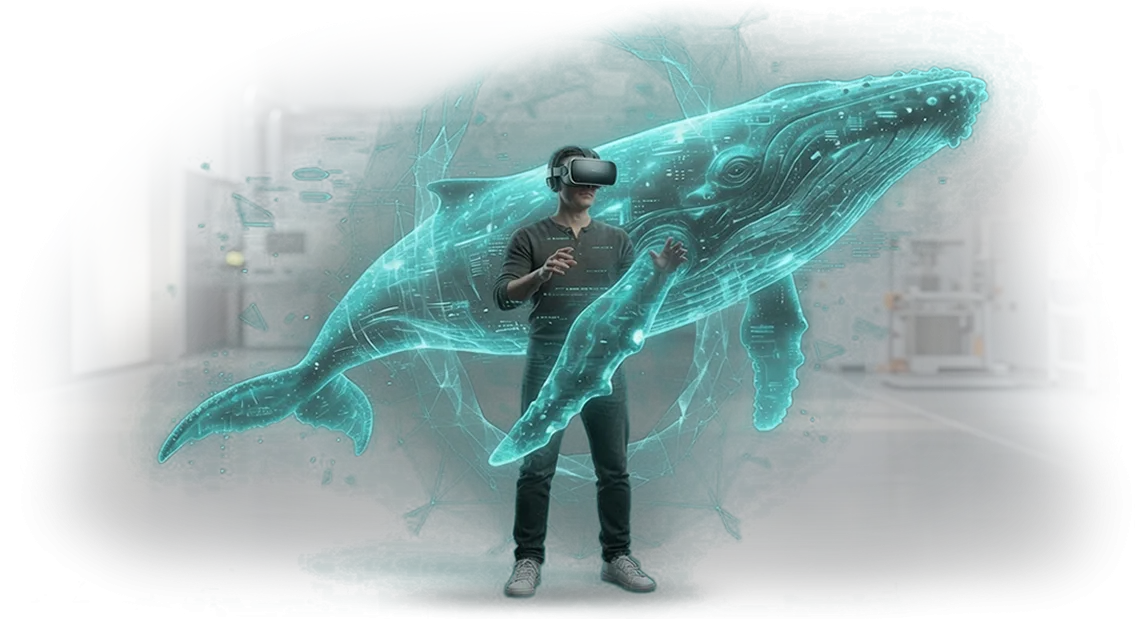
We close this gap. We create interactive VR/AR scenarios where you can walk through your project, examine components, and assess scale and materials.
The client gets a ready-made product for selling the project and defending it in a tender — without unnecessary approvals and long explanations. You no longer need to persuade: the client sees the value for themselves and makes decisions faster.
Why VR and AR Win Over Flat Drawings
Visual clarity of a spatial solution
A flat drawing forces the imagination to fill in reality — and everyone sees it differently. In VR and AR, the client literally walks through the future facility, assessing proportions, light, and materials before construction.
Space ceases to be an abstraction: the visual clarity of the project immediately removes most questions.
Speed of understanding for engineers and managers
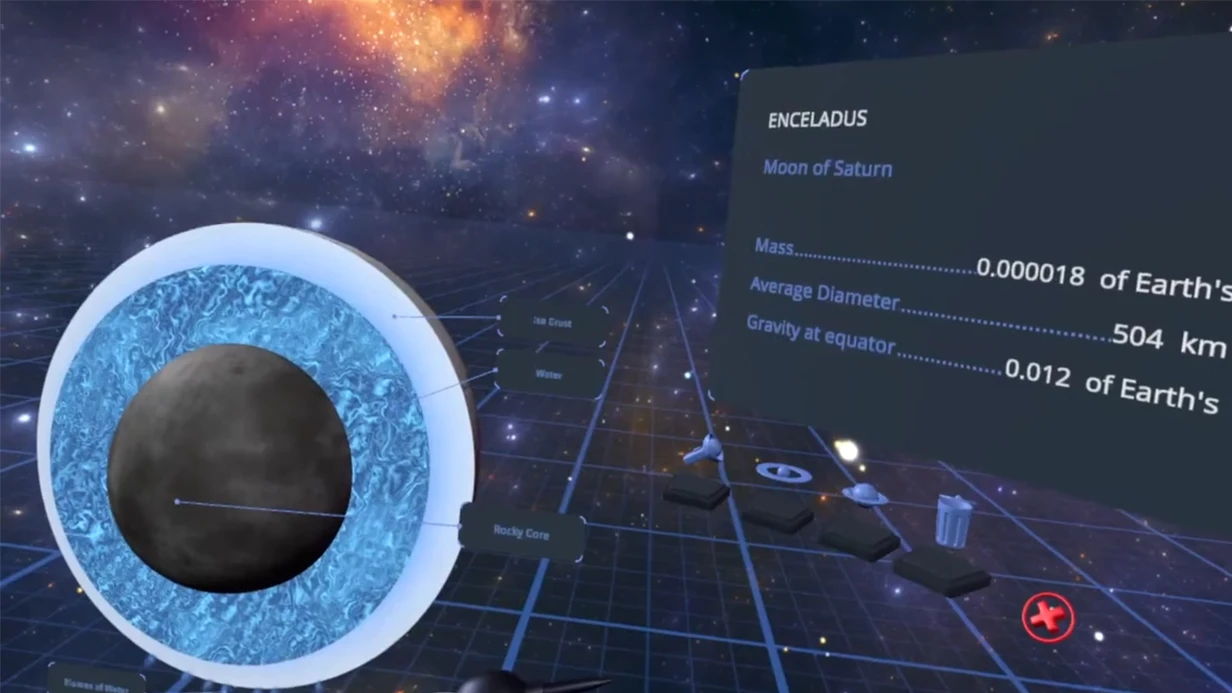
What takes hours to study on a drawing is understood in minutes in virtual reality. An engineer sees the utility systems in the context of the building, while a manager sees the final result without diving into technical details.
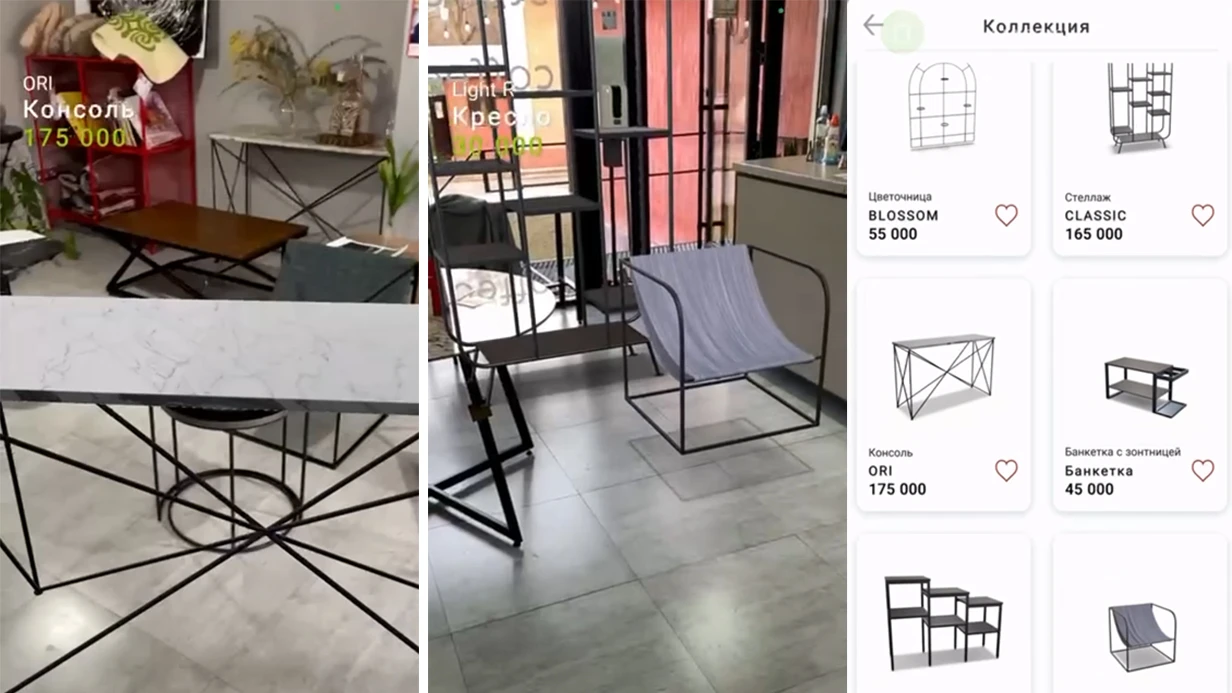
AR lets you overlay the project onto the actual site and verify it before work begins. Fewer meetings, fewer revisions, faster approval.
Emotions that stick
A VR presentation is perceived as an event, not just another slide. It engages even those who have never worked with plans and leaves an impression that works in your favor when decisions are made. The project stands out from others and is remembered at the right moment.
Trust in the project
When partners and investors “walk through” the facility before it exists, the project becomes tangible. This increases trust in the team and shortens the path from presentation to approval.
For more than ten years, we have been creating such solutions on professional equipment — which is why clients come back to us again.
Development formats for your task and budget
Each visualization task — whether selling an apartment at the foundation stage or defending an engineering project before a client — requires its own format.
We have divided the main options so that you see not the technical side, but how quickly and with what reach the result will solve your business problem.
The same facility can be presented in different ways: immerse a person inside the future building, overlay the project onto a real construction site, or create a permanent virtual space for meetings and presentations. The choice depends on the audience, the scenario, and the budget size.
| Format | For whom | What it gives the client |
|---|---|---|
| VR tour | Developers, architectural bureaus, sales departments | Full immersion in a facility that has not yet been built: the buyer “walks through” the apartment and feels the space before construction begins. |
| AR application | Engineering companies, construction supervision, exhibition stands | Overlay of the digital model onto the actual site — clearly shows where utility lines will run and how the facility will fit into its surroundings. |
| Corporate metaverse | Large companies, training centers, holdings | A permanent virtual venue for meetings, employee training, and presenting projects to clients without renting physical spaces. |
If the task is one-off and you need quick visual clarity, a VR tour is suitable. For regular work with real estate or complex engineering solutions, AR overlay is more effective.
When you need a single space for your entire project portfolio and a team from different cities, choose the metaverse.
We will help you plan the format to fit your budget and goals: we start with one facility and, if needed, scale to the entire catalog.
The main thing is that every unit of budget invested brings a measurable result: increased sales conversion, faster approvals, or savings on business trips.
How the process works: from brief to launch
We have structured the process so that you always understand where the project stands and what happens next. No hidden pauses or unexpected tasks — only clear stages that lead to the launch of an application for presenting engineering projects.
Work stages
- Application and visualization brief — we get on a call, discuss your task, audience, and expected result. We record the project goals, formats, and deadlines so that you have a clear work plan.
- Concept and plan — we propose the structure of the future application, usage scenarios, and design solution. You see the direction before development starts and can adjust it without extra costs.
- Development — we turn the concept into a working product. We regularly show intermediate versions so you can monitor progress and see your project come to life.
- Approval and testing — you test the application on your devices, and we make adjustments. The acceptance criterion is a result that is convenient for your team and clear for clients.
- Launch and handover — we install the application on the required equipment, configure it, and train your employees. You receive a ready-made tool, documentation, and confidence that everything works.
- Support and development — we stay in touch after launch: we help with updates, refinements, and technical issues. We do not abandon the project; we continue to support it.
This approach allows us to meet agreed deadlines and achieve a predictable result: you know what happens at each stage and make decisions based on facts, not guesses.
What is included in the delivery: a kit for presenting engineering projects
You receive a complete kit for presenting engineering projects — not just a program, but a fully configured system that any employee can use. Everything is already assembled, tested, and adapted to your task; all that remains is to show the facility to the client.
- Ready-made VR scene with your project: an engineering model presented at full scale, with the necessary layers, sections, and display options.
- Project source files: all graphics, the scene, and settings are provided in editable form — you are not dependent on the developer and can make changes with your own team.
- Instructions for use: simple step-by-step guides for launching, operating, and adapting the scene to a new facility.
- Personnel training: we conduct sessions for managers and engineers so they can confidently present the project to clients and partners.
- Post-delivery support: a dedicated specialist stays in touch throughout the entire support period — answers questions, helps update the scene, and quickly resolves any issues.
- Warranty on all components: if something does not work as expected, we fix and refine it free of charge upon agreement.
- Presentation methodology: we provide a demonstration script — which elements to show first, and what to emphasize for investors, clients, or technical specialists.
This is a complete package — you do not need to hire developers or understand the technologies. You simply open the project, put on the headset, and show the result: vividly, quickly, with the effect of full immersion.
Case study: how we helped get a project approved with VR
Task and solution
Client — engineering bureau “Gidrotech” — was preparing a complex facility for handover: a pumping station with dozens of units and engineering solutions.
The project approval got stuck: commission members interpreted the drawings differently, and static visualizations did not answer how the facility operates in motion.
We proposed a VR case — an interactive presentation instead of a classic report. Using Unreal Engine, we built a digital copy of the station: you can approach any unit, walk around it, change the viewpoint, and see how the mechanisms work.
The commission saw not a picture but the real scale — this eliminated half of the questions even before discussion.
Specifically for directors and engineers, we created a simple scenario: a person controls movement with gaze or a joystick and chooses what to look at. No instructions needed — it takes a minute to learn, even for those who put on a headset for the first time.
Result and feedback
One session was enough for the commission to approve the project. Instead of a series of clarification meetings — a live vote right after the demonstration.
The bureau received not just approval but a contract for the next stage: the client also entrusted them with designing the second phase.
The engineering bureau measured the result not in enthusiastic epithets but in timelines: the approval cycle went from three months to three weeks. This project example became the calling card of “Gidrotech” — now they themselves show the VR presentation to new clients.
Thus, the success of VR implementation turned from a “costly toy” into a working sales tool. If you have a similar task — we will demonstrate the same case on your facility.
What if you need a non-standard format?
Standard solutions are often not enough, especially when it comes to complex engineering projects or unique architecture. We understand that every client comes with their own task — and that is normal.
Therefore, we do not offer a “boxed” product but develop an individual solution that takes into account the specific requirements of your industry.
An individual approach begins with studying your situation: how the audience will use the application, what data is important, and how the result should be integrated into your processes.
We adapt the format to you — whether it is a virtual tour of a not-yet-built building, an interactive presentation for investors, or a training program for employees.
Technically, it can be anything, but the main thing is that you get a tool that solves your business problem, not just a pretty picture.
For architectural visualization, this is especially important: the client needs to see not just a model but the future facility in context, with materials, light, and layout.
We can add usage scenarios — for example, walking through floors, changing finishes in real time, or displaying engineering systems. All of this is done in a single interface that is clear to your clients and partners.
A non-standard format is not a problem but an opportunity to stand out. We take on the design, development, and support, and you get a solution that works for your reputation and saves time on explanations.
Tell us about your specific requirements — we will propose the optimal option and show you what it could look like in your industry.
We answer questions about cost and timelines
Clients rarely ask about technologies — they care about timelines, budget, and what happens after launch. We answer these questions directly and to the point: how the cost is formed, how long development takes, and how we support the project after handover.
Below are answers to common client concerns. If you do not find your question, simply write to us: we will send you a quote for your project within one business day.
How much does visualization development cost?
The cost depends on the complexity of the scenario, the number of facilities, and the required level of detail. We prepare a transparent estimate before the project starts — we fix the price and do not change it during the process. You know the budget in advance and can adjust the scope of work.
What are the development timelines?
A typical project takes 2 to 8 weeks — depending on the tasks and the availability of source materials. After the brief, we set stage deadlines and stick to them. If you need to present a solution by a specific exhibition or tender, we will choose an accelerated format.
What happens if something breaks after launch?
We provide a warranty on the result — during this period, we fix any errors free of charge. After the project is handed over, you stay in touch with our team: we help with updates, add new facilities, and adapt the visualization to new tasks.
How does technical support work?
We do not abandon the project after launch. We set up a communication channel with your team, train employees to work with the visualization, and quickly answer questions. If needed, we sign a support agreement with a fixed response time and a clear procedure.
Shall we discuss your task? Leave a request
You have put months of work into the project documentation, but at a defense or presentation, the investor sees drawings and boring slides. A technically accurate project does not always look convincing, and the decision on financing or approval suffers as a result.
We close this gap: we turn engineering data into a clear virtual tour of the facility before construction begins. The client gets a tool that sells the project itself — at a meeting, exhibition, or negotiations.
Leave a request — we will discuss your task and offer a solution for your scenario. What you get after contacting us:
- A consultation with a VR visualization expert — we will figure out which format suits your project best: a virtual reality headset, a tablet for the meeting room, or an interactive screen.
- A cost and timeline estimate for your task with no hidden conditions — you will understand the budget before work starts.
- A preliminary concept for the presentation scenario: how the client will “walk” through the facility, open floors, and change engineering solutions.
- Access to examples of our work and client testimonials — you will see how it works in your industry.
- A description of the delivery format: you receive a ready-made environment that you can show on a laptop, tablet, or in an office showroom.
- A clear cooperation proposal — no obligations and no forced meetings.
We work with design institutes and construction companies around the world — remotely, meeting deadlines, and with complete supporting documentation.
You do not need to understand technologies: we handle everything — from adapting drawings to training your team to work with the virtual facility.
Write a few words about the project in the form — we will call you back within one business day, clarify the details, and offer the optimal format. We start with a consultation.