

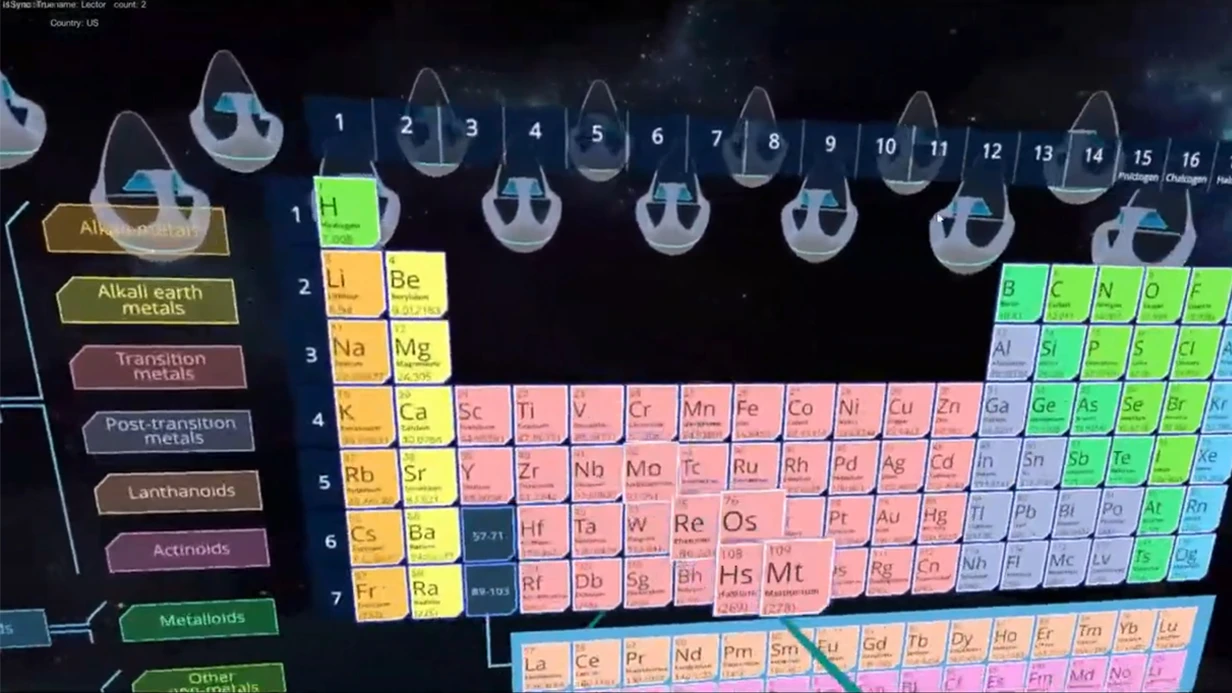


Interactive Demonstrations and Product Presentations for B2B Clients
When it comes to a complex product or a high-tech solution, a regular PDF presentation or catalog stops working.
The customer sees slides but cannot imagine how the product will behave in their business processes — and the deal drags on or falls apart at the "we'll think about it" stage.
This is especially critical in B2B, where the decision is made not by one person but by a group: the executive, the technologist, the purchasing manager. Each of them needs their own answer, and a static product demonstration does not provide it.
An interactive presentation solves this problem. Instead of talking about features — the opportunity to see the product in action, configure it for your own task, or look inside the process.
The client clicks, moves, changes parameters themselves — and at that moment they are no longer a spectator but a participant. It is this kind of immersion that moves the conversation from "let's see" to "when do we implement."
For your team, this means a shorter deal cycle and fewer objections. When the customer has seen for themselves how the product solves their problem, questions like "what if...", "how would this work for us", and "show me again" disappear.
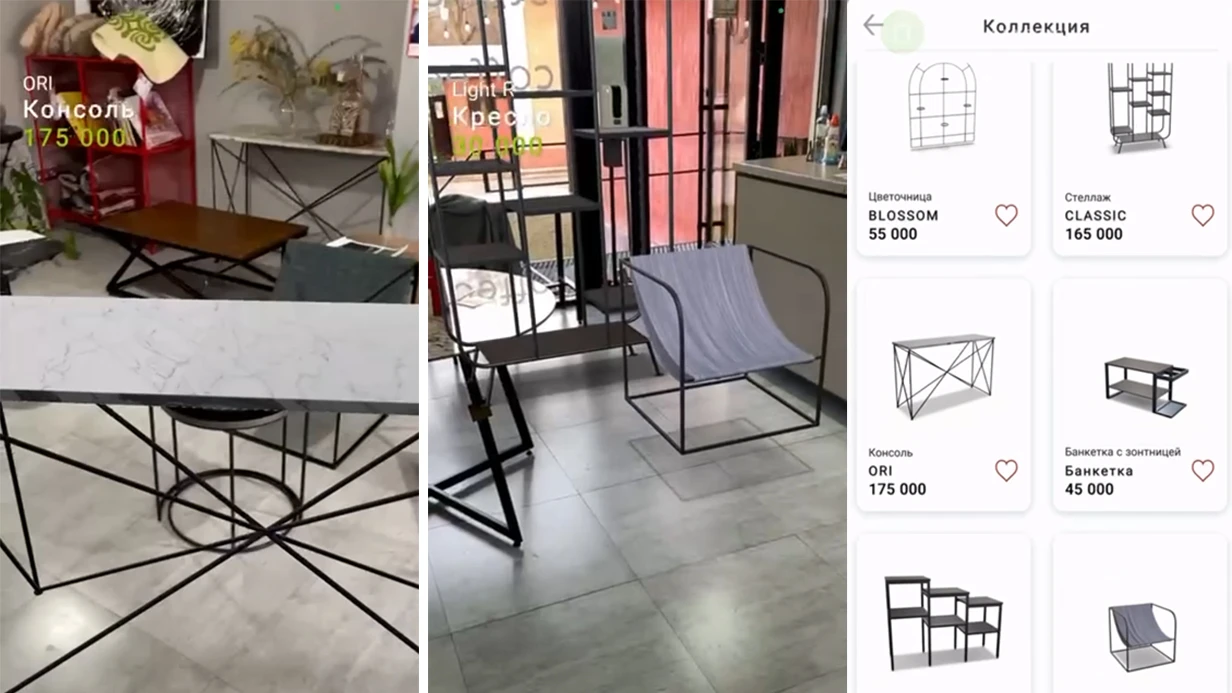
A product demonstration in virtual or augmented reality lets you show not only the object itself but also its operation in context — in a workshop, an office, in logistics, in the field.
We create such solutions on professional equipment and proven tools, so the result is stable: no failures at the most crucial moment of negotiations.
You get a ready-made scenario that can be used in the meeting room, at an exhibition, or in a remote meeting — wherever the fate of a contract is decided.
The client remembers not your slides but their own experience of interacting with the product, and that works for you long after the meeting.
By investing in an interactive presentation once, you get a tool that pays off on every subsequent deal. It does not become outdated with a single showing — it can be supplemented, updated, and adapted for a new customer in hours, not weeks.
This is not just a "pretty picture" but a working sales tool that your managers will use every day.
What a corporate metaverse gives your business
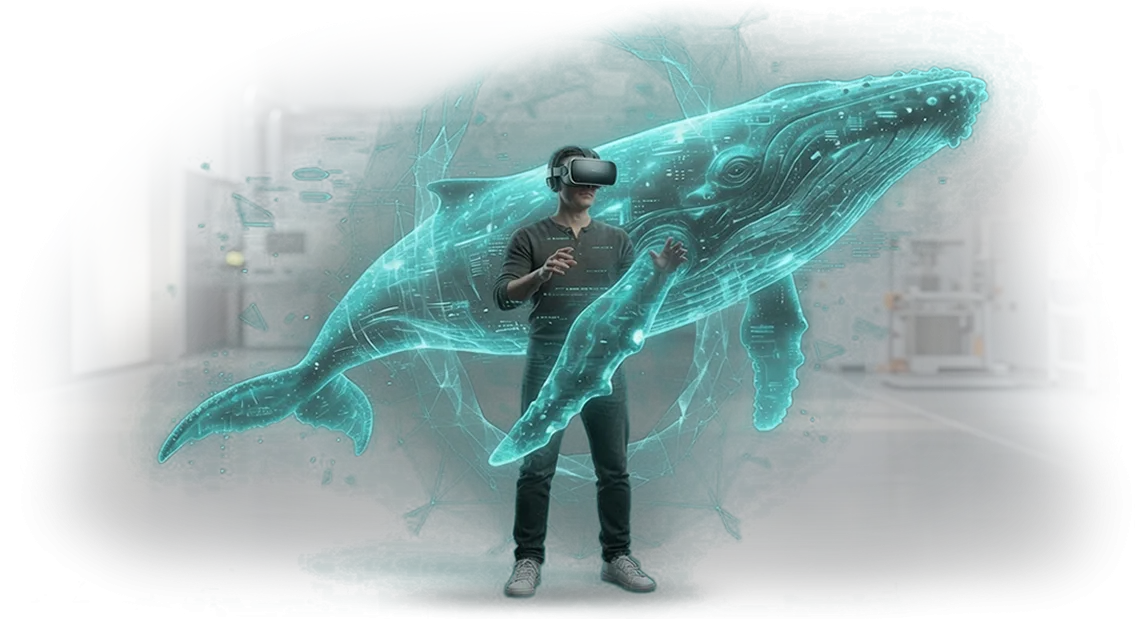
A corporate metaverse is a virtual space for presentations, exhibitions, and training. For B2B companies, it solves a key challenge: clearly showing a complex product that you cannot bring to the client's office or convey on a flat screen.
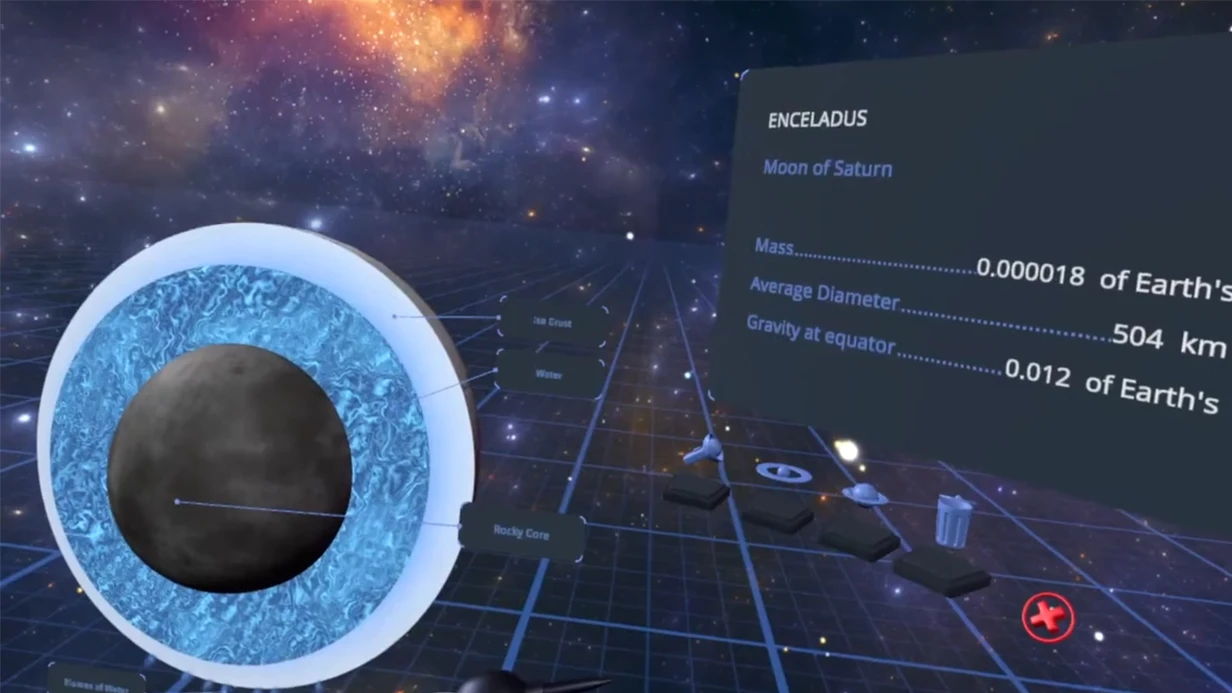
Instead of slides — an interactive 3D world where the buyer explores the product at a convenient pace, zooms in on details, and changes configurations.
The adoption of VR and AR is becoming a standard for companies that want to stand out in a competitive market. The metaverse gives the client not just information but an emotional experience.
This is especially important when working with large B2B customers: the entire team involved in the purchase gathers in one virtual hall, and each person sees the product in action. And emotions, as we know, are remembered more strongly and increase brand loyalty.
For the sales department
An interactive catalog in the metaverse is a showroom that is always with you. The manager walks the client through virtual halls, showing modifications and options in real time.
VR adoption shortens the deal cycle: the buyer sees the product's value faster and postpones decisions less often.
For marketing
The metaverse creates a strong media hook for a product launch or an industry event. Visitors don't just watch a presentation — they explore the space, take photos, and share their impressions on social media. This provides organic reach and a memorable brand image.
For training
VR-based virtual simulators help train employees without spending money on physical samples. New specialists master the material faster; experienced ones practice complex negotiation scenarios. Training becomes safe, visual, and scalable.
We help businesses turn these scenarios into working solutions. The team at our team has been developing VR/AR applications for sales and marketing for over 10 years. We use professional equipment and proven tools, so you get a stable result exactly on time.
We will help you choose the optimal format: from an interactive catalog to a full corporate metaverse with virtual booths and avatars. Let's discuss your product and show you how to strengthen sales, marketing, and training.
Implementation formats: choose the one that fits your task
Virtual presentation formats differ not in appearance but in purpose: show a catalog, let the customer configure a product for themselves, or train them in how to use it. Below are three proven formats that we use in corporate metaverses for B2B presentations.
We choose the format for your product and sales stage: this is not an expensive toy but a working tool for the sales department. Each of them runs in a browser on a laptop, tablet, or VR headset, so the client does not need to install anything.
You select a scenario for the funnel stage: first introduction, qualification, or after-sales training.
| Format | For whom | What it gives the client |
|---|---|---|
| Virtual showroom | For presenting a catalog at meetings and exhibitions | The buyer sees the product in a realistic 3D space, without the costs of sample logistics and venue rental. |
| 3D configurator | For selling products with variable parameters | The client selects characteristics and configuration themselves, and the system immediately shows the final appearance and cost. |
| Training simulator | For teaching clients to work with complex equipment | The client's employee masters work scenarios in a safe environment, without the risk of errors and downtime. |
The formats are easy to combine: a showroom to spark interest, a configurator for the request, a simulator to retain the client. This combination accelerates decision-making and reduces objections at every stage of the funnel. We will help you choose the optimal scenario for your product.
How the project goes: from brief to launch
A clear process with no surprises is what distinguishes a mature contractor. From the very beginning, you see who is responsible for what, where the approval points are, and when the result will be ready.
This eliminates missed deadlines and "vague" outcomes, and you always understand what stage the project is at.
Work stages
-
Brief and immersion in the task. We discuss your goal: which products we show, to which audience, and what should happen after the demonstration. The result is a document with tasks and success criteria.
-
Concept and plan approval. We propose an interaction scenario, determine the composition of scenes and the presentation logic. You get a clear diagram rather than technical details — you can show it to management or partners.
-
Design and development. We create an interface and visual style for your brand. At this stage, you see prototypes and approve the look before the main work begins.
-
VR solution assembly. We turn the approved scenario into a working product. Periodic demonstrations of intermediate versions allow you to adjust course without losing time.
-
Testing and debugging. We check the solution on real devices, fix errors, and adapt it to demonstration conditions — from exhibitions to meeting rooms.
-
Launch and support. We train your team, provide instructions, and stay in touch after launch. We guarantee a fast response to questions and refinements.
This sequence is proven on dozens of B2B projects: it saves time and money because every edit is made at an early stage when its cost is minimal. You get a working VR solution with clear control and a clear result.
What is included in the delivery: a complete package for your project
When you order a corporate metaverse for product demonstrations, it is important to understand what you will get in the end.
We put together the delivery as a ready-made tool for your team: so that after launch you can immediately give presentations, change content, and attract B2B clients.
Here is the complete package included in the project:
- VR/AR/MR application for your task — a product demonstration scenario, a presentation for clients, and navigation through your catalog. It works on professional equipment and looks convincing at any event.
- Admin panel — you independently manage the content: change prices, add new items, update videos and descriptions. No need to wait for developers — everything is done in minutes.
- Staff training — we conduct training sessions for your managers: how to welcome a client in virtual space, build a demonstration, work with equipment, and answer audience questions.
- Instructions and regulations — short and clear guides for launch, daily work, setting up scenarios, and resolving common situations.
- Project support — we stay with you after launch: we answer questions, help with updates, and refine scenarios when business tasks change.
- Result guarantee — we specify deadlines and performance criteria for the application so you can be confident in the quality and delivery timeline.
All of this is included in the project cost — with no hidden fees. You get a transparent plan, a team in touch, and a tool that genuinely helps sell your products.
Case study: how we strengthened a product presentation for a large manufacturer
For Promtech — a large manufacturer of industrial equipment — we developed a VR presentation case study in the format of a corporate metaverse.
Previously, sales relied on PDF catalogs and photos: the customer's engineers found it hard to imagine how the installation would fit into their workshop, how much space it would take, or how to maintain it.
The deal cycle stretched to two months, and some clients went to competitors with a more visual presentation.
We built an interactive scenario: the client "enters" a virtual workshop, sees the equipment at full scale, starts it, changes the configuration, and immediately compares different setups.
The presentation runs on a tablet or headset — the salesperson carries the dialogue and adjusts it in real time to the potential customer's tasks.
Implementation results
- Active product exploration time grew 3 times — from 8 to 25 minutes, instead of passively flipping through slides.
- The deal cycle shortened by 30%: from first showing to commercial proposal now takes 20 days on average instead of 30.
- 7 out of 10 negotiations end with a VR presentation demonstration — it has become the standard in the sales department.
- The share of repeat orders increased: customers see the full range and come back for additional equipment.
Client testimonial
The customer's sales director described the implementation results this way: "Previously, we sold with words — the client did not believe until they saw the equipment in person.
Now they explore the product themselves in VR, ask precise questions, and approve the budget faster. For us, this is direct money and time savings at every stage."
This VR presentation case study shows how a product demonstration environment reduces risks and accelerates decision-making. We are ready to create the same presentation for your B2B clients — tell us about your product, and we will propose a format for your task.
How to choose a format for the specifics of your task?
When it comes to implementing VR/AR for B2B presentations, clients often ask: "Which format will suit us?" The answer depends not on trendy technologies but on three things: how many people will watch the presentation at once, how complex the product you are showing is, and whether interactivity with real equipment is needed.
Simply put, one format works better for a mass event with 50 guests, and a completely different one works for a targeted meeting with three plant directors. We select a solution for the task, not the other way around. Below is a table to help you get your bearings even before talking to us.
| Format | For whom | What it gives the client |
|---|---|---|
| VR presentation in headsets | Individual negotiations and small groups of up to 5 people | Full immersion in the product, the "I am inside the solution" effect |
| AR overlay on a real object | Demonstration at an exhibition or in a showroom | Showing features directly on physical equipment |
| Interactive 3D configurator on screen | Working with large groups or online presentations | Detailed review of options without headsets, quick audience response |
| Corporate metaverse showroom | Ongoing demonstration of the product line | A virtual hall for guests from any city, working 24/7 |
If your task is to regularly show a large product catalog to remote customers, a metaverse showroom covers that need better than one-off headsets. If it is about key negotiations with a major client, an individual VR session provides the maximum wow effect and attention control.
We are ready to conduct a short consultation and propose 2-3 formats for your specifics, with an estimate of timelines and results. The choice is yours — and we make sure each format works to your advantage.
Frequent questions and doubts before placing an order
Before ordering a VR presentation, clients have the same questions: will the timeline slip, will data leak, will it be too complicated for the team, and too expensive for the budget. Let's explain how it works in practice.
In fact, presenting products in a virtual environment is not an experiment but a well-established business tool. Our team use professional equipment and standard scenarios, so integration with your content takes days, not months.
How long does development take?
A standard turnkey project goes through several stages: brief, prototype, assembly, testing, launch.
Thanks to ready-made modules and accumulated experience, we deliver the work within the agreed timeframes — as a rule, faster than you would prepare a traditional exhibition display.
The development time is not affected by the complexity of your product: we adapt scenes for any product line.
Is it safe to show a product in virtual reality?
Data about your product is stored on a secure server, and only your clients get access to the presentation via a personal link. No public content — all sessions take place in a closed environment. This is no less secure than a meeting in a conference room, but with more control and analytics.
Is it difficult for our managers and clients?
Running a session does not require special skills. The manager launches the application, selects a scenario, and guides the client by voice. For the viewer, it is simply a video sequence that can be watched on a phone, tablet, or VR headset. We provide brief training and a cheat sheet — the team starts working on the first day.
Will it cost more than a regular presentation?
A VR presentation replaces an exhibition booth, venue rental, printed materials, and business trips. You pay once for development and then use it for any clients anywhere in the world.
With each showing, the cost per meeting decreases — this is direct savings while maintaining high engagement.
If you still have questions or doubts — write to us. We will tell you how a VR presentation fits into your sales cycle and show examples of projects for your industry.Ready to discuss your project? Leave a request
Leave a development request — and within the next business days we will conduct a VR/AR/MR consultation. We will analyze your task, show how the technology will strengthen your product presentation, and propose a solution for your timeline and goals.
Immediately after your inquiry, you receive:
- a consultation with a specialized expert — we will discuss the task, demonstration formats, and the expected result;
- a selection of solutions for your niche — we will show how similar projects work in B2B sales;
- a preliminary estimate of work scope and timelines — so you understand your planning horizon;
- a project launch plan: from brief and prototype to testing and handover;
- a personal communication channel with the team — no "lost" requests or long waits;
- readiness to start work immediately after goals are agreed upon.
We start with a consultation. You will get concrete answers for your scenario, even if you are not yet sure whether you need a VR presentation. We will advise where the technology genuinely strengthens negotiations and where simple formats are enough.
After the consultation, we draw up a proposal, formalize the agreements, and launch the project. We start with the brief — we record the audience, scenario, key contact points, and success metrics, so that within a few weeks you are showing the product to clients in a new format.
To get a consultation and a starting plan, just fill out the form. Provide your contact details and a few words about the task — we will get back to you within one business day.