



Warehouse Logistics Simulations: How to Avoid Costly Mistakes?
Every mistake in a warehouse is not just a human factor — it's direct losses: damaged goods, missed deadlines, extra hours spent on re-sorting, and even injuries. One incorrect order picking can cost more than several months of staff training. Logistics simulations allow you to see these risks before they turn into real losses.
Traditional briefings and mentoring work while the floor is calm. But during peak season or when new equipment arrives, employees act differently: haste, panic, loss of concentration — and suddenly a warehouse error results in downtime for an entire line.
That's exactly why staff training should be moved into an environment that closely resembles real conditions, but without the consequences.
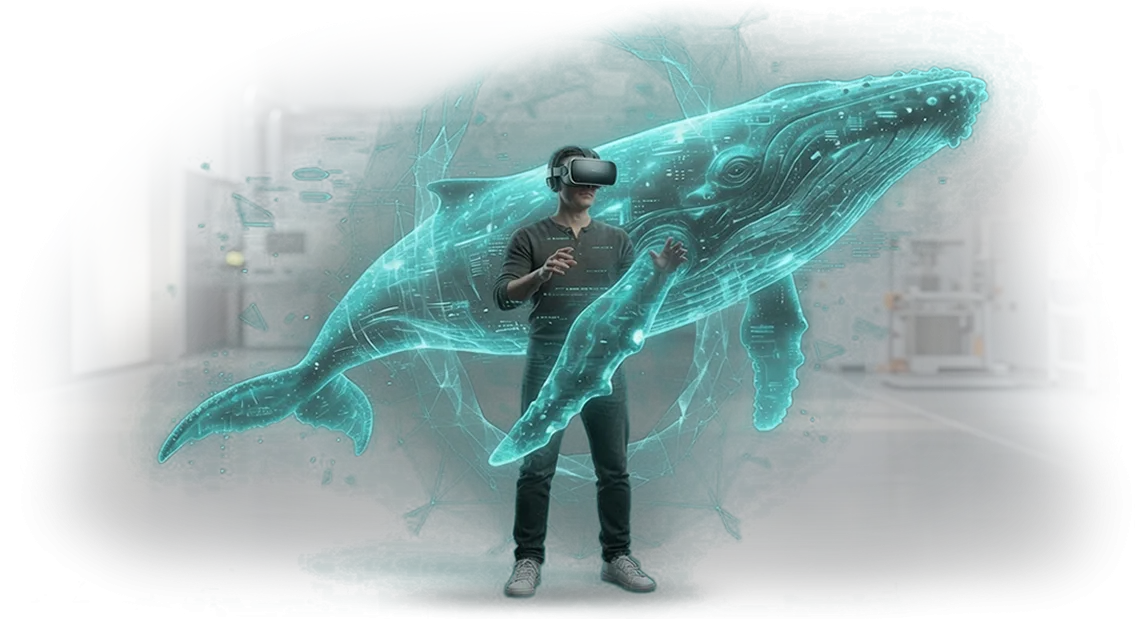
VR for warehouses is a virtual training ground where employees practice receiving, putaway, picking, and shipping under conditions close to the real thing. They can make mistakes without harming your business, while you can see exactly where seconds and money are being lost.
We have been building such logistics simulations for over ten years, tailored to the needs of a specific warehouse — from a small facility to a distribution center.
The result is not "training for the sake of a checkbox," but a measurable reduction in error rates and faster onboarding for new hires. Staff arrive at the real warehouse with ready-made skills, and managers no longer have to guess who is prepared for what. This closes several loss categories at once: defects, downtime, turnover, and insurance risks.
What Implementing VR Trainers for Warehouses Delivers
Training staff on a real warehouse floor is always a risk: rookie mistakes lead to damaged goods, injuries, and downtime. Practicing every scenario takes days and requires experienced mentors, and every mistake during training costs time and money.
The solution — warehouse VR trainers from our team — moves training into a safe virtual environment without stopping operations.
This is not just a simulation, but a full-fledged trainer that replicates the geometry of your warehouse and its logistics processes. Employees learn to operate equipment, pick orders, and work around hazardous zones without causing accidents.
According to statistics, such training reduces error rates by 30–40% — because people practice actions until they become automatic, rather than studying a manual.
Learning speed increases many times over: instead of a week of adaptation — just 2–3 shifts. New hires encounter realistic situations, including emergencies, and receive instant feedback. This allows them to reach planned productivity faster and reduces the burden on mentors.
Safety is a separate benefit. The trainer can simulate falling loads, smoke, or equipment collisions without consequences for people or property. Employees learn to react correctly in extreme conditions, and employers reduce injuries and related costs.
Implementing VR training pays off through reduced errors, faster onboarding, and less downtime. We handle scenario development for your specific needs, and employees train at a convenient time — right at the warehouse.
Formats of Virtual Trainers for Warehouses
Warehouse staff training is one of the most expensive items in logistics. Errors in loading, equipment setup, or routing result in downtime and losses.
Virtual trainers allow skills to be practiced in a safe environment, but to get a real effect, it is important to choose the right implementation format.
We offer three main formats — from a ready-made solution to a fully custom project. The choice depends on the warehouse size, number of employees, and the tasks you need to solve.
| Format | Who it's for | What the client gets |
|---|---|---|
| Ready-made VR scenarios | Small warehouses and distribution centers | Quick start: forklift and standard operations training within a week. Minimal investment and a clear result. |
| Custom development | Large logistics complexes | The trainer replicates your warehouse: racks, aisles, equipment specifics. Training on real routes without risk to goods. |
| VR equipment rental | Seasonal peak loads | Flexible capacity: you pay only for the training period. No need to purchase headsets or maintain infrastructure. |
| Digital twin of the warehouse | Planning and optimization | Model logistics changes before implementation, test scenarios, and train staff on an exact copy of your facility. |
Ready-made scenarios suit you when you need to quickly train large numbers of staff on standard operations. Custom development is for unique processes that cannot be taught with abstract examples. Rental helps out with temporary teams and peak loads.
We work on professional VR equipment and support the project at every stage — from format selection to launch. You get clear progress metrics for each employee and confidence that the skill is solidified before they set foot on the real warehouse floor.
Stages of Implementing a Virtual Warehouse Simulator
Implementing a warehouse VR simulator is not buying a "box" — it's a structured process where each stage brings you closer to a measurable result.
We support the project from the first brief to post-launch support, so you always understand what is happening and what effect you will get at each step.
-
Brief and task audit. We determine which warehouse operations employees need to practice: receiving, picking, shipping, or equipment operation. Based on this, we build the training scenario and success evaluation criteria.
-
Scenario and concept approval. We show what the warehouse zones, traffic routes, and checkpoints will look like. You approve the scenario before development starts — this eliminates costly rework at later stages.
-
Simulator prototype creation. We build a working version with key operations. You can see the training logic, and future users can test basic actions and provide feedback.
-
Full VR application development. We bring the scenario up to a real trainer level: detailed graphics, equipment sounds, and a hint system that guides the employee through the exercise.
-
Testing with your audience. We run a pilot with a group of employees. We collect data on completion time, errors, and subjective comfort — and adjust difficulty and interface based on results.
-
Launch and technical support. We deploy the simulator on your hardware, train administrators, and stay in touch: updating content, adding new scenarios, and helping with technical issues.
This sequence guarantees the result matches your task, not some abstract "let's implement VR for the sake of technology." You control every stage and get a working tool that pays for itself through faster staff preparation and fewer errors on the real warehouse floor.
What's Included in Delivery and Project Support
When you order a custom VR/AR simulator for a warehouse, it's important to understand that you're getting not just an application, but a complete working tool. We define the delivery scope upfront so you know what you receive at each stage and how you'll use the result.
The full delivery package includes:
- Training scenarios — a ready-made exercise library: from goods receiving to complex logistics operations. Scenarios are adapted to your warehouse processes and typical employee errors.
- User interfaces — tailored to worker tasks: navigation, hints, action control. Simple and intuitive even for those trying on a VR headset for the first time.
- Instructions and regulations — text and video guides for administrators and users. They help launch training quickly without involving developers.
- Training for your team — we conduct a session for administrators and instructors: they will be able to independently adjust scenario parameters, add new exercises, and manage the simulation.
- Technical documentation — composition description, deployment procedures, and update recommendations. Useful for your IT department during routine maintenance.
- Support and maintenance — throughout the operational period: consultations, updates, and scenario refinements as your processes change. We stay in touch and help grow the simulator alongside your business.
Support doesn't end at launch — you can always request a new scenario or interface adjustment without lengthy approvals. This lets you quickly adapt training to new tasks and keep up the pace.
Case Study: How We Reduced Warehouse Staff Errors
We implemented a VR simulator for a logistics operator managing three warehouses with over 500 employees. Order picking errors were costing the company dearly: mis-shipments, returns, and missed deadlines.
New employees were trained for weeks, but much of the knowledge was lost — mentors explained things differently, and practicing skills in a real environment was risky.
We built a digital copy of the warehouse where employees in VR headsets pick orders under conditions as close to reality as possible: the same racks, bins, scanners, and emergency situations — missing items, priority conflicts, and swapped bins.
An error in the simulation doesn't cause defects but is recorded by the system, and the next employee gets an exercise specifically targeting the problem action.
The implementation results exceeded expectations. In the first three months, order picking errors dropped by 42%, onboarding time was cut from three days to six hours — in a single shift, an employee experiences a week of real work in the simulation. Turnover during the probation period decreased, and order processing speed increased by 18%.
The client's operations director assessed the project: "We saw for the first time how an inexperienced newcomer picks orders without a single mistake before even going on the line.
For us, this isn't entertainment — it's a quality control tool." The investment paid for itself in four months through reduced returns and a lower burden on mentors.
We didn't just hand over the simulator: we configured scenarios to warehouse regulations, trained two internal instructors, and implemented a dashboard where managers can see each employee's progress. After the pilot, the company ordered an expansion to its two other warehouses.
How to Choose the Right Format for Your Task?
The choice of simulation format depends not on trends or technical complexity, but on the task you're solving.
If you need to quickly train newcomers on basic warehouse operations, short augmented reality scenarios that guide the sequence of actions right at the workstation are sufficient.
If rare emergency situations, interaction with heavy equipment, or complex route logistics need to be practiced, full immersion in a virtual environment is essential.
Full VR simulation delivers presence and maximum realism. Employees memorize action sequences through muscle memory, not from a manual. This format makes sense when a mistake on a real warehouse floor is expensive: damaged goods, equipment downtime, injury.
AR solutions, on the other hand, are convenient for supporting employees during work — overlaying instructions, highlighting the right bins, checking assembly correctness. This reduces errors without interrupting real operations.
When selecting a solution, we work from three parameters: scenario complexity, number of trainees, and implementation budget. For small teams and regular training, an AR module embedded in the workflow is sufficient.
For mass training across multiple warehouses, a VR trainer that can run on several stations simultaneously is more effective. If the task changes over time — for example, new storage zones or equipment types appear — a modular system that's easy to extend is the better choice.
The key is not to guess the format on your own, but to start with a short task audit. We help identify bottlenecks in your current training, calculate potential savings on errors, and propose a format that delivers results within your timeframe.
After a trial simulation, you'll see concrete metrics: scenario completion speed, error counts, employee engagement. That's how the choice stops being a guessing game and becomes a well-founded decision for your task and budget.
Frequently Asked Questions About Implementation
Any new tool raises questions — especially when it comes to implementing virtual trainers in warehouse workflows. Managers most often ask about timelines, budget, compatibility with existing equipment, and how employees will perceive the technology.
Below are answers to these questions. If your scenario isn't listed here, we'll send a detailed solution after a short consultation.
How long does simulator implementation take?
A typical project takes 4 to 8 weeks from contract signing. The timeline depends on the number of scenarios and the level of detail of your warehouse. We run a pilot on real operational data so you can see the first training results within a month.
How expensive is this and what makes up the budget?
The cost consists of three parts: scenario development for your warehouse, the equipment set, and a usage license. We don't sell a "box" — we offer a solution for your task.
As a rule, the project pays for itself through reduced errors and faster onboarding of new employees.
Will the solution work with our existing equipment?
We work with professional VR systems that are compatible with most modern computers used in warehouses. If you already have headsets, we'll check compatibility. If not, we'll provide a rental set or help you select the optimal option for your budget.
Is it difficult to train staff to work in a virtual environment?
Training takes no more than an hour. We design the interface so employees immediately understand what to do: hints appear at the right moment, and instructions are duplicated by voice and text.
We also conduct a training session for your mentors — they'll be able to onboard newcomers into the program on their own.
What if employees don't embrace the technology?
People adapt faster when they see personal benefit: less stress during initial shifts, clear steps, and safe mistakes during training. We include short demo sessions and collect feedback to remove the barrier before the main program even starts.
Ready to Launch a Simulation at Your Warehouse? Get in Touch
Starting a project without confidence in the result is an unnecessary risk.
We suggest starting with a short consultation and a live demo: you'll see what a simulation looks like on a real warehouse floor, which scenarios are already refined, and how it will affect employee learning speed.
During the meeting, we'll review your task, show project examples, and answer questions — how long implementation takes, how to integrate the simulation into existing training, and how to measure results. This carries no obligation.
Next Steps — Simple and Clear
- Submit a request — via the form on the website or in a messenger; it takes just a couple of minutes.
- Get a consultation — we'll discuss your task, current processes, and training goals.
- See a demo — we'll demonstrate the simulation on your typical operations or a ready-made example.
- Get a project estimate — we'll prepare a transparent timeline and scope of work for your warehouse.
- Approve the implementation plan — we'll define the stages, required equipment, and training for your team.
- Launch and support — after the start, we stay in touch, update scenarios, and help with operation.
Submit a request for a VR consultation — we'll call you back within one business day, find a convenient time for the demo, and answer all your questions. Start with an initial step that will help you make an informed decision.