




Why Doesn't Occupational Safety Training Change Employee Behavior?
Every year, companies spend hours on lectures and occupational safety briefings — yet the injury rate doesn't drop. Employees sit through the mandatory hours, nod at the right moments, and within a week can't remember what to press or how to act in an emergency. Formal training is completed just to check a box: it doesn't change habits or create safe behavior.
The reason is that a classic briefing doesn't engage people. Hearing about risks is one thing; finding yourself in a situation where you must make a quick decision is quite another.
In a real environment, an employee acts on autopilot, out of habit — not from memory of a slideshow.
Safety training only becomes effective when a person experiences the scenario firsthand, sees the consequences of a mistake, and practices the correct actions until they become automatic.
For a business, this is a direct financial loss: workplace accidents mean sick leave, downtime, fines, and reputational risks.
A manager can remind people about safety rules as much as they like, but as long as occupational safety training is just talking at a screen, behavior won't change. What's needed is a format that engages emotions and muscle memory, not just hearing.
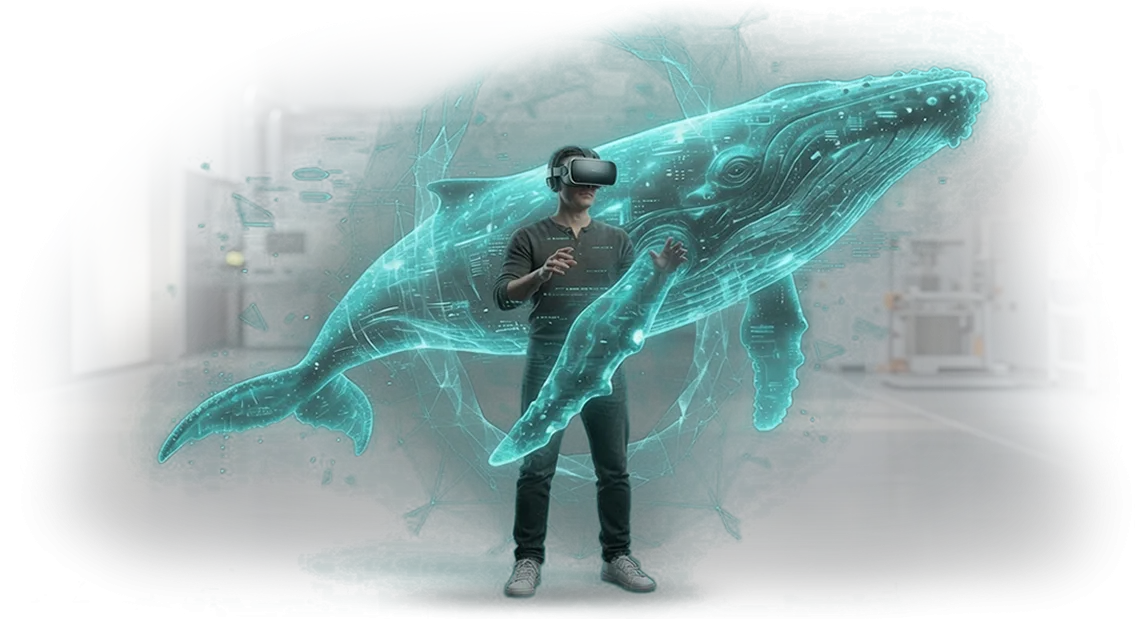
That's exactly why we at our team are building a corporate metaverse for safety training. An employee enters a realistic virtual environment where they must find the violation themselves, make a decision, and see the result.
Such an experience stays in memory for a long time and carries over into real work — which means training starts delivering real value instead of just meeting a requirement.
What Does a Modern Approach to Employee Training Offer Your Business?
Traditional lectures and tests don't prepare an employee for a real emergency: a person knows the theory but freezes at the sight of fire or a leak. A modern approach is immersion in a virtual scenario where decisions are made with your hands, not from memory.
That's how a lasting skill is formed — one that stays with a person in a stressful situation. Let's look at what this gives your business.
Fewer Injuries Without Halting Production
Practicing dangerous situations in a virtual environment lets an employee make mistakes without consequences for health or equipment. They live through a fire, evacuation, or work-at-height scenario and drill their actions until they're automatic. As a result, accidents become a rare exception rather than a systemic problem.
At the same time, training doesn't require stopping the workshop or pulling people from the workflow. Sessions take place on-site or remotely, at convenient times, without gathering groups in classrooms. You don't lose hours of downtime, employees don't waste time commuting — and safety improves.
Transparent Tracking of Every Employee
The system records the trainee's actions: how they react to an alarm signal, which button they press, how long they take to evacuate. You see who has truly mastered the program and who has only made a mark in the log.
This eliminates a box-ticking approach and provides honest reporting for management and regulatory authorities.
This corporate training format noticeably increases the effectiveness of occupational safety training: material is absorbed better, and each employee's level of preparedness is confirmed by objective data.
A Ready-Made Solution from a Proven Partner
Wehave been developing VR simulators for industrial enterprises, construction companies, and the energy sector for more than 10 years. We deliver projects turnkey: from scenario to implementation and support.
You receive not an abstract "metaverse," but a working tool that integrates into your training system and starts delivering value from the very first session.
Corporate Training Formats: Which One Fits Your Objective?
Occupational safety isn't about checking boxes — it's about preserving employees' health. Conventional briefings are poorly remembered: a week later, listeners recall only part of the rules and act on guesswork in a critical situation.
That's why corporate training formats are shifting from lectures toward practice — and the choice depends on the objective: run a quick interactive briefing, rehearse a rare accident, or immerse the team in a virtual copy of your facility.
Below is a table of the main formats we use in our projects. It helps align business objectives with the right tool.
Training Format Comparison
| Format | Who it's for | What it gives the client |
|---|---|---|
| Classic briefing | New employees, office personnel | Minimal cost and a familiar process, but low engagement and weak rule retention |
| Interactive briefing | Regular staff training | The employee makes decisions on their own in a safe environment, while the system records mistakes and suggests what to review |
| Virtual simulators | Workers in hazardous professions: height workers, electricians, operators | Practice of emergency scenarios without risk, actions drilled to automaticity, fewer injuries on the real site |
| Corporate metaverse | Large companies with branches and distributed teams | A single training space for all divisions, unified statistics per employee, savings on business trips and instructors |
Each format solves its own task: interactive briefings raise engagement, virtual simulators build durable skills, and the corporate metaverse unites training for the entire company on one platform.
We'll choose a format to match your regulations and budget and design the scenario so the result is measurable: fewer errors, shorter preparation time, and more successfully passed inspections.
How Project Work Goes: From Brief to Launch
We structure our work so that you always know what stage the project is at and what you'll get as a result. Below are the typical development stages that all our corporate-metaverse training projects go through. You receive a turnkey project with a transparent process, clear deadlines, and no surprises.
-
Brief and discovery. We start with interviews with you and your occupational safety specialists. We capture training scenarios, target employee roles, reporting requirements, and the specifics of your production processes. This becomes the foundation of the future product.
-
Plan and estimate. We prepare a step-by-step development plan with a timeline and a fixed cost. You approve the document — and we get to work.
-
Concept approval. We present the scenarios and visual style of the future simulators. We make edits before the main scope begins — this saves time and budget.
-
Development and content. We build the simulators, create virtual spaces, load training materials, and configure scenarios. You receive intermediate versions and see progress at every step.
-
Testing and training rollout. We run a pilot test with your employees, collect feedback, and fine-tune details. We connect the results tracking system and integrate it with your learning management system.
-
Program launch and support. We launch training in full, train administrators, and hand over documentation. We stay available for technical support and enhancements.
What's Included in Delivery: A Complete Kit for Your Team
The delivery isn't a set of files — it's a ready-to-use kit. Everything needed to launch occupational health and safety trainings, we hand over to your team as a complete package: scenarios, content, integrations, and instruction.
You get a solution that can be embedded into your training system without any programmer involvement.
-
Ready-made training scenarios: typical situations are practiced — work at height, electrical safety, fire safety, evacuation. The scenarios are developed around your regulations and real risks.
-
Training VR content: a virtual copy of your facility (workshop, warehouse, office, site). An employee is immersed in a familiar environment and learns to recognize hazards without risk to life.
-
LMS integration: results from every completed session automatically enter your record-keeping system. Protocols, scores, and time are logged without manual input.
-
Admin panel: course assignment, progress control, error analysis. The interface is clear to your team and requires no technical background.
-
Reporting for management: summary data on coverage, average score, and the most common errors. Reports help you track training dynamics and personnel readiness for real situations.
-
Employee onboarding and support: we brief administrators and methodologists, hand over methodology materials, and support you at launch. Technical support is included — you're never left alone with the system.
The result: your team gets a convenient tool that strengthens the safety culture and satisfies training requirements. It's one complete working kit, not a set of scattered apps.
Case Study: How We Reduced Injuries on the Production Floor
We helped a metallurgical plant replace paper briefings and occupational safety lectures with a corporate metaverse equipped with VR simulators. Instead of theory, employees step into dangerous scenarios without any risk to life and learn to act automatically.
What We Did
We developed five VR scenarios tailored to the plant's real risks: work at height, filter replacement, a workshop fire, evacuation, and chemical spill response.
Occupational safety specialists approved them directly in the digital mockup — approval time was cut in half, from three weeks down to one. The program launched in a month instead of a quarter, and in this type of production, training speed has a direct impact on people's safety.
Implementation Results
Within the first six months, all 1,200 employees of the plant completed the training. The average knowledge-check score rose from 64 to 92 points, and the number of severe incidents fell by 37%.
96% of workers reached the end of the VR scenario — engagement was nearly twice as high as with a standard video briefing.
The plant's management came back two months later with a request to expand the system to new workshops and relaunch it for contractors.
For us, this is the main indicator of effectiveness: VR training pays for itself not as entertainment, but as a tool for reducing injuries and growing the safety culture in production.
How to Choose a Training Format That Fits Your Task?
The choice of a training format begins not with technology, but with the specific task you need to solve.
If employees need to practice actions in an emergency — a fire, a chemical leak, or work at height — a classic lecture or video won't provide the required level of engagement.
In such cases, an immersive scenario lets every participant go through the situation "from the inside" and remember the correct algorithm at the level of muscle memory.
It's important to assess the scale and geographic spread of your production. If the company has multiple sites and thousands of employees, in-person training is difficult and expensive: you have to pull people from work, rent venues, and hire instructors.
The corporate metaverse solves this problem — training happens remotely, at convenient times, and results are recorded automatically. And the level of realism stays high, which is critical for practicing dangerous scenarios.
Another factor is the specific requirements of your industry. At one enterprise, the key task is evacuation and actions in smoky conditions; at another, it's working with electrical equipment; at a third, it's interacting with heavy machinery.
We tailor the solution to your specifics: we simulate exactly the situations that actually occur at your facility. This makes training relevant rather than abstract.
Finally, take into account the experience level of your audience. New employees need basic scenarios and detailed feedback; experienced ones need complex inputs and reaction-speed tests.
The right format supports a mixed audience: a newcomer progresses at a comfortable pace, while a seasoned specialist gets a challenge that makes them think.
In the end, you're not just meeting occupational safety requirements — you're genuinely reducing the risk of incidents and injuries, with metrics that management can understand.
Frequently Asked Questions About Implementing Virtual Simulators
Implementing VR simulators for occupational safety is a responsible step, and you probably have questions. We — our team — hear them from every client, so we've collected answers to the most frequent ones. Below is no complex technical jargon — only what matters for your business.
Is it difficult to integrate VR training into current learning processes?
Integration is carried out in stages: we analyze your programs, adapt scenarios, and help embed the simulator into the existing system. Employees complete a session in 15–20 minutes, and your specialist conducts the briefing — we support you at every stage.
How secure is employee data?
Simulators run on your infrastructure or in a secure cloud. Employee data is not shared with third parties, results are stored according to your requirements, and access is role-based — only you can see them.
How long does simulator development take?
A typical scenario takes 4–8 weeks from the moment the brief and requirements are approved. We fix the deadlines in the contract and show intermediate versions at every stage. We work according to a transparent plan and never miss deadlines — that's our guarantee.
What if the scenario needs to be changed after launch?
Edits before the final version are included in the cost. After launch, changes are made according to a transparent price list; small refinements are often done free of charge as part of support. You pay only for new modules or scenarios.
Order Your Training and Safety System Development
Leave a request — and we'll close your safety training challenge turnkey: from scenario to deployment on your devices. We'll show a demo on the first call, design the system around your regulations, and help you implement it in your processes without halting production.
Simulator development takes between 2 and 6 weeks — after that, the system runs on its own: it monitors completion, generates reports, and reduces the workload on instructors.
For corporate metaverses, we use well-tuned tools that have already proven themselves in industrial and retail projects.
What you get by reaching out:
- Expert consultation — we'll analyze your task, calculate timelines and budget, and offer 2–3 solution options.
- Demo access to ready-made modules — see how the simulators look and how they engage employees.
- An individual training scenario based on your instructions, regulations, and hazard zones.
- Training deployed in an LMS or a separate portal — employees access it from their workstation or in a VR zone.
- An admin panel for completion control and analytics: who has completed the training, what mistakes they make, and where to retake it.
- Support after launch — we update scenarios, add new areas, and help expand to other sites.
- A guarantee of results — we set deadlines and metrics in the contract, so you accept the work based on actual outcomes.
Order training today — and in a month, your employees will start practicing skills in a safe environment. All you need to do is leave your contacts in the form below: we'll get in touch within one business day, answer your questions, and prepare a preliminary proposal.