



Insurance simulations and calculators don't engage — VR solves it
Standard insurance simulations and calculators show numbers — but they don't create a picture. The client sees abstract percentages and terms and doesn't understand how insurance will protect them in a real situation. As a result, interest fades and the decision is postponed.
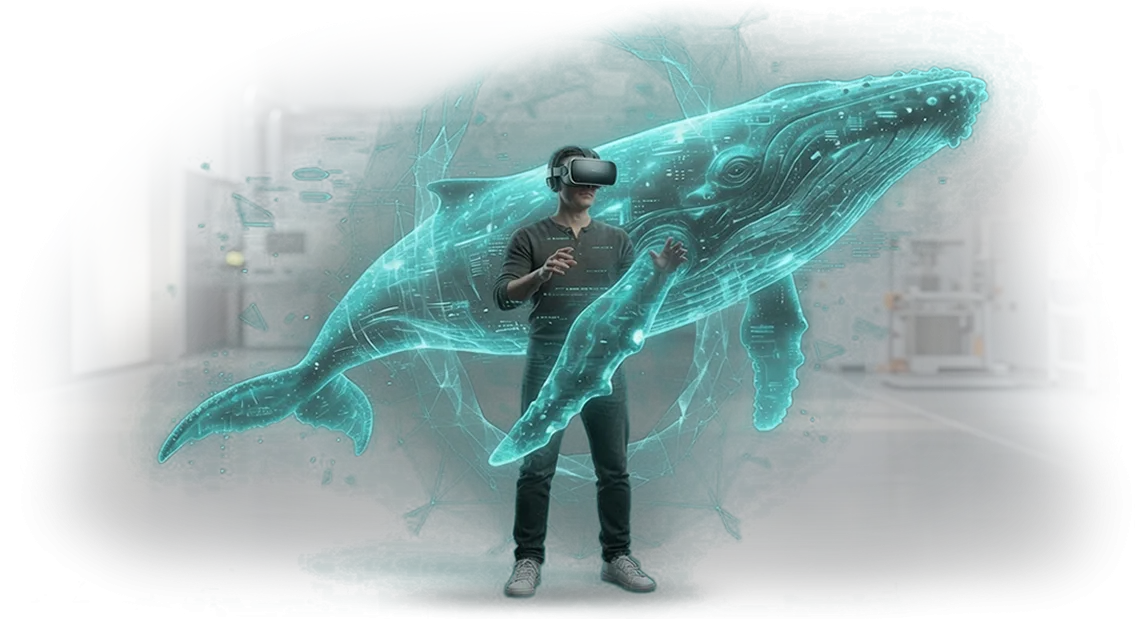
Virtual reality translates calculations into an understandable scenario: a person sees with their own eyes the consequences of a risk and how an insurance policy works.
An interactive calculator becomes part of that story — changing parameters and immediately seeing the result is easier than flipping through tables. This holds attention, lowers the trust barrier, and shortens the path to purchase.
VR for insurance delivers another important effect — emotion. An immersive demonstration is remembered many times better than text or video. The client doesn't just "learn about the product" — they live through the future situation.
Such an experience builds loyalty and makes the offer noticeably more valuable than competitors who still work through static pages and forms.
We help insurance companies implement virtual simulations and calculators that engage clients from the first minute. We tailor scenarios to your product and audience so that calculations become vivid stories and clients become buyers. This is where the "boring math" ends and a live dialogue with the policyholder begins.
What benefits VR calculators bring to your business
A regular insurance calculator shows a figure — the client doesn't feel what they are paying for. A VR calculator immerses them in a situation: an accident, flooding, property damage.
Seeing risks firsthand, a person makes an informed decision — and moves to purchasing a policy faster.
Conversion growth through visual clarity
When a client "experiences" an insured event in a virtual environment, the value of the service becomes obvious. They don't need to read long terms — they see the consequences and the protection they receive themselves.
Such engagement increases conversion: the visitor reaches the checkout instead of leaving to compare prices with competitors.
Client retention and trust
A VR calculator turns a one-time inquiry into a memorable experience. A person returns to the company that showed care for their peace of mind. After a virtual demonstration, trust in the brand grows, and along with it — the share of repeat inquiries and policy renewals.
Increased brand awareness
An unusual format attracts attention and becomes news on its own. Clients share screenshots and impressions on social media, tell colleagues — the brand gets mentioned even by those who haven't purchased yet. This way, a VR calculator works for reach without an additional advertising budget.
At our team we create insurance VR simulations on professional equipment and our own server architecture. This guarantees stable operation of calculators in any browser, on headsets and kiosks — even at peak simultaneous connections.
The client gets not a demo version but a ready-made sales tool that measurably increases conversion and awareness.
Virtual reality formats for your task
For an insurance company, virtual reality is not entertainment but a working tool. It can be used to train employees without taking them away from work, show clients insurance terms visually, and let them "feel" the future product themselves.
But there is no one-size-fits-all solution: it's important to choose a format for a specific task and audience.
Below are the three main formats we use in projects for insurance simulations and calculators. They differ in depth of immersion, required equipment, and use case.
| Format | For whom | What it gives the client |
|---|---|---|
| VR simulation for training | Employees working with risks and loss adjustment | Safe practice of real situations without consequences or downtime |
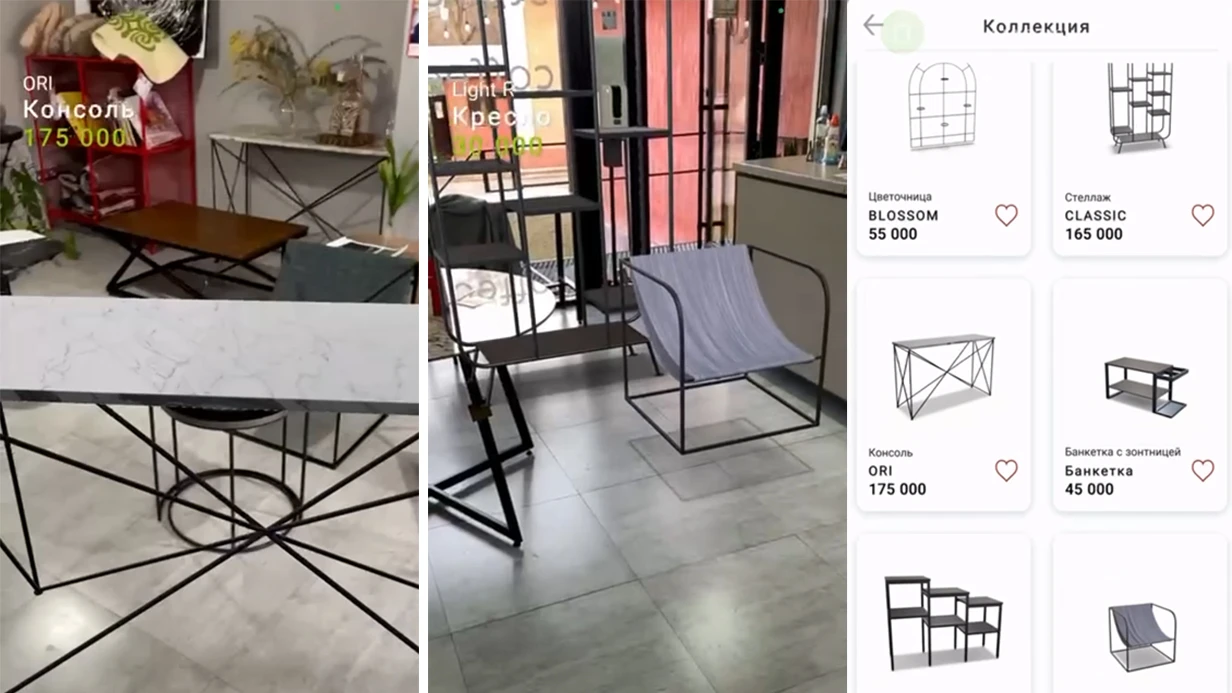
| Augmented reality (AR) for insurance | Sales managers and clients | Overlaying digital hints on a real object — quick explanation of insurance terms |
| Interactive VR calculator | Policyholders and applicants | Immersion in a virtual scenario with cost and benefit calculation — the client sees how the price is formed |
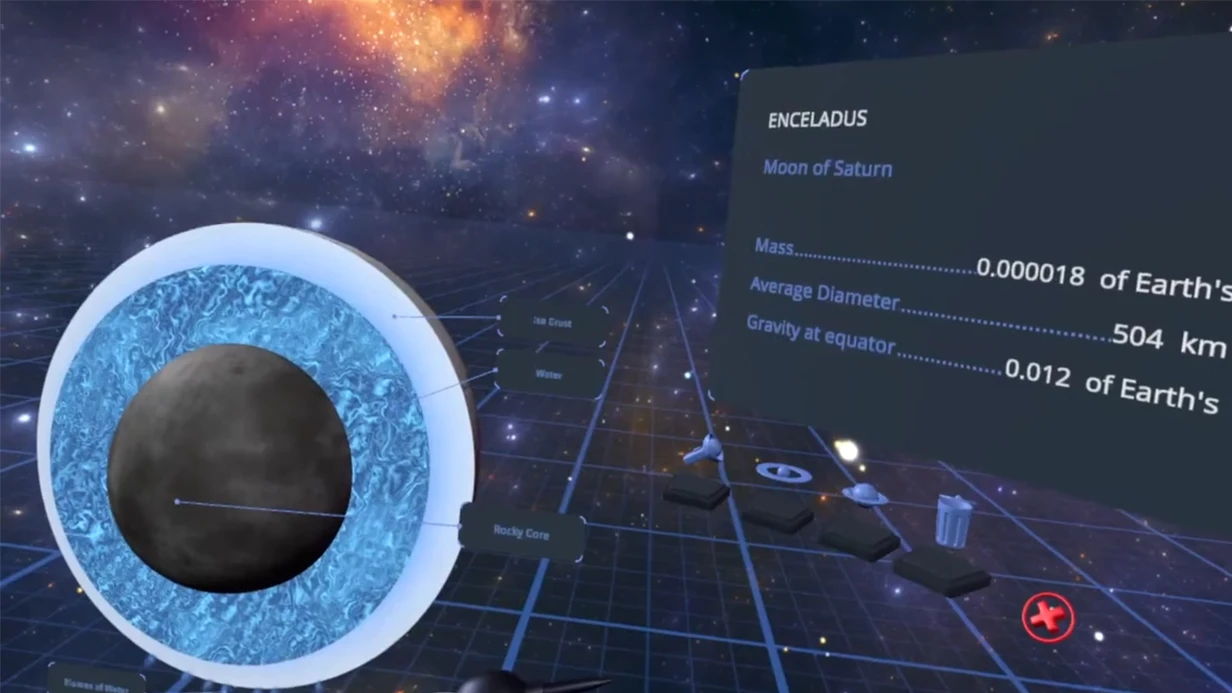
The key advantage of this approach is flexibility. For mass training, a VR simulation on standalone headsets is suitable: employees go through the scenario at their own pace, and the manager sees passing statistics.
For client meetings, AR is more effective — no need to put on bulky equipment; a smartphone or tablet is enough to show how an insurance policy works in real life.
Interactive VR calculators solve the task of calculation transparency. A client in a virtual environment goes through key situations (from a household incident to a serious event) and immediately sees how the terms affect the cost. This increases trust and shortens consultation time.
If you're not sure which format suits you, describe your task, and we'll offer the optimal option considering your audience and launch timeline. We work on professional equipment, so the result will be stable both in a pilot launch and at scale.
How VR application development goes: from brief to launch
We structured the process so that you see the result at every step and understand what you are paying for. No "black box": from the first brief to launch, all stages are covered by a contract, deadlines, and approval checkpoints. Below is how we work on VR projects for insurance simulations and calculators.
-
Brief and immersion in the task — we record the goals: which insurance scenarios need to be shown, who your audience is, and what result you consider a success.
At this stage, we determine where VR truly solves the task and where a regular calculator is enough — so you don't overpay.
-
Concept and scenario — we propose the structure of the future simulation: how the user interacts with the insurance calculator, what steps they go through, and what the interface looks like. You receive a description "on paper" before money is invested in development.
-
Prototype approval — we create a simplified interactive model of the future application. You test it on a headset and make edits to the logic and interface without extra costs — it's cheaper to change a prototype than a finished version.
-
VR application development — we build a full-fledged simulation with professional 3D models and correct calculation logic. Every 1-2 weeks we show intermediate versions so you see progress and can adjust course.
-
Testing on real equipment — we check how the application works on the headsets you plan to use. We eliminate errors and bring control convenience and system stability to a reliable state.
-
Launch and commissioning — we install the solution on your hardware, train employees to work with the simulation, and support the first users. At this stage, you receive a working tool, not a set of files.
-
Support and development — after launch we stay in touch: we update scenarios, add new insurance products, or change calculation terms. If the business changes, the application changes with it.
The result — you get a working VR tool within the agreed timeline, not a "lifetime" project. Each stage is approved with you, so there are no unexpected surprises or hidden surcharges.
What's included in the VR product delivery: the complete package
Delivering a VR product is not a "file with an application" but a ready-made working tool with everything needed for its implementation and use in your insurance practice.
We assemble the package in advance so that you work with the product from day one instead of figuring out how to launch it and train employees.
- VR application for insurance simulations and calculators — a ready-made product for your scenarios: from policy calculation to practicing actions in an insured event. The application runs on professional equipment and is immediately ready for client demonstrations or staff training.
- Administrative panel — management of scenarios, data, and simulation settings. You change calculation parameters yourself, add new situations, and monitor results without developer involvement.
- User and administrator documentation — clear instructions on how to launch a VR scenario, change parameters, and connect equipment. No "specialists in every office": the documentation is written for regular employees.
- Training for your team — we conduct sessions for administrators and operators, showing how to use the product in real tasks. Employees get video lessons and cheat sheets that stay with you.
- Deployment and integration — we help install the software on your devices, configure it for your infrastructure, and integrate with CRM or a calculation database if needed.
- Warranty support after launch — we fix issues, answer questions, and update simulation content within the agreed period. You are not left alone with the product after project delivery.
- Project source materials — design mockups, scenarios, 3D models, and other assets created during the work. You can use them for new products or develop the project independently in the future.
In the end, you receive not just a VR application but a turnkey solution: with training, documentation, and support.
This allows you to launch simulators and calculators within the first days after delivery — without missed deadlines, "manual" setup, or unnecessary approvals.
Case study: the result of implementing virtual reality in business
When an insurance company faces tasks that are difficult to explain in words, virtual reality becomes not an experiment but a working tool.
We implemented a VR simulation for a major insurer: they needed to speed up agent training and show clients how insurance premiums are calculated — without abstract tables and long presentations.
Agents went through loss adjustment scenarios in a virtual environment, where every step was immediately checked and reviewed with a mentor.
In parallel, the VR calculator allowed clients to model an insured event and see how the final policy price changed — in real time, in a clear format.
What changed after implementation
- Time for a new hire to start working independently more than halved: instead of months of lectures and tests — a few days of immersion in realistic scenarios.
- The number of errors in calculating insurance premiums nearly halved — the system prompts the agent with the correct logic and blocks inaccurate actions.
- Conversion to policy sales through the VR calculator grew by 37%: the client understands the product better, trusts it, and makes a decision faster.
The project paid for itself within a few months, and the insurer got not only a training simulator but also a full-fledged sales tool. Employees stopped being afraid of complex products — VR showed them scenarios that in ordinary practice took years to work through.
Based on the pilot results, the company ordered scaling to all regional branches, and management noted that this was the first project where performance metrics were visible within the first month.
Technology here is not an end in itself. It solves specific business tasks: reduces costs, speeds up training, and increases revenue. That is why insurance companies come back to us again when they need to turn the complex into something understandable and profitable.
How to choose a VR format for your business task?
The right VR format is not about technology but about the business task in front of you. The same insurance simulation can be a short showroom demonstration, a full-fledged risk assessment trainer, or an interactive calculator for clients.
So before choosing a device or application type, determine what should happen after the user "puts on the headset": they should learn, make a purchase decision, or test a hypothesis.
The second criterion is who and where will use the product. If it's a mass flow of visitors at an exhibition, you need a simple "plug and play" scenario that doesn't require an instructor and restarts quickly.
If it's employees who work with the simulator regularly, the depth of detail, the ability to run repeated sessions, and statistics collection matter. For remote teams or branches, consider a format that works on regular computers or via a browser, without complex equipment.
The third point is how you will measure the result. The VR format should provide clear metrics: how many people completed the simulation, what percentage reached the end, where errors occur, how decision-making speed changes.
For insurance calculators, this is conversion to an application or calculation; for training programs, it's the reduction of errors after practice. Decide in advance which metrics are important — and this will indicate what functionality the product should have.
And finally, budget and timeline. A full-scale metaverse with multiple scenarios requires more resources than a single simulation for a specific task.
But that doesn't mean a smaller format is less effective: often a targeted solution with 2-3 minutes of immersion delivers a fast, measurable result. We help you choose the option that solves your task without overpaying for unnecessary functionality.
If you're in doubt, start with a short pilot scenario — for example, an insured event simulation or a policy calculation calculator. With it, you'll test how the technology works for your clients and employees, and you'll be able to make a scaling decision. We'll advise which format suits your situation and design a solution around your business model.
Frequently asked questions about VR application development
Before ordering VR development, every business owner has the same questions: how long the project takes, what equipment is needed, how the integration with accounting systems will go, and who will support the product after launch.
We answer right away — so you understand the path from idea to a working tool and don't fear the complexity.
We build insurance simulations and calculators on a turnkey basis. We select the equipment ourselves, connect your CRM and 1C systems, train employees, and take responsibility for the result.
How long does VR project development take?
A typical insurance simulation project takes from six to ten weeks. We show the first working version within three to four weeks so you can adjust the scenario along the way rather than after final delivery.
What equipment will be needed?
For training and demonstrations, one professional VR kit is enough. We'll select a model for your budget and tasks — from standalone headsets to stationary systems.
How does a VR calculator integrate with our systems?
The application pulls data from your accounting system and returns the result back — without manual transfer or double entry. We'll set up synchronization with your CRM or 1C, or open the source code for your IT team.
What happens after launch?
We'll train your employees and hand over clear instructions. Under maintenance support, we quickly fix errors, update scenarios for new insurance products, and refine the calculator without rewriting the entire program.
Ready to discuss your project? Get a consultation
An insurance simulation in VR shows risks and policy benefits clearly, and a calculator in the metaverse turns a boring calculation into an interactive scenario.
But before ordering VR development, you want to understand: how much it costs, when it will pay off, and what you'll get as a result. We start not with an estimate but with a consultation — in one conversation you'll understand whether virtual reality solves your task.
After your inquiry, you receive:
- Task analysis: which scenario will deliver the most value — an insured event simulation, agent training, or a client calculator.
- VR development cost calculation: budget and timeline estimate within two working days, with no hidden fees.
- Format recommendation: headsets, a stationary zone, or a mobile option for your audience and venue.
- Practice examples: cases of similar projects with metrics — reach, conversion, repeat inquiries.
- First-stage plan: the sequence from scenario to launch with clear checkpoints.
- Support answers: what happens after project delivery, how to update content and train employees.
How the VR consultation goes. You leave a request, and within a working day an expert from our team calls you. We clarify the goals and expected result, then prepare a cost estimate and solution within two days.
If the project is a fit — we finalize the plan and launch; if not — we honestly say so and offer an alternative.
Ordering VR development of insurance simulations and calculators now means gaining an advantage before your competitors. Leave a request: we'll respond within a working day.