

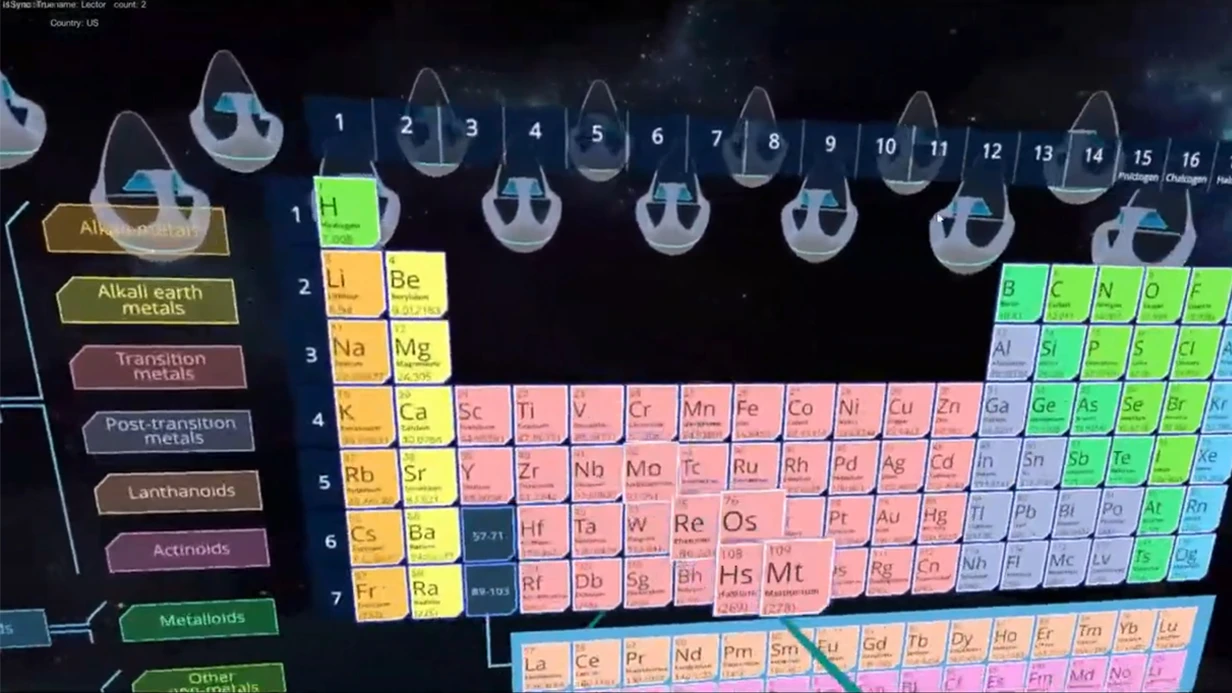


Why You Lose Profit Every Month Without an Immersive Experience
Every month, while you deliberate, customers leave for those who have already let them try the product through augmented or virtual reality.
When a business searches for apple vision pro app development companies, it wants not just a contractor, but a way to shorten the path to purchase. Without an immersive experience, you lose profit at every stage: less product attention, lower conversion, weaker brand recall.
Buyers no longer want to read specs or look at flat photos. They want to place a new sofa in their living room, try on glasses on their face, walk through a future office before it's built.
AR/VR for business provides this opportunity, and its absence makes customers hesitate, compare, and postpone their decision. Every such "I'll think about it" is a lost deal and money that could have been yours.
Future technologies have already become a competitive advantage: companies that have implemented immersive experiences get more leads and retain customers longer.
Immersive experience multiplies engagement, and the cost of a wrong choice drops — customers see the product before buying. This directly affects revenue and how people talk about you.
We fill this need: we design VR/AR solutions for your industry's goals, from the first brief to launch and support. You get a working tool that pays for itself through higher conversion, bigger average order value, and new customers from digital channels.
What Implementing Immersive Technologies Gives Your Business
The first and most obvious benefit is emotion, and emotion directly drives engagement.
When a customer or guest doesn't just watch a screen but personally controls a virtual fitting, looks inside a product, or takes part in an interactive story, time spent interacting grows several times over.
Such an experience is remembered for a long time, people tell friends about it, and the brand becomes associated with something modern and unusual.
The second benefit is brand recognition.
The immersive format itself becomes a talking point: people share videos, tag brand pages, and come to "just try it." The effect spreads for free, through word of mouth and social media, and is hard to achieve with ordinary advertising.
This works especially well in projects for new devices like Apple Vision Pro — the very fact that such an app exists sets a company apart from competitors.
The third and most practical benefit is leads. An immersive experience easily turns into a request: built-in forms, virtual consultations, or personalized recommendations motivate users to leave their details.
People do this voluntarily because they want to continue the interaction, not because they were forced to fill out another boring form. These inquiries are warmer and convert into purchases noticeably better.
Put together, immersive technologies solve three business tasks at once: they hold audience attention, make the brand recognizable, and deliver quality leads.
We shape every project around a specific goal — from growing engagement to increasing inquiry volume — and choose the format that will deliver the greatest result for your specific field.
Development Formats for Apple Vision Pro
Every Apple Vision Pro project is unique: some need to launch a demo for investors quickly, others need a full product integrated into business processes. That's why we offer three collaboration formats — a ready-made solution, custom development, and a hybrid.
This lets you choose an option that fits your timeline and budget, rather than bending your task to fit a template.
Ready-made solutions are proven scenarios that can be launched in a few weeks, with user feedback in as little as a month. Custom development is needed when internal regulations, brand style, and non-standard functionality must be taken into account.
A hybrid combines existing building blocks with unique refinements — optimal when you want to save money but keep your individuality.
The table below will help you decide which format fits you best.
| Format | For whom | What the client gets |
|---|---|---|
| Ready-made solution | For those who want to quickly test an idea or launch a standard scenario | Market entry in 1-2 months, low entry barrier, predictable budget |
| Custom development | For those with a unique business process or high integration requirements | A product that precisely mirrors your business logic and sets your company apart |
| Hybrid format | For those who want a balance between speed and uniqueness | Fast launch thanks to ready-made modules, plus customization to your needs |
We'll help you choose a format and plan the work so you understand what you're paying for and what result you'll get. We'll explain Apple Vision Pro's capabilities using examples from your industry and prepare a launch plan — from the first demo to release.
How a Project Proceeds: Stages for the Client
Any project is a journey, so we make it predictable. You always know what stage the development is at, what's ready, and what comes next. No "black boxes": every step ends with an intermediate result you can see and approve.
- Brief and objective. We gather your goals: who the audience is, what result you need — sales, recognition, employee training. We lock down timelines and budget so there are no hidden costs later.
- Plan and estimate. We prepare a work plan with stages and deadlines and formalize it in the contract. You know the cost and what you'll get at each step in advance.
- Concept and prototype. We show how the app will work and look using simple mockups. Revisions at this stage are cheap — unlike after launch.
- Development. Engineers build the product, and we regularly show intermediate versions. You see progress and can influence details at any moment.
- Testing and approval. We check the app on real devices and fix any flaws. You accept the result — and only then do we move to launch.
- Launch and support. We help with publishing, launch the project, and train your team. After release, we stay in touch: refinements, updates, technical support.
We put deadlines in the contract, not just in words. If priorities change, we adjust the plan together so you don't lose money or time. In the end, you get a working product and a team that keeps developing it.
What's Included in the Delivery: A Turnkey Package
We deliver the project "turnkey": after completion, the client gets not just a pile of source code but a working solution the team can use every day. The delivery package includes everything needed to launch and grow the app.
-
Interactive prototype. At an early stage, we turn scenarios into an interactive version: you can see the interface interaction in the headset and make changes before the main budgets are committed.
-
Final Vision Pro app. Adapted and polished for release, published in the App Store. You get an installation link for as many devices as you need.
-
Integrations with your systems. We connect CRM, customer databases, and internal services — data syncs automatically, with no manual transfer or duplication.
-
Employee training. We run a hands-on workshop for administrators and key users: setup, typical scenarios, operational questions. The answers don't disappear after we leave.
-
Clear documentation. We hand over instructions, the integration scheme, update procedures, and technical support contacts. All information stays with you — you're not dependent on specific people.
-
Post-release support. Our engineers stay by your side for the first few months: we monitor stability, quickly fix flaws, and refine scenarios based on feedback.
Case Study: Measurable Results for Our Client
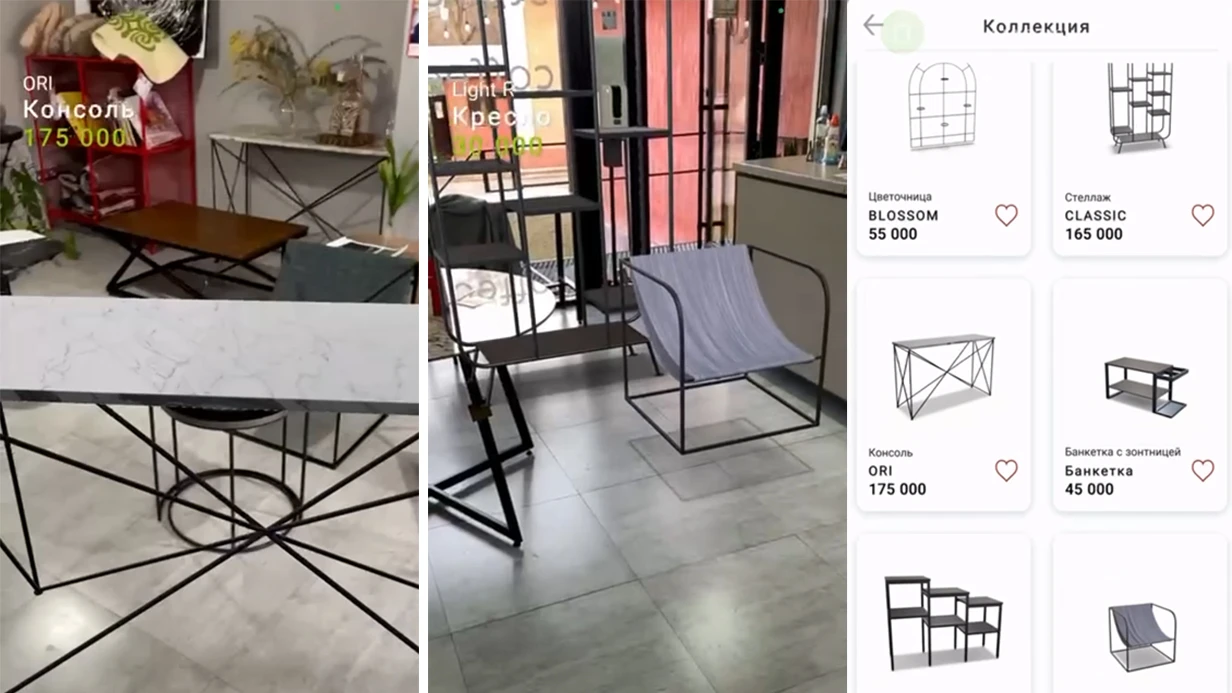
For a large furniture retail chain, Harmony, we developed an AR app based on Apple Vision Pro. A customer in the showroom puts on the headset and "arranges" a sofa, wardrobe, and armchairs in their own apartment: changes colors, moves items, opens drawers.
Previously, visitors quickly lost interest and left without buying — they weren't sure the furniture would fit their space.
Project Metrics
At the opening of a new demo zone in one showroom, 120 guests tested the app in 2 hours. 34 of them placed pre-orders on the spot, even though a normal day saw no more than 15 orders.
In the first month, the average order value grew by 22%, and purchase conversion rose from 11% to 19%. Time spent in the headset zone doubled.
Six months later, the chain ordered the solution rolled out to all its locations, plus an additional online ordering module. We now support the project: updating the catalog, adding new collections, and making sure the app runs reliably. For us, this confirms we've addressed a real business need — not just built a flashy demo.
This kind of result is possible because we start with the economics: we calculate where customers are lost and design a scenario that leads directly to purchase. Our projects rarely end with a single version — 80% of clients come back with new tasks.
Want to see what kind of effect AR/VR could bring to your field? We'll offer a quick pilot based on a similar example.
How to Choose an App Development Contractor for Your Task?
Choosing the right contractor starts not with technology, but with how well the team understands your business problem.
A good partner asks questions first: who your users are, what they should feel, what result you want to measure — greater recognition, higher sales, training savings.
If you get an immediate barrage of technical jargon instead of a discussion of your goal, that's a signal: the client won't be heard.
The second criterion is real experience with similar tasks. Don't look at the number of projects, but at their value to the client's business: what numbers grew, how conversion changed, how much time the solution saves.
A reliable team will provide such examples and explain what exactly worked. "We have the technology" is a weak argument. "We help clients achieve X result" — that's what you should rely on.
Process transparency matters just as much. An honest contractor will show you the work stages, deadlines, and checkpoints where you can review intermediate results.
They won't promise to do everything "super fast" but will discuss risks in advance and how the company responds to change. You should have a single point of contact who speaks the language of business, not the language of development.
Finally, talk about what happens after launch. An app is not the final product; it's a tool that needs to grow. Ask whether support is included in the price, how quickly the team responds to problems, and who will refine the product a year from now.
A reliable partner values long-term relationships and is ready to answer uncomfortable questions before the contract is signed, not after.
Choose a contractor who looks at your project from a results perspective. Describe your task, and a good company will offer a concrete path: what we'll do, how long it will take, and what effect the business will get. If all you get instead is a technology showcase, it's worth looking for another team.
Answering Common Doubts Before You Start
Straight answers to common doubts, no fluff:
How much does Apple Vision Pro app development cost?
The cost depends on the task: a prototype for an investor presentation is one budget, a full product project with integrations is another.
We prepare an accurate estimate after a brief session, and thanks to our existing building blocks, the price is often lower than competitors who deliver the same result.
What are the realistic development timelines?
We fix the stages and budget in the contract, so you know when you'll get the result and where in the project you are. A standard prototype takes 2-4 weeks; a full product takes 3 to 6 months.
Who supports the app after launch?
We don't abandon the project after release: our team monitors stability, updates the app for new system versions, and helps grow its functionality. Support is a separate line item in the contract, so you know exactly what services are included and what they cost.
What guarantees do you provide?
Our guarantee is spelled out in the terms: we are responsible for meeting the technical specification, the proper operation of key functions, and fixing errors after launch. If something doesn't work as expected, we fix it at our own expense within the warranty period.
Is it safe to share an idea with the team?
Before we discuss any details, we sign a non-disclosure agreement, and we don't reveal project information without your permission. App data is stored on secure infrastructure, and once the project is complete, all rights to the result transfer to you.
Ready to Discuss Your Project? Leave a Request
Choosing a contractor for Vision Pro app development is a decision that affects your budget, timeline, and final result. We want you to have a transparent picture before we even start: exactly what the team will do, how much it costs, and when the first results will appear.
That's why the first step is a consultation where we analyze your idea and honestly assess its prospects.
Why leave a request? Because after a short conversation you'll get specifics, not generic promises. We'll ask the right questions, clarify your target audience and use cases — and based on that, prepare a tailored proposal.
What you'll get after reaching out:
- A preliminary estimate of cost and timelines for your project — no hidden fees or asterisks.
- Recommendations on the app format and tools that fit your specific goals.
- A target audience breakdown: what it takes to get users to download and come back.
- A clear starting plan: stages, team, and materials needed from your side.
- A commercial proposal with the scope of work and final price — yours to keep.
- A personal manager who will guide the project from request to release.
We don't chase project volume — what matters to us is that each one delivers measurable business results. So if your idea is still rough around the edges, we'll advise you at the consultation on how to strengthen it. If a project doesn't make sense, we'll tell you honestly and suggest an alternative.
Leave a request for a consultation — and by the next business day, you'll receive a preliminary estimate and action plan. It comes with no obligation: the decision stays with you.