



Why Aviation Loses Money on Outdated Approaches
Aviation is one of the most expensive and demanding industries, where the cost of an error is measured not only in money but also in lives. Every hour of pilot training on a real aircraft costs enormous amounts: fuel, maintenance, equipment depreciation, instructor time.
With a traditional approach, airlines are forced to choose between depth of skill development and budget — and it's always a compromise.
Moreover, skills become outdated faster than it seems. Rare emergency scenarios cannot be practiced regularly on real equipment — it is dangerous, complex, and economically unprofitable.
Without constant training in non-standard conditions, crew reaction and confidence decline, which directly affects aviation safety.
These problems turn into outright losses for airlines. Incidents caused by human factors cost astronomical sums, insurance premiums rise, and reputation suffers. Companies that save on simulators lose much more in the long run than they try to gain by cutting costs.
Digital simulators based on mixed reality address these pain points. They make it possible to model any malfunctions, weather conditions, and emergency situations in a safe environment, repeat them unlimited times, and train the crew without taking off.
Training costs drop, and the quality of training improves — pilots gain relevant skills faster, and those skills last longer.
Airlines that implement such solutions gain a real competitive advantage: they get flight crews to the line faster, spend less on fuel and maintenance, and face fewer incidents.
Mixed reality is not just a technology, but a risk management tool and a key factor in improving the efficiency of the entire aviation industry.
What Implementing VR/AR/MR Brings to an Enterprise
Implementing VR/AR/MR at an aviation enterprise delivers measurable business results. Virtual and augmented reality technologies accelerate personnel training, reduce accident rates, save resources, improve work quality, and strengthen the employer brand.
Unlike classical training and testing, digital solutions do not require diverting real aircraft from production tasks.
Faster training: pilots and engineers train in a virtual environment, simulating any scenario — from routine flights to equipment failures. This reduces the time to bring employees up to full capability several times compared with the traditional scheme.
Lower accident rate: practicing emergency situations on simulators reduces the number of errors in real work. Each prevented incident saves the enterprise significant funds and protects its reputation.
Resource savings: virtual simulators replace expensive hours on real aircraft — no fuel, materials, or equipment wear. Training can be conducted at any time and in unlimited quantities.
Higher quality: augmented reality prompts employees with diagrams and parameters directly on the equipment, eliminating assembly and diagnostic errors. Mixed reality allows checking the ergonomics of a product even before building the first prototype.
Employer brand: modern technologies attract young specialists and increase the loyalty of experienced staff, which is especially important given the shortage of aviation professionals.
As a result, the enterprise operates faster and safer, and investments in VR/AR/MR pay off through reduced training costs, fewer accidents, and less equipment downtime.
VR/AR Application Formats for Aviation Tasks
In aviation, the cost of an error is especially high: crew training, control of complex systems, and maintenance require precision and take weeks.
Traditional formats — paper instructions, scheme albums, and stationary simulators — cannot keep up with the speed of change, and taking a worker away from real work for training is getting more and more expensive.
Immersive technologies solve this problem differently: they embed training and documentation into the workflow. Below are the main VR/AR/MR solution formats that we implement for aviation clients.
| Format | For whom | What it gives the client |
|---|---|---|
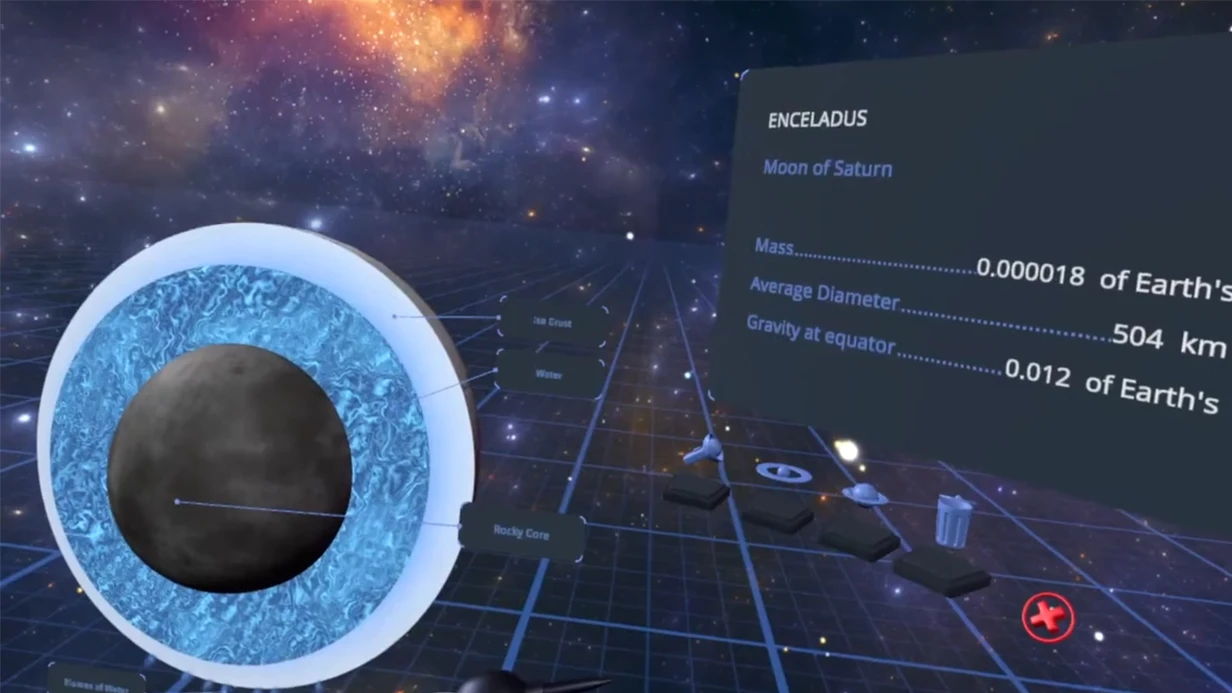
| Virtual simulator (VR) | Flight and technical personnel, training centers | Safe practice of actions in emergency situations without consuming the resource of real equipment. Reduces training time and increases skill retention. |
| Augmented reality (AR) | Service engineers, maintenance teams | Step-by-step instructions are projected directly onto the equipment: the engineer sees what and where to check without looking at a tablet or paper. Fewer errors, higher repair speed. |
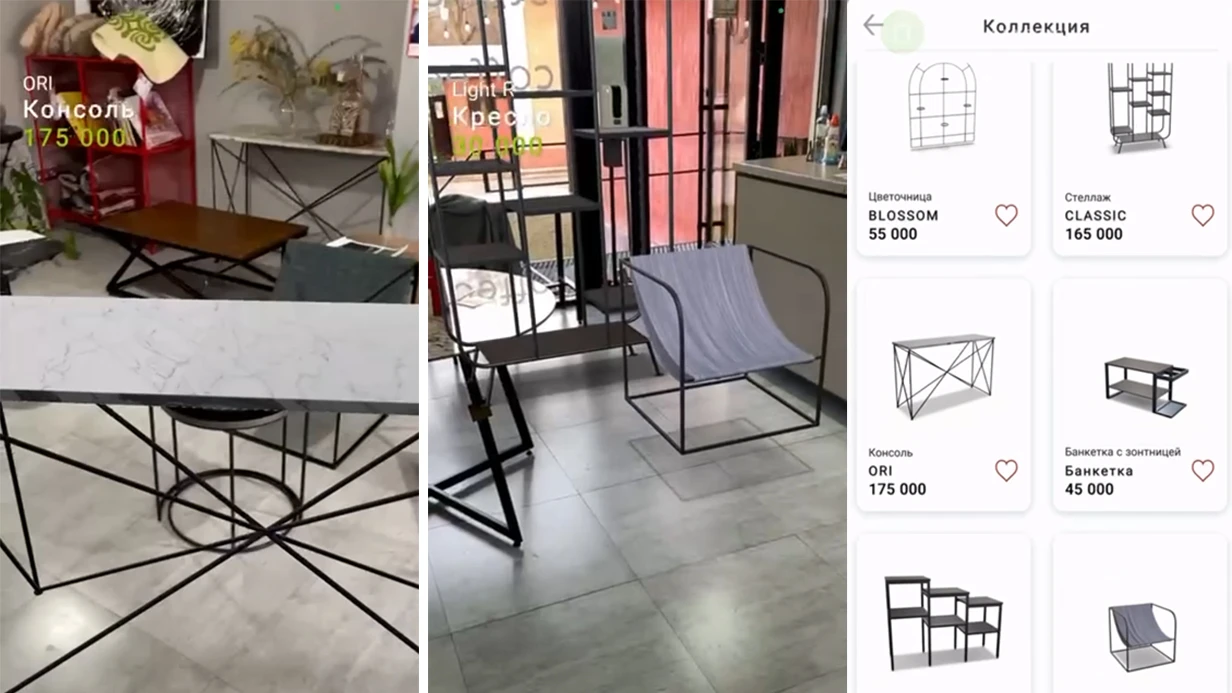
| Mixed reality (MR) | Designers, process engineers, quality departments | A digital model is overlaid on a real object — you can check assembly, see hidden elements, and compare with design documentation without switching context. |
| Design documentation in XR | Engineers, production workshops | Instead of bulky albums — interactive three-dimensional guides and diagrams in space. Data is always up to date, and finding the desired unit takes seconds, not minutes. |
When choosing a format, we start from your specific task: one thing is preparing pilots for a rare system failure, another is speeding up daily maintenance. In each case, the result is measurable: less training time, faster repairs, higher quality and safety.
How a VR/AR Project Is Implemented
Implementing a VR/AR project in the aviation industry is not a one-time launch, but a structured process that reduces risks and delivers a predictable result.
We support the client at every stage — from the first meeting to technical support after launch, so the project pays off faster and does not require "rework."
-
Brief and immersion in the task. We record goals: where the solution will be used — personnel training, client demonstration, equipment maintenance. We define the audience, scenarios, and success criteria — what should change in the client's operations.
-
Design and prototype. We create an interaction scenario and visual concept. At this stage you already see what the future application will look like and can adjust details before development begins.
-
Approval and estimate. We fix the scope of work, timeline, and cost. You understand which stages follow one another, and changes are made without "surprises" in the budget.
-
Development and implementation. All functionality is written for specific tasks — simulator, instruction, showcase. In parallel, we prepare materials: 3D models, scenarios, tests.
-
Launch and employee training. We configure equipment, conduct pilot testing at your site, and teach your team to use the solution independently.
-
Support and development. We consult, update content, and add new scenarios. You are not left with questions after launch — we stay in touch and refine the system to meet growing tasks.
As a result, implementation proceeds without firefighting: every stage is agreed upon, every result is verifiable. You get a working tool that solves a specific business problem — whether it is training flight crews or an interactive presentation for investors.
What You Get in the Project Package
The final delivery includes not only the application, but also tools that make it transparent for your team and protect your investment.
We put together the package so that after launch you can independently develop and support the project — or bring in any other contractor without losing the work done.
- Full documentation — instructions for operators, administrators, and technical specialists. Every scenario is described, including emergency situations, so onboarding a new employee takes hours, not weeks, and does not require constant consultations with the developer.
- Project source files — all source code, 3D models, and media materials are transferred to you. You get full control over the project: you can develop it with your own team, order refinements from us, or use another contractor.
- Employee training — we conduct training sessions for operators and technical specialists using your real scenarios. After training, the team confidently works with the application, and trained instructors can themselves bring new employees up to speed.
- Support regulation — we fix incident response times, communication channels, and escalation procedures. This is a guarantee that any technical failure will be resolved within the agreed time and will not stop your operations.
- Content rights — all 3D models, animations, and scenarios created within the project are transferred to your ownership without restrictions. You can use them in other training programs, marketing materials, or when developing new products.
As a result, you get not just an application, but a full-fledged asset: documentation, knowledge, and rights. We hand over the project completely and remain in touch under the regulation — but key decisions and resources are already under your control.
Case: How We Accelerated Specialist Training
Aviation training is one of the most expensive: simulator hours are scheduled, real aircraft are occupied, and an error on the ground later costs millions. We needed to shorten the path from theory to the first independent shift without losing quality.
We developed an MR application for an aviation enterprise that combined instructions, 3D models, and step-by-step action control.
A specialist puts on a headset and trains on a virtual copy of the workplace right in the shop: studies components, performs routine operations, and receives hints from the system.
It is safe, does not block equipment, and does not require an instructor to be present at every step.
Result
Training time was reduced by 35%: the average time from newbie to authorization for independent work dropped from eight weeks to five. In three months, 120 engineers went through the program, and the number of errors in control testing halved.
Instructors stopped spending time repeating the basics — they focused on complex emergency situations.
Effectiveness evaluation and feedback
Effectiveness was not evaluated by eye: the system records every action of the trainee and forms objective indicators. The training supervisor sees who is already ready for real work and who needs additional exercises. This turned training from "the instructor decided" into a clear metric.
"Mixed reality gave us a predictable result: training is faster, assessments are objective, and the risk of errors on board has decreased. We plan to roll it out to all groups." — Head of the customer's training center
The case confirmed: MR should be implemented not as an experiment, but as a standard personnel training tool. The customer continued to develop the system — the next modules cover related areas.
Answering Common Questions About VR/AR Projects
Before starting a VR/AR project, clients from the aviation sector most often ask the same questions: how will it affect personnel training, how safe is it, will it fit into existing processes, and what will it cost.
We have collected typical concerns and briefly answered them — so you can see in advance how we work and what we guarantee.
What are the risks of implementing VR/AR in aviation?
The main risk is missing deadlines or getting a solution that is not used in practice. We mitigate this through staged delivery: first a brief, then a pilot prototype on one task, then scaling. At every stage you see the result and decide whether to continue. Therefore, even if adjustments are needed, it will not cost you your budget or schedule.
How does a VR/AR solution integrate with our training and operational systems?
We design the solution as part of your IT infrastructure, not as a separate "island." We use open formats and interfaces so that data from simulators, learning management systems, and documentation work together.
Your specialists participate in the project from day one — this ensures seamless integration without stopping current processes.
How safe is this for data and flights?
Security is built in at the architecture level: access control, protected channels, and work in an isolated environment when necessary. For aviation, we additionally consider industry regulations and the requirements of your security department.
The result is a solution that does not create new vulnerabilities and is controlled by your IT department.
How much does it cost and when will it pay off?
The cost depends on the complexity of the task and the number of scenarios. We always calculate the estimate transparently and by stages.
We calculate payback together with you before the start: reduced costs for live training, shorter onboarding time, fewer errors during maintenance. For many tasks, the payback period is less than a year, but we make an accurate calculation after analyzing your processes.
If you have any remaining questions, leave a request and we will go through them on a short call. We will advise which VR/AR option makes sense in your case and give you a budget orientation without going into unnecessary detail.Shall We Discuss Your VR/AR/MR Project?
Implementing mixed reality in aviation is not buying a ready-made application, but developing a scenario for specific tasks: crew training, cabin visualization for clients, or maintenance.
To understand what exactly your area needs and how much it costs, a short conversation with our experts is required. That is why we offer a meeting — at a time convenient for you.
Here is how the process looks:
- You leave a request on the website or contact us directly.
- We have a call, clarify your task and the audience for which the application is being created.
- We discuss the possible format — training, presentation, simulator, interactive catalog.
- We make a preliminary estimate: timeline, stages, and what resources will be needed.
- We prepare an individual commercial offer and a work plan.
- After your approval, we launch the project — you stay in touch with the development manager.
This sequence helps to quickly assess the project's potential before work begins. You learn whether an MR solution solves your problem, what investment will be required, and how quickly you can get the first result. And if a project is not needed, we honestly say so and suggest simpler options.
Call or write to us — we will schedule a consultation to discuss the details and answer your questions. No technical jargon — only clear timelines, scope, and benefit for your department.
How to Choose the Right Format for Your Task?
The right format directly determines how much time and money you invest and what result you get. There is no universal solution: what is ideal for one task can be excessive for another.
That is why we always start not with the technology, but with your goal — what should change in the work of pilots, engineers, or ground personnel after implementation.
The main selection criteria are task complexity, timeline, and budget. If you need to familiarize employees with new equipment or practice a simple sequence of actions, a lightweight VR format that runs on existing devices and is implemented in a few weeks is enough.
For complex scenarios — joint work of several specialists, practice of emergency situations, interaction with real instruments — a full-fledged MR solution with a longer development cycle is required.
Timeline and budget are directly linked: the more realism and interactivity required, the higher the cost and the longer the preparation.
But we help find a balance — often the desired result is achievable for less money if you properly limit the scenario and choose a format that covers exactly your task. At the brief stage, we show two or three options with different ratios of budget, timeline, and effect.
An equally important criterion is who will use the solution. If it is mass training of dozens of groups, we choose a format that is easy to scale and update without rework. If it is rare, highly responsible training, the priority is maximum realism rather than speed of launch.
We help you get oriented: send us your task — and receive a recommendation on format, timeline, and budget. The choice remains yours, and we take on the technical part and guarantee of the result.