



Landscape design projects come to life: how VR helps sell the idea before construction
The client can't see the plot from drawings and pictures. They try to imagine what the garden, house, and lighting will look like in two years — but instead they see a flat diagram and hesitate.
Without a dimensional image, the value of a landscape project stays abstract, so the decision gets postponed and the budget "hangs in the air" before work even begins.
The landscape designer puts an idea into the project, but the client evaluates it based on photos of other people's plots.
The result is endless bargaining: "can it be cheaper," "why does it take so long," "show me what it will look like." Every revision requires redoing the visualizations, and trust in the project drops — along with the contractor's margin.
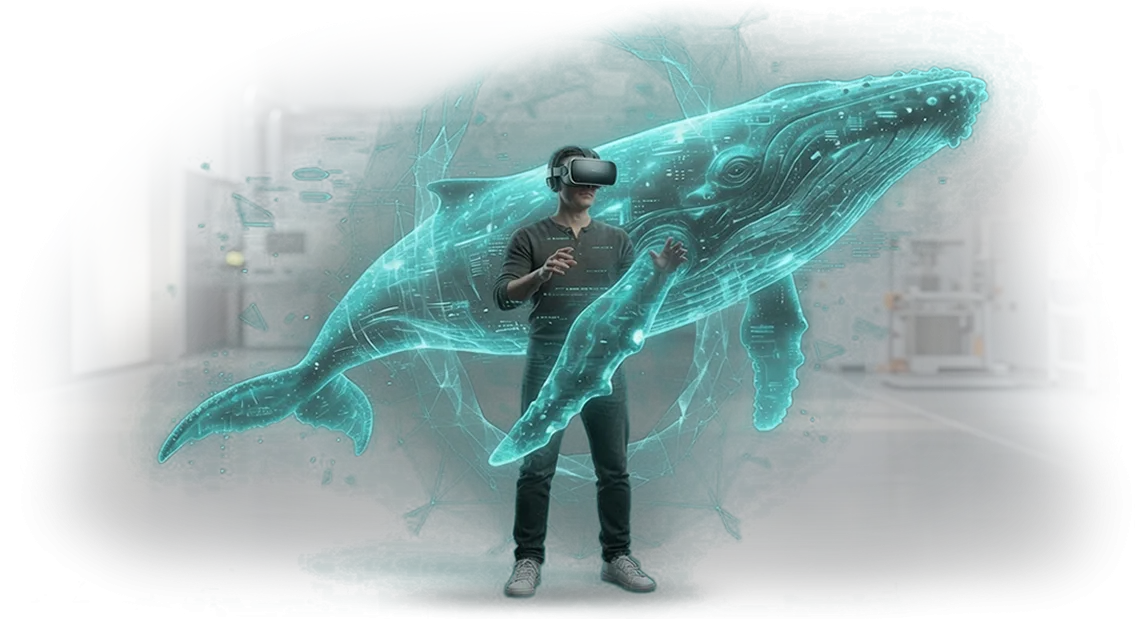
VR for landscape solves this problem. The client puts on a headset and finds themselves inside their future plot: they walk around the house, look at flower beds from the right angle, check the height of the hedge and the evening lighting.
They don't take things "on faith" — they experience the project before construction and make a decision faster because they see the result with their own eyes.
A virtual tour of the plot turns a landscape project presentation into an event.
The designer presents the concept, and the client immediately says: "remove that tree here, and turn the terrace toward the sunset." Revisions are made right there, and in a single session the project becomes "theirs." This removes the main objection — "what if it won't look like that" — and we help landscape studios close such deals.
What an MR project brings to your business: emotion, reach, and new leads
An MR application packs your professionalism into a vivid experience. It helps sell complex landscape projects faster and at a higher value, and lets clients feel the result before work begins.
Benefit: a live landscape presentation
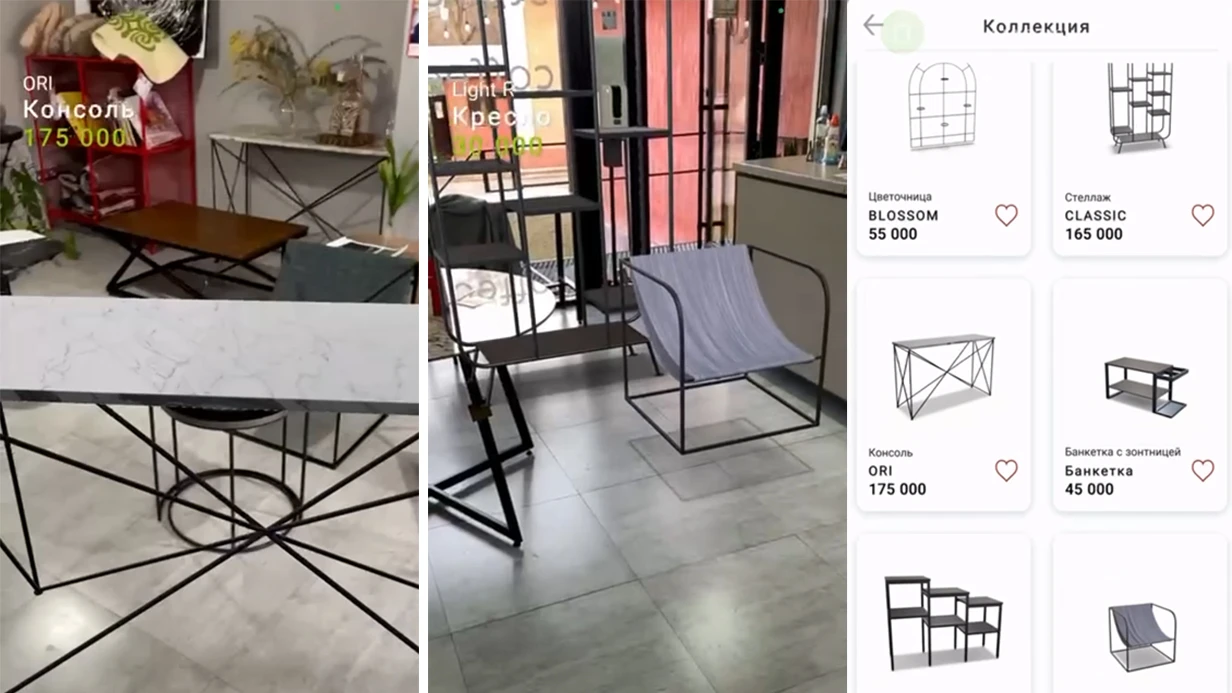
The client no longer has to guess from drawings — the MR application overlays the project onto the real plot. Trees, paths, and lighting at full scale; they can walk around and inspect everything from any point.
This removes the main objection — "what if it won't look like that." The client sees their garden before work starts, makes decisions faster, and asks for revisions less often.
Benefit: engaging guests and expanding reach
A demonstration at an exhibition or in a showroom draws a crowd: people line up to "take a walk" through someone else's plot. They record videos and share them on social media — every post becomes a recommendation for your studio.
Emotions become firmly linked to the brand, and clients tell their acquaintances about you even without a project inquiry. That gives you reach that an advertising budget can't buy.
Benefit: more inquiries and a higher average check
When a client sees the project in action, it's easier to agree to more expensive solutions: lighting, automatic irrigation, decorative elements. These can be shown as options that turn a plot into a living space.
The result — higher conversion to contract and a larger average check. Satisfied clients come back for the next stages and bring friends, creating a stream of inquiries without marketing investment.
MR visualization formats for landscape design tasks
In landscape design, the client isn't buying a drawing — they're buying the feeling of a future garden. Until they see the project with their own eyes, on their own plot, at real scale, there will be objections and long approvals.
Mixed reality formats close this gap: you show the result before work starts, and decisions happen faster.
Each business task has a matching format, from overlaying a digital model onto the real plot to a fully virtual tour. Here is what is chosen most often.
MR formats for client needs
| Format | Who it's for | What it gives the client |
|---|---|---|
| AR for the plot | Landscape studios, construction companies | The client sees future trees, paths, and lighting right on their land. Approvals happen 2–3 times faster with fewer revisions. |
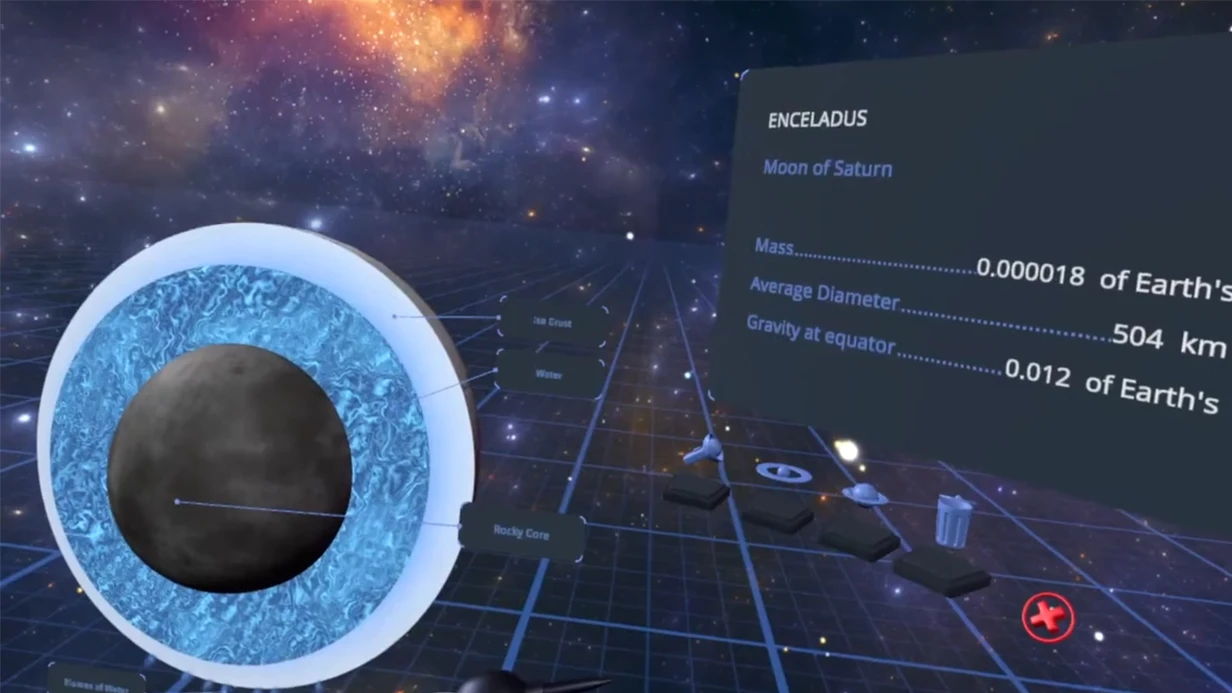
| VR showroom | Design bureaus, nurseries, exhibitions | Full immersion in the project without visiting the site. The visitor walks through the garden, changes materials, and evaluates views from the windows — convenient for exhibitions and office negotiations. |
| MR navigation | Parks, estates, residential complexes | Guests point their smartphone camera at the area and see plant names, zones, and the site's history. Increases engagement and dwell time. |
| Training with MR | Garden centers, management companies | Staff train on digital mockups: planting, watering, pruning. Real-world mistakes on sites decrease, and new specialists get up to speed faster. |
We choose the format based on the task and budget: for selling a project, an AR layer on the plot is enough; for a brand event, a VR showroom; for a permanent display, navigation with augmented reality. In any case, you get a tool that speaks your clients' language — the language of a visual result.
How the project works: from brief, plan, and approval to launch and support
For a landscape bureau, predictability matters: you know in advance what you'll receive, in what timeframe, and what it costs. We've structured the process so you see the result at every stage and can make revisions before the final launch — no surprises at the finish line.
-
Brief for visualization and immersion in the task. We discuss exactly how you'll use the MR application: present the project to a private client, pitch it to an investor, or use it at an exhibition.
We define key scenarios and success criteria — for example, "the guest walks through the plot on their own and changes plants."
-
Plan and approval. We create a project plan with clear MR development stages, timelines, and approval checkpoints. You receive a cost estimate and an understanding of what the outcome will be at each step.
-
Scenario and interface design. We map out how the virtual walk works: which landscape objects are shown, how the user moves around, and how they interact with them. At this stage we approve the logic — before the main part of the work is written.
-
Draft prototype. We quickly assemble a working version with key elements: the plot, main structures, plantings. You test the prototype in practice, see how it feels, and make revisions before resources are put into detailing.
-
Interactive project launch and testing. We build the final version and verify it on the device you and your clients will use. We train your team: we show how to run the scenario, change materials, and save key angles for presentations.
-
Post-launch support. We stay in touch: we help with updates, adapt the application to new tasks, and add features if needed — for example, seasonal planting options or additional plot objects.
What's included in an MR project delivery: a complete turnkey package
When you order an MR project for landscape design, you receive not just an application but a ready-made tool for selling and approving ideas. We put together a complete turnkey package so you don't have to deal with the technical side or hire additional contractors. Everything needed for launch — in one set:
- An interactive tour of the plot: the client sees the future garden at real scale — plants, paths, small architectural forms, lighting. They move through the plot and understand the project before work starts.
- Scenarios for different layout options: you present two or three landscaping variants, change decisions on the fly, and get immediate feedback from the client.
- Instructions and delivery contents: short, clear materials for installation and launch that require no special knowledge. Staff can start working on day one.
- Customization for your business: adaptation of the interface, naming, and presentation logic to your studio's standards, so clients see your level and brand.
- Team training: a practical session of 2–5 hours where managers and designers learn to conduct presentations, answer client questions, and use the features for persuasion.
- Support and updates: throughout the warranty period we stay in touch — we help with equipment setup, resolve issues, and update the application for your needs.
As a result, you have a clear tool that fits into your sales and project approval process. A transparent delivery scope and training save your team dozens of hours, and clients get a vivid impression and trust in your studio.
Case study: an interactive park for a developer — 42 inquiries in a month
How to create an MR park that sells
The developer of a new residential complex faced a typical pain point: buyers couldn't imagine what the landscaped park around the buildings would look like. Ordinary renders and physical models didn't inspire trust — people lacked a sense of real space.
We proposed an interactive MR park based on a mixed reality application. Visitors step onto the real territory, point a tablet or glasses at it — and see the finished landscape in front of them: alleys, trees, playgrounds.
They walk through the future park, move zones around, and even see what their apartment looks like from the window.
The professional Unity engine handles the realism. It guarantees stable operation in any conditions — even in bright sunlight, the image stays sharp. For the client, this means no glitches during a presentation, and every visitor gets an equally high-quality experience.
Results of implementation
In the first month of showings, the park generated 42 apartment inquiries — three times the project's usual conversion rate. Buyers spent an average of 8–10 minutes in the demo area and asked to be connected with a manager after the session.
The developer was so impressed that they ordered MR versions for two more sites and made the interactive park a permanent part of their sales process.
How to choose the MR format that fits your project?
The choice of an MR format depends directly on the task you're solving: selling a project, approving a layout, or making an impression at an exhibition. There is no universal solution — the same tool in different scenarios produces different results. So first define the primary goal, and then choose the visualization to match it.
If you need to quickly sell an idea and show how a house or plot will look "here and now," the best approach is overlaying the 3D model onto the real territory via a tablet or phone.
The client sees the future landscape on their own plot, walks around it, and understands the scale. This removes the main objection — "how will this look on my property?" — before work even starts.
When the task is to approve details with a client or show several layout options, interactive visualization with the ability to change materials, plants, and object positions during the presentation works better.
Instead of dozens of static images, you get one "living" project that adapts to the client's preferences. This speeds up decision-making and reduces the number of revisions.
For exhibitions and open events, choose an immersive format — a fully virtual environment where visitors walk through the future garden without being tied to a real site. This format attracts attention, creates a media hook, and builds brand recognition.
Guests remember the experience and share it on social media, and that means additional reach for you.
We help select the right format right at the brief stage: we analyze the task, the audience, and the usage scenario, propose the optimal option, and implement it.
You don't pay for unnecessary functionality and get a tool that solves a specific problem, whether it's increasing sales conversion or delivering a striking presentation for partners.
Frequently asked questions: what if the solution breaks or doesn't fit?
The fear "what if it breaks or doesn't fit" is one of the main objections when ordering MR development. We address it during the project stage: we show a prototype, test it on your equipment, and guarantee the application's performance. If something goes wrong, you're never left alone with the problem.
Below are answers to the questions most often asked before starting.
What happens if the application breaks during an event or in everyday use?
You receive a guarantee of stable solution performance. We conduct repeated load testing before launch and monitor key metrics in real time through a monitoring system. If a failure still occurs, an engineer connects remotely and fixes the situation within the agreed timeframe.
In all our years of work, there hasn't been a case where a client was left without a working solution at a critical moment.
How reliably does an MR application work in real-world conditions?
We use professional equipment proven across dozens of commercial projects. The application is designed around your tasks and usage scenario: number of users, session length, lighting, and space area. This is not a lab experiment but a solution refined for a live location.
At the pre-production stage, we run a test on your site to ensure reliability before the final launch.
What if the solution doesn't work with our hardware or software?
We check compatibility before development starts. We agree with you on the list of devices and operating systems that you or your clients use. If visitors will use their own gadgets, we adapt to popular models.
Our experience lets us cover up to 95% of typical setups, and for non-standard equipment we'll write a separate integration plan. You always know which devices the solution is guaranteed to work on.
What's included in post-launch support?
Support isn't "we came, we delivered, we forgot." We provide accompaniment for the entire service life: updates for new operating system versions, remote technical support for your staff, and, if necessary, an engineer's visit to the site.
We set up administration so your personnel can handle typical tasks on their own, while we remain on standby for non-standard situations.
A solution that can't be broken by one button and that never goes without support — that's the norm for us. You receive not just a code file but a clear tool with clear guarantees. If you still have doubts, ask us directly in the chat or by email: we'll answer before work begins and include all agreements in the contract.Let's discuss an MR project for your landscape: leave a request
You don't need to spend seasons building mutual understanding with a client — just show the future garden in the real context of the plot. MR viewing helps approve the concept before work starts, cuts revisions, and increases the client's confidence in the solution. We invite you to discuss your project so you can see what this format looks like in practice.
Right after you contact us, you receive:
- A landscape consultation: we'll tell you which MR visualization types suit your plot type and tasks.
- An assessment of "what can already be shown to the client" — we'll determine whether your existing drawings and 3D materials are enough or an additional stage is needed.
- A cost estimate tailored to your scope: we'll account for the number of scenes, terrain complexity, level of detail, and implementation timeline.
- Format selection for your sales scenario — for office negotiations, exhibition presentations, or on-site viewing.
- Examples of work in the landscape field and recommendations for integrating them into your approval processes.
- Direct contact with your personal manager and engineer — no intermediaries or long chains.
Submitting a request for an MR project takes a couple of minutes, and afterward we prepare a preliminary proposal within one business day. Even if you're not sure this format is right for you, the consultation will help clear things up.
Leave a request below, and by the end of the conversation it will be clear how to turn visualization into a source of new orders.