

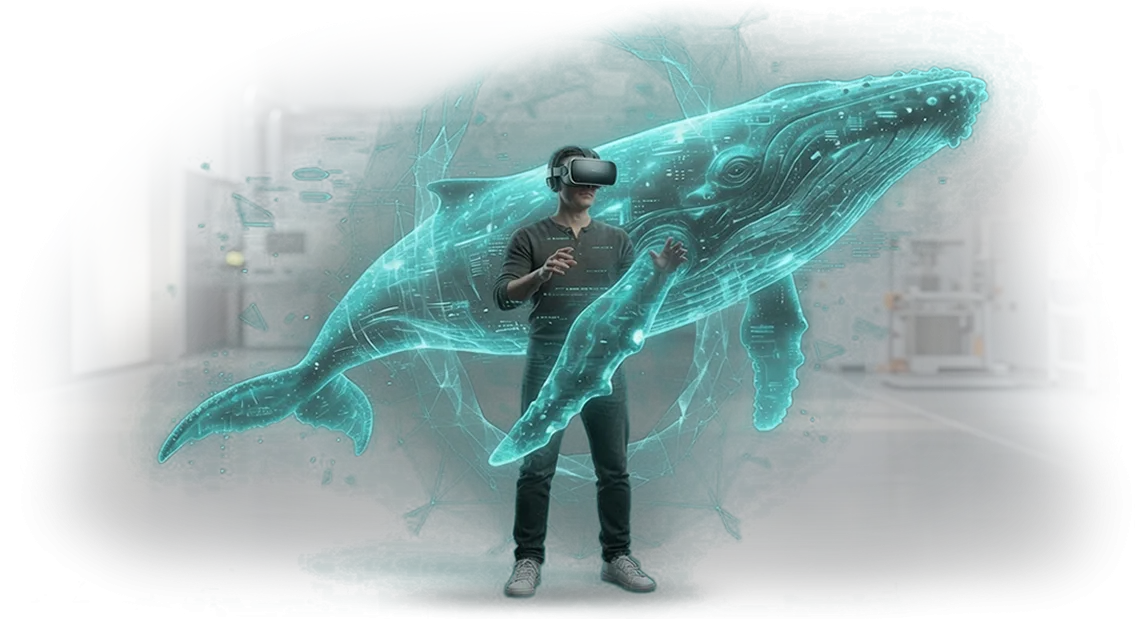
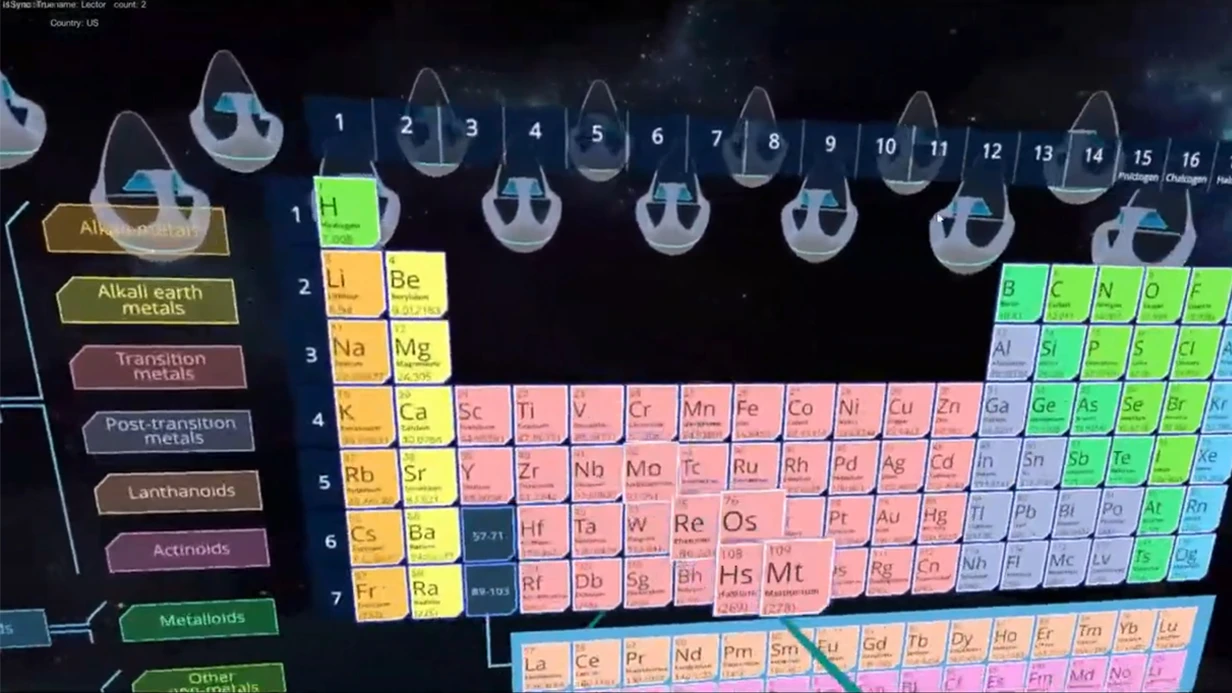


VR application development for education: where learners get lost
Traditional learning depends on attention, and attention is the scarcest resource. A lecture, slides, a test: the learner nods along, but by the end of the session only a small part remains in memory, and practical skills never materialize.
For a manager, this means the training budget goes into reporting rather than results — employees and students come out of the program the same way they came in.
Learning in VR breaks this pattern because it removes the main cause of loss — passivity. The learner doesn't look at a diagram but assembles a unit, runs diagnostics, and practices an action in a safe environment where a mistake costs nothing and creates no risks.
Learner engagement grows not through gamification for the sake of a checkbox, but because the person is busy doing the work and immediately sees the consequences of their decisions.
VR application development for education is built around your program, not around the technology. We start with the question of what skill should emerge at the end, and then design the scenarios, the environment, and the checkpoints around it.
Educational content becomes measurable: you can see who made it to the end, where they stumbled, how many attempts it took — and this turns learning from an expense line into a manageable process.
We handle this task turnkey: scenario, environment, build, deployment on your devices, and post-launch support. The client receives not a demonstration but a working tool that can be scaled to new groups, locations, and program modules.
What the customer gets from a learning VR/MR product
A learning VR/MR product solves three problems that classical formats handle poorly: it holds attention, provides safe practice, and shows progress in numbers.
An employee or student does not read slides or watch videos — they act in an environment close to reality and receive feedback immediately.
That is why the benefits of VR training manifest not in "engaging delivery" but in measurable indicators: the share of completed modules, the speed of reaching independent work, and a reduction in the number of errors on a real site.
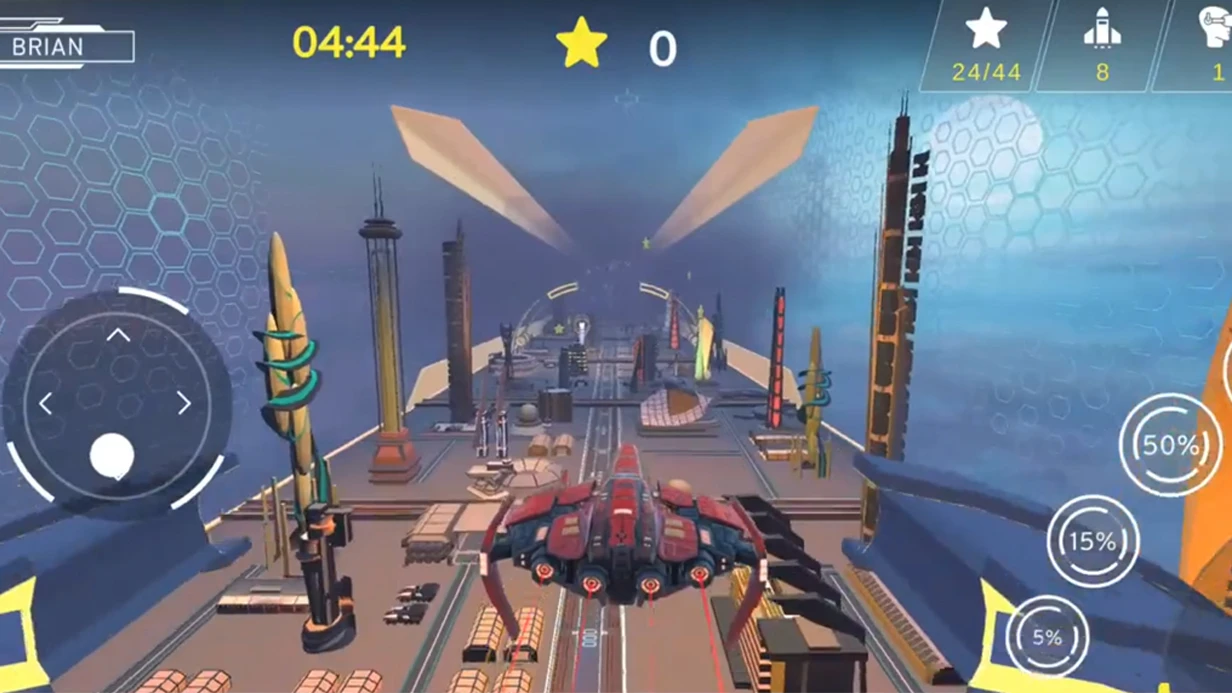
Engagement is the first effect the customer notices. Material that passes by in a lecture has to be mastered hands-on in an interactive environment: assemble, disassemble, repeat the scenario.
People return to such sessions more willingly, and the share of those who drop out of training midway falls noticeably — this is visible already in the first cohorts.
Safe practice is the second benefit. A mistake in working with equipment, in actions during an emergency, or in communicating with a client is better made in an environment where it costs nothing and creates no risks.
The learner goes through the scenario as many times as needed until a confident result, and the mentor does not waste time analyzing the same mistakes over and over.
Measurable progress turns training from "conducted and forgotten" into a manageable process. For each participant, it is clear which modules have been completed, where they stumble, and when they are ready for a real task.
The department head gets grounds for decisions about authorization to work rather than relying on a general impression of the course.
Hence the reduction in costs for retraining. A scenario built once works for new cohorts without travel, equipment downtime, or pulling experienced employees away from their duties.
We design such products for the customer's specific task: we analyze which skill needs to be instilled and build an environment where it can be practiced and the result measured.
VR/AR/MR application formats for learning tasks
The format determines not the "wow factor," but which skills employees or students reinforce and what you get as a result. Below are working scenarios that we most often implement in projects for education and corporate training.
| Format | For whom | What it gives the client |
|---|---|---|
| Simulator | Personnel in hazardous areas, student interns | Practicing actions to the point of automaticity without risk to people or equipment, reducing the number of errors in real work |
| Virtual tour | Schoolchildren, prospective students, visitors | Introduction to a facility or profession without travel — wider reach, lower organizational costs |
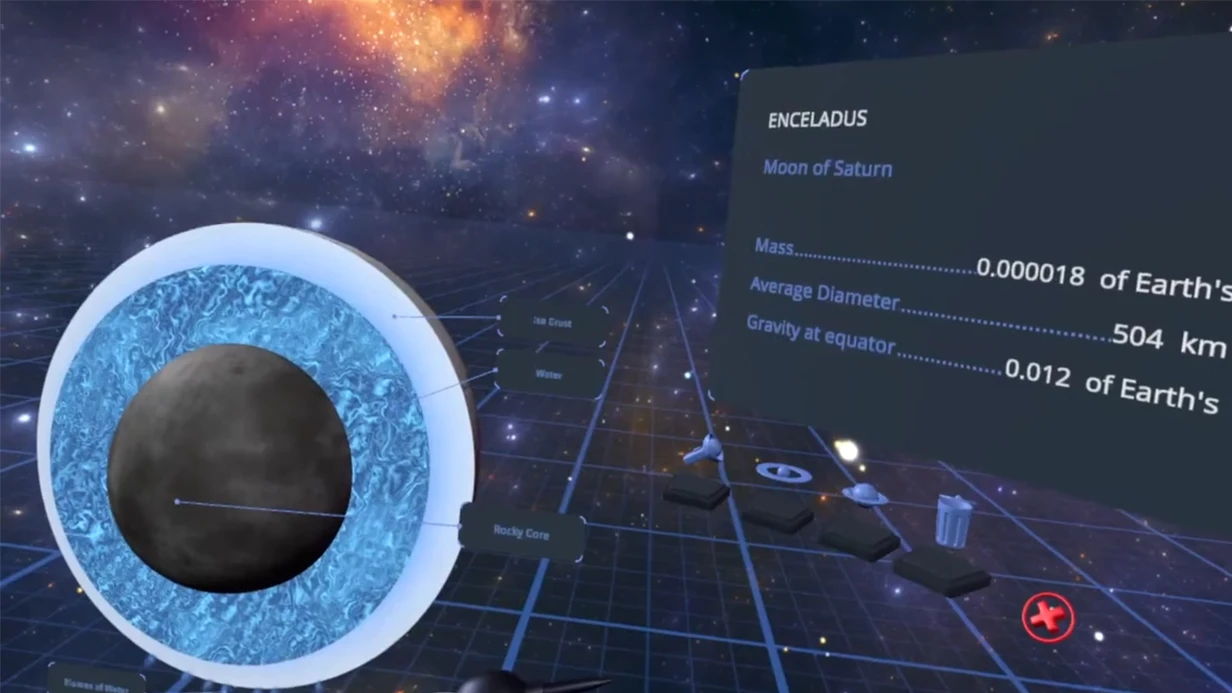
| Virtual laboratory | Educational institutions, technical specialists | Access to experiments that cannot be conducted in a classroom: too expensive, dangerous, or physically impossible |
| Simulator | Operators, drivers, medical personnel | Practicing complex scenarios and emergency situations in a safe environment, objective assessment of results |
How to choose a format for your task
We start not from the technology, but from the goal: whether you need to build a skill, showcase a facility, or practice reactions in a non-standard situation.
For each goal we select a format and scenario, not the other way around — that way the project solves the task rather than simply "looking modern."
Formats can be combined: a tour prepares for immersion, a trainer reinforces a skill, a simulator tests readiness. We will build a scenario for your learner flow and come back with an assessment and a plan.
How a project runs: from task to training launch
The process is structured so that you understand what is happening at each step and when you will receive working training. No "black boxes": you see progress, influence the content, and approve the result before launch.
How the stages are structured
- Brief and task analysis. We discuss whom we are teaching, which skills need to be practiced, and how you will know that the training worked. The output is an agreed-upon goal and success criteria, not an abstract "make it look nice."
- Plan and scenario. Our instructional designers, together with your experts, build the scenario: which situations the employee practices, what they see, what actions they take. You approve the scenario before production begins — revisions at this stage are free in substance and inexpensive in time.
- Approval of scope and timelines. We lock in what is included in the first version and what can be added later. You know exactly what result you will get and when.
- Implementation. We build the environment, fill it with your content, and test it with real employees. We show intermediate versions — you see progress every week, not just at the end.
- Training launch. We deploy on your devices or in your environment, train administrators, and help run the first session. Employees log in and start learning without your involvement.
- Support and development. After launch, we collect feedback, revise scenarios, and add new modules. The training lives and updates alongside your processes.
What this gives you
Transparent stages mean a predictable result: you are not guessing how the project will end, but seeing it at every step. Approval at early stages saves budget — rework at the end costs many times more. And post-launch support turns one-off development into a tool that works for years.
Describe your task — we will come back with an estimate and a stage-by-stage plan.
What the delivery includes: a package for the customer
The delivery is not just a built application. We hand over to the customer a complete package that lets the learning process start without the developer's involvement: a finished product, materials for instructors, staff training, and clear documentation. Everything needed for the application to work in your program from day one.
What exactly you receive
- A finished application — tested on real learning scenarios, tailored to your audience and curriculum. It runs on the target hardware agreed upon at the start.
- Methodological materials — lesson scenarios, recommendations for integrating into the curriculum, sample assignments. The instructor doesn't have to figure out how to fit the application into the course.
- Staff training — hands-on sessions for instructors and technical specialists. Your staff confidently launch and run classes on their own.
- Documentation — clear instructions for operation, configuration, and typical situations. Not "for engineers," but for those who use it every day.
- Warranty support — post-launch assistance: we answer questions, help with updates, and work through non-standard situations.
Why this matters for the customer
The package removes the main risk — that the application stays a "demo" and never reaches real classes. Instructors get a ready tool, administration gets a clear process, and you get results without having to keep a developer on staff.
If a refinement is needed during operation, we'll discuss the task and come back with an estimate and a plan.
Case Study: How a VR Course Improved Learning Outcomes
One of our educational projects began with a typical pain point: students' practical skills were "lagging," and instructors were spending the lion's share of their time re-explaining the same things over and over.
The client — an educational institution — wanted measurable improvement in outcomes, not a "wow effect." We proposed a VR simulator where students practice actions in a safe environment, and the system records every mistake.
What Changed After Implementation
Engagement rose noticeably: students began completing the module through to the end instead of dropping out halfway, because there was clear progress and real-time feedback.
Mistakes that previously surfaced during actual practice were now caught at the training stage — the instructor could see exactly where the group was "falling apart" and close the gaps in a targeted way.
I'd like to highlight separately the effect for the client itself: the workload on instructors decreased, because students practiced the basic scenarios on their own. Repeated explanations went away, freeing up time for complex topics and one-on-one work.
Why This Is a Repeatable Result
We built the project for the educational client not as a one-off demonstration, but as part of the learning process: with a methodology, scenarios, and clear assessment criteria.
That is precisely why the client came back to expand — to add new modules and cover related disciplines. This approach is what distinguishes a working educational project from a flashy but useless presentation.
If you have a similar challenge, let's discuss which format of simulator will deliver measurable results in your specific case.
How to choose the right format for the task?
Start not with the technology, but with the educational goal.
Ask yourself: what should change for the learner after completing the program — should they practice a dangerous process without risk, memorize a complex scheme, learn to work in a team, or hold attention on a boring topic?
The format depends on the answer, and only then comes the choice of solution. Once the goal is formulated, selecting the format takes a single conversation, not months of trial and error.
VR is appropriate where full immersion and safe simulation are needed: practicing actions on equipment, training in conditions that are expensive or dangerous to recreate live.
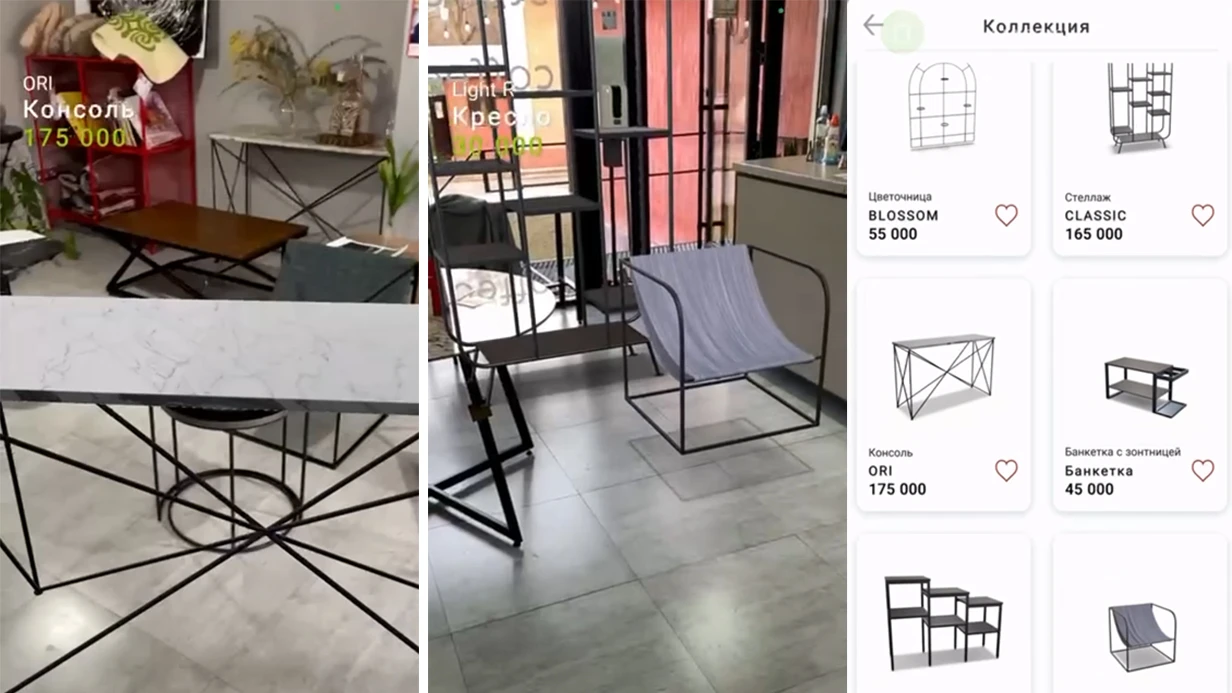
AR solves a different task — it overlays hints and models on top of the real world, so it is good for visual instructions, working with real objects, and learning "here and now." Mixed reality combines both approaches: the learner sees the real audience, colleagues, or equipment and simultaneously interacts with digital objects — this works best in team scenarios and where it is important not to lose contact with the physical environment.
If you are unsure between VR and AR, ask two more questions: does the learner need to be fully immersed, or is it important to see the real surroundings, and are you evaluating individual actions or group interaction.
The first usually leads to VR, the second to AR, while team and hybrid scenarios more often win in mixed reality.
We help you make this choice without unnecessary costs: we analyze your educational goal, show which format will deliver results, and propose a solution for it, not for a trendy technology.
Common customer doubts before starting
Doubts before launch are almost always the same — and almost all of them are about risk, not technology. The customer is afraid of investing in a project that won't take root, will be left without support, or will require keeping a dedicated specialist on staff. Below are honest answers to what is most often asked before starting.
What if the equipment breaks down?
We select devices for the task and operating conditions, not "whatever is in the warehouse." At the launch stage, we hand over clear instructions for use and maintenance, and during the warranty period we provide support: we help with replacement, setup, and employee training.
Equipment is a consumable resource, and we plan its lifecycle in advance so that a breakdown doesn't stop the training.
Do we need our own IT specialist on staff?
No. We take on the technical part: deployment, updates, integration with your systems, and user support. Your team is left with the methodological work — scenarios, groups, scheduling.
If you have a technical employee in-house, they can get involved if they wish, but there's no critical dependency on them.
How quickly does the project pay off?
We calculate the payback before the start — through your metrics: how many employees or students you train, how much time and resources the format saves, how engagement grows and the error rate decreases.
Usually the effect is visible already in the first cohorts, and the content itself is reused: you build a scenario once — and train groups without repeated deployment costs.
What if the project doesn't take root?
That's why we start with a pilot on one group or site. You see real results on your own people, not in a presentation, and only then do you scale. This way the implementation risk stays manageable, and the decision is made on facts.
Still have your own questions — ask them directly. Describe the task, and we'll come back with an estimate, a pilot plan, and clear timelines.
Let's discuss your task and come back with a plan
Describe the task in whatever way is convenient: the learning scenario, the audience, what should change as a result. We'll ask clarifying questions on the substance — no ten-page questionnaires — and come back with an estimate and a project plan.
You don't need to prepare a technical specification: it's enough to tell us whom we're teaching and what, and what result you consider a success.
What you'll get after reaching out
- An estimate — realistic timelines and scope of work for your task, broken down into stages.
- A project plan — the sequence of steps, approval points, and areas of your responsibility.
- A prototype — a working fragment of the scenario that shows how it will feel in the headset, before full development begins.
- The team composition — who leads the project, whom to contact with any question.
- Support — content updates, user support, and scenario development after launch.
How the work proceeds
- We discuss the task — a call or correspondence, we go over the learning scenario and constraints.
- We prepare the estimate and plan — stages, timelines, what will be needed on your side.
- We build a prototype — we test the core mechanics with real employees or students.
- We develop the full version — content, interaction, integration with your systems.
- We launch and train your team — so the process lives on without us.
- We support — we refine the scenarios as the program changes.
Developing VR applications for education is a project that lives for years: the program changes, the audience grows, new topics appear.
That's why we build in the ability to update content without rebuilding the entire application from the start, and we stay in touch after launch.
Describe your task — we'll come back with an estimate, a plan, and a proposal for a prototype.